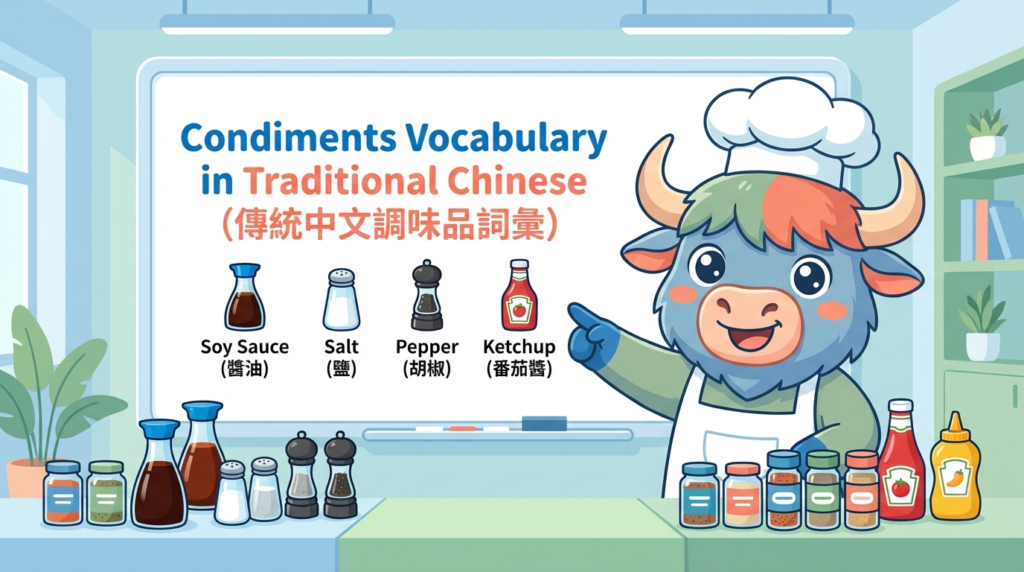
Condiments Vocabulary in Traditional Chinese
調味料與醬料(西式+東亞+華人常用)
Every item includes Traditional characters, pinyin, meaning, and real-life example sentences you can actually use.
Condiments are the small things that make food feel like a plan (instead of a regret). Below you’ll learn the most useful sauces, oils, seasonings, and toppings in Traditional Chinese—covering Western staples, East Asian favorites, and Chinese/Taiwanese classics.
You’ll get the characters, pinyin with tone marks, clear meanings, and example sentences (Traditional Chinese + pinyin + English). Tap the audio buttons to hear the Hanzi in Taiwan Mandarin (zh-TW).
Section 1: The “I Use This Weekly” Condiments
These 8 show up everywhere: burgers, dumplings, noodles, hot pot, sushi… basically your whole life. Learn them first.
這碗湯加一點醬油就更香。
Zhè wǎn tāng jiā yìdiǎn jiàngyóu jiù gèng xiāng.
Add a little soy sauce to this soup and it smells (and tastes) even better.
我想要微辣,所以只放一點辣椒醬。
Wǒ xiǎng yào wēilà, suǒyǐ zhǐ fàng yìdiǎn làjiāo jiàng.
I want it mildly spicy, so I’m only adding a little chili sauce.
薯條配番茄醬最好吃。
Shǔtiáo pèi fānqié jiàng zuì hǎochī.
Fries with ketchup taste best.
這個三明治可以不要美乃滋嗎?
Zhège sānmíngzhì kěyǐ búyào měinǎizī ma?
Can this sandwich be without mayo?
壽司我喜歡沾一點芥末。
Shòusī wǒ xǐhuan zhān yìdiǎn jièmò.
With sushi, I like dipping a little mustard/wasabi.
炒青菜加蠔油很下飯。
Chǎo qīngcài jiā háoyóu hěn xiàfàn.
Stir-fried greens with oyster sauce go great with rice.
餃子沾醋再加點辣更讚。
Jiǎozi zhān cù zài jiā diǎn là gèng zàn.
Dumplings dipped in vinegar—plus a bit of spice—are even better.
我早餐喜歡吐司抹花生醬。
Wǒ zǎocān xǐhuan tǔsī mǒ huāshēngjiàng.
For breakfast, I like toast with peanut butter.
Section 1.01: Useful Phrases (So You Actually Get the Sauce)
These are the phrases you’ll use at restaurants, night markets, and anywhere food appears (so… everywhere).
可以給我番茄醬嗎?
Kěyǐ gěi wǒ fānqié jiàng ma?
MeaningCould you give me ketchup?
薯條可以給我番茄醬嗎?
Shǔtiáo kěyǐ gěi wǒ fānqié jiàng ma?
Can I have ketchup for the fries?
醬放旁邊就好,謝謝。
Jiàng fàng pángbiān jiù hǎo, xièxie.
MeaningSauce on the side is fine, thanks.
沙拉醬放旁邊就好,謝謝。
Shālā jiàng fàng pángbiān jiù hǎo, xièxie.
Dressing on the side is fine, thanks.
再來一點辣椒醬。
Zài lái yìdiǎn làjiāo jiàng.
MeaningA bit more chili sauce, please.
我還可以,再來一點辣椒醬。
Wǒ hái kěyǐ, zài lái yìdiǎn làjiāo jiàng.
I can handle it—give me a bit more chili sauce.
不要加美乃滋,謝謝。
Búyào jiā měinǎizī, xièxie.
MeaningNo mayo, thanks.
這個漢堡不要加美乃滋,謝謝。
Zhège hànbǎo búyào jiā měinǎizī, xièxie.
No mayo on this burger, thanks.
少一點鹽,可以嗎?
Shǎo yìdiǎn yán, kěyǐ ma?
MeaningLess salt, is that okay?
這道菜少一點鹽,可以嗎?
Zhè dào cài shǎo yìdiǎn yán, kěyǐ ma?
Can this dish be a bit less salty?
這個很辣嗎?
Zhège hěn là ma?
MeaningIs this very spicy?
這個辣椒醬很辣嗎?
Zhège làjiāo jiàng hěn là ma?
Is this chili sauce very spicy?
我對花生過敏。
Wǒ duì huāshēng guòmǐn.
MeaningI’m allergic to peanuts.
我對花生過敏,請不要放花生醬。
Wǒ duì huāshēng guòmǐn, qǐng búyào fàng huāshēngjiàng.
I’m allergic to peanuts—please don’t add peanut sauce/butter.
這個是素的嗎?
Zhège shì sù de ma?
MeaningIs this vegetarian?
這個沙茶醬是素的嗎?
Zhège shāchá jiàng shì sù de ma?
Is this satay sauce vegetarian?
我想要微辣。
Wǒ xiǎng yào wēilà.
MeaningI want it mildly spicy.
我想要微辣就好,不要太辣。
Wǒ xiǎng yào wēilà jiù hǎo, búyào tài là.
Mild spicy is fine—please not too spicy.
請給我一小碟醋。
Qǐng gěi wǒ yì xiǎo dié cù.
MeaningPlease give me a small dish of vinegar.
餃子要沾醋,請給我一小碟醋。
Jiǎozi yào zhān cù, qǐng gěi wǒ yì xiǎo dié cù.
I want vinegar for the dumplings—please give me a small dish.
可以另外給我芥末嗎?
Kěyǐ lìngwài gěi wǒ jièmò ma?
MeaningCould I get extra mustard/wasabi?
壽司可以另外給我芥末嗎?
Shòusī kěyǐ lìngwài gěi wǒ jièmò ma?
Can I get extra wasabi for the sushi?
這個需要沾醬嗎?
Zhège xūyào zhān jiàng ma?
MeaningDo I need a dipping sauce for this?
這個炸物需要沾醬嗎?
Zhège zháwù xūyào zhān jiàng ma?
Do these fried snacks need a dipping sauce?
Section 1.1: Quick Chinese Pattern—醬 vs 油 vs 粉
A small cheat code: 醬 (jiàng) is usually a thick sauce/paste (think “spreadable or spoonable”). 油 (yóu) is an oil (drippy, glossy, dangerous on white shirts). 粉 (fěn) is powder (sprinkle life). Once you spot the ending, you can guess the vibe even if the word is new.
Section 2: The Big List (Western + East Asian + Chinese/TW)
Tables below are grouped by “where you’ll see it” and “what it does.” Every row includes a usable example sentence with pinyin and translation.
| Traditional Chinese | Pinyin | Meaning (EN) | Example (ZH + pinyin) | Translation (EN) | Audio |
|---|---|---|---|---|---|
| 黃芥末 | Huáng jièmò | yellow mustard | 熱狗上我只放黃芥末。 Règǒu shàng wǒ zhǐ fàng huáng jièmò. | On a hot dog, I only put yellow mustard. | |
| 第戎芥末 | Dìróng jièmò | Dijon mustard | 這個三明治加第戎芥末很有味道。 Zhège sānmíngzhì jiā díróng jièmò hěn yǒu wèidào. | This sandwich tastes great with Dijon mustard. | |
| 蜂蜜芥末醬 | Fēngmì jièmò jiàng | honey mustard | 雞塊配蜂蜜芥末醬超搭。 Jīkuài pèi fēngmì jièmò jiàng chāo dā. | Chicken nuggets go perfectly with honey mustard. | |
| 烤肉醬 | Kǎoròu jiàng | BBQ sauce | 我想要烤肉醬,偏甜的那種。 Wǒ xiǎng yào kǎoròu jiàng, piān tián de nà zhǒng. | I want BBQ sauce—the sweeter kind. | |
| 伍斯特醬 | Wǔsī tè jiàng | Worcestershire sauce | 煮牛排醬汁時加一點伍斯特醬。 Zhǔ niúpái jiàngzhī shí jiā yìdiǎn wǔsī tè jiàng. | When making steak sauce, add a little Worcestershire sauce. | |
| 塔塔醬 | Tǎtǎ jiàng | tartar sauce | 炸魚配塔塔醬很經典。 Zháyú pèi tǎtǎ jiàng hěn jīngdiǎn. | Fried fish with tartar sauce is a classic. | |
| 凱薩醬 | Kǎisà jiàng | Caesar dressing | 沙拉我想要凱薩醬。 Shālā wǒ xiǎng yào kǎisà jiàng. | For the salad, I want Caesar dressing. | |
| 千島醬 | Qiāndǎo jiàng | Thousand Island dressing | 這個漢堡可以換成千島醬嗎? Zhège hànbǎo kěyǐ huàn chéng qiāndǎo jiàng ma? | Can this burger switch to Thousand Island dressing? | |
| 牧場醬 | Mùchǎng jiàng | ranch dressing | 蔬菜棒沾牧場醬很方便。 Shūcài bàng zhān mùchǎng jiàng hěn fāngbiàn. | Veggie sticks dipped in ranch are super easy. | |
| 油醋醬 | Yóu cù jiàng | vinaigrette | 我喜歡清爽一點,所以選油醋醬。 Wǒ xǐhuan qīngshuǎng yìdiǎn, suǒyǐ xuǎn yóu cù jiàng. | I like it lighter, so I choose vinaigrette. |
| Traditional Chinese | Pinyin | Meaning (EN) | Example (ZH + pinyin) | Translation (EN) | Audio |
|---|---|---|---|---|---|
| 味噌 | Wèicēng | miso | 這家味噌湯很濃。 Zhè jiā wèicēng tāng hěn nóng. | This place’s miso soup is very rich. | |
| 味醂 | Wèilín | mirin | 煮照燒醬時會加一點味醂。 Zhǔ zhàoshāo jiàng shí huì jiā yìdiǎn wèilín. | When making teriyaki sauce, you add a little mirin. | |
| 照燒醬 | Zhàoshāo jiàng | teriyaki sauce | 我想要照燒醬雞。 Wǒ xiǎng yào zhàoshāo jiàng jī. | I want teriyaki chicken. | |
| 七味粉 | Qī wèi fěn | shichimi (Japanese seven-spice) | 烏龍麵我會撒一點七味粉。 Wūlóngmiàn wǒ huì sǎ yìdiǎn qī wèi fěn. | I sprinkle a little shichimi on udon. | |
| 山葵 | Shānkuī | wasabi | 我不太能吃山葵,少一點。 Wǒ bútài néng chī shānkuī, shǎo yìdiǎn. | I can’t really handle wasabi—just a little. | |
| 韓式辣椒醬 | Hánshì làjiāo jiàng | gochujang (Korean chili paste) | 石鍋拌飯加韓式辣椒醬才對味。 Shíguō bànfàn jiā Hánshì làjiāo jiàng cái duì wèi. | Bibimbap tastes right only with gochujang. | |
| 韓式大醬 | Hánshì dàjiàng | doenjang (Korean soybean paste) | 這個湯有韓式大醬的香味。 Zhège tāng yǒu Hánshì dàjiàng de xiāngwèi. | This soup has that fragrant doenjang smell. | |
| 魚露 | Yúlù | fish sauce | 炒菜最後滴幾滴魚露更鮮。 Chǎo cài zuìhòu dī jǐ dī yúlù gèng xiān. | A few drops of fish sauce at the end makes it more savory. |
| Traditional Chinese | Pinyin | Meaning (EN) | Example (ZH + pinyin) | Translation (EN) | Audio |
|---|---|---|---|---|---|
| 豆瓣醬 | Dòubàn jiàng | fermented broad bean chili paste (often spicy) | 麻婆豆腐少不了豆瓣醬。 Mápó dòufu shǎo bùliǎo dòubàn jiàng. | Mapo tofu isn’t complete without doubanjiang. | |
| 甜麵醬 | Tiánmiàn jiàng | sweet bean sauce | 北京烤鴨通常配甜麵醬。 Běijīng kǎoyā tōngcháng pèi tiánmiàn jiàng. | Peking duck is usually served with sweet bean sauce. | |
| 黃豆醬 | Huángdòu jiàng | soybean paste | 這道菜用黃豆醬炒很香。 Zhè dào cài yòng huángdòu jiàng chǎo hěn xiāng. | Stir-frying this dish with soybean paste is super fragrant. | |
| 沙茶醬 | Shāchá jiàng | sha cha sauce (Taiwan hot pot favorite) | 火鍋我一定要沙茶醬。 Huǒguō wǒ yídìng yào shāchá jiàng. | For hot pot, I absolutely need sha cha sauce. | |
| XO醬 | X-O jiàng | XO sauce | 炒海鮮加一點XO醬就升級。 Chǎo hǎixiān jiā yìdiǎn X-O jiàng jiù shēngjí. | Add a bit of XO sauce to seafood stir-fry and it levels up. | |
| 海鮮醬 | Hǎixiān jiàng | hoisin sauce (often labeled like this) | 春捲沾海鮮醬很對味。 Chūnjuǎn zhān hǎixiān jiàng hěn duì wèi. | Spring rolls taste great dipped in hoisin sauce. | |
| 芝麻醬 | Zhīma jiàng | sesame paste | 涼麵拌芝麻醬超香。 Liángmiàn bàn zhīma jiàng chāo xiāng. | Cold noodles mixed with sesame paste are insanely fragrant. | |
| 腐乳 | Fǔrǔ | fermented tofu (as a condiment) | 我喜歡用腐乳當沾醬。 Wǒ xǐhuan yòng fǔrǔ dāng zhānjiàng. | I like using fermented tofu as a dipping sauce. | |
| 花椒油 | Huājiāo yóu | Sichuan peppercorn oil (numbing aroma) | 想要麻一點就滴花椒油。 Xiǎng yào má yìdiǎn jiù dī huājiāo yóu. | If you want more numbing aroma, add a few drops of peppercorn oil. | |
| 蔥油 | Cōngyóu | scallion oil | 這碗拌麵加蔥油很香。 Zhè wǎn bànmiàn jiā cōngyóu hěn xiāng. | This dry-mixed noodle bowl smells amazing with scallion oil. |
| Traditional Chinese | Pinyin | Meaning (EN) | Example (ZH + pinyin) | Translation (EN) | Audio |
|---|---|---|---|---|---|
| 橄欖油 | Gǎnlǎn yóu | olive oil | 沙拉我喜歡淋橄欖油。 Shālā wǒ xǐhuan lín gǎnlǎn yóu. | For salad, I like drizzling olive oil. | |
| 芝麻油 | Zhīma yóu | sesame oil | 餛飩湯加幾滴芝麻油。 Húntún tāng jiā jǐ dī zhīma yóu. | Add a few drops of sesame oil to wonton soup. | |
| 米醋 | Mǐ cù | rice vinegar | 餃子我都用米醋。 Jiǎozi wǒ dōu yòng mǐ cù. | For dumplings, I always use rice vinegar. | |
| 黑醋 | Hēi cù | black vinegar | 排骨用黑醋更有香氣。 Páigǔ yòng hēi cù gèng yǒu xiāngqì. | Ribs taste more fragrant with black vinegar. | |
| 巴薩米克醋 | Bā sà mǐ kè cù | balsamic vinegar | 這個沙拉淋巴薩米克醋很讚。 Zhège shālā lín bā sà mǐ kè cù hěn zàn. | This salad is awesome with balsamic vinegar. | |
| 檸檬汁 | Níngméng zhī | lemon juice | 海鮮擠點檸檬汁更清爽。 Hǎixiān jǐ diǎn níngméng zhī gèng qīngshuǎng. | A bit of lemon juice makes seafood taste fresher. |
| Traditional Chinese | Pinyin | Meaning (EN) | Example (ZH + pinyin) | Translation (EN) | Audio |
|---|---|---|---|---|---|
| 海鹽 | Hǎiyán | sea salt | 牛排只要海鹽就夠了。 Niúpái zhǐ yào hǎiyán jiù gòu le. | Steak only needs sea salt. | |
| 黑胡椒 | Hēi hújiāo | black pepper | 我想要多一點黑胡椒。 Wǒ xiǎng yào duō yìdiǎn hēi hújiāo. | I want a bit more black pepper. | |
| 五香粉 | Wǔxiāng fěn | five-spice powder | 滷味會放五香粉。 Lǔwèi huì fàng wǔxiāng fěn. | Braised foods often use five-spice powder. | |
| 味精 | Wèijīng | MSG | 這家湯不加味精。 Zhè jiā tāng bù jiā wèijīng. | This place doesn’t add MSG to the soup. |
| Traditional Chinese | Pinyin | Meaning (EN) | Example (ZH + pinyin) | Translation (EN) | Audio |
|---|---|---|---|---|---|
| 酸黃瓜 | Suān huángguā | pickles | 漢堡裡可以加酸黃瓜嗎? Hànbǎo lǐ kěyǐ jiā suān huángguā ma? | Can you add pickles in the burger? | |
| 泡菜 | Pàocài | kimchi / pickled vegetables (context decides) | 我想要一點泡菜配飯。 Wǒ xiǎng yào yìdiǎn pàocài pèi fàn. | I want a bit of kimchi/pickles with rice. | |
| 醃薑 | Yān jiāng | pickled ginger | 壽司請給我醃薑。 Shòusī qǐng gěi wǒ yān jiāng. | For sushi, please give me pickled ginger. | |
| 榨菜 | Zhàcài | pickled mustard stem | 我喜歡稀飯配榨菜。 Wǒ xǐhuan xīfàn pèi zhàcài. | I like congee with pickled mustard stem. | |
| 蜂蜜 | Fēngmì | honey | 優格我會加蜂蜜。 Yōugé wǒ huì jiā fēngmì. | I add honey to yogurt. | |
| 楓糖漿 | Fēngtáng jiāng | maple syrup | 鬆餅淋楓糖漿最好。 Sōngbǐng lín fēngtáng jiāng zuì hǎo. | Pancakes are best with maple syrup. | |
| 果醬 | Guǒjiàng | jam | 吐司抹果醬很簡單。 Tǔsī mǒ guǒjiàng hěn jiǎndān. | Toast with jam is simple and easy. | |
| 煉乳 | Liànrǔ | condensed milk | 刨冰加煉乳超幸福。 Bàobīng jiā liànrǔ chāo xìngfú. | Shaved ice with condensed milk is pure happiness. |
Section 3: Handy Variants (Synonyms, “which one?” traps)
Same condiment family, different vibe. These show up on labels and menus, and they’re easy to mix up.
| Variant | Pinyin | Meaning (EN) | Example (ZH + pinyin) | Translation (EN) | Audio |
|---|---|---|---|---|---|
| 茄汁 | Qiézhī | ketchup (common label/word in some places) | 我比較喜歡茄汁,不要番茄醬。 Wǒ bǐjiào xǐhuan qiézhī, búyào fānqié jiàng. | I prefer “qiézhī” ketchup—no tomato ketchup, please. | |
| 蛋黃醬 | Dànhuáng jiàng | mayonnaise (literally “egg-yolk sauce”) | 這個沙拉用蛋黃醬也可以。 Zhège shālā yòng dànhuáng jiàng yě kěyǐ. | This salad can use mayo too. | |
| 醬油膏 | Jiàngyóu gāo | thick soy sauce | 蚵仔煎常常會淋醬油膏。 Kēzǎijiān chángcháng huì lín jiàngyóu gāo. | Oyster omelets often get drizzled with thick soy sauce. | |
| 白醋 | Bái cù | white vinegar | 做涼拌時加一點白醋會更開胃。 Zuò liángbàn shí jiā yìdiǎn bái cù huì gèng kāiwèi. | Adding a little white vinegar to cold dishes makes them more appetizing. | |
| 香醋 | Xiāng cù | fragrant vinegar (often darker, aromatic) | 小籠包我喜歡用香醋。 Xiǎolóngbāo wǒ xǐhuan yòng xiāng cù. | For soup dumplings, I like using aromatic vinegar. | |
| 香油 | Xiāngyóu | toasted sesame oil (often used like sesame oil) | 湯裡滴一點香油就很香。 Tāng lǐ dī yìdiǎn xiāngyóu jiù hěn xiāng. | A few drops of toasted sesame oil make soup smell amazing. | |
| 一小包(醬) | Yì xiǎo bāo (jiàng) | one small packet (of sauce) | 可以給我一小包醬油嗎? Kěyǐ gěi wǒ yì xiǎo bāo jiàngyóu ma? | Could I get a small packet of soy sauce? | |
| 一小碟(醬) | Yì xiǎo dié (jiàng) | one small dish (of sauce) | 請給我一小碟沙茶醬。 Qǐng gěi wǒ yì xiǎo dié shāchá jiàng. | Please give me a small dish of sha cha sauce. |