Spanish Imperfect Conjugation For Beginners
Learn the endings, the only 3 irregular verbs, when to use the imperfect, and how to stop mixing it up with the preterite. Your past-tense drama can calm down now.
The first time I heard a friend in Mexico City tell a story about his old apartment, almost every sentence started with era, iba, or hacía. Nothing huge had happened yet. He was just painting the scene: the rent was cheap, the neighbors were loud, the coffee was bad, and the bus was always late. That is the imperfect in action.
In Spanish, the imperfect is the tense you use for background, habits, repeated actions, and past situations without a clear finish line. It often matches English ideas like “used to,” “was doing,” and “would” for repeated past actions. Once that clicks, the endings feel much less scary.
Yak Tip: Think “Background,” Not “Finished Action”
If the sentence is setting the scene, describing how things were, or talking about what someone used to do, the imperfect is usually your friend. If the sentence is about one completed event that moved the story forward, the preterite usually barges in and steals the spotlight.
How To Form The Spanish Imperfect
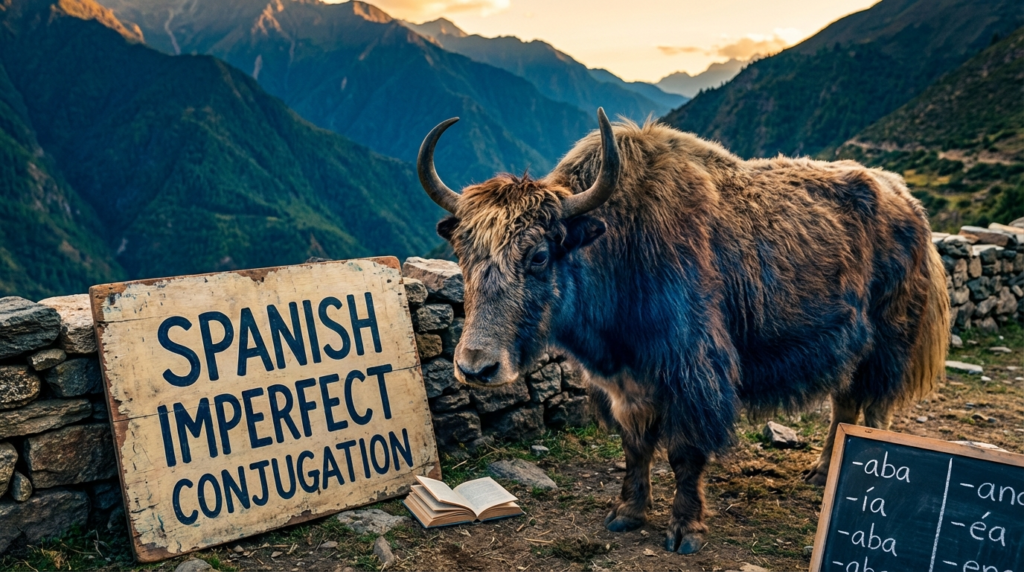
Good news: the imperfect is one of the friendliest past tenses in Spanish. Regular verbs use just two sets of endings:
| Subject | -ar Verbs | -er / -ir Verbs |
|---|---|---|
| yo | -aba | -ía |
| tú | -abas | -ías |
| él / ella / usted | -aba | -ía |
| nosotros / nosotras | -ábamos | -íamos |
| ellos / ellas / ustedes | -aban | -ían |
Mexican Spanish note: in everyday speech, you will usually focus on tú, usted, and ustedes. Textbooks often include vosotros forms like hablabais and comíais, but you do not need them to sound natural in Mexico.
Hablar
hablaba = I/he/she was speaking
hablabas = you were speaking
hablábamos = we were speaking
Spanish: Cuando trabajaba desde casa, hablaba por teléfono todo el día.
English: When I worked from home, I used to talk on the phone all day.
Comer
comía = I/he/she was eating
comías = you were eating
comíamos = we were eating
Spanish: Antes comíamos en ese mercado cada viernes.
English: We used to eat at that market every Friday.
Vivir
vivía = I/he/she was living
vivías = you were living
vivíamos = we were living
Spanish: Vivíamos cerca del centro y caminábamos al trabajo.
English: We used to live near downtown and walk to work.
One small gift from the grammar gods: most stem-changing verbs stop being dramatic in the imperfect. dormir → dormía, pedir → pedía, querer → quería. No weird stem change, just normal endings.
The Only 3 Irregular Verbs In The Imperfect
Yes, only three. Compared with other Spanish tenses, this is practically a spa day.
| Subject | Ser (to be) | Ir (to go) | Ver (to see) |
|---|---|---|---|
| yo | era | iba | veía |
| tú | eras | ibas | veías |
| él / ella / usted | era | iba | veía |
| nosotros / nosotras | éramos | íbamos | veíamos |
| ellos / ellas / ustedes | eran | iban | veían |
Ser: De joven, yo era muy impaciente. = When I was younger, I was very impatient.
Ir: Íbamos al tianguis los sábados por la mañana. = We used to go to the street market on Saturday mornings.
Ver: Veía esa serie mientras cenaba. = I used to watch that show while I was eating dinner.
Accent reminder: do not drop the accents in éramos, íbamos, veíamos, comíamos, or vivíamos. Those little marks are doing real work.
When To Use The Imperfect
Past Habits And Routines
Use the imperfect for things people did regularly in the past.
Spanish: Siempre tomaba café antes de entrar a la oficina.
English: I always used to drink coffee before going into the office.
Spanish: Mis padres cenaban tarde entre semana.
English: My parents used to eat dinner late during the week.
Ongoing Actions In The Past
Use it for something that was in progress. Very often, another verb in the preterite interrupts it.
Spanish: Leía un correo cuando sonó el teléfono.
English: I was reading an email when the phone rang.
Spanish: Caminábamos al metro cuando empezó a llover.
English: We were walking to the subway when it started to rain.
Descriptions And Scene-Setting
Use the imperfect to describe what things were like: weather, rooms, people, mood, traffic, chaos, the usual.
Spanish: El departamento era pequeño, pero tenía mucha luz.
English: The apartment was small, but it had a lot of light.
Spanish: Hacía calor y las calles estaban vacías.
English: It was hot, and the streets were empty.
Age, Time, And Other Background Facts
Spanish usually uses the imperfect for age and time in the past.
Spanish: Tenía veinticinco años cuando conseguí mi primer trabajo serio.
English: I was twenty-five when I got my first serious job.
Spanish: Eran las seis y todavía no llegaba nadie.
English: It was six o’clock and nobody had arrived yet.
Feelings, Thoughts, And Mental States
Use it for ongoing emotions, opinions, desires, and states of mind in the past.
Spanish: Estaba cansado, pero quería terminar el proyecto.
English: I was tired, but I wanted to finish the project.
Spanish: No sabía la respuesta, pero entendía la pregunta.
English: I didn’t know the answer, but I understood the question.
The imperfect paints the background. The preterite throws the chair through the window.
Useful Phrases That Often Show Up With The Imperfect
| Spanish Phrase | English Meaning | Example |
|---|---|---|
| de niño / de niña | as a child | De niño, jugaba fútbol en la calle. = As a child, I used to play soccer in the street. |
| antes | before / in the past | Antes vivíamos más cerca del trabajo. = We used to live closer to work. |
| siempre | always | Siempre llegaba temprano a clase. = He always used to arrive early to class. |
| a menudo | often | A menudo cenábamos con mis suegros. = We often used to have dinner with my in-laws. |
| todos los días | every day | Todos los días corría media hora. = Every day, I used to run for half an hour. |
| cada verano | every summer | Cada verano íbamos a Oaxaca. = Every summer, we used to go to Oaxaca. |
| mientras | while | Mientras yo cocinaba, ella ponía la mesa. = While I was cooking, she was setting the table. |
| cuando era joven | when I was young | Cuando era joven, no me gustaba madrugar. = When I was young, I didn’t like getting up early. |
Imperfect Vs Preterite: The Fast Way To See The Difference
These two past tenses work together all the time. The imperfect gives background, repetition, or an action in progress. The preterite gives a completed event.
| Imperfect | Meaning | Preterite | Meaning |
|---|---|---|---|
| Siempre cenábamos tarde. | We used to eat dinner late. | Anoche cenamos tarde. | We ate dinner late last night. |
| Leía cuando llegaste. | I was reading when you arrived. | Leí el informe en una hora. | I read the report in an hour. |
| Hacía frío. | It was cold. | Empezó a hacer frío. | It started to get cold. |
| Vivíamos en Guadalajara. | We used to live in Guadalajara / were living there. | Vivimos en Guadalajara un año. | We lived in Guadalajara for a year. |
| Era simpático. | He was nice / used to be nice. | Fue amable conmigo. | He was kind to me that time. |
Another helpful note: Spanish often uses the simple imperfect where English uses “was doing.” So leía can already mean “I was reading.” You do not always need estaba leyendo. Spanish likes efficiency more than your old workbook did.
Common Mistakes And Easy Fixes
- Mistake: Using the preterite for a habit.
Fix: Use the imperfect for repeated past actions. Todos los domingos visitábamos a mi abuela. = Every Sunday, we used to visit my grandma. - Mistake: Forgetting accent marks.
Fix: Watch forms like hablábamos, comíamos, íbamos, and éramos. - Mistake: Expecting stem changes in the imperfect.
Fix: Most verbs behave normally: dormía, not duermía; pedía, not pidía. - Mistake: Treating fui and iba as interchangeable.
Fix: iba = was going / used to go; fui = went. - Mistake: Memorizing vosotros before forms you will actually use in Mexico.
Fix: Prioritize yo, tú, usted, nosotros, ustedes.
Practice Section
Try these before peeking at the answers.
- Yo ________ (vivir) en Puebla cuando tenía veinte años.
- Nosotros siempre ________ (comer) en casa de mi tía los viernes.
- Mientras ella ________ (leer), yo ________ (preparar) el café.
- De niño, mi hermano no ________ (querer) levantarse temprano.
- ¿Qué hora ________ cuando saliste?
- Antes, ustedes ________ (ir) al gimnasio después del trabajo.
- El departamento ________ (ser) pequeño, pero bonito.
- Yo ________ (ver) las noticias cada mañana.
Answer Key
- vivía = I was living / used to live
- comíamos = we used to eat
- leía, preparaba = was reading, was making
- quería = wanted
- era = it was
- iban = used to go / were going
- era = was
- veía = used to watch / saw repeatedly
Quick Reference Summary
- The imperfect is used for background, habits, repeated actions, descriptions, time, age, and ongoing past situations.
- Regular endings are -aba, -abas, -aba, -ábamos, -aban for -ar verbs and -ía, -ías, -ía, -íamos, -ían for -er and -ir verbs.
- The only irregular verbs are ser, ir, and ver.
- Many English “used to” and “was/were doing” ideas map to the imperfect in Spanish.
- In Mexico, focus on usted and ustedes; vosotros is not essential for speaking naturally.
- If the action feels completed and specific, check whether the preterite is the better choice.
Final Yak
If you can hear “used to,” “was doing,” or “that’s how things were,” the imperfect is probably the tense you want. Learn the regular endings, memorize era, iba, and veía, and then practice with real sentences instead of staring at charts like they owe you rent.