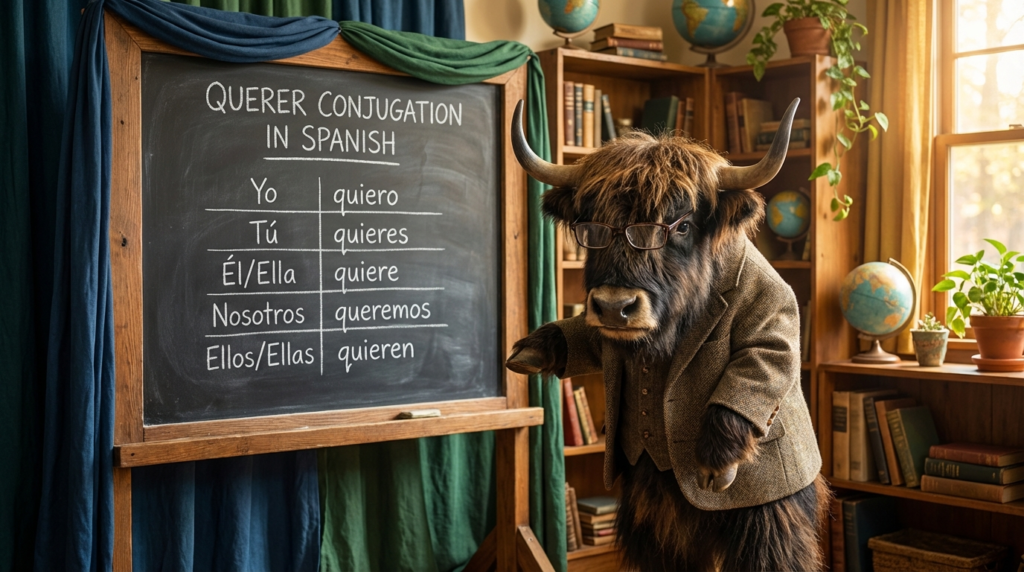
Spanish Estar Conjugation Made Easy: Charts, Uses, And Real Examples
Learn how to use estar without turning every sentence into a tiny identity crisis.
I still remember the first week I tried to say I was tired and blurted out soy cansado. The room went quiet for one beat, then my teacher smiled and explained that I had not described my Monday. I had described my entire personality. Rude, yes. Helpful, also yes.
That is why estar matters so much. It helps you talk about how someone feels, where someone is, and what is happening right now. Once you get the main patterns down, this verb stops feeling wild and starts feeling very usable.
Yak Box: The 3 Big Jobs Of Estar
- State or condition — Estoy cansado. = I am tired.
- Location — El café está aquí. = The café is here.
- Action in progress — Estamos estudiando. = We are studying.
In everyday Mexican Spanish, these are the forms you will use most: yo, tú, usted, nosotros, ustedes. You will still see vosotros in big conjugation charts, because textbooks enjoy making life interesting.
Present Tense Estar Chart
Start here. The present tense of estar carries a lot of daily conversation all by itself.
| Subject | Estar Form | English Meaning | Example |
|---|---|---|---|
| yo | estoy | I am | Estoy en casa. = I am at home. |
| tú | estás | you are | ¿Estás listo? = Are you ready? |
| él / ella / usted | está | he is / she is / you are | Ella está ocupada. = She is busy. |
| nosotros / nosotras | estamos | we are | Estamos bien. = We are fine. |
| ustedes / ellos / ellas | están | you all are / they are | Ustedes están aquí. = You all are here. |
Quick pattern check: the accent marks matter. estás, está, and están all need them. Tiny marks, big consequences.
Feelings
Estoy feliz = I am happy.
Hoy estoy feliz porque terminé el proyecto. = Today I am happy because I finished the project.
Location
Está en la oficina = He or she is at the office.
Mi jefe está en la oficina desde las ocho. = My boss is at the office since eight.
Right Now Action
Estoy trabajando = I am working.
No puedo hablar; estoy trabajando. = I cannot talk; I am working.
When To Use Estar In Spanish
Beginners often get stuck because they memorize charts but never learn the jobs the verb actually does. So here are the jobs. Much more useful than staring at six forms and hoping for spiritual enlightenment.
| Pattern | Meaning | Example 1 | Example 2 |
|---|---|---|---|
| estar + adjective | state or condition | Estoy cansado. = I am tired. | La sopa está fría. = The soup is cold. |
| estar + en + place | location | Estamos en México. = We are in Mexico. | ¿Dónde está el baño? = Where is the bathroom? |
| estar + gerund | action in progress | Estoy leyendo. = I am reading. | Ellos están esperando. = They are waiting. |
| estar de + noun | common fixed expressions | Estoy de acuerdo. = I agree. | Mi mamá está de vacaciones. = My mom is on vacation. |
| estar + result adjective | resulting condition | La puerta está abierta. = The door is open. | El restaurante está cerrado. = The restaurant is closed. |
Useful shortcut: if the idea is “how someone or something is right now” or “where it is,” estar is usually a strong bet.
Past, Future, And Other Estar Forms You Will Actually Need
You do not need all the fancy literary tenses on day one. You do need the forms that show up in real conversation, stories, texts, meetings, travel, and everyday adult life.
Preterite Vs Imperfect
These two cause drama. Here is the easy version:
- Preterite tells you how someone or something was at a specific completed moment.
- Imperfect describes an ongoing past state, background, or repeated situation.
| Subject | Preterite | Imperfect | Example |
|---|---|---|---|
| yo | estuve | estaba | Ayer estuve muy nervioso. = Yesterday I was very nervous. Cuando trabajaba allí, siempre estaba cansado. = When I worked there, I was always tired. |
| tú | estuviste | estabas | ¿Estuviste en la reunión? = Were you at the meeting? Estabas muy callado. = You were very quiet. |
| él / ella / usted | estuvo | estaba | La tienda estuvo cerrada ayer. = The store was closed yesterday. Mi abuelo estaba enfermo. = My grandfather was sick. |
| nosotros | estuvimos | estábamos | Estuvimos en Guadalajara. = We were in Guadalajara. Estábamos en casa cuando llamó. = We were at home when he called. |
| ustedes / ellos / ellas | estuvieron | estaban | Ellos estuvieron listos a tiempo. = They were ready on time. Las llaves estaban aquí. = The keys were here. |
Future And Conditional
| Subject | Future | Conditional | Example |
|---|---|---|---|
| yo | estaré | estaría | Mañana estaré en la oficina. = Tomorrow I will be at the office. Yo estaría más tranquilo con un plan. = I would be calmer with a plan. |
| tú | estarás | estarías | ¿Estarás libre mañana? = Will you be free tomorrow? ¿Estarías de acuerdo? = Would you agree? |
| él / ella / usted | estará | estaría | Ella estará lista pronto. = She will be ready soon. Usted estaría cómodo aquí. = You would be comfortable here. |
| nosotros | estaremos | estaríamos | Estaremos en contacto. = We will be in touch. Estaríamos mejor con tiempo. = We would be better off with time. |
| ustedes / ellos / ellas | estarán | estarían | Estarán aquí a las seis. = They will be here at six. Ustedes estarían felices allá. = You all would be happy there. |
Subjunctive You Will See Early
Yes, the subjunctive shows up early because Spanish enjoys keeping beginners humble. With estar, the present subjunctive is common after doubt, emotion, and recommendation.
| Subject | Present Subjunctive | English Meaning | Example |
|---|---|---|---|
| yo | esté | that I be | Espero que yo no esté tarde. = I hope I am not late. |
| tú | estés | that you be | Quiero que estés aquí. = I want you to be here. |
| él / ella / usted | esté | that he, she, you be | Dudo que ella esté lista. = I doubt she is ready. |
| nosotros | estemos | that we be | Es bueno que estemos juntos. = It is good that we are together. |
| ustedes / ellos / ellas | estén | that you all, they be | Ojalá estén bien. = I hope you all are well. |
Imperfect subjunctive: estuviera, estuvieras, estuviera, estuviéramos, estuvieran.
Si yo estuviera en tu lugar, esperaría. = If I were in your place, I would wait.
Commands With Estar
| Command | Form | English Meaning | Example |
|---|---|---|---|
| tú affirmative | está | be / stay | Está tranquilo. = Be calm. |
| tú negative | no estés | do not be | No estés nervioso. = Do not be nervous. |
| usted affirmative | esté | be | Esté listo a las nueve. = Be ready at nine. |
| usted negative | no esté | do not be | No esté aquí mañana. = Do not be here tomorrow. |
| nosotros | estemos / no estemos | let us be / let us not be | Estemos atentos. = Let us stay alert. |
| ustedes | estén / no estén | be / do not be | Estén listos. = Be ready. |
Compound Forms You Should Recognize
The past participle of estar is estado, which means been in forms like “have been.”
- he estado = I have been — He estado muy ocupado. = I have been very busy.
- había estado = I had been — Había estado allí antes. = I had been there before.
- haya estado = that I have been — Dudo que haya estado listo. = I doubt he has been ready.
Useful Estar Phrases And Real-Life Sentences
These are the kinds of phrases adults actually use in texts, meetings, dating, travel, work, family chats, and random life chaos.
- Estoy bien = I am fine.
Gracias, estoy bien. = Thanks, I am fine. - ¿Cómo estás? = How are you?
Hola, ¿cómo estás hoy? = Hi, how are you today? - Estoy cansado / cansada = I am tired.
Después del vuelo, estoy cansada. = After the flight, I am tired. - Está aquí = He, she, or it is here.
Tu paquete ya está aquí. = Your package is already here. - Estamos listos = We are ready.
Estamos listos para salir. = We are ready to leave. - Estoy buscando = I am looking for.
Estoy buscando un departamento. = I am looking for an apartment. - Está abierto = It is open.
¿El banco está abierto? = Is the bank open? - Está cerrado = It is closed.
Lo siento, ya está cerrado. = Sorry, it is already closed. - Estoy de acuerdo = I agree.
Estoy de acuerdo contigo. = I agree with you. - Está de vacaciones = He or she is on vacation.
Mi jefe está de vacaciones esta semana. = My boss is on vacation this week. - Estamos en camino = We are on the way.
Tranquilo, estamos en camino. = Relax, we are on the way. - Están trabajando = They are working.
No pueden salir; están trabajando. = They cannot leave; they are working.
Ser Vs Estar In One Clean Snapshot
You cannot really learn estar without at least peeking at ser. Here is the version your brain can keep before coffee.
| Spanish | English Meaning | Why | Example |
|---|---|---|---|
| Soy mexicano. | I am Mexican. | identity | Soy mexicano, pero vivo en Monterrey. = I am Mexican, but I live in Monterrey. |
| Estoy en México. | I am in Mexico. | location | Ahora estoy en México por trabajo. = Right now I am in Mexico for work. |
| Soy aburrido. | I am boring. | personality or lasting trait | No soy aburrido; solo estoy cansado. = I am not boring; I am just tired. |
| Estoy aburrido. | I am bored. | temporary state | Estoy aburrido en esta junta. = I am bored in this meeting. |
| La fiesta es en mi casa. | The party is at my house. | location of an event uses ser | La reunión es en la oficina. = The meeting is at the office. |
| La oficina está en el centro. | The office is downtown. | physical location uses estar | La oficina está cerca del metro. = The office is near the subway. |
Common Mistakes And Fast Fixes
- Mistake: Soy cansado.
Fix: Estoy cansado. = I am tired. - Mistake: Soy en la oficina.
Fix: Estoy en la oficina. = I am at the office. - Mistake: Estoy mexicano.
Fix: Soy mexicano. = I am Mexican. - Mistake: La boda está en junio.
Fix: La boda es en junio. = The wedding is in June. Events use ser. - Mistake: forgetting the accent in está or están.
Fix: write the accent. Your future self will thank you.
Practice Section
Fill in each blank with the correct form of estar.
- Yo ______ en casa ahora.
- ¿Tú ______ listo para salir?
- Mis amigos ______ en el restaurante.
- Ayer nosotros ______ muy ocupados.
- Cuando era niño, siempre ______ cerca de mi abuela.
- Ojalá ustedes ______ bien.
- No ______ nervioso. Todo va a salir bien. (tú command)
- Mañana ella ______ en la oficina todo el día.
Answer Key
- estoy
- estás
- están
- estuvimos
- estaba
- estén
- no estés
- estará
Quick Reference Summary
- Present: estoy, estás, está, estamos, están
- Preterite stem: estuv- → estuve, estuviste, estuvo, estuvimos, estuvieron
- Imperfect: estaba, estabas, estaba, estábamos, estaban
- Future: estaré, estarás, estará, estaremos, estarán
- Conditional: estaría, estarías, estaría, estaríamos, estarían
- Present subjunctive: esté, estés, esté, estemos, estén
- Past participle: estado = been
- Gerund: estando = being
- Main uses: state, location, action in progress
A Curious Bit That Saves Mistakes
Some learners hear “temporary equals estar” and run with it a little too hard. Helpful rule, but not perfect rule. A building can be very permanent and still use estar for location: El museo está en el centro. = The museum is downtown. Meanwhile, an event uses ser: La conferencia es en el museo. = The conference is at the museum.
Also, Spanish uses estar muerto for “to be dead.” It is not temporary, obviously. Language likes patterns, but language also likes drama.
Final Yak
If you remember only one thing, remember this: estar usually answers “how is it right now?”, “where is it?”, or “what is happening?” Start with the present tense, learn a few high-frequency phrases, and then add the past and subjunctive forms as you meet them. That is how this verb becomes useful instead of just decorative chart furniture.