Chinese Snacks Vocabulary For Beginners
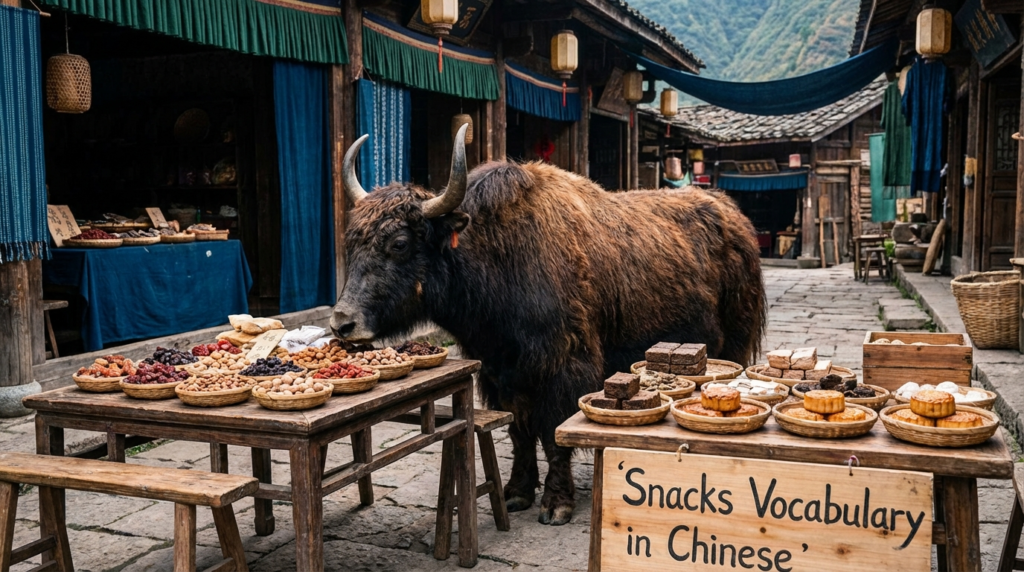
Learn how to talk about snacks in simplified Chinese: 零食 língshí, sweets, chips, nuts, fruit, and the phrases people actually use when they want a bite.
If you can say “I’m hungry” but freeze the second snacks appear, this lesson fixes that. Chinese has a lot of useful food words, and snack vocabulary comes up fast in shops, at school, at work, and during those very serious late-night cupboard raids.
Below, you’ll learn high-use words for common snacks, plus handy phrases like “I want something sweet” and “Do you want a bag of chips?” Every item includes simplified Chinese, pinyin with tone marks, an English meaning, and a real sentence. Nice and practical. No heroic memorizing required.
Yak Tip
零食 língshí means “snacks” in general. 小吃 xiǎochī usually means “street snacks” or “small eats,” often the kind you buy fresh. They are cousins, not twins. Use the wrong one and people will still understand you, but your Chinese will sound a little wobbly.
Snack Words You’ll Use All The Time
零食 língshí
snacks
我包里有很多零食。
wǒ bāo lǐ yǒu hěn duō língshí.
I have a lot of snacks in my bag.
薯片 shǔpiàn
potato chips
他一边看电影一边吃薯片。
tā yìbiān kàn diànyǐng yìbiān chī shǔpiàn.
He eats potato chips while watching a movie.
饼干 bǐnggān
cookies; biscuits
这盒饼干很适合下午茶。
zhè hé bǐnggān hěn shìhé xiàwǔchá.
This box of cookies is great for afternoon tea.
糖 táng
candy; sugar
小孩子都喜欢吃糖。
xiǎoháizi dōu xǐhuān chī táng.
Kids all like eating candy.
巧克力 qiǎokèlì
chocolate
我想买一块巧克力。
wǒ xiǎng mǎi yí kuài qiǎokèlì.
I want to buy a bar of chocolate.
坚果 jiānguǒ
nuts
坚果吃起来香,而且很方便。
jiānguǒ chī qǐlái xiāng, érqiě hěn fāngbiàn.
Nuts taste fragrant and are very convenient.
爆米花 bàomǐhuā
popcorn
电影院的爆米花有点贵。
diànyǐngyuàn de bàomǐhuā yǒudiǎn guì.
The popcorn at the cinema is a bit expensive.
果冻 guǒdòng
jelly
冰过的果冻更好吃。
bīng guò de guǒdòng gèng hǎochī.
Chilled jelly tastes better.
Useful Phrases For Talking About Snacks
- 你想吃点零食吗? nǐ xiǎng chī diǎn língshí ma? — Do you want some snacks?
你想吃点零食吗?我这里有薯片。
nǐ xiǎng chī diǎn língshí ma? wǒ zhèlǐ yǒu shǔpiàn.
Do you want some snacks? I have chips here. - 我想吃点甜的。 wǒ xiǎng chī diǎn tián de. — I want something sweet.
我想吃点甜的,比如巧克力。
wǒ xiǎng chī diǎn tián de, bǐrú qiǎokèlì.
I want something sweet, like chocolate. - 我想吃点咸的。 wǒ xiǎng chī diǎn xián de. — I want something salty.
看球的时候,我想吃点咸的。
kàn qiú de shíhou, wǒ xiǎng chī diǎn xián de.
When watching a game, I want something salty. - 这个很好吃。 zhège hěn hǎochī. — This is delicious.
这个海苔很好吃。
zhège hǎitái hěn hǎochī.
This seaweed snack is delicious. - 这个太甜了。 zhège tài tián le. — This is too sweet.
这块蛋糕太甜了。
zhè kuài dàngāo tài tián le.
This cake is too sweet. - 这个有点辣。 zhège yǒudiǎn là. — This is a little spicy.
这个辣条有点辣。
zhège làtiáo yǒudiǎn là.
This spicy gluten snack is a little spicy. - 给我一包薯片。 gěi wǒ yì bāo shǔpiàn. — Give me a bag of chips.
给我一包薯片和一瓶水。
gěi wǒ yì bāo shǔpiàn hé yì píng shuǐ.
Give me a bag of chips and a bottle of water. - 我不太吃零食。 wǒ bú tài chī língshí. — I don’t really eat snacks.
晚上我不太吃零食。
wǎnshang wǒ bú tài chī língshí.
I don’t really eat snacks at night. - 你最喜欢什么零食? nǐ zuì xǐhuān shénme língshí? — What snack do you like most?
你最喜欢什么零食?
nǐ zuì xǐhuān shénme língshí?
What snack do you like most? - 我们去便利店买点吃的吧。 wǒmen qù biànlìdiàn mǎi diǎn chī de ba. — Let’s go buy something to eat at the convenience store.
电影开始前,我们去便利店买点吃的吧。
diànyǐng kāishǐ qián, wǒmen qù biànlìdiàn mǎi diǎn chī de ba.
Let’s go buy something to eat at the convenience store before the movie starts. - 我带了一些零食来。 wǒ dài le yìxiē língshí lái. — I brought some snacks.
我带了一些零食来,大家一起吃吧。
wǒ dài le yìxiē língshí lái, dàjiā yìqǐ chī ba.
I brought some snacks, let’s all eat together. - 别吃太多。 bié chī tài duō. — Don’t eat too much.
这些糖很好吃,但是别吃太多。
zhèxiē táng hěn hǎochī, dànshì bié chī tài duō.
These candies are tasty, but don’t eat too many.
Everyday Packaged Snacks
| Hanzi | Pinyin | Meaning | Example (ZH) | Example (Pinyin) | Translation (EN) |
|---|---|---|---|---|---|
| 薯片 | shǔpiàn | potato chips | 我买了一包薯片。 | wǒ mǎi le yì bāo shǔpiàn. | I bought a bag of chips. |
| 饼干 | bǐnggān | cookies; biscuits | 这家店的饼干很香。 | zhè jiā diàn de bǐnggān hěn xiāng. | The cookies in this shop smell great. |
| 爆米花 | bàomǐhuā | popcorn | 看电影时我们常吃爆米花。 | kàn diànyǐng shí wǒmen cháng chī bàomǐhuā. | We often eat popcorn while watching movies. |
| 海苔 | hǎitái | seaweed snack | 我妹妹很喜欢海苔。 | wǒ mèimei hěn xǐhuān hǎitái. | My younger sister really likes seaweed snacks. |
| 辣条 | làtiáo | spicy gluten snack | 他一吃辣条就停不下来。 | tā yì chī làtiáo jiù tíng bù xià lái. | Once he starts eating spicy gluten snacks, he can’t stop. |
| 锅巴 | guōba | crispy rice crackers | 锅巴又脆又香。 | guōba yòu cuì yòu xiāng. | Rice crackers are crunchy and fragrant. |
| 虾条 | xiātiáo | shrimp-flavored sticks | 小时候我常吃虾条。 | xiǎoshíhou wǒ cháng chī xiātiáo. | I often ate shrimp sticks when I was little. |
| 苏打饼干 | sūdá bǐnggān | crackers | 饿的时候我会吃几片苏打饼干。 | è de shíhou wǒ huì chī jǐ piàn sūdá bǐnggān. | When I’m hungry, I eat a few crackers. |
| 夹心饼干 | jiāxīn bǐnggān | sandwich cookies | 孩子们都爱夹心饼干。 | háizimen dōu ài jiāxīn bǐnggān. | Kids all love sandwich cookies. |
| 玉米片 | yùmǐpiàn | corn chips; corn flakes | 这包玉米片有点咸。 | zhè bāo yùmǐpiàn yǒudiǎn xián. | This bag of corn chips is a little salty. |
| 肉干 | ròugān | jerky | 路上带点肉干很方便。 | lùshang dài diǎn ròugān hěn fāngbiàn. | Taking some jerky on the road is very convenient. |
| 鱼干 | yúgān | dried fish snack | 这种鱼干味道很重。 | zhè zhǒng yúgān wèidào hěn zhòng. | This kind of dried fish snack has a strong taste. |
Sweet Snacks And Desserts
| Hanzi | Pinyin | Meaning | Example (ZH) | Example (Pinyin) | Translation (EN) |
|---|---|---|---|---|---|
| 糖 | táng | candy | 桌上有很多糖。 | zhuō shàng yǒu hěn duō táng. | There is a lot of candy on the table. |
| 巧克力 | qiǎokèlì | chocolate | 她最喜欢黑巧克力。 | tā zuì xǐhuān hēi qiǎokèlì. | She likes dark chocolate best. |
| 果冻 | guǒdòng | jelly | 小朋友很爱果冻。 | xiǎopéngyou hěn ài guǒdòng. | Children really love jelly. |
| 蛋糕 | dàngāo | cake | 下午茶我想吃一小块蛋糕。 | xiàwǔchá wǒ xiǎng chī yì xiǎo kuài dàngāo. | I want to eat a small piece of cake at afternoon tea. |
| 冰淇淋 | bīngqílín | ice cream | 夏天吃冰淇淋真舒服。 | xiàtiān chī bīngqílín zhēn shūfu. | Eating ice cream in summer feels great. |
| 布丁 | bùdīng | pudding | 这个布丁很滑。 | zhège bùdīng hěn huá. | This pudding is very smooth. |
| 甜甜圈 | tiántiánquān | doughnut | 我早上买了一个甜甜圈。 | wǒ zǎoshang mǎi le yí gè tiántiánquān. | I bought a doughnut this morning. |
| 曲奇 | qǔqí | cookie | 这盒曲奇很适合送人。 | zhè hé qǔqí hěn shìhé sòng rén. | This box of cookies is good for giving as a gift. |
| 奶糖 | nǎitáng | milk candy | 奶糖吃起来很香甜。 | nǎitáng chī qǐlái hěn xiāngtián. | Milk candy tastes rich and sweet. |
| 山楂片 | shānzhāpiàn | haw flakes | 饭后吃点山楂片也不错。 | fànhòu chī diǎn shānzhāpiàn yě búcuò. | Eating some haw flakes after a meal is not bad either. |
| 蜜饯 | mìjiàn | candied fruit | 这种蜜饯有点甜。 | zhè zhǒng mìjiàn yǒudiǎn tián. | This candied fruit is a little sweet. |
| 果脯 | guǒfǔ | dried preserved fruit | 我妈妈喜欢买果脯。 | wǒ māma xǐhuān mǎi guǒfǔ. | My mom likes buying preserved dried fruit. |
Nuts, Seeds, And Fruit Snacks
| Hanzi | Pinyin | Meaning | Example (ZH) | Example (Pinyin) | Translation (EN) |
|---|---|---|---|---|---|
| 坚果 | jiānguǒ | nuts | 办公室里常有人吃坚果。 | bàngōngshì lǐ cháng yǒu rén chī jiānguǒ. | People in the office often eat nuts. |
| 花生 | huāshēng | peanuts | 这包花生很脆。 | zhè bāo huāshēng hěn cuì. | This bag of peanuts is very crunchy. |
| 瓜子 | guāzǐ | sunflower seeds | 春节时大家喜欢一边聊天一边嗑瓜子。 | chūnjié shí dàjiā xǐhuān yìbiān liáotiān yìbiān kē guāzǐ. | During Spring Festival, people like chatting while cracking sunflower seeds. |
| 开心果 | kāixīnguǒ | pistachios | 开心果不便宜,但是很好吃。 | kāixīnguǒ bú piányi, dànshì hěn hǎochī. | Pistachios are not cheap, but they’re tasty. |
| 核桃 | hétao | walnuts | 我爸爸喜欢吃核桃。 | wǒ bàba xǐhuān chī hétao. | My dad likes eating walnuts. |
| 腰果 | yāoguǒ | cashews | 腰果越吃越上瘾。 | yāoguǒ yuè chī yuè shàngyǐn. | Cashews get more addictive the more you eat them. |
| 葡萄干 | pútáogān | raisins | 我会把葡萄干加进酸奶里。 | wǒ huì bǎ pútáogān jiā jìn suānnǎi lǐ. | I add raisins to yogurt. |
| 红枣 | hóngzǎo | red dates; jujubes | 红枣也常当小零食吃。 | hóngzǎo yě cháng dāng xiǎo língshí chī. | Red dates are also often eaten as a small snack. |
| 芒果干 | mángguǒgān | dried mango | 我最近迷上了芒果干。 | wǒ zuìjìn mí shàng le mángguǒgān. | I’ve recently become obsessed with dried mango. |
| 香蕉片 | xiāngjiāopiàn | banana chips | 香蕉片甜甜脆脆的。 | xiāngjiāopiàn tiántián cuìcuì de. | Banana chips are sweet and crunchy. |
| 冻干草莓 | dònggān cǎoméi | freeze-dried strawberries | 冻干草莓很适合当办公室零食。 | dònggān cǎoméi hěn shìhé dāng bàngōngshì língshí. | Freeze-dried strawberries are great office snacks. |
| 果仁 | guǒrén | nut kernels | 这款巧克力里面有果仁。 | zhè kuǎn qiǎokèlì lǐmiàn yǒu guǒrén. | This chocolate has nuts inside. |
Fresh And Street-Style Snack Words
| Hanzi | Pinyin | Meaning | Example (ZH) | Example (Pinyin) | Translation (EN) |
|---|---|---|---|---|---|
| 小吃 | xiǎochī | street snack; small eat | 这条街上有很多小吃。 | zhè tiáo jiē shàng yǒu hěn duō xiǎochī. | There are many street snacks on this street. |
| 烤肠 | kǎocháng | grilled sausage | 放学后很多学生买烤肠。 | fàngxué hòu hěn duō xuéshēng mǎi kǎocháng. | Many students buy grilled sausage after school. |
| 茶叶蛋 | cháyèdàn | tea egg | 便利店里的茶叶蛋很受欢迎。 | biànlìdiàn lǐ de cháyèdàn hěn shòu huānyíng. | The tea eggs in convenience stores are very popular. |
| 烤红薯 | kǎo hóngshǔ | roasted sweet potato | 冬天吃烤红薯特别舒服。 | dōngtiān chī kǎo hóngshǔ tèbié shūfu. | Eating roasted sweet potato in winter feels especially comforting. |
| 糖葫芦 | tánghúlu | candied hawthorn skewer | 糖葫芦又酸又甜。 | tánghúlu yòu suān yòu tián. | Candied hawthorn skewers are both sour and sweet. |
| 手抓饼 | shǒuzhuābǐng | flaky flatbread snack | 我早上常买手抓饼。 | wǒ zǎoshang cháng mǎi shǒuzhuābǐng. | I often buy shouzhuabing in the morning. |
| 鸡蛋仔 | jīdànzǎi | egg waffle | 刚做好的鸡蛋仔特别香。 | gāng zuò hǎo de jīdànzǎi tèbié xiāng. | Freshly made egg waffles smell amazing. |
| 肉夹馍 | ròujiāmó | Chinese meat sandwich | 肉夹馍吃起来很满足。 | ròujiāmó chī qǐlái hěn mǎnzú. | Roujiamo feels very satisfying to eat. |
| 煎饼 | jiānbing | savory crepe | 我想加一个鸡蛋的煎饼。 | wǒ xiǎng jiā yí gè jīdàn de jiānbing. | I want a jianbing with an extra egg. |
| 饭团 | fàntuán | rice ball | 早上买一个饭团很方便。 | zǎoshang mǎi yí gè fàntuán hěn fāngbiàn. | Buying a rice ball in the morning is very convenient. |
| 关东煮 | guāndōngzhǔ | oden-style snack | 下雨天我想吃关东煮。 | xiàyǔtiān wǒ xiǎng chī guāndōngzhǔ. | On rainy days, I want to eat oden. |
| 烤玉米 | kǎo yùmǐ | grilled corn | 夜市里的烤玉米很香。 | yèshì lǐ de kǎo yùmǐ hěn xiāng. | The grilled corn at the night market smells great. |
Flavor Words That Help A Lot
- 甜 tián — sweet
这个饼干太甜了。
zhège bǐnggān tài tián le.
This cookie is too sweet. - 咸 xián — salty
这包薯片有点咸。
zhè bāo shǔpiàn yǒudiǎn xián.
This bag of chips is a little salty. - 辣 là — spicy
我不能吃太辣的东西。
wǒ bù néng chī tài là de dōngxi.
I can’t eat food that is too spicy. - 酸 suān — sour
这个糖有一点酸。
zhège táng yǒu yìdiǎn suān.
This candy is a bit sour. - 脆 cuì — crispy; crunchy
我喜欢又脆又薄的薯片。
wǒ xǐhuān yòu cuì yòu báo de shǔpiàn.
I like chips that are crunchy and thin.
- 香 xiāng — fragrant; tasty-smelling
刚出炉的饼干很香。
gāng chūlú de bǐnggān hěn xiāng.
Freshly baked cookies smell great. - 苦 kǔ — bitter
这块黑巧克力有点苦。
zhè kuài hēi qiǎokèlì yǒudiǎn kǔ.
This dark chocolate is a little bitter. - 新鲜 xīnxiān — fresh
水果还是新鲜的最好吃。
shuǐguǒ háishi xīnxiān de zuì hǎochī.
Fruit still tastes best when it is fresh. - 软 ruǎn — soft
这种蛋糕很软。
zhè zhǒng dàngāo hěn ruǎn.
This kind of cake is very soft. - 硬 yìng — hard
这块糖太硬了。
zhè kuài táng tài yìng le.
This candy is too hard.
Common Variants And Handy Counters
| Pattern | Use | Example (ZH) | Example (Pinyin) | Translation (EN) |
|---|---|---|---|---|
| 一包 yì bāo | one bag or pack | 我买了一包薯片。 | wǒ mǎi le yì bāo shǔpiàn. | I bought one bag of chips. |
| 一盒 yì hé | one box | 桌上有一盒饼干。 | zhuō shàng yǒu yì hé bǐnggān. | There is one box of cookies on the table. |
| 一块 yí kuài | one piece | 给我一块巧克力。 | gěi wǒ yí kuài qiǎokèlì. | Give me one piece of chocolate. |
| 一袋 yí dài | one pouch or bag | 我带了一袋坚果。 | wǒ dài le yí dài jiānguǒ. | I brought a bag of nuts. |
| 一点 yìdiǎn | a little bit | 我只想吃一点甜的。 | wǒ zhǐ xiǎng chī yìdiǎn tián de. | I only want to eat a little something sweet. |
| 吃点 chī diǎn | eat a little | 先吃点零食吧。 | xiān chī diǎn língshí ba. | Eat a few snacks first. |
Common Mistakes And Fast Fixes
- 零食 língshí is the general word for snacks. Use it for packaged snacks and casual snack talk.
- 小吃 xiǎochī usually points to fresh street-style snacks, not your average office drawer cookies.
- 甜的 tián de means “sweet things,” and 咸的 xián de means “salty things.” The little 的 de matters.
- 好吃 hǎochī means delicious. It is one of the most useful food words in Chinese, so yes, it earns its fame.
Quick Practice
- How would you say “I want something salty”?
我想吃点咸的。 wǒ xiǎng chī diǎn xián de. - How would you ask “Do you want some snacks?”
你想吃点零食吗? nǐ xiǎng chī diǎn língshí ma? - How would you say “This popcorn is delicious”?
这个爆米花很好吃。 zhège bàomǐhuā hěn hǎochī. - How would you say “I bought a bag of chips”?
我买了一包薯片。 wǒ mǎi le yì bāo shǔpiàn. - How would you say “I don’t really eat snacks at night”?
晚上我不太吃零食。 wǎnshang wǒ bú tài chī língshí.
Final Yak Box
The easiest way to sound natural is to learn snack words in chunks, not as lonely little dictionary entries. Start with 零食 língshí, 薯片 shǔpiàn, 饼干 bǐnggān, 巧克力 qiǎokèlì, 坚果 jiānguǒ, and the phrases 我想吃点甜的 wǒ xiǎng chī diǎn tián de and 这个很好吃 zhège hěn hǎochī. That small set already gets you surprisingly far.
And yes, once you learn 辣条 làtiáo, there is a decent chance you will start noticing it everywhere. Chinese snack vocabulary has that effect. Sneaky, crunchy, delicious.