Chinese Recess Vocabulary: 50+ Easy Words And Phrases For Beginners
Talk about recess in simplified Chinese with useful playground words, quick phrases, and real-life school examples. Topic: 课间 kèjiān, 休息时间 xiūxi shíjiān.
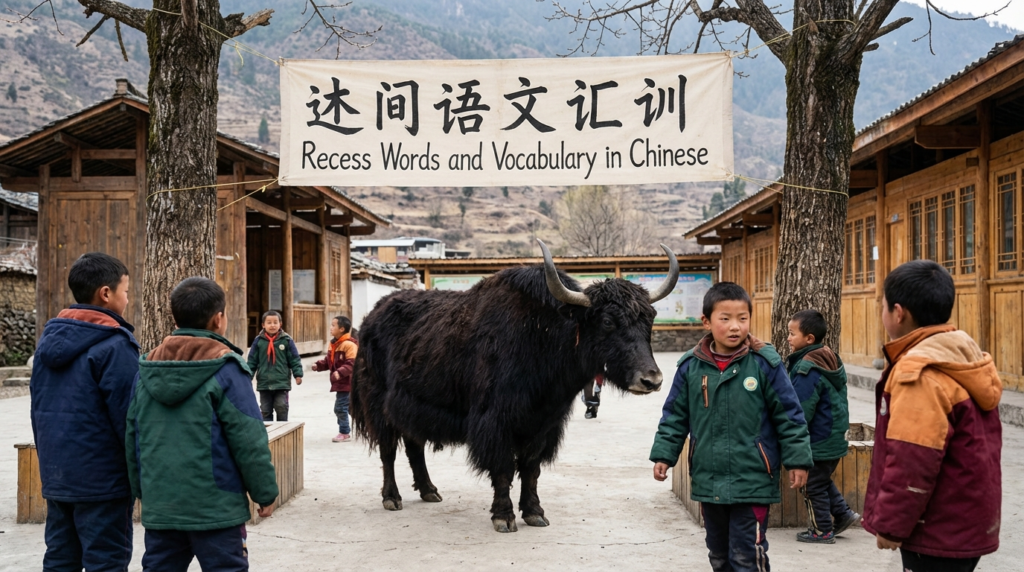
Recess is where textbook Chinese meets actual kid energy. Nobody is calmly reciting grammar while sprinting across the 操场 cāochǎng. They are shouting, asking friends to play, lining up badly, and trying to finish snacks before the bell ruins everything.
This guide teaches the most useful recess vocabulary in simplified Chinese, with pinyin, meanings, and example sentences that sound like real school life. You will get words for places, people, games, actions, rules, and those tiny dramatic moments like “Hurry up” and “The bell rang.”
课间
kèjiān
recess; between classes
现在是课间 kèjiān,我们出去吧。
Xiànzài shì kèjiān, wǒmen chūqù ba.
It is recess now, let’s go out.
下课
xiàkè
class is over
老师一说下课 xiàkè,大家就站起来了。
Lǎoshī yì shuō xiàkè, dàjiā jiù zhàn qǐlái le.
As soon as the teacher said class was over, everyone stood up.
操场
cāochǎng
playground; sports field
我们去操场 cāochǎng 跑步吧。
Wǒmen qù cāochǎng pǎobù ba.
Let’s go run on the playground.
朋友
péngyou
friend
我和朋友 péngyou 一起跳绳。
Wǒ hé péngyou yìqǐ tiàoshéng.
I jump rope with my friend.
排队
páiduì
line up
回教室前要排队 páiduì。
Huí jiàoshì qián yào páiduì.
You need to line up before going back to the classroom.
跳绳
tiàoshéng
jump rope
你会跳绳 tiàoshéng 吗?
Nǐ huì tiàoshéng ma?
Can you jump rope?
铃声
língshēng
bell sound
听到铃声 língshēng 就要回去。
Tīngdào língshēng jiù yào huíqù.
When you hear the bell, you need to go back.
Useful Phrases And Real-Life Sentences
- 现在下课了 xiànzài xiàkè le — Class is over now.
现在下课了 xiànzài xiàkè le,我们去外面吧。
Xiànzài xiàkè le, wǒmen qù wàimiàn ba.
Class is over now, let’s go outside. - 一起玩吧 yìqǐ wán ba — Let’s play together.
我们一起玩吧 yìqǐ wán ba。
Wǒmen yìqǐ wán ba.
Let’s play together. - 你想玩什么 nǐ xiǎng wán shénme — What do you want to play?
你想玩什么 nǐ xiǎng wán shénme,跳绳还是捉迷藏?
Nǐ xiǎng wán shénme, tiàoshéng háishì zhuōmícáng?
What do you want to play, jump rope or hide-and-seek? - 我们去操场吧 wǒmen qù cāochǎng ba — Let’s go to the playground.
课间 kèjiān 很短,我们去操场吧 wǒmen qù cāochǎng ba。
Kèjiān hěn duǎn, wǒmen qù cāochǎng ba.
Recess is short, let’s go to the playground. - 快一点 kuài yìdiǎn — Hurry up.
快一点 kuài yìdiǎn,铃声快响了。
Kuài yìdiǎn, língshēng kuài xiǎng le.
Hurry up, the bell is about to ring. - 等一下 děng yíxià — Wait a second.
等一下 děng yíxià,我还没穿好外套。
Děng yíxià, wǒ hái méi chuān hǎo wàitào.
Wait a second, I have not put on my coat yet. - 轮到我了 lúndào wǒ le — It’s my turn.
轮到我了 lúndào wǒ le,让我试一次。
Lúndào wǒ le, ràng wǒ shì yí cì.
It’s my turn, let me try once. - 该回教室了 gāi huí jiàoshì le — It’s time to go back to the classroom.
铃声响了 língshēng xiǎng le,该回教室了 gāi huí jiàoshì le。
Língshēng xiǎng le, gāi huí jiàoshì le.
The bell rang, it’s time to go back to the classroom. - 不要跑太快 búyào pǎo tài kuài — Don’t run too fast.
走廊里 zǒuláng lǐ 不要跑太快 búyào pǎo tài kuài。
Zǒuláng lǐ búyào pǎo tài kuài.
Don’t run too fast in the hallway. - 老师来了 lǎoshī lái le — The teacher is coming.
老师来了 lǎoshī lái le,快排队。
Lǎoshī lái le, kuài páiduì.
The teacher is coming, line up quickly. - 我想喝水 wǒ xiǎng hē shuǐ — I want to drink water.
跑完步后 pǎo wán bù hòu,我想喝水 wǒ xiǎng hē shuǐ。
Pǎo wán bù hòu, wǒ xiǎng hē shuǐ.
After running, I want to drink water. - 我们再玩一次 wǒmen zài wán yí cì — Let’s play one more time.
还有一分钟 hái yǒu yì fēnzhōng,我们再玩一次 wǒmen zài wán yí cì。
Hái yǒu yì fēnzhōng, wǒmen zài wán yí cì.
There is still one minute left, let’s play one more time.
Core Recess Words By Category
Places And People
| Hanzi | Pinyin | Meaning | Example (ZH) | Example (Pinyin) | Translation (EN) |
|---|---|---|---|---|---|
| 课间 | kèjiān | recess; between classes | 课间 kèjiān 大家都很开心。 | Kèjiān dàjiā dōu hěn kāixīn. | Everyone is happy during recess. |
| 休息时间 | xiūxi shíjiān | break time | 休息时间 xiūxi shíjiān 只有十分钟。 | Xiūxi shíjiān zhǐyǒu shí fēnzhōng. | Break time is only ten minutes. |
| 操场 | cāochǎng | playground; sports field | 操场 cāochǎng 上有很多学生。 | Cāochǎng shàng yǒu hěn duō xuésheng. | There are many students on the playground. |
| 教室 | jiàoshì | classroom | 下课后 xiàkè hòu,我先回教室 jiàoshì。 | Xiàkè hòu, wǒ xiān huí jiàoshì. | After class, I first go back to the classroom. |
| 走廊 | zǒuláng | hallway | 走廊 zǒuláng 里不能大声喊。 | Zǒuláng lǐ bù néng dàshēng hǎn. | You cannot shout loudly in the hallway. |
| 楼梯 | lóutī | stairs | 楼梯 lóutī 上要慢一点。 | Lóutī shàng yào màn yìdiǎn. | You need to be slower on the stairs. |
| 饮水机 | yǐnshuǐjī | water dispenser | 我去饮水机 yǐnshuǐjī 那边喝水。 | Wǒ qù yǐnshuǐjī nàbiān hē shuǐ. | I am going to the water dispenser to drink water. |
| 厕所 | cèsuǒ | restroom | 课间 kèjiān 我先去厕所 cèsuǒ。 | Kèjiān wǒ xiān qù cèsuǒ. | During recess I am going to the restroom first. |
| 同学 | tóngxué | classmate | 我的同学 tóngxué 喜欢打篮球。 | Wǒ de tóngxué xǐhuan dǎ lánqiú. | My classmate likes to play basketball. |
| 朋友 | péngyou | friend | 朋友 péngyou 叫我一起玩。 | Péngyou jiào wǒ yìqǐ wán. | My friend asked me to play together. |
| 老师 | lǎoshī | teacher | 老师 lǎoshī 让我们排队。 | Lǎoshī ràng wǒmen páiduì. | The teacher tells us to line up. |
| 值日生 | zhírìshēng | student on duty | 今天的值日生 zhírìshēng 在整理桌子。 | Jīntiān de zhírìshēng zài zhěnglǐ zhuōzi. | The student on duty today is tidying the desks. |
Actions And Games
| Hanzi | Pinyin | Meaning | Example (ZH) | Example (Pinyin) | Translation (EN) |
|---|---|---|---|---|---|
| 玩 | wán | play | 我们出去玩 wán 吧。 | Wǒmen chūqù wán ba. | Let’s go outside and play. |
| 跑步 | pǎobù | run | 他们在操场 cāochǎng 上跑步 pǎobù。 | Tāmen zài cāochǎng shàng pǎobù. | They are running on the playground. |
| 跳绳 | tiàoshéng | jump rope | 我会跳绳 tiàoshéng,你呢? | Wǒ huì tiàoshéng, nǐ ne? | I can jump rope, what about you? |
| 踢足球 | tī zúqiú | play soccer | 男孩们在踢足球 tī zúqiú。 | Nánháimen zài tī zúqiú. | The boys are playing soccer. |
| 打篮球 | dǎ lánqiú | play basketball | 下课后 xiàkè hòu,他常常打篮球 dǎ lánqiú。 | Xiàkè hòu, tā chángcháng dǎ lánqiú. | After class, he often plays basketball. |
| 捉迷藏 | zhuōmícáng | play hide-and-seek | 我们在树旁边玩捉迷藏 zhuōmícáng。 | Wǒmen zài shù pángbiān wán zhuōmícáng. | We play hide-and-seek by the tree. |
| 追 | zhuī | chase | 不要在走廊 zǒuláng 里互相追 zhuī。 | Búyào zài zǒuláng lǐ hùxiāng zhuī. | Do not chase each other in the hallway. |
| 聊天 | liáotiān | chat | 她喜欢和朋友 péngyou 聊天 liáotiān。 | Tā xǐhuan hé péngyou liáotiān. | She likes chatting with friends. |
| 休息 | xiūxi | rest | 跑累了就休息 xiūxi 一下。 | Pǎo lèi le jiù xiūxi yíxià. | If you get tired from running, rest for a bit. |
| 喝水 | hē shuǐ | drink water | 运动后 yùndòng hòu 记得喝水 hē shuǐ。 | Yùndòng hòu jìde hē shuǐ. | Remember to drink water after exercise. |
| 吃点心 | chī diǎnxīn | eat a snack | 有些学生课间 kèjiān 会吃点心 chī diǎnxīn。 | Yǒuxiē xuésheng kèjiān huì chī diǎnxīn. | Some students eat a snack during recess. |
| 看书 | kàn shū | read a book | 我不想跑,我想看书 kàn shū。 | Wǒ bù xiǎng pǎo, wǒ xiǎng kàn shū. | I do not want to run, I want to read a book. |
| 画画 | huàhuà | draw | 她在教室 jiàoshì 里安静地画画 huàhuà。 | Tā zài jiàoshì lǐ ānjìng de huàhuà. | She is drawing quietly in the classroom. |
Objects And Time Words
| Hanzi | Pinyin | Meaning | Example (ZH) | Example (Pinyin) | Translation (EN) |
|---|---|---|---|---|---|
| 铃声 | língshēng | bell sound | 铃声 língshēng 一响,大家就停下来了。 | Língshēng yì xiǎng, dàjiā jiù tíng xiàlái le. | As soon as the bell rings, everyone stops. |
| 绳子 | shéngzi | rope | 这根绳子 shéngzi 是跳绳用的。 | Zhè gēn shéngzi shì tiàoshéng yòng de. | This rope is for jump rope. |
| 球 | qiú | ball | 谁的球 qiú 掉在地上了? | Shéi de qiú diào zài dìshang le? | Whose ball fell on the ground? |
| 外套 | wàitào | coat; jacket | 天气冷,别忘了穿外套 wàitào。 | Tiānqì lěng, bié wàng le chuān wàitào. | It is cold, do not forget to wear your coat. |
| 水杯 | shuǐbēi | water bottle; cup | 我的水杯 shuǐbēi 在桌上。 | Wǒ de shuǐbēi zài zhuō shàng. | My water bottle is on the desk. |
| 零食 | língshí | snack | 我今天带了小零食 língshí。 | Wǒ jīntiān dài le xiǎo língshí. | I brought a small snack today. |
| 时间 | shíjiān | time | 课间 kèjiān 时间 shíjiān 不长。 | Kèjiān shíjiān bù cháng. | Recess time is not long. |
| 一分钟 | yì fēnzhōng | one minute | 再等一分钟 yì fēnzhōng,好吗? | Zài děng yì fēnzhōng, hǎo ma? | Wait one more minute, okay? |
| 马上 | mǎshàng | right away; immediately | 老师说要马上 mǎshàng 回来。 | Lǎoshī shuō yào mǎshàng huílái. | The teacher said to come back right away. |
| 刚才 | gāngcái | just now | 刚才 gāngcái 谁在叫我? | Gāngcái shéi zài jiào wǒ? | Who was calling me just now? |
| 等一下 | děng yíxià | wait a second | 等一下 děng yíxià,我系一下鞋带。 | Děng yíxià, wǒ jì yíxià xiédài. | Wait a second, I need to tie my shoelace. |
| 快一点 | kuài yìdiǎn | hurry up | 快一点 kuài yìdiǎn,要上课了。 | Kuài yìdiǎn, yào shàngkè le. | Hurry up, class is about to start. |
Rules, Feelings, And Handy School Words
| Hanzi | Pinyin | Meaning | Example (ZH) | Example (Pinyin) | Translation (EN) |
|---|---|---|---|---|---|
| 排队 | páiduì | line up | 大家在门口排队 páiduì。 | Dàjiā zài ménkǒu páiduì. | Everyone is lining up at the door. |
| 安静 | ānjìng | quiet | 回教室后 huí jiàoshì hòu 要安静 ānjìng。 | Huí jiàoshì hòu yào ānjìng. | After going back to the classroom, you need to be quiet. |
| 小心 | xiǎoxīn | be careful | 地上有水,走路要小心 xiǎoxīn。 | Dìshang yǒu shuǐ, zǒulù yào xiǎoxīn. | There is water on the floor, be careful when walking. |
| 不要 | búyào | do not | 不要 búyào 推别人。 | Búyào tuī biérén. | Do not push others. |
| 可以 | kěyǐ | can; may | 现在可以 kěyǐ 出去吗? | Xiànzài kěyǐ chūqù ma? | Can we go out now? |
| 不可以 | bù kěyǐ | cannot; may not | 上课前 shàngkè qián 不可以 bù kěyǐ 乱跑。 | Shàngkè qián bù kěyǐ luànpǎo. | You may not run around before class. |
| 开心 | kāixīn | happy | 和朋友玩我很开心 kāixīn。 | Hé péngyou wán wǒ hěn kāixīn. | I am happy when I play with friends. |
| 累 | lèi | tired | 我跑了很多圈,现在很累 lèi。 | Wǒ pǎo le hěn duō quān, xiànzài hěn lèi. | I ran many laps, and now I am tired. |
| 热 | rè | hot | 今天太热 rè 了,我想喝水。 | Jīntiān tài rè le, wǒ xiǎng hē shuǐ. | It is too hot today, I want to drink water. |
| 冷 | lěng | cold | 外面有点冷 lěng,我们别待太久。 | Wàimiàn yǒudiǎn lěng, wǒmen bié dāi tài jiǔ. | It is a little cold outside, let’s not stay too long. |
| 上课 | shàngkè | to attend class; class starts | 快上课 shàngkè 了,回去吧。 | Kuài shàngkè le, huíqù ba. | Class is about to start, let’s go back. |
| 回去 | huíqù | go back | 铃声响了,我们回去 huíqù 吧。 | Língshēng xiǎng le, wǒmen huíqù ba. | The bell rang, let’s go back. |
| 轮到 | lúndào | it is someone’s turn | 现在轮到 lúndào 你了。 | Xiànzài lúndào nǐ le. | Now it is your turn. |
Common Recess Verbs You Will Hear A Lot
- 出去 chūqù — go out
我们出去 chūqù 吧。
Wǒmen chūqù ba.
Let’s go out. - 回来 huílái — come back
老师说马上回来 huílái。
Lǎoshī shuō mǎshàng huílái.
The teacher said to come back right away. - 坐下 zuòxià — sit down
回教室后请坐下 zuòxià。
Huí jiàoshì hòu qǐng zuòxià.
Please sit down after returning to the classroom. - 站起来 zhàn qǐlái — stand up
下课 xiàkè 以后大家都站起来 zhàn qǐlái 了。
Xiàkè yǐhòu dàjiā dōu zhàn qǐlái le.
After class, everyone stood up. - 叫 jiào — call; shout; ask someone
别大声叫 jiào。
Bié dàshēng jiào.
Do not shout loudly. - 听 tīng — listen; hear
你听 tīng,铃声来了。
Nǐ tīng, língshēng lái le.
Listen, the bell is here. - 看 kàn — look; watch
你看 kàn,他们在踢足球。
Nǐ kàn, tāmen zài tī zúqiú.
Look, they are playing soccer. - 试试 shìshi — try it
你也试试 shìshi 吧。
Nǐ yě shìshi ba.
You should try it too. - 借 jiè — borrow
我可以借 jiè 你的球吗?
Wǒ kěyǐ jiè nǐ de qiú ma?
Can I borrow your ball? - 分享 fēnxiǎng — share
谢谢你和我分享 fēnxiǎng 绳子。
Xièxie nǐ hé wǒ fēnxiǎng shéngzi.
Thanks for sharing the rope with me.
Quick Notes That Save You From Awkward Chinese
- 下课 xiàkè means “class is over.” It is the event. 课间 kèjiān means “recess” or “between classes.” It is the time period. Tiny difference, very useful difference.
- 玩 wán is a general word for “play.” Add a game after it when needed, like 玩捉迷藏 wán zhuōmícáng. But with many sports, Chinese often uses a sport verb instead, such as 打篮球 dǎ lánqiú or 踢足球 tī zúqiú.
- 铃声 língshēng is the bell sound. When it rings, school freedom usually ends. Quite rude of it, honestly.
- 排队 páiduì is one of those super common school words. Learn it early, because teachers love it and hallways demand it.
Useful Variants And Related Words
| Word | Pinyin | Meaning | Close Variant | Pinyin | Difference |
|---|---|---|---|---|---|
| 课间 | kèjiān | recess; between classes | 休息时间 | xiūxi shíjiān | 课间 kèjiān is school-specific; 休息时间 xiūxi shíjiān is more general “break time.” |
| 朋友 | péngyou | friend | 同学 | tóngxué | 朋友 péngyou is a friend; 同学 tóngxué is a classmate. |
| 玩 | wán | play | 游戏 | yóuxì | 玩 wán is the action “to play”; 游戏 yóuxì is the noun “game.” |
| 回去 | huíqù | go back | 回来 | huílái | 回去 huíqù means go back there; 回来 huílái means come back here. |
| 快一点 | kuài yìdiǎn | hurry up | 马上 | mǎshàng | 快一点 kuài yìdiǎn pushes speed; 马上 mǎshàng means immediately. |
| 安静 | ānjìng | quiet | 小声一点 | xiǎoshēng yìdiǎn | 安静 ānjìng means be quiet; 小声一点 xiǎoshēng yìdiǎn means speak more softly. |
Yak Box: A Fast Recess Survival Pack
- Want to sound natural fast? Learn these first: 下课 xiàkè, 课间 kèjiān, 操场 cāochǎng, 一起玩吧 yìqǐ wán ba, 排队 páiduì, 回去 huíqù.
- Best pattern to remember: place + action. Example: 在操场 cāochǎng 上跑步 pǎobù — run on the playground.
- Best social phrase: 一起玩吧 yìqǐ wán ba — Let’s play together. Friendly, easy, and much better than standing there like a confused statue.
Quick Reference Summary
- Time: 课间 kèjiān, 休息时间 xiūxi shíjiān, 下课 xiàkè, 上课 shàngkè
- Places: 操场 cāochǎng, 教室 jiàoshì, 走廊 zǒuláng, 楼梯 lóutī, 厕所 cèsuǒ
- People: 同学 tóngxué, 朋友 péngyou, 老师 lǎoshī, 值日生 zhírìshēng
- Actions: 玩 wán, 跑步 pǎobù, 跳绳 tiàoshéng, 踢足球 tī zúqiú, 打篮球 dǎ lánqiú, 聊天 liáotiān, 喝水 hē shuǐ
- Rules And Reactions: 排队 páiduì, 小心 xiǎoxīn, 安静 ānjìng, 不要 búyào, 快一点 kuài yìdiǎn, 等一下 děng yíxià, 回去 huíqù
Final Yak Box
Recess vocabulary in Chinese is practical almost immediately because it is all motion, timing, and tiny social moments. Learn a few core words, combine them with simple verbs, and suddenly you can say things like “Let’s go out,” “It’s my turn,” and “The bell rang.” That is real language, not museum language.
The smartest move is to reuse the same small set until it sticks: 下课 xiàkè, 课间 kèjiān, 操场 cāochǎng, 一起玩吧 yìqǐ wán ba, 排队 páiduì, and 该回教室了 gāi huí jiàoshì le. Not glamorous, but wildly useful. Which is usually how good beginner Chinese works.