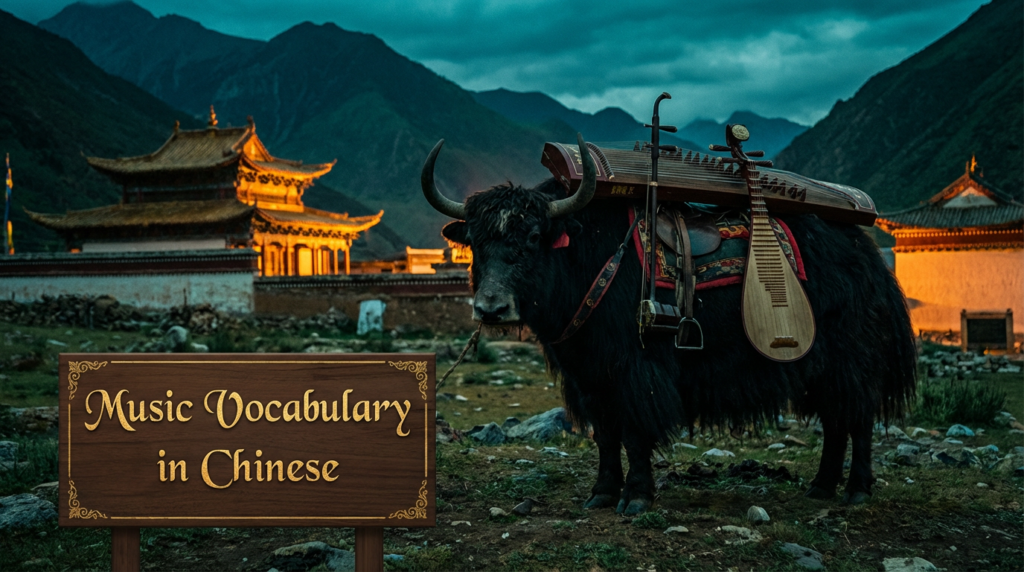
Music Vocabulary in Chinese: 50+ Easy Words and Phrases for Beginners
Learn music vocabulary in simplified Chinese with 音乐词汇 (yīnyuè cíhuì), useful phrases, and real sentences you can actually use without sounding like a robot with a broken speaker.
If you want to talk about songs, instruments, concerts, or your terrible karaoke choices, you need the right Chinese words first. The good news: music vocabulary is practical, memorable, and way more fun than memorizing random textbook nouns like “post office” for the fifth time.
Below, you’ll get high-frequency music words in simplified Chinese, pinyin with tone marks, English meanings, and example sentences so the vocabulary actually sticks in your head. Miracles do happen.
Start With These Core Music Words
These are the words you’ll see again and again: 音乐 (yīnyuè) “music,” 歌曲 (gēqǔ) “song,” 歌手 (gēshǒu) “singer,” 乐器 (yuèqì) “musical instrument,” 练习 (liànxí) “to practice,” and 演唱会 (yǎnchànghuì) “concert.” Learn these first, and the rest stops looking like a wall of mystery symbols.
Visual Cards: High-Utility Music Terms
音乐 (yīnyuè)
music
我喜欢听音乐。
wǒ xǐhuān tīng yīnyuè.
I like listening to music.
歌曲 (gēqǔ)
song
这首歌曲很好听。
zhè shǒu gēqǔ hěn hǎotīng.
This song sounds very nice.
歌手 (gēshǒu)
singer
她是一位很有名的歌手。
tā shì yí wèi hěn yǒumíng de gēshǒu.
She is a very famous singer.
乐器 (yuèqì)
musical instrument
你会弹什么乐器?
nǐ huì tán shénme yuèqì?
What instrument can you play?
唱歌 (chànggē)
to sing
她喜欢一边开车一边唱歌。
tā xǐhuān yìbiān kāichē yìbiān chànggē.
She likes singing while driving.
弹吉他 (tán jítā)
to play the guitar
我哥哥会弹吉他。
wǒ gēge huì tán jítā.
My older brother can play the guitar.
练习 (liànxí)
to practice
我每天练习钢琴。
wǒ měitiān liànxí gāngqín.
I practice piano every day.
演唱会 (yǎnchànghuì)
concert
我们周末去看演唱会。
wǒmen zhōumò qù kàn yǎnchànghuì.
We’re going to a concert this weekend.
Useful Phrases And Real-Life Sentences
- 你喜欢什么音乐?(nǐ xǐhuān shénme yīnyuè?) — What music do you like?
我喜欢流行音乐。
wǒ xǐhuān liúxíng yīnyuè.
I like pop music. - 这首歌是谁唱的?(zhè shǒu gē shì shéi chàng de?) — Who sings this song?
这首歌是她唱的。
zhè shǒu gē shì tā chàng de.
This song is sung by her. - 你会唱这首歌吗?(nǐ huì chàng zhè shǒu gē ma?) — Can you sing this song?
我会一点。
wǒ huì yìdiǎn.
I can a little. - 我在学弹钢琴。 (wǒ zài xué tán gāngqín.) — I’m learning to play the piano.
我每天晚上练习。
wǒ měitiān wǎnshang liànxí.
I practice every evening. - 他的声音很好听。 (tā de shēngyīn hěn hǎotīng.) — His voice sounds great.
我很喜欢他的声音。
wǒ hěn xǐhuān tā de shēngyīn.
I really like his voice. - 这首歌的节奏很快。 (zhè shǒu gē de jiézòu hěn kuài.) — This song has a fast rhythm.
我跟不上。
wǒ gēn bu shàng.
I can’t keep up. - 你想去听现场音乐吗?(nǐ xiǎng qù tīng xiànchǎng yīnyuè ma?) — Do you want to hear live music?
当然想。
dāngrán xiǎng.
Of course I do. - 我最喜欢的歌手来了。 (wǒ zuì xǐhuān de gēshǒu lái le.) — My favorite singer is here.
我太激动了。
wǒ tài jīdòng le.
I’m so excited. - 这张专辑很好听。 (zhè zhāng zhuānjí hěn hǎotīng.) — This album sounds great.
我已经听了三遍。
wǒ yǐjīng tīng le sān biàn.
I’ve already listened to it three times. - 你平时会练声吗?(nǐ píngshí huì liànshēng ma?) — Do you usually do vocal practice?
会,我每周练三次。
huì, wǒ měi zhōu liàn sān cì.
Yes, I practice three times a week. - 这段旋律我记住了。 (zhè duàn xuánlǜ wǒ jìzhù le.) — I remembered this melody.
真的很容易上头。
zhēn de hěn róngyì shàngtóu.
It’s really catchy. - 我们一起去唱卡拉OK吧。 (wǒmen yìqǐ qù chàng kǎlā OK ba.) — Let’s go sing karaoke together.
好啊,不过别录我。
hǎo a, búguò bié lù wǒ.
Sure, but don’t record me.
Music Words: Basic Actions And People
| Hanzi | Pinyin | Meaning | Example (ZH) | Example (Pinyin) | Translation (EN) |
|---|---|---|---|---|---|
| 音乐 | yīnyuè | music | 我每天都听音乐。 | wǒ měitiān dōu tīng yīnyuè. | I listen to music every day. |
| 歌曲 | gēqǔ | song | 这首歌曲很有名。 | zhè shǒu gēqǔ hěn yǒumíng. | This song is famous. |
| 歌 | gē | song | 你会唱这首歌吗? | nǐ huì chàng zhè shǒu gē ma? | Can you sing this song? |
| 歌手 | gēshǒu | singer | 他想当歌手。 | tā xiǎng dāng gēshǒu. | He wants to be a singer. |
| 乐队 | yuèduì | band | 那个乐队很受欢迎。 | nàge yuèduì hěn shòu huānyíng. | That band is very popular. |
| 音乐家 | yīnyuèjiā | musician | 她是一位年轻的音乐家。 | tā shì yí wèi niánqīng de yīnyuèjiā. | She is a young musician. |
| 作曲家 | zuòqǔjiā | composer | 这位作曲家很有才华。 | zhè wèi zuòqǔjiā hěn yǒu cáihuá. | This composer is very talented. |
| 听 | tīng | to listen | 我喜欢听中文歌。 | wǒ xǐhuān tīng zhōngwén gē. | I like listening to Chinese songs. |
| 唱 | chàng | to sing | 她唱得很好。 | tā chàng de hěn hǎo. | She sings well. |
| 唱歌 | chànggē | to sing songs | 他们在房间里唱歌。 | tāmen zài fángjiān lǐ chànggē. | They are singing in the room. |
| 演奏 | yǎnzòu | to perform music | 他会演奏很多曲子。 | tā huì yǎnzòu hěn duō qǔzi. | He can perform many pieces. |
| 练习 | liànxí | to practice | 我晚上练习小提琴。 | wǒ wǎnshang liànxí xiǎotíqín. | I practice violin at night. |
| 表演 | biǎoyǎn | to perform; performance | 他们今晚要表演。 | tāmen jīnwǎn yào biǎoyǎn. | They will perform tonight. |
Music Words: Instruments
| Hanzi | Pinyin | Meaning | Example (ZH) | Example (Pinyin) | Translation (EN) |
|---|---|---|---|---|---|
| 乐器 | yuèqì | musical instrument | 这家店卖很多乐器。 | zhè jiā diàn mài hěn duō yuèqì. | This shop sells many instruments. |
| 吉他 | jítā | guitar | 我弟弟在学吉他。 | wǒ dìdi zài xué jítā. | My younger brother is learning guitar. |
| 弹吉他 | tán jítā | to play guitar | 她会弹吉他,也会唱歌。 | tā huì tán jítā, yě huì chànggē. | She can play guitar and sing. |
| 钢琴 | gāngqín | piano | 客厅里有一架钢琴。 | kètīng lǐ yǒu yí jià gāngqín. | There is a piano in the living room. |
| 弹钢琴 | tán gāngqín | to play piano | 我小时候学过弹钢琴。 | wǒ xiǎoshíhou xué guò tán gāngqín. | I learned to play piano when I was a child. |
| 小提琴 | xiǎotíqín | violin | 她拉小提琴很好听。 | tā lā xiǎotíqín hěn hǎotīng. | Her violin playing sounds beautiful. |
| 鼓 | gǔ | drum | 那个孩子很喜欢打鼓。 | nàge háizi hěn xǐhuān dǎ gǔ. | That child really likes playing drums. |
| 贝斯 | bèisī | bass guitar | 他在乐队里弹贝斯。 | tā zài yuèduì lǐ tán bèisī. | He plays bass in a band. |
| 长笛 | chángdí | flute | 她会吹长笛。 | tā huì chuī chángdí. | She can play the flute. |
| 萨克斯 | sàkèsī | saxophone | 我喜欢萨克斯的声音。 | wǒ xǐhuān sàkèsī de shēngyīn. | I like the sound of the saxophone. |
| 二胡 | èrhú | erhu | 二胡的声音很特别。 | èrhú de shēngyīn hěn tèbié. | The erhu has a very distinctive sound. |
| 古筝 | gǔzhēng | guzheng | 她正在学古筝。 | tā zhèngzài xué gǔzhēng. | She is learning the guzheng. |
| 麦克风 | màikèfēng | microphone | 请把麦克风给我。 | qǐng bǎ màikèfēng gěi wǒ. | Please give me the microphone. |
Music Words: Song Types And Sound
| Hanzi | Pinyin | Meaning | Example (ZH) | Example (Pinyin) | Translation (EN) |
|---|---|---|---|---|---|
| 流行音乐 | liúxíng yīnyuè | pop music | 她平时听流行音乐。 | tā píngshí tīng liúxíng yīnyuè. | She usually listens to pop music. |
| 摇滚乐 | yáogǔn yuè | rock music | 我爸爸年轻时喜欢摇滚乐。 | wǒ bàba niánqīng shí xǐhuān yáogǔn yuè. | My dad liked rock music when he was young. |
| 古典音乐 | gǔdiǎn yīnyuè | classical music | 我学习的时候听古典音乐。 | wǒ xuéxí de shíhou tīng gǔdiǎn yīnyuè. | I listen to classical music while studying. |
| 民谣 | mínyáo | folk music | 这家咖啡店常放民谣。 | zhè jiā kāfēidiàn cháng fàng mínyáo. | This café often plays folk music. |
| 说唱 | shuōchàng | rap | 他最近开始听说唱。 | tā zuìjìn kāishǐ tīng shuōchàng. | He recently started listening to rap. |
| 电子音乐 | diànzǐ yīnyuè | electronic music | 这家店里的电子音乐很响。 | zhè jiā diàn lǐ de diànzǐ yīnyuè hěn xiǎng. | The electronic music in this shop is loud. |
| 旋律 | xuánlǜ | melody | 这段旋律很优美。 | zhè duàn xuánlǜ hěn yōuměi. | This melody is beautiful. |
| 节奏 | jiézòu | rhythm | 这首歌的节奏很强。 | zhè shǒu gē de jiézòu hěn qiáng. | This song has a strong rhythm. |
| 歌词 | gēcí | lyrics | 我能听懂一点歌词。 | wǒ néng tīngdǒng yìdiǎn gēcí. | I can understand a little of the lyrics. |
| 声音 | shēngyīn | sound; voice | 她的声音很温柔。 | tā de shēngyīn hěn wēnróu. | Her voice is very gentle. |
| 高音 | gāoyīn | high notes | 这首歌的高音很难唱。 | zhè shǒu gē de gāoyīn hěn nán chàng. | The high notes in this song are hard to sing. |
| 低音 | dīyīn | low notes; bass | 他的低音很稳。 | tā de dīyīn hěn wěn. | His low notes are very steady. |
| 好听 | hǎotīng | pleasant to hear | 这首歌真好听。 | zhè shǒu gē zhēn hǎotīng. | This song sounds really nice. |
Music Words: Concerts, Practice, And Daily Use
| Hanzi | Pinyin | Meaning | Example (ZH) | Example (Pinyin) | Translation (EN) |
|---|---|---|---|---|---|
| 演唱会 | yǎnchànghuì | concert | 我们下个月去看演唱会。 | wǒmen xià ge yuè qù kàn yǎnchànghuì. | We’re going to a concert next month. |
| 现场音乐 | xiànchǎng yīnyuè | live music | 这家酒吧有现场音乐。 | zhè jiā jiǔbā yǒu xiànchǎng yīnyuè. | This bar has live music. |
| 票 | piào | ticket | 你的演唱会票买了吗? | nǐ de yǎnchànghuì piào mǎi le ma? | Did you buy your concert ticket? |
| 舞台 | wǔtái | stage | 歌手已经上舞台了。 | gēshǒu yǐjīng shàng wǔtái le. | The singer has already gone on stage. |
| 专辑 | zhuānjí | album | 这是他的新专辑。 | zhè shì tā de xīn zhuānjí. | This is his new album. |
| 单曲 | dānqǔ | single | 这首单曲很快就火了。 | zhè shǒu dānqǔ hěn kuài jiù huǒ le. | This single became popular very quickly. |
| 播放 | bōfàng | to play media | 请播放下一首歌。 | qǐng bōfàng xià yì shǒu gē. | Please play the next song. |
| 暂停 | zàntíng | to pause | 我先暂停一下音乐。 | wǒ xiān zàntíng yíxià yīnyuè. | I’ll pause the music for a moment. |
| 重复 | chóngfù | to repeat | 我把这首歌重复听了很多次。 | wǒ bǎ zhè shǒu gē chóngfù tīng le hěn duō cì. | I listened to this song on repeat many times. |
| 耳机 | ěrjī | headphones | 坐地铁时我常戴耳机。 | zuò dìtiě shí wǒ cháng dài ěrjī. | I often wear headphones on the subway. |
| 音量 | yīnliàng | volume | 请把音量调低一点。 | qǐng bǎ yīnliàng tiáo dī yìdiǎn. | Please turn the volume down a bit. |
| 练声 | liànshēng | vocal practice | 她每天早上练声。 | tā měitiān zǎoshang liànshēng. | She does vocal practice every morning. |
| 卡拉OK | kǎlā OK | karaoke | 周五晚上我们去唱卡拉OK。 | zhōuwǔ wǎnshang wǒmen qù chàng kǎlā OK. | We’re going to karaoke on Friday night. |
Quick Notes That Save You From Tiny Mistakes
- 歌 (gē) and 歌曲 (gēqǔ) both mean “song,” but 歌 (gē) is shorter and more common in casual speech.
- 音乐 (yīnyuè) means “music” in general, while 歌曲 (gēqǔ) means one specific song.
- 唱 (chàng) means “to sing,” but 唱歌 (chànggē) is the full everyday phrase “to sing songs.”
- 弹 (tán) is commonly used with instruments like 吉他 (jítā) and 钢琴 (gāngqín).
- 拉 (lā) is used for bowed instruments like 小提琴 (xiǎotíqín) and 二胡 (èrhú).
- 吹 (chuī) is used for wind instruments like 长笛 (chángdí) and 萨克斯 (sàkèsī).
- 打鼓 (dǎ gǔ) means “to play the drums,” because apparently Chinese decided drums should be “hit,” which is honestly fair.
Useful Variants And Common Patterns
| Pattern | Meaning | Example (ZH) | Example (Pinyin) | Translation (EN) |
|---|---|---|---|---|
| 这首歌 (zhè shǒu gē) | this song | 这首歌太好听了。 | zhè shǒu gē tài hǎotīng le. | This song is so good. |
| 听音乐 (tīng yīnyuè) | listen to music | 我在做饭的时候听音乐。 | wǒ zài zuòfàn de shíhou tīng yīnyuè. | I listen to music while cooking. |
| 唱中文歌 (chàng zhōngwén gē) | sing Chinese songs | 她很喜欢唱中文歌。 | tā hěn xǐhuān chàng zhōngwén gē. | She likes singing Chinese songs. |
| 学乐器 (xué yuèqì) | learn an instrument | 很多孩子小时候学乐器。 | hěn duō háizi xiǎoshíhou xué yuèqì. | Many children learn an instrument when young. |
| 去看演唱会 (qù kàn yǎnchànghuì) | go to a concert | 我们明年想去看演唱会。 | wǒmen míngnián xiǎng qù kàn yǎnchànghuì. | We want to go to a concert next year. |
| 开大一点 (kāi dà yìdiǎn) | turn it up a bit | 这首歌不错,音量开大一点。 | zhè shǒu gē búcuò, yīnliàng kāi dà yìdiǎn. | This song is good, turn the volume up a bit. |
| 调低一点 (tiáo dī yìdiǎn) | turn it down a bit | 太晚了,把音乐调低一点。 | tài wǎn le, bǎ yīnyuè tiáo dī yìdiǎn. | It’s too late, turn the music down a bit. |
| 我最喜欢的歌手 (wǒ zuì xǐhuān de gēshǒu) | my favorite singer | 她是我最喜欢的歌手。 | tā shì wǒ zuì xǐhuān de gēshǒu. | She is my favorite singer. |
Yak Tip
Don’t try to memorize all 50+ words in one heroic sitting. Learn them in clusters: people, instruments, sound, then concerts. Your brain likes patterns. Your panic does not.
Quick Reference Summary
- 音乐 (yīnyuè) = music
- 歌 / 歌曲 (gē / gēqǔ) = song
- 歌手 (gēshǒu) = singer
- 乐队 (yuèduì) = band
- 乐器 (yuèqì) = instrument
- 唱歌 (chànggē) = sing
- 练习 (liànxí) = practice
- 演唱会 (yǎnchànghuì) = concert
- 歌词 (gēcí) = lyrics
- 旋律 (xuánlǜ) = melody
- 节奏 (jiézòu) = rhythm
- 好听 (hǎotīng) = sounds nice
Final Yak Box
Once you can say 我喜欢这首歌。 (wǒ xǐhuān zhè shǒu gē.) — “I like this song,” you’re already using real Chinese. Add a few instrument words and one concert phrase, and suddenly you can have an actual conversation instead of staring politely into the void.