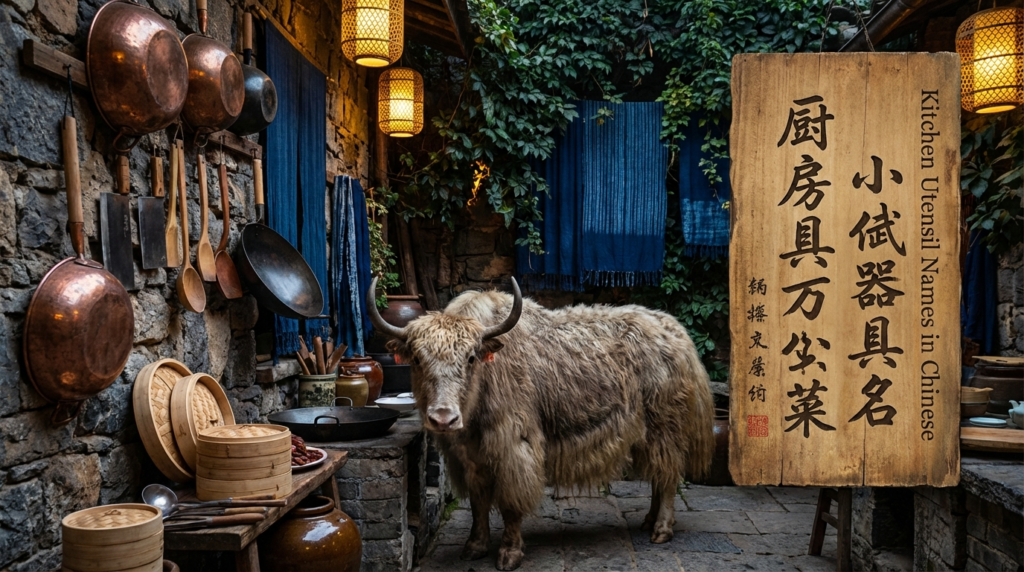
Kitchen Utensil Names In Chinese
Learn the kitchen basics in simplified Chinese: 厨房用具 chúfáng yòngjù and 厨具 chújù, with pinyin, meanings, and real-life sentences that sound like something an actual human would say near a stove.
If you can name the stuff in your kitchen, you can suddenly understand recipes, ask where things are, and stop pointing at random objects like a confused raccoon. That is a solid win.
This guide gives you the most useful kitchen utensil names in Chinese, plus short example sentences so the words actually stick. Memorizing isolated nouns is boring. Using them in real sentences is much less tragic.
One Tiny Rule That Saves Your Brain
In Chinese, many hand-held tools use the measure word 把 bǎ.
一把刀 yī bǎ dāo — a knife
两把勺子 liǎng bǎ sháozi — two spoons
Not every kitchen item uses 把 bǎ, but for utensils with handles, it shows up a lot. Handy, unlike that drawer full of mystery gadgets nobody uses.
Core Kitchen Utensil Cards
刀 dāo
knife
这把刀很锋利。
Zhè bǎ dāo hěn fēnglì.
This knife is very sharp.
锅 guō
pot / pan
锅里有汤。
Guō lǐ yǒu tāng.
There is soup in the pot.
勺子 sháozi
spoon
给我一把勺子。
Gěi wǒ yī bǎ sháozi.
Give me a spoon.
筷子 kuàizi
chopsticks
我会用筷子。
Wǒ huì yòng kuàizi.
I can use chopsticks.
砧板 zhēnbǎn
cutting board
菜在砧板上。
Cài zài zhēnbǎn shàng.
The vegetables are on the cutting board.
铲子 chǎnzi
spatula
用铲子翻一下。
Yòng chǎnzi fān yīxià.
Flip it with the spatula.
夹子 jiāzi
tongs / clip
用夹子夹面包。
Yòng jiāzi jiā miànbāo.
Use the tongs to pick up the bread.
碗 wǎn
bowl
这个碗很大。
Zhège wǎn hěn dà.
This bowl is big.
Useful Kitchen Phrases And Real-Life Sentences
- 厨房在哪儿? chúfáng zài nǎr? — Where is the kitchen?
- 这个怎么用? zhège zěnme yòng? — How do you use this?
- 把刀递给我。 bǎ dāo dì gěi wǒ. — Pass me the knife.
- 锅太热了。 guō tài rè le. — The pot is too hot.
- 先切菜。 xiān qiē cài. — Cut the vegetables first.
- 再搅一搅。 zài jiǎo yī jiǎo. — Stir it a bit more.
- 请拿一个碗。 qǐng ná yí ge wǎn. — Please get a bowl.
- 筷子在抽屉里。 kuàizi zài chōuti lǐ. — The chopsticks are in the drawer.
- 用小火煮。 yòng xiǎo huǒ zhǔ. — Cook on low heat.
- 帮我洗一下盘子。 bāng wǒ xǐ yīxià pánzi. — Help me wash the plates.
- 把锅盖盖上。 bǎ guōgài gài shàng. — Put the lid on the pot.
- 这个勺子太小了。 zhège sháozi tài xiǎo le. — This spoon is too small.
A Common Confusion
锅 guō is a broad word for pot or pan. In real life, Chinese also uses more specific words like 平底锅 píngdǐguō for frying pan and 汤锅 tāngguō for soup pot. So yes, one word can be flexible. Language loves doing that.
Also, 碟子 diézi and 盘子 pánzi can both mean plate, but 盘子 pánzi is the more common everyday beginner word to learn first.
Prep Tools
| Hanzi | Pinyin | Meaning | Example (ZH) | Example (Pinyin) | Translation (EN) |
|---|---|---|---|---|---|
| 刀 | dāo | knife | 这把刀很快。 | Zhè bǎ dāo hěn kuài. | This knife is sharp. |
| 菜刀 | càidāo | chef’s knife / cleaver | 我用菜刀切肉。 | Wǒ yòng càidāo qiē ròu. | I use a chef’s knife to cut meat. |
| 水果刀 | shuǐguǒdāo | paring knife | 水果刀适合削苹果。 | Shuǐguǒdāo shìhé xiāo píngguǒ. | A paring knife is good for peeling apples. |
| 剪刀 | jiǎndāo | scissors | 用剪刀开袋子。 | Yòng jiǎndāo kāi dàizi. | Use scissors to open the bag. |
| 砧板 | zhēnbǎn | cutting board | 肉在砧板上。 | Ròu zài zhēnbǎn shàng. | The meat is on the cutting board. |
| 削皮刀 | xiāopídāo | peeler | 削皮刀很好用。 | Xiāopídāo hěn hǎoyòng. | The peeler is very useful. |
| 刨丝器 | bàosīqì | grater / shredder | 用刨丝器刨胡萝卜。 | Yòng bàosīqì bào húluóbo. | Use the grater to shred carrots. |
| 蒜压器 | suànyāqì | garlic press | 蒜压器在抽屉里。 | Suànyāqì zài chōuti lǐ. | The garlic press is in the drawer. |
| 漏斗 | lòudǒu | funnel | 把油倒进漏斗里。 | Bǎ yóu dào jìn lòudǒu lǐ. | Pour the oil into the funnel. |
| 量杯 | liàngbēi | measuring cup | 量杯里有两杯水。 | Liàngbēi lǐ yǒu liǎng bēi shuǐ. | There are two cups of water in the measuring cup. |
| 量勺 | liàngsháo | measuring spoon | 加一量勺盐。 | Jiā yī liàngsháo yán. | Add one measuring spoon of salt. |
| 厨房秤 | chúfáng chèng | kitchen scale | 厨房秤很准。 | Chúfáng chèng hěn zhǔn. | The kitchen scale is accurate. |
Cooking Tools
| Hanzi | Pinyin | Meaning | Example (ZH) | Example (Pinyin) | Translation (EN) |
|---|---|---|---|---|---|
| 锅 | guō | pot / pan | 锅里没有水了。 | Guō lǐ méiyǒu shuǐ le. | There is no water left in the pot. |
| 平底锅 | píngdǐguō | frying pan | 鸡蛋在平底锅里。 | Jīdàn zài píngdǐguō lǐ. | The eggs are in the frying pan. |
| 炒锅 | chǎoguō | wok | 他用炒锅炒饭。 | Tā yòng chǎoguō chǎofàn. | He uses a wok to make fried rice. |
| 汤锅 | tāngguō | soup pot | 汤锅里正在煮汤。 | Tāngguō lǐ zhèngzài zhǔ tāng. | Soup is cooking in the soup pot. |
| 锅盖 | guōgài | pot lid | 锅盖有点热。 | Guōgài yǒudiǎn rè. | The pot lid is a little hot. |
| 铲子 | chǎnzi | spatula | 用铲子翻鱼。 | Yòng chǎnzi fān yú. | Use the spatula to flip the fish. |
| 木铲 | mùchǎn | wooden spatula | 木铲不会刮坏锅。 | Mùchǎn bú huì guāhuài guō. | A wooden spatula will not scratch the pan. |
| 夹子 | jiāzi | tongs | 用夹子夹牛排。 | Yòng jiāzi jiā niúpái. | Use tongs to pick up the steak. |
| 打蛋器 | dǎdànqì | whisk | 用打蛋器打鸡蛋。 | Yòng dǎdànqì dǎ jīdàn. | Use a whisk to beat the eggs. |
| 搅拌勺 | jiǎobànsháo | mixing spoon | 搅拌勺在锅旁边。 | Jiǎobànsháo zài guō pángbiān. | The mixing spoon is next to the pot. |
| 漏勺 | lòusháo | slotted spoon / skimmer | 用漏勺捞饺子。 | Yòng lòusháo lāo jiǎozi. | Use the slotted spoon to scoop up the dumplings. |
| 隔热手套 | gérè shǒutào | oven mitts / heatproof gloves | 拿烤盘时要戴隔热手套。 | Ná kǎopán shí yào dài gérè shǒutào. | Wear oven mitts when holding the baking tray. |
Serving And Eating Tools
| Hanzi | Pinyin | Meaning | Example (ZH) | Example (Pinyin) | Translation (EN) |
|---|---|---|---|---|---|
| 筷子 | kuàizi | chopsticks | 筷子在桌子上。 | Kuàizi zài zhuōzi shàng. | The chopsticks are on the table. |
| 勺子 | sháozi | spoon | 这个勺子很深。 | Zhège sháozi hěn shēn. | This spoon is deep. |
| 叉子 | chāzi | fork | 我需要一把叉子。 | Wǒ xūyào yī bǎ chāzi. | I need a fork. |
| 餐刀 | cāndāo | table knife | 餐刀放在盘子右边。 | Cāndāo fàng zài pánzi yòubiān. | The table knife is on the right side of the plate. |
| 碗 | wǎn | bowl | 请给我一个碗。 | Qǐng gěi wǒ yí ge wǎn. | Please give me a bowl. |
| 盘子 | pánzi | plate | 盘子已经洗干净了。 | Pánzi yǐjīng xǐ gānjìng le. | The plate has already been washed clean. |
| 碟子 | diézi | small plate / dish | 小菜放在碟子里。 | Xiǎocài fàng zài diézi lǐ. | The side dish is on the small plate. |
| 杯子 | bēizi | cup / glass | 杯子里有茶。 | Bēizi lǐ yǒu chá. | There is tea in the cup. |
| 托盘 | tuōpán | tray | 把杯子放到托盘上。 | Bǎ bēizi fàng dào tuōpán shàng. | Put the cups on the tray. |
| 开瓶器 | kāipíngqì | bottle opener | 开瓶器在哪儿? | Kāipíngqì zài nǎr? | Where is the bottle opener? |
| 开罐器 | kāiguànqì | can opener | 这个开罐器很好用。 | Zhège kāiguànqì hěn hǎoyòng. | This can opener is very useful. |
| 吸管 | xīguǎn | straw | 我想要一根吸管。 | Wǒ xiǎng yào yì gēn xīguǎn. | I want a straw. |
Cleaning And Storage Tools
| Hanzi | Pinyin | Meaning | Example (ZH) | Example (Pinyin) | Translation (EN) |
|---|---|---|---|---|---|
| 洗碗布 | xǐwǎnbù | dishcloth | 洗碗布湿了。 | Xǐwǎnbù shī le. | The dishcloth is wet. |
| 海绵 | hǎimián | sponge | 用海绵洗锅。 | Yòng hǎimián xǐ guō. | Use the sponge to wash the pot. |
| 刷子 | shuāzi | brush | 刷子可以刷瓶子。 | Shuāzi kěyǐ shuā píngzi. | The brush can clean bottles. |
| 洗碗机 | xǐwǎnjī | dishwasher | 盘子在洗碗机里。 | Pánzi zài xǐwǎnjī lǐ. | The plates are in the dishwasher. |
| 沥水架 | lìshuǐjià | dish rack | 碗在沥水架上晾着。 | Wǎn zài lìshuǐjià shàng liàngzhe. | The bowls are drying on the rack. |
| 保鲜盒 | bǎoxiānhé | food container | 剩饭放进保鲜盒里。 | Shèngfàn fàng jìn bǎoxiānhé lǐ. | Put the leftover rice into the food container. |
| 保鲜膜 | bǎoxiānmó | plastic wrap | 用保鲜膜盖住碗。 | Yòng bǎoxiānmó gàizhù wǎn. | Cover the bowl with plastic wrap. |
| 锡纸 | xīzhǐ | aluminum foil | 把鱼包在锡纸里。 | Bǎ yú bāo zài xīzhǐ lǐ. | Wrap the fish in aluminum foil. |
| 抽屉 | chōuti | drawer | 勺子在抽屉里。 | Sháozi zài chōuti lǐ. | The spoons are in the drawer. |
| 架子 | jiàzi | rack / shelf | 锅放在上面的架子上。 | Guō fàng zài shàngmiàn de jiàzi shàng. | The pots are on the upper shelf. |
| 垃圾桶 | lājītǒng | trash can | 把果皮扔进垃圾桶。 | Bǎ guǒpí rēng jìn lājītǒng. | Throw the fruit peels into the trash can. |
| 夹链袋 | jiāliàndài | zip bag | 把蔬菜装进夹链袋里。 | Bǎ shūcài zhuāng jìn jiāliàndài lǐ. | Put the vegetables into the zip bag. |
Small Specialty Tools
| Hanzi | Pinyin | Meaning | Example (ZH) | Example (Pinyin) | Translation (EN) |
|---|---|---|---|---|---|
| 擀面杖 | gǎnmiànzhàng | rolling pin | 擀面杖在柜子里。 | Gǎnmiànzhàng zài guìzi lǐ. | The rolling pin is in the cabinet. |
| 漏盆 | lòupén | colander | 面条在漏盆里。 | Miàntiáo zài lòupén lǐ. | The noodles are in the colander. |
| 捣蒜器 | dǎosuànqì | mortar tool / garlic crusher | 用捣蒜器做蒜泥。 | Yòng dǎosuànqì zuò suànní. | Use the garlic crusher to make mashed garlic. |
| 榨汁器 | zhàzhīqì | juicer | 榨汁器可以榨橙汁。 | Zhàzhīqì kěyǐ zhà chéngzhī. | The juicer can make orange juice. |
| 漏网 | lòuwǎng | strainer | 用漏网过滤茶叶。 | Yòng lòuwǎng guòlǜ cháyè. | Use the strainer to filter the tea leaves. |
| 烤盘 | kǎopán | baking tray | 饼干在烤盘上。 | Bǐnggān zài kǎopán shàng. | The cookies are on the baking tray. |
| 蛋糕模具 | dàngāo mújù | cake mold / cake pan | 蛋糕模具是圆的。 | Dàngāo mújù shì yuán de. | The cake pan is round. |
| 冰格 | bīnggé | ice cube tray | 冰格里没有冰了。 | Bīnggé lǐ méiyǒu bīng le. | There is no ice left in the ice tray. |
| 咖啡勺 | kāfēisháo | coffee spoon | 咖啡勺很小。 | Kāfēisháo hěn xiǎo. | The coffee spoon is very small. |
| 茶壶 | cháhú | teapot | 茶壶里有热水。 | Cháhú lǐ yǒu rèshuǐ. | There is hot water in the teapot. |
| 锅垫 | guōdiàn | trivet | 热锅要放在锅垫上。 | Rè guō yào fàng zài guōdiàn shàng. | A hot pot should be placed on a trivet. |
| 围裙 | wéiqún | apron | 做饭时我会穿围裙。 | Zuòfàn shí wǒ huì chuān wéiqún. | I wear an apron when cooking. |
Quick Practice
- “knife” = 刀 dāo
- “cutting board” = 砧板 zhēnbǎn
- “spatula” = 铲子 chǎnzi
- “tongs” = 夹子 jiāzi
- “bowl” = 碗 wǎn
- “dishcloth” = 洗碗布 xǐwǎnbù
Try saying these out loud:
- 刀在砧板上。 dāo zài zhēnbǎn shàng. — The knife is on the cutting board.
- 铲子在锅旁边。 chǎnzi zài guō pángbiān. — The spatula is next to the pot.
- 请拿两个碗。 qǐng ná liǎng ge wǎn. — Please get two bowls.
- 夹子在抽屉里。 jiāzi zài chōuti lǐ. — The tongs are in the drawer.
Common Mistakes And Easy Fixes
- Do not use 筷子 kuàizi for all eating tools. It means chopsticks, not fork and not spoon.
- Do not panic when you see 锅 guō used for both pots and pans. Context usually does the heavy lifting.
- Remember that 勺子 sháozi is spoon, while 漏勺 lòusháo is a slotted spoon or skimmer.
- For handled tools, try the pattern 一把刀 yī bǎ dāo, 一把叉子 yī bǎ chāzi, 一把勺子 yī bǎ sháozi.
Quick Reference Summary
| English | Chinese | Pinyin |
|---|---|---|
| knife | 刀 | dāo |
| cutting board | 砧板 | zhēnbǎn |
| pot / pan | 锅 | guō |
| spatula | 铲子 | chǎnzi |
| tongs | 夹子 | jiāzi |
| spoon | 勺子 | sháozi |
| chopsticks | 筷子 | kuàizi |
| bowl | 碗 | wǎn |
| plate | 盘子 | pánzi |
| dishcloth | 洗碗布 | xǐwǎnbù |
Final Yak Box
The fastest way to learn kitchen Chinese is not to memorize fifty words in one dramatic sitting. Pick five items in your actual kitchen, label them in Chinese, and say one sentence with each: 刀 dāo, 锅 guō, 碗 wǎn, 筷子 kuàizi, 勺子 sháozi. Real objects beat fancy study plans every time.