100+ Chinese Jokes For Beginners
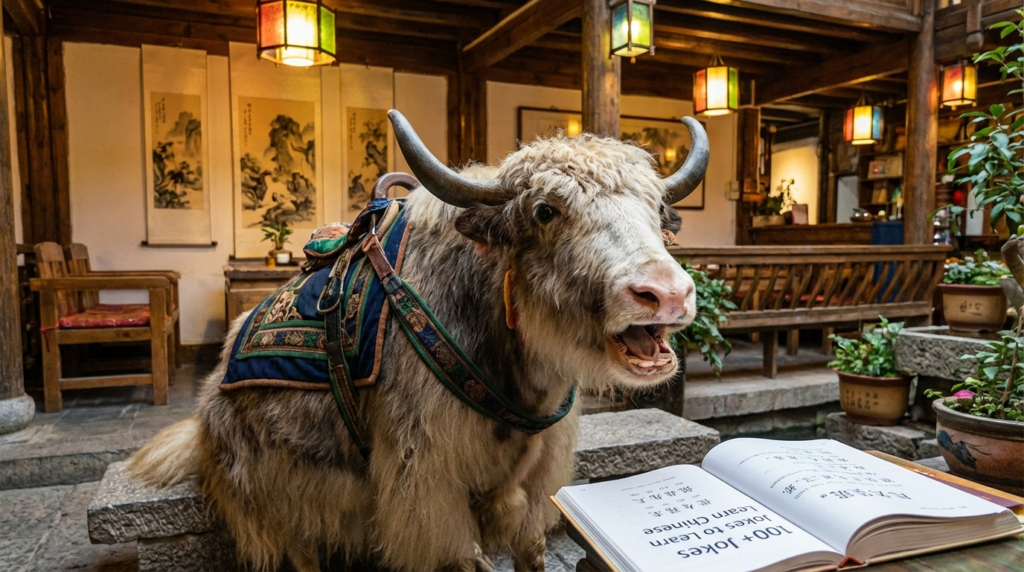
Learn to laugh in simplified Chinese with jokes, puns, silly questions, and bite-size punchlines about 笑话 xiàohuà (jokes).
A lot of beginner Chinese study material sounds like it was written by a toaster with social anxiety. Jokes are better. They are short, memorable, and packed with everyday words you can actually use. This guide gives you over 100 Chinese jokes with hanzi, pinyin, and English, so your brain gets a tiny reward instead of another grammar lecture.
Not every joke is a masterpiece. Some are pure dad-joke chaos. That is exactly why they work for language learners.
Yak Tip: Read the Chinese line out loud first. Then check the pinyin. Then read the English. Your pronunciation gets practice, your memory gets a joke hook, and your dignity survives another study session.
Key Humor Words You Will See A Lot
笑话 xiàohuà
Meaning: joke
Example: 这个笑话很好笑。
Zhège xiàohuà hěn hǎoxiào.
This joke is very funny.
好笑 hǎoxiào
Meaning: funny
Example: 你觉得这个视频好笑吗?
Nǐ juéde zhège shìpín hǎoxiào ma?
Do you think this video is funny?
冷笑话 lěngxiàohuà
Meaning: corny joke, literally “cold joke”
Example: 他很喜欢讲冷笑话。
Tā hěn xǐhuān jiǎng lěngxiàohuà.
He really likes telling corny jokes.
为什么 wèishénme
Meaning: why
Example: 你为什么笑?
Nǐ wèishénme xiào?
Why are you laughing?
因为 yīnwèi
Meaning: because
Example: 因为这个答案太奇怪了。
Yīnwèi zhège dá’àn tài qíguài le.
Because this answer is too weird.
知道 zhīdào
Meaning: to know
Example: 你知道答案吗?
Nǐ zhīdào dá’àn ma?
Do you know the answer?
老师 lǎoshī
Meaning: teacher
Example: 老师也会讲笑话。
Lǎoshī yě huì jiǎng xiàohuà.
Teachers tell jokes too.
学生 xuéshēng
Meaning: student
Example: 学生笑得很大声。
Xuéshēng xiào de hěn dàshēng.
The students laughed loudly.
回答 huídá
Meaning: to answer; answer
Example: 他的回答太好笑了。
Tā de huídá tài hǎoxiào le.
His answer was too funny.
How These Chinese Jokes Work
Most beginner jokes here use one of four easy patterns:
- Question + answer: quick and easy to memorize
- Wordplay: Chinese loves sound-based jokes
- School humor: because teachers and students are reliable chaos
- Literal thinking: the punchline comes from taking a word too seriously
100+ Chinese Jokes With Pinyin And English
The jokes below are grouped by theme, so you can study in smaller chunks instead of trying to inhale 100 punchlines like a language vacuum cleaner.
Question And Answer Jokes
- 为什么鱼不说话?
Wèishénme yú bù shuōhuà?
Why don’t fish talk?
因为它们在水里,手机没信号。
Yīnwèi tāmen zài shuǐ lǐ, shǒujī méi xìnhào.
Because they are underwater, and the phone has no signal. - 为什么电脑很冷?
Wèishénme diànnǎo hěn lěng?
Why is the computer cold?
因为它开着窗户。
Yīnwèi tā kāizhe chuānghu.
Because it left the windows open. - 什么动物最会用手机?
Shénme dòngwù zuì huì yòng shǒujī?
Which animal is best at using a phone?
熊猫,因为它会扫码。
Xióngmāo, yīnwèi tā huì sǎomǎ.
The panda, because it can scan codes. - 为什么老师喜欢白板?
Wèishénme lǎoshī xǐhuān báibǎn?
Why do teachers like whiteboards?
因为它们很好讲。
Yīnwèi tāmen hěn hǎo jiǎng.
Because they make explaining things easy. - 为什么猫不玩微信?
Wèishénme māo bù wán Wēixìn?
Why don’t cats use WeChat?
因为它只会喵。
Yīnwèi tā zhǐ huì miāo.
Because it only knows how to meow. - 为什么月亮不上班?
Wèishénme yuèliang bù shàngbān?
Why doesn’t the moon go to work?
因为它晚上才出来。
Yīnwèi tā wǎnshang cái chūlái.
Because it only comes out at night. - 为什么书最安静?
Wèishénme shū zuì ānjìng?
Why are books the quietest?
因为它们只会翻脸。
Yīnwèi tāmen zhǐ huì fānliǎn.
Because they only “turn faces,” meaning pages. - 为什么面包很累?
Wèishénme miànbāo hěn lèi?
Why is bread tired?
因为它天天被烤。
Yīnwèi tā tiāntiān bèi kǎo.
Because it gets baked every day. - 为什么鸡不能当老师?
Wèishénme jī bùnéng dāng lǎoshī?
Why can’t chickens be teachers?
因为它只会咯咯叫。
Yīnwèi tā zhǐ huì gēgē jiào.
Because it only clucks. - 为什么香蕉总是滑倒?
Wèishénme xiāngjiāo zǒng shì huádǎo?
Why do bananas always slip?
因为它自己就是香蕉皮。
Yīnwèi tā zìjǐ jiù shì xiāngjiāopí.
Because it is its own banana peel. - 为什么学生喜欢下课?
Wèishénme xuéshēng xǐhuān xiàkè?
Why do students like class ending?
因为空气突然变甜了。
Yīnwèi kōngqì tūrán biàn tián le.
Because the air suddenly becomes sweet. - 为什么手机会生气?
Wèishénme shǒujī huì shēngqì?
Why does a phone get angry?
因为你老是挂它。
Yīnwèi nǐ lǎo shì guà tā.
Because you keep hanging up on it. - 为什么米饭很团结?
Wèishénme mǐfàn hěn tuánjié?
Why is rice so united?
因为大家都在一个锅里。
Yīnwèi dàjiā dōu zài yí gè guō lǐ.
Because everyone is in the same pot. - 为什么咖啡睡不着?
Wèishénme kāfēi shuì bù zháo?
Why can’t coffee sleep?
因为它太清醒了。
Yīnwèi tā tài qīngxǐng le.
Because it is too awake. - 为什么冰箱不说秘密?
Wèishénme bīngxiāng bù shuō mìmì?
Why doesn’t the fridge tell secrets?
因为它嘴很紧。
Yīnwèi tā zuǐ hěn jǐn.
Because it keeps its mouth shut. - 为什么树很忙?
Wèishénme shù hěn máng?
Why are trees busy?
因为它们要长高。
Yīnwèi tāmen yào zhǎng gāo.
Because they have to grow taller. - 为什么袜子害羞?
Wèishénme wàzi hàixiū?
Why are socks shy?
因为它们总是在脚下。
Yīnwèi tāmen zǒng shì zài jiǎo xià.
Because they are always under feet. - 为什么牙医不怕冷?
Wèishénme yáyī bù pà lěng?
Why isn’t the dentist afraid of the cold?
因为他天天看牙。
Yīnwèi tā tiāntiān kàn yá.
Because he looks at teeth every day. - 为什么鱼考试不及格?
Wèishénme yú kǎoshì bù jígé?
Why did the fish fail the exam?
因为它总是游题。
Yīnwèi tā zǒng shì yóutí.
Because it “swam off topic.” - 为什么雨伞很自信?
Wèishénme yǔsǎn hěn zìxìn?
Why is the umbrella confident?
因为有人给它撑腰。
Yīnwèi yǒurén gěi tā chēngyāo.
Because someone literally supports its back.
School Jokes
- 老师:你为什么迟到?
Lǎoshī: Nǐ wèishénme chídào?
Teacher: Why are you late?
学生:因为我走得太慢了。
Xuéshēng: Yīnwèi wǒ zǒu de tài màn le.
Student: Because I walked too slowly. - 老师:一加一等于几?
Lǎoshī: Yī jiā yī děngyú jǐ?
Teacher: What is one plus one?
学生:等于窗口关闭。
Xuéshēng: Děngyú chuāngkǒu guānbì.
Student: It equals the window closing. “加” also appears on a computer as add or close-related joke logic here. Very silly, very student. - 老师:谁能回答这个问题?
Lǎoshī: Shéi néng huídá zhège wèntí?
Teacher: Who can answer this question?
学生:百度。
Xuéshēng: Bǎidù.
Student: Baidu. - 老师:你昨天为什么没做作业?
Lǎoshī: Nǐ zuótiān wèishénme méi zuò zuòyè?
Teacher: Why didn’t you do your homework yesterday?
学生:因为昨天已经很忙了。
Xuéshēng: Yīnwèi zuótiān yǐjīng hěn máng le.
Student: Because yesterday was already busy enough. - 老师:你上课为什么睡觉?
Lǎoshī: Nǐ shàngkè wèishénme shuìjiào?
Teacher: Why were you sleeping in class?
学生:我没有睡,我在闭目学习。
Xuéshēng: Wǒ méiyǒu shuì, wǒ zài bìmù xuéxí.
Student: I wasn’t sleeping. I was studying with my eyes closed. - 老师:你的字怎么这么小?
Lǎoshī: Nǐ de zì zěnme zhème xiǎo?
Teacher: Why is your handwriting so small?
学生:因为题目太多了。
Xuéshēng: Yīnwèi tímù tài duō le.
Student: Because there were too many questions. - 老师:你为什么抄答案?
Lǎoshī: Nǐ wèishénme chāo dá’àn?
Teacher: Why did you copy the answers?
学生:我不是抄,我是参考。
Xuéshēng: Wǒ bú shì chāo, wǒ shì cānkǎo.
Student: I wasn’t copying. I was “referencing.” - 老师:你的作文题目呢?
Lǎoshī: Nǐ de zuòwén tímù ne?
Teacher: Where is your essay title?
学生:还在想,内容先跑出来了。
Xuéshēng: Hái zài xiǎng, nèiróng xiān pǎo chūlái le.
Student: I was still thinking of it. The content came running out first. - 老师:为什么试卷这么干净?
Lǎoshī: Wèishénme shìjuàn zhème gānjìng?
Teacher: Why is this test paper so clean?
学生:因为我很爱卫生。
Xuéshēng: Yīnwèi wǒ hěn ài wèishēng.
Student: Because I love cleanliness. - 老师:你为什么总看窗外?
Lǎoshī: Nǐ wèishénme zǒng kàn chuāngwài?
Teacher: Why do you always look outside the window?
学生:我在拓展视野。
Xuéshēng: Wǒ zài tuòzhǎn shìyě.
Student: I’m expanding my horizons. - 老师:你会不会这个语法?
Lǎoshī: Nǐ huì bú huì zhège yǔfǎ?
Teacher: Do you know this grammar point?
学生:我会看懂答案。
Xuéshēng: Wǒ huì kàn dǒng dá’àn.
Student: I know how to understand the answer. - 老师:请用“马上”造句。
Lǎoshī: Qǐng yòng “mǎshàng” zàojù.
Teacher: Make a sentence with “right away.”
学生:我骑在马上。
Xuéshēng: Wǒ qí zài mǎ shàng.
Student: I am riding on a horse. - 老师:请用“简单”造句。
Lǎoshī: Qǐng yòng “jiǎndān” zàojù.
Teacher: Make a sentence with “simple.”
学生:这个题太难了,简单不了。
Xuéshēng: Zhège tí tài nán le, jiǎndān bù liǎo.
Student: This question is too hard. It can’t become simple. - 老师:你为什么交白卷?
Lǎoshī: Nǐ wèishénme jiāo báijuàn?
Teacher: Why did you hand in a blank test?
学生:我想给题目一点空间。
Xuéshēng: Wǒ xiǎng gěi tímù yìdiǎn kōngjiān.
Student: I wanted to give the questions some space. - 老师:你怎么又忘带书?
Lǎoshī: Nǐ zěnme yòu wàng dài shū?
Teacher: How did you forget your book again?
学生:因为我太相信记忆力了。
Xuéshēng: Yīnwèi wǒ tài xiāngxìn jìyìlì le.
Student: Because I trusted my memory too much. - 老师:今天谁没来?
Lǎoshī: Jīntiān shéi méi lái?
Teacher: Who didn’t come today?
学生:没来的人。
Xuéshēng: Méi lái de rén.
Student: The people who didn’t come. - 老师:这个答案谁写的?
Lǎoshī: Zhège dá’àn shéi xiě de?
Teacher: Who wrote this answer?
学生:字写得这么丑,肯定不是我。
Xuéshēng: Zì xiě de zhème chǒu, kěndìng bú shì wǒ.
Student: The handwriting is this ugly, so it definitely wasn’t me. - 老师:上课不能吃东西。
Lǎoshī: Shàngkè bùnéng chī dōngxi.
Teacher: You can’t eat in class.
学生:我没吃,我在品尝知识。
Xuéshēng: Wǒ méi chī, wǒ zài pǐncháng zhīshi.
Student: I’m not eating. I’m tasting knowledge. - 老师:你怎么总问同学?
Lǎoshī: Nǐ zěnme zǒng wèn tóngxué?
Teacher: Why do you keep asking your classmates?
学生:团结就是力量。
Xuéshēng: Tuánjié jiù shì lìliàng.
Student: Unity is strength. - 老师:请安静。
Lǎoshī: Qǐng ānjìng.
Teacher: Please be quiet.
学生:我已经很安静了,我只是声音比较明显。
Xuéshēng: Wǒ yǐjīng hěn ānjìng le, wǒ zhǐshì shēngyīn bǐjiào míngxiǎn.
Student: I’m already quiet. My voice is just more noticeable.
Animal Jokes
- 小狗为什么不用导航?
Xiǎogǒu wèishénme bú yòng dǎoháng?
Why doesn’t a puppy use navigation?
因为它认路。
Yīnwèi tā rèn lù.
Because it knows the way. - 熊为什么不戴帽子?
Xióng wèishénme bù dài màozi?
Why doesn’t the bear wear a hat?
因为它已经很熊了。
Yīnwèi tā yǐjīng hěn xióng le.
Because it is already very “bear-ish.” - 什么鸟最爱聊天?
Shénme niǎo zuì ài liáotiān?
Which bird loves chatting most?
八哥。
Bāgē.
The myna bird, famous for mimicking speech. - 为什么乌龟不着急?
Wèishénme wūguī bù zháojí?
Why isn’t the turtle in a hurry?
因为它背着房子。
Yīnwèi tā bēizhe fángzi.
Because it carries its house on its back. - 为什么猫头鹰考试好?
Wèishénme māotóuyīng kǎoshì hǎo?
Why does the owl do well on exams?
因为它晚上也在看书。
Yīnwèi tā wǎnshang yě zài kàn shū.
Because it studies at night too. - 为什么鸭子不会保守秘密?
Wèishénme yāzi bú huì bǎoshǒu mìmì?
Why can’t ducks keep secrets?
因为它们嘴太快。
Yīnwèi tāmen zuǐ tài kuài.
Because their mouths are too fast. - 为什么猪很快乐?
Wèishénme zhū hěn kuàilè?
Why are pigs happy?
因为它们不想太多。
Yīnwèi tāmen bù xiǎng tài duō.
Because they do not overthink. - 为什么兔子跑得快?
Wèishénme tùzi pǎo de kuài?
Why do rabbits run fast?
因为它怕别人说它慢。
Yīnwèi tā pà biérén shuō tā màn.
Because it is afraid people will call it slow. - 为什么马最懂礼貌?
Wèishénme mǎ zuì dǒng lǐmào?
Why is the horse the most polite?
因为它总说“马上”。
Yīnwèi tā zǒng shuō “mǎshàng.”
Because it always says “right away,” which literally contains “horse.” - 为什么狼不吃素?
Wèishénme láng bù chī sù?
Why doesn’t the wolf eat vegetarian food?
因为它名字已经很狠了。
Yīnwèi tā míngzi yǐjīng hěn hěn le.
Because its name already sounds fierce. - 为什么鱼最会排队?
Wèishénme yú zuì huì páiduì?
Why are fish best at lining up?
因为它们总是一群一群。
Yīnwèi tāmen zǒng shì yì qún yì qún.
Because they always move in groups. - 为什么蚂蚁不怕累?
Wèishénme mǎyǐ bù pà lèi?
Why aren’t ants afraid of being tired?
因为它们早就习惯忙了。
Yīnwèi tāmen zǎo jiù xíguàn máng le.
Because they are already used to being busy. - 为什么猴子拍照好看?
Wèishénme hóuzi pāizhào hǎokàn?
Why do monkeys look good in photos?
因为它们表情很多。
Yīnwèi tāmen biǎoqíng hěn duō.
Because they have lots of expressions. - 为什么蛇不穿裤子?
Wèishénme shé bù chuān kùzi?
Why doesn’t the snake wear pants?
因为没有腿。
Yīnwèi méiyǒu tuǐ.
Because it has no legs. - 为什么大象不丢手机?
Wèishénme dàxiàng bù diū shǒujī?
Why doesn’t the elephant lose its phone?
因为它太大了。
Yīnwèi tā tài dà le.
Because it is too big. - 为什么熊猫上镜?
Wèishénme xióngmāo shàngjìng?
Why is the panda camera-friendly?
因为它自带黑眼线。
Yīnwèi tā zìdài hēi yǎnxiàn.
Because it comes with black eyeliner. - 为什么鸡过马路?
Wèishénme jī guò mǎlù?
Why did the chicken cross the road?
因为对面也有鸡。
Yīnwèi duìmiàn yě yǒu jī.
Because there were chickens on the other side too. - 为什么牛很稳重?
Wèishénme niú hěn wěnzhòng?
Why is the cow steady and calm?
因为它说话慢慢的。
Yīnwèi tā shuōhuà mànmàn de.
Because it talks slowly. - 为什么鸟不喜欢数学?
Wèishénme niǎo bù xǐhuān shùxué?
Why don’t birds like math?
因为它们更喜欢数树。
Yīnwèi tāmen gèng xǐhuān shǔ shù.
Because they would rather “count trees,” a sound-based pun. - 为什么狗坐在阴凉处?
Wèishénme gǒu zuò zài yīnliáng chù?
Why does the dog sit in the shade?
因为它不想变热狗。
Yīnwèi tā bù xiǎng biàn règǒu.
Because it doesn’t want to become a hot dog.
Food Jokes
- 米饭对面条说:你怎么这么长?
Mǐfàn duì miàntiáo shuō: Nǐ zěnme zhème cháng?
Rice said to noodles: Why are you so long?
面条说:因为我不走弯路。
Miàntiáo shuō: Yīnwèi wǒ bù zǒu wānlù.
Noodles said: Because I don’t take crooked roads. - 为什么饺子冬天最开心?
Wèishénme jiǎozi dōngtiān zuì kāixīn?
Why are dumplings happiest in winter?
因为终于到主场了。
Yīnwèi zhōngyú dào zhǔchǎng le.
Because it is finally their home season. - 为什么西瓜心情好?
Wèishénme xīguā xīnqíng hǎo?
Why is the watermelon in a good mood?
因为它很有面子。
Yīnwèi tā hěn yǒu miànzi.
Because it has a great “face.” - 为什么鸡蛋不去健身?
Wèishénme jīdàn bú qù jiànshēn?
Why doesn’t the egg go to the gym?
因为它已经很圆满了。
Yīnwèi tā yǐjīng hěn yuánmǎn le.
Because it is already perfectly round. - 面包问蛋糕:你怎么这么甜?
Miànbāo wèn dàngāo: Nǐ zěnme zhème tián?
Bread asked cake: Why are you so sweet?
蛋糕说:我天生会做人。
Dàngāo shuō: Wǒ tiānshēng huì zuòrén.
Cake said: I was born knowing how to please people. - 为什么豆腐最温柔?
Wèishénme dòufu zuì wēnróu?
Why is tofu the gentlest?
因为它说话都软软的。
Yīnwèi tā shuōhuà dōu ruǎnruǎn de.
Because everything about it is soft. - 为什么辣椒话很多?
Wèishénme làjiāo huà hěn duō?
Why does chili talk so much?
因为它太刺激了。
Yīnwèi tā tài cìjī le.
Because it is too exciting. - 为什么包子不怕冷?
Wèishénme bāozi bù pà lěng?
Why isn’t the bun afraid of the cold?
因为它有馅,也有热气。
Yīnwèi tā yǒu xiàn, yě yǒu rèqì.
Because it has filling and warmth inside. - 为什么牛奶不说脏话?
Wèishénme niúnǎi bù shuō zānghuà?
Why doesn’t milk swear?
因为它很纯。
Yīnwèi tā hěn chún.
Because it is pure. - 为什么苹果不吵架?
Wèishénme píngguǒ bù chǎojià?
Why doesn’t the apple argue?
因为它想和平。
Yīnwèi tā xiǎng hépíng.
Because it wants peace. - 为什么橙子不怕压?
Wèishénme chéngzi bù pà yā?
Why isn’t the orange afraid of pressure?
因为它抗压能力强。
Yīnwèi tā kàngyā nénglì qiáng.
Because it handles pressure well. - 为什么薯条喜欢排队?
Wèishénme shǔtiáo xǐhuān páiduì?
Why do fries like lining up?
因为大家都是一条一条的。
Yīnwèi dàjiā dōu shì yì tiáo yì tiáo de.
Because they are all in little strips. - 为什么汤圆很黏人?
Wèishénme tāngyuán hěn niánrén?
Why are tangyuan clingy?
因为它们真的很黏。
Yīnwèi tāmen zhēnde hěn nián.
Because they really are sticky. - 为什么咖啡和茶总吵架?
Wèishénme kāfēi hé chá zǒng chǎojià?
Why do coffee and tea always argue?
因为一个太急,一个太淡。
Yīnwèi yí gè tài jí, yí gè tài dàn.
Because one is too intense and one is too mild. - 为什么饼干总是断?
Wèishénme bǐnggān zǒng shì duàn?
Why do cookies always break?
因为压力太大了。
Yīnwèi yālì tài dà le.
Because the pressure is too much. - 为什么火锅朋友多?
Wèishénme huǒguō péngyou duō?
Why does hot pot have many friends?
因为谁都能一起进来。
Yīnwèi shéi dōu néng yìqǐ jìnlái.
Because everyone can join in. - 为什么米线不迷路?
Wèishénme mǐxiàn bù mílù?
Why don’t rice noodles get lost?
因为它们路线很清楚。
Yīnwèi tāmen lùxiàn hěn qīngchu.
Because their route is very clear. - 为什么可乐爱笑?
Wèishénme kělè ài xiào?
Why does cola love laughing?
因为它一开口就冒泡。
Yīnwèi tā yì kāikǒu jiù màopào.
Because bubbles come out the moment it opens its mouth. - 为什么饺子考试不紧张?
Wèishénme jiǎozi kǎoshì bù jǐnzhāng?
Why aren’t dumplings nervous in exams?
因为它们早就包好了。
Yīnwèi tāmen zǎo jiù bāo hǎo le.
Because they are already wrapped up and ready. - 为什么面条很会聊天?
Wèishénme miàntiáo hěn huì liáotiān?
Why are noodles good at chatting?
因为它们总能接上话。
Yīnwèi tāmen zǒng néng jiē shàng huà.
Because they always know how to pick up the conversation.
Wordplay And Pun Jokes
- 请问,什么马不会跑?
Qǐngwèn, shénme mǎ bú huì pǎo?
What kind of “horse” can’t run?
号码。
Hàomǎ.
A number. “Mǎ” sounds like horse in 马 mǎ, but here it is 码/码 in 号码 hàomǎ. - 什么布不能做衣服?
Shénme bù bùnéng zuò yīfu?
What cloth can’t make clothes?
瀑布。
Pùbù.
A waterfall. 布 bù means cloth, but 瀑布 pùbù means waterfall. - 什么书不能看?
Shénme shū bùnéng kàn?
What book can’t be read?
秘书。
Mìshū.
A secretary. 书 shū means book, but 秘书 mìshū is secretary. - 什么花不能闻?
Shénme huā bùnéng wén?
What flower can’t be smelled?
烟花。
Yānhuā.
Fireworks. - 什么门永远关不上?
Shénme mén yǒngyuǎn guān bù shàng?
What door can never be shut?
球门。
Qiúmén.
A goalpost. - 什么鸡没有翅膀?
Shénme jī méiyǒu chìbǎng?
What “chicken” has no wings?
司机。
Sījī.
A driver. 机 jī sounds like 鸡 jī. - 什么笔不能写字?
Shénme bǐ bùnéng xiě zì?
What pen can’t write?
毛笔的“毛”不行,笔自己可以。
Máobǐ de “máo” bù xíng, bǐ zìjǐ kěyǐ.
The “hair” in brush pen cannot write, but the pen itself can. Yes, this is aggressively corny. - 什么气不能生?
Shénme qì bùnéng shēng?
What kind of “anger/air” cannot be produced?
客气。
Kèqi.
Politeness. 客气 means polite, not literal air. - 什么果不能吃?
Shénme guǒ bùnéng chī?
What fruit can’t be eaten?
如果。
Rúguǒ.
“If.” - 什么车最怕热?
Shénme chē zuì pà rè?
What vehicle is most afraid of heat?
风车。
Fēngchē.
A windmill. - 什么线最忙?
Shénme xiàn zuì máng?
What line is the busiest?
热线。
Rèxiàn.
A hotline. - 什么光最重?
Shénme guāng zuì zhòng?
What light is heaviest?
耳光。
Ěrguāng.
A slap. 耳光 literally contains “light,” but means slap. - 什么房子不能住?
Shénme fángzi bùnéng zhù?
What house can’t be lived in?
心房。
Xīnfáng.
A heart chamber. - 什么包最安静?
Shénme bāo zuì ānjìng?
What bag is the quietest?
环保。
Huánbǎo.
Environmental protection. Not actually a bag, which is exactly the dumb joke. - 什么手最忙?
Shénme shǒu zuì máng?
What hand is busiest?
助手。
Zhùshǒu.
An assistant. - 什么面不能吃?
Shénme miàn bùnéng chī?
What noodle/face can’t be eaten?
见面。
Jiànmiàn.
Meeting someone face to face. - 什么心最亮?
Shénme xīn zuì liàng?
What heart is brightest?
明星。
Míngxīng.
A star. Not a literal heart, but the sound play gives the joke rhythm. - 什么汤最聪明?
Shénme tāng zuì cōngming?
What soup is smartest?
商汤。
Shāng Tāng.
The Shang ruler Tang. History joke unlocked. - 什么船最小?
Shénme chuán zuì xiǎo?
What boat is the smallest?
传说。
Chuánshuō.
Legend. 传 chuán sounds like boat 船 chuán. - 什么人天天洗脸?
Shénme rén tiāntiān xǐ liǎn?
Who washes their face every day?
照片里的人。
Zhàopiàn lǐ de rén.
The person in the photo.
Daily Life Jokes
- 我问朋友:你今天怎么这么安静?
Wǒ wèn péngyou: Nǐ jīntiān zěnme zhème ānjìng?
I asked my friend: Why are you so quiet today?
他说:因为我话费快没了。
Tā shuō: Yīnwèi wǒ huàfèi kuài méi le.
He said: Because I’m almost out of phone credit. - 我问弟弟:你为什么不关灯?
Wǒ wèn dìdi: Nǐ wèishénme bù guān dēng?
I asked my little brother: Why don’t you turn off the light?
他说:我怕黑,也怕电费。
Tā shuō: Wǒ pà hēi, yě pà diànfèi.
He said: I’m afraid of the dark, and also the electric bill. - 我问妈妈:晚饭吃什么?
Wǒ wèn māma: Wǎnfàn chī shénme?
I asked Mom: What’s for dinner?
她说:看你作业写得怎么样。
Tā shuō: Kàn nǐ zuòyè xiě de zěnmeyàng.
She said: Depends on how your homework is going. - 我问朋友:你为什么带两把伞?
Wǒ wèn péngyou: Nǐ wèishénme dài liǎng bǎ yǔsǎn?
I asked my friend: Why do you have two umbrellas?
他说:一把下雨用,一把防丢。
Tā shuō: Yì bǎ xiàyǔ yòng, yì bǎ fáng diū.
He said: One for the rain, one in case I lose the first one. - 我问哥哥:你怎么还没睡?
Wǒ wèn gēge: Nǐ zěnme hái méi shuì?
I asked my older brother: Why are you still awake?
他说:我在等困。
Tā shuō: Wǒ zài děng kùn.
He said: I’m waiting to get sleepy. - 我问同事:你为什么一直喝水?
Wǒ wèn tóngshì: Nǐ wèishénme yìzhí hē shuǐ?
I asked my coworker: Why do you keep drinking water?
他说:我在给自己加油。
Tā shuō: Wǒ zài gěi zìjǐ jiāyóu.
He said: I’m fueling myself up. - 我问朋友:你为什么不运动?
Wǒ wèn péngyou: Nǐ wèishénme bù yùndòng?
I asked my friend: Why don’t you exercise?
他说:我怕肌肉太忙。
Tā shuō: Wǒ pà jīròu tài máng.
He said: I’m afraid my muscles will get too busy. - 我问室友:你怎么又点外卖?
Wǒ wèn shìyǒu: Nǐ zěnme yòu diǎn wàimài?
I asked my roommate: Why did you order takeout again?
他说:我和厨房保持礼貌距离。
Tā shuō: Wǒ hé chúfáng bǎochí lǐmào jùlí.
He said: I keep a polite distance from the kitchen. - 我问爸爸:你为什么看天气预报这么认真?
Wǒ wèn bàba: Nǐ wèishénme kàn tiānqì yùbào zhème rènzhēn?
I asked Dad: Why do you watch the weather forecast so seriously?
他说:我要提前和天气讲道理。
Tā shuō: Wǒ yào tíqián hé tiānqì jiǎng dàolǐ.
He said: I need to reason with the weather in advance. - 我问朋友:你钱包怎么这么瘦?
Wǒ wèn péngyou: Nǐ qiánbāo zěnme zhème shòu?
I asked my friend: Why is your wallet so thin?
他说:因为它在减肥。
Tā shuō: Yīnwèi tā zài jiǎnféi.
He said: Because it’s on a diet. - 我问同学:你为什么背单词背得这么慢?
Wǒ wèn tóngxué: Nǐ wèishénme bèi dāncí bèi de zhème màn?
I asked my classmate: Why do you memorize words so slowly?
他说:我怕它们太快离开我。
Tā shuō: Wǒ pà tāmen tài kuài líkāi wǒ.
He said: I’m afraid they’ll leave me too quickly. - 我问朋友:你为什么总迟到?
Wǒ wèn péngyou: Nǐ wèishénme zǒng chídào?
I asked my friend: Why are you always late?
他说:因为时间走得比我快。
Tā shuō: Yīnwèi shíjiān zǒu de bǐ wǒ kuài.
He said: Because time walks faster than I do.
Curious Bit: Why Some Jokes Feel Weird In Chinese
Some Chinese jokes are funny because of same-sound words, not because the story itself is brilliant. So yes, sometimes the punchline feels like it was assembled out of spare parts. That is normal. Chinese has loads of homophones, which makes it perfect for puns and wonderfully terrible wordplay.
That also means you should read the pinyin carefully. A tiny sound change can turn a normal sentence into a joke, or into total nonsense. Occasionally both.
Useful Joke Phrases You Can Reuse In Real Life
- 太好笑了。
Tài hǎoxiào le.
That is so funny. - 这个笑话有点冷。
Zhège xiàohuà yǒudiǎn lěng.
This joke is a bit corny. - 我懂了。
Wǒ dǒng le.
I get it now. - 我刚刚才听懂。
Wǒ gānggāng cái tīng dǒng.
I only just understood it. - 你又讲冷笑话。
Nǐ yòu jiǎng lěngxiàohuà.
You are telling corny jokes again. - 再讲一个。
Zài jiǎng yí gè.
Tell one more. - 这个梗我知道。
Zhège gěng wǒ zhīdào.
I know this meme or joke. - 你太会玩文字了。
Nǐ tài huì wán wénzì le.
You are way too good at wordplay. - 我笑不出来,但是我懂。
Wǒ xiào bù chūlái, dànshì wǒ dǒng.
I cannot laugh, but I understand it. - 这个真的有点厉害。
Zhège zhēnde yǒudiǎn lìhai.
This one is actually kind of clever.
Tables Of Jokes And Study Notes
Easy Question Words
| Hanzi | Pinyin | Meaning | Example (ZH) | Example (Pinyin) | Translation (EN) |
|---|---|---|---|---|---|
| 为什么 | wèishénme | why | 你为什么笑? | Nǐ wèishénme xiào? | Why are you laughing? |
| 什么 | shénme | what | 这是什么? | Zhè shì shénme? | What is this? |
| 谁 | shéi | who | 谁在讲笑话? | Shéi zài jiǎng xiàohuà? | Who is telling a joke? |
| 怎么 | zěnme | how; why in casual speech | 你怎么来了? | Nǐ zěnme lái le? | How come you came? |
| 因为 | yīnwèi | because | 因为我听懂了。 | Yīnwèi wǒ tīng dǒng le. | Because I understood it. |
High-Use Joke Vocabulary
| Hanzi | Pinyin | Meaning | Example (ZH) | Example (Pinyin) | Translation (EN) |
|---|---|---|---|---|---|
| 笑 | xiào | to laugh | 大家都笑了。 | Dàjiā dōu xiào le. | Everyone laughed. |
| 讲 | jiǎng | to tell; to speak | 他会讲笑话。 | Tā huì jiǎng xiàohuà. | He can tell jokes. |
| 听懂 | tīng dǒng | to understand what you hear | 我听懂了这个梗。 | Wǒ tīng dǒng le zhège gěng. | I understood this joke or meme. |
| 答案 | dá’àn | answer | 答案比问题更奇怪。 | Dá’àn bǐ wèntí gèng qíguài. | The answer is stranger than the question. |
| 奇怪 | qíguài | strange | 这个回答很奇怪。 | Zhège huídá hěn qíguài. | This answer is strange. |
Common Tone And Reaction Words
| Hanzi | Pinyin | Meaning | Example (ZH) | Example (Pinyin) | Translation (EN) |
|---|---|---|---|---|---|
| 真的 | zhēnde | really | 这真的好笑吗? | Zhè zhēnde hǎoxiào ma? | Is this really funny? |
| 有点 | yǒudiǎn | a little bit | 这个笑话有点冷。 | Zhège xiàohuà yǒudiǎn lěng. | This joke is a little corny. |
| 太 | tài | too; very | 你太会讲了。 | Nǐ tài huì jiǎng le. | You are too good at telling jokes. |
| 终于 | zhōngyú | finally | 我终于听懂了。 | Wǒ zhōngyú tīng dǒng le. | I finally understood it. |
| 还是 | háishì | still; or | 我还是喜欢短笑话。 | Wǒ háishì xǐhuān duǎn xiàohuà. | I still prefer short jokes. |
Common Mistakes When Reading Chinese Jokes
- Reading only the English first: try the Chinese line before checking the translation.
- Ignoring the tones: puns often depend on sound, so tones and syllables matter.
- Expecting every joke to be hilarious: many are just mnemonic devices wearing a fake mustache.
- Skipping the repeated patterns: the joke frames teach useful grammar like 为什么 wèishénme and 因为 yīnwèi.
Quick Practice
Try answering these before reading the sample answer.
- 请用“为什么”说一句话。
Qǐng yòng “wèishénme” shuō yí jù huà.
Make one sentence with “why.”
Sample: 你为什么这么开心?
Nǐ wèishénme zhème kāixīn?
Why are you so happy? - 请用“因为”回答。
Qǐng yòng “yīnwèi” huídá.
Answer with “because.”
Sample: 因为我今天不用上班。
Yīnwèi wǒ jīntiān bú yòng shàngbān.
Because I do not need to work today. - 请自己编一个冷笑话。
Qǐng zìjǐ biān yí gè lěngxiàohuà.
Make your own corny joke.
Sample: 为什么书很忙?因为它页很多。
Wèishénme shū hěn máng? Yīnwèi tā yè hěn duō.
Why is the book busy? Because it has many pages.
Final Yak Box
You do not need to memorize all 100+ jokes at once. Pick 5 to 10, read them aloud, copy the pattern, and steal the structure for your own tiny Chinese jokes. That is real progress. Also, being able to understand a bad pun in another language is strangely powerful.
FAQ
Are Chinese jokes good for beginners?
Yes. Short jokes repeat useful patterns like 为什么 wèishénme (why) and 因为 yīnwèi (because), and that repetition helps a lot.
Why do so many Chinese jokes use puns?
Chinese has many same-sound words, so sound-based humor is common. Sometimes the joke is clever. Sometimes it is just a pun doing its best. Bless it anyway.
Should I memorize every joke?
No. Learn the pattern, not just the punchline. Reusable structures matter more than collecting 100 random one-liners like a bilingual goblin.