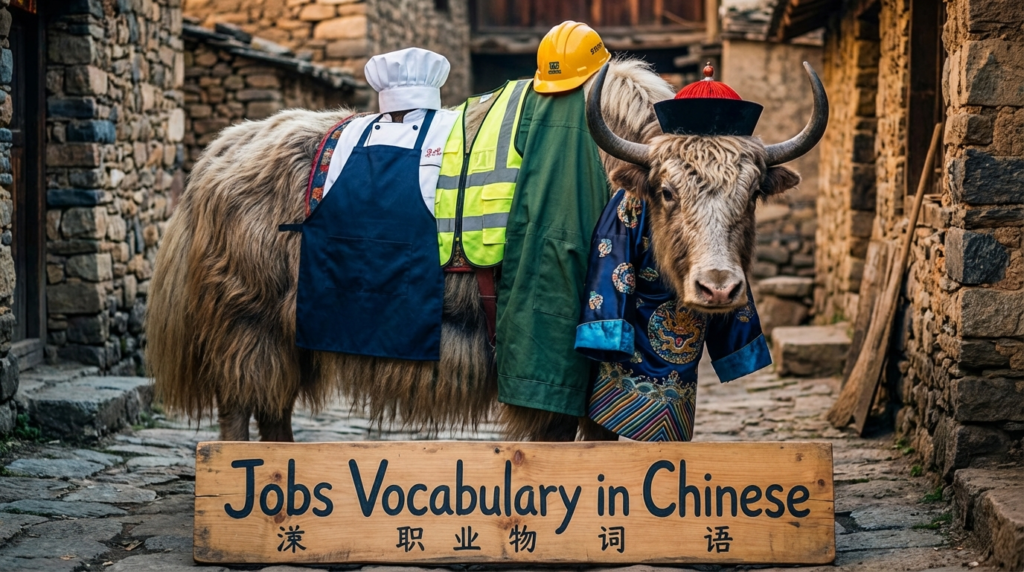
Jobs Vocabulary In Chinese: 50 Essential Occupations And Work Words For Beginners
Learn the words for jobs, workplaces, and work life in Chinese: 工作职业词汇 gōngzuò zhíyè cíhuì.
Useful, practical, and a lot more impressive than pointing at someone in a uniform and hoping for the best.
Talking about jobs in Chinese gets useful fast. You can say what you do, ask what other people do, and understand common job titles without your brain quietly leaving the building.
Two words matter early on: 工作 gōngzuò means work or job, while 职业 zhíyè means profession or occupation. Native speakers use both, but 工作 gōngzuò shows up more in everyday conversation.
Start With These High-Utility Job Words
医生 yīshēng
doctor
我想看医生。Wǒ xiǎng kàn yīshēng. I want to see a doctor.
老师 lǎoshī
teacher
她是一位中文老师。Tā shì yí wèi Zhōngwén lǎoshī. She is a Chinese teacher.
工程师 gōngchéngshī
engineer
他爸爸是工程师。Tā bàba shì gōngchéngshī. His dad is an engineer.
程序员 chéngxùyuán
programmer
他想当程序员。Tā xiǎng dāng chéngxùyuán. He wants to be a programmer.
厨师 chúshī
chef; cook
这个厨师做菜很好吃。Zhège chúshī zuò cài hěn hǎochī. This chef cooks very tasty food.
司机 sījī
driver
司机开车很稳。Sījī kāichē hěn wěn. The driver drives steadily.
警察 jǐngchá
police officer
警察来了,大家安心了。Jǐngchá lái le, dàjiā ānxīn le. The police arrived, and everyone felt relieved.
摄影师 shèyǐngshī
photographer
婚礼摄影师已经到了。Hūnlǐ shèyǐngshī yǐjīng dào le. The wedding photographer has arrived.
Quick Reality Check: when people ask what you do, the easiest answer pattern is 我是 + job title. Wǒ shì + job title. “I am a…” Simple beats fancy every time.
Useful Work Phrases And Real-Life Sentences
| Phrase | Pinyin | Meaning | Example In Chinese | Example In Pinyin | Translation |
|---|---|---|---|---|---|
| 工作 | gōngzuò | work; job | 我的工作很忙。 | Wǒ de gōngzuò hěn máng. | My job is busy. |
| 职业 | zhíyè | profession; occupation | 你的职业是什么? | Nǐ de zhíyè shì shénme? | What is your profession? |
| 公司 | gōngsī | company | 她在大公司上班。 | Tā zài dà gōngsī shàngbān. | She works at a big company. |
| 办公室 | bàngōngshì | office | 我八点到办公室。 | Wǒ bā diǎn dào bàngōngshì. | I get to the office at eight. |
| 工资 | gōngzī | salary | 这个月的工资到了。 | Zhège yuè de gōngzī dào le. | This month’s salary arrived. |
| 面试 | miànshì | interview | 我明天有面试。 | Wǒ míngtiān yǒu miànshì. | I have an interview tomorrow. |
| 简历 | jiǎnlì | résumé; CV | 请把简历发给我。 | Qǐng bǎ jiǎnlì fā gěi wǒ. | Please send me your résumé. |
| 全职 | quánzhí | full-time | 他想找全职工作。 | Tā xiǎng zhǎo quánzhí gōngzuò. | He wants to find a full-time job. |
| 兼职 | jiānzhí | part-time | 我周末做兼职。 | Wǒ zhōumò zuò jiānzhí. | I do part-time work on weekends. |
| 加班 | jiābān | work overtime | 今天晚上我要加班。 | Jīntiān wǎnshang wǒ yào jiābān. | I have to work overtime tonight. |
| 同事 | tóngshì | colleague | 我的同事很友好。 | Wǒ de tóngshì hěn yǒuhǎo. | My colleagues are friendly. |
| 老板 | lǎobǎn | boss | 老板今天不在。 | Lǎobǎn jīntiān bú zài. | The boss is not here today. |
| 客户 | kèhù | client | 我下午要见客户。 | Wǒ xiàwǔ yào jiàn kèhù. | I need to meet a client this afternoon. |
| 上班 | shàngbān | go to work; be at work | 我七点半上班。 | Wǒ qī diǎn bàn shàngbān. | I start work at 7:30. |
A Small Trick That Makes Job Words Easier
A lot of Chinese job titles repeat useful endings. Learn the pattern once, and suddenly your vocabulary grows without all the drama.
| Pattern | Pinyin | What It Often Means | Common Examples |
|---|---|---|---|
| 员 | yuán | staff member; worker | 服务员 fúwùyuán, 店员 diànyuán, 快递员 kuàidìyuán |
| 师 | shī | skilled professional | 老师 lǎoshī, 工程师 gōngchéngshī, 厨师 chúshī |
| 家 | jiā | expert; specialist; artist | 作家 zuòjiā, 科学家 kēxuéjiā |
Common Confusion, Fixed: 工作 gōngzuò is usually the everyday word for “job” or “work.” 职业 zhíyè sounds a bit more formal, more like “profession” or “occupation.” So 你做什么工作?Nǐ zuò shénme gōngzuò? feels very natural in conversation.
Office And Business Jobs
| Hanzi | Pinyin | Meaning | Example In Chinese | Example In Pinyin | Translation |
|---|---|---|---|---|---|
| 经理 | jīnglǐ | manager | 她是销售部经理。 | Tā shì xiāoshòubù jīnglǐ. | She is the sales department manager. |
| 会计 | kuàijì | accountant | 我姐姐是会计。 | Wǒ jiějie shì kuàijì. | My older sister is an accountant. |
| 销售员 | xiāoshòuyuán | salesperson | 那个销售员很会介绍产品。 | Nàge xiāoshòuyuán hěn huì jièshào chǎnpǐn. | That salesperson is good at introducing products. |
| 程序员 | chéngxùyuán | programmer | 他想当程序员。 | Tā xiǎng dāng chéngxùyuán. | He wants to be a programmer. |
| 设计师 | shèjìshī | designer | 这位设计师很有创意。 | Zhè wèi shèjìshī hěn yǒu chuàngyì. | This designer is very creative. |
| 翻译 | fānyì | translator; interpreter | 她做中文翻译。 | Tā zuò Zhōngwén fānyì. | She works as a Chinese translator. |
| 记者 | jìzhě | journalist; reporter | 记者正在采访他。 | Jìzhě zhèngzài cǎifǎng tā. | The reporter is interviewing him. |
| 律师 | lǜshī | lawyer | 我朋友是律师。 | Wǒ péngyou shì lǜshī. | My friend is a lawyer. |
| 工程师 | gōngchéngshī | engineer | 他爸爸是工程师。 | Tā bàba shì gōngchéngshī. | His dad is an engineer. |
Healthcare And Education Jobs
| Hanzi | Pinyin | Meaning | Example In Chinese | Example In Pinyin | Translation |
|---|---|---|---|---|---|
| 医生 | yīshēng | doctor | 我想看医生。 | Wǒ xiǎng kàn yīshēng. | I want to see a doctor. |
| 护士 | hùshi | nurse | 护士很耐心。 | Hùshi hěn nàixīn. | The nurse is very patient. |
| 牙医 | yáyī | dentist | 我明天要去看牙医。 | Wǒ míngtiān yào qù kàn yáyī. | I need to see the dentist tomorrow. |
| 药剂师 | yàojìshī | pharmacist | 药剂师给我说明了用法。 | Yàojìshī gěi wǒ shuōmíng le yòngfǎ. | The pharmacist explained how to use it. |
| 科学家 | kēxuéjiā | scientist | 他小时候想当科学家。 | Tā xiǎoshíhou xiǎng dāng kēxuéjiā. | He wanted to be a scientist when he was little. |
| 老师 | lǎoshī | teacher | 她是一位中文老师。 | Tā shì yí wèi Zhōngwén lǎoshī. | She is a Chinese teacher. |
| 校长 | xiàozhǎng | principal | 校长今天在开会。 | Xiàozhǎng jīntiān zài kāihuì. | The principal is in a meeting today. |
| 教练 | jiàoliàn | coach | 我的游泳教练很严格。 | Wǒ de yóuyǒng jiàoliàn hěn yángé. | My swimming coach is strict. |
| 心理医生 | xīnlǐ yīshēng | psychologist; therapist | 她是心理医生。 | Tā shì xīnlǐ yīshēng. | She is a psychologist. |
Service And Skilled Jobs
| Hanzi | Pinyin | Meaning | Example In Chinese | Example In Pinyin | Translation |
|---|---|---|---|---|---|
| 厨师 | chúshī | chef; cook | 这个厨师做菜很好吃。 | Zhège chúshī zuò cài hěn hǎochī. | This chef cooks very tasty food. |
| 服务员 | fúwùyuán | waiter; server | 服务员马上就来。 | Fúwùyuán mǎshàng jiù lái. | The server will come right away. |
| 司机 | sījī | driver | 司机开车很稳。 | Sījī kāichē hěn wěn. | The driver drives steadily. |
| 理发师 | lǐfàshī | hairdresser | 我的理发师很懂卷发。 | Wǒ de lǐfàshī hěn dǒng juǎnfà. | My hairdresser really understands curly hair. |
| 电工 | diàngōng | electrician | 电工今天来修灯。 | Diàngōng jīntiān lái xiū dēng. | The electrician is coming today to fix the light. |
| 机械师 | jīxièshī | mechanic | 机械师正在检查车。 | Jīxièshī zhèngzài jiǎnchá chē. | The mechanic is checking the car. |
| 清洁工 | qīngjiégōng | cleaner; janitor | 清洁工每天很早上班。 | Qīngjiégōng měitiān hěn zǎo shàngbān. | The cleaner starts work very early every day. |
| 保安 | bǎo’ān | security guard | 保安在门口站着。 | Bǎo’ān zài ménkǒu zhànzhe. | The security guard is standing at the entrance. |
| 店员 | diànyuán | shop assistant; store clerk | 店员帮我找到了尺寸。 | Diànyuán bāng wǒ zhǎodào le chǐcùn. | The store clerk helped me find the size. |
Public, Travel, And Creative Jobs
| Hanzi | Pinyin | Meaning | Example In Chinese | Example In Pinyin | Translation |
|---|---|---|---|---|---|
| 警察 | jǐngchá | police officer | 警察来了,大家安心了。 | Jǐngchá lái le, dàjiā ānxīn le. | The police arrived, and everyone felt relieved. |
| 消防员 | xiāofángyuán | firefighter | 消防员非常勇敢。 | Xiāofángyuán fēicháng yǒnggǎn. | Firefighters are very brave. |
| 农民 | nóngmín | farmer | 我爷爷以前是农民。 | Wǒ yéye yǐqián shì nóngmín. | My grandpa used to be a farmer. |
| 飞行员 | fēixíngyuán | pilot | 他哥哥是飞行员。 | Tā gēge shì fēixíngyuán. | His older brother is a pilot. |
| 空乘人员 | kōngchéng rényuán | flight attendant; cabin crew | 空乘人员给我们发水。 | Kōngchéng rényuán gěi wǒmen fā shuǐ. | The cabin crew handed out water to us. |
| 快递员 | kuàidìyuán | delivery worker; courier | 快递员刚刚打电话给我。 | Kuàidìyuán gānggang dǎ diànhuà gěi wǒ. | The courier just called me. |
| 摄影师 | shèyǐngshī | photographer | 婚礼摄影师已经到了。 | Hūnlǐ shèyǐngshī yǐjīng dào le. | The wedding photographer has arrived. |
| 作家 | zuòjiā | writer | 她想成为作家。 | Tā xiǎng chéngwéi zuòjiā. | She wants to become a writer. |
| 演员 | yǎnyuán | actor; actress | 那个演员很有名。 | Nàge yǎnyuán hěn yǒumíng. | That actor is very famous. |
Quick Reference Sentence Patterns
- 我是老师。Wǒ shì lǎoshī. I am a teacher.
- 我在医院上班。Wǒ zài yīyuàn shàngbān. I work at a hospital.
- 她在公司做会计。Tā zài gōngsī zuò kuàijì. She works as an accountant at a company.
- 你做什么工作?Nǐ zuò shénme gōngzuò? What job do you do?
- 他的职业是工程师。Tā de zhíyè shì gōngchéngshī. His profession is engineer.
Yak Box: The Fastest Way To Sound Natural
When in doubt, answer with a short sentence first. 我是医生。Wǒ shì yīshēng. I am a doctor. Clean, simple, correct. You can always add details later. No medal is given for making your first answer weirdly complicated.
A second easy pattern is 我在 + place + 上班. Wǒ zài + place + shàngbān. That lets you say where you work even when you forget the exact job title. Very useful. Mildly heroic.
FAQ
How Do You Ask Someone’s Job In Chinese?
The most natural beginner-friendly question is 你做什么工作?Nǐ zuò shénme gōngzuò? It means “What job do you do?” You can also ask 你的职业是什么?Nǐ de zhíyè shì shénme? but that sounds a bit more formal.
What Is The Difference Between 工作 And 职业?
工作 gōngzuò is the everyday word for work or job. 职业 zhíyè means profession or occupation and feels more formal. In normal conversation, 工作 gōngzuò wins a lot.
Do Chinese Job Titles Change For Men And Women?
Usually, no. 老师 lǎoshī, 医生 yīshēng, 律师 lǜshī, and many other job titles stay the same regardless of gender. Nice and efficient, which is refreshingly unchaotic.