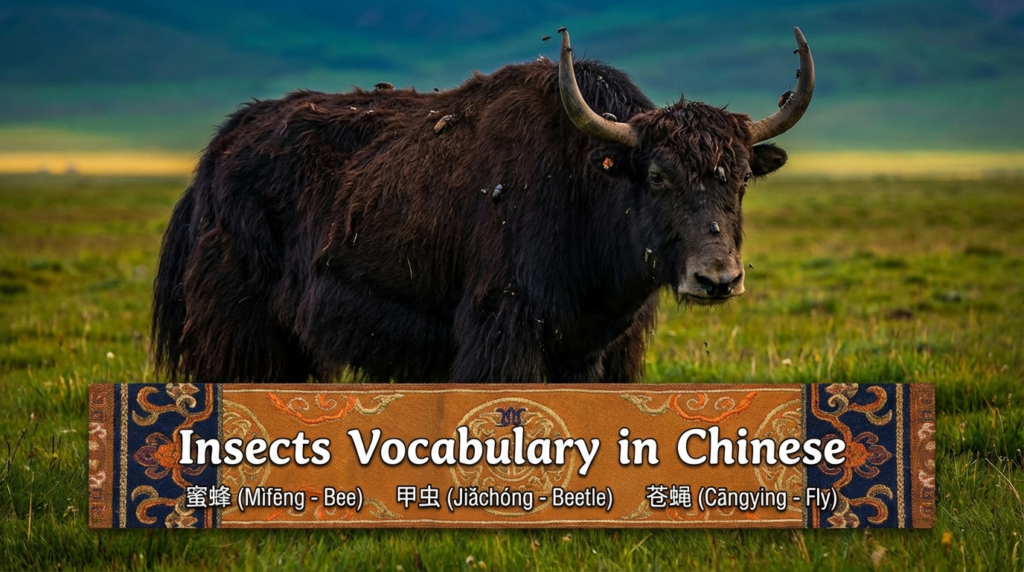
Insects Vocabulary In Chinese
Learn common insect words in simplified Chinese: 昆虫 kūnchóng, plus the creepy-crawly extras people actually say in daily life.
Bugs show up everywhere in real life Chinese: in parks, in summer chats, in children’s books, and in those very dramatic moments when something flies into the room and everyone suddenly becomes an athlete. So yes, insect vocabulary is oddly useful.
This guide gives you the everyday words, pinyin with tone marks, plain-English meanings, and easy example sentences. No need to memorize a science textbook just to say “There’s a mosquito on the wall.” Civilization can survive without that level of suffering.
Yak Tip
In normal conversation, people often use 虫 chóng for “bug” in a broad way, even when the creature is not strictly an insect. Everyday language is practical like that. Biology can complain later.
Quick Visual Cards
蝴蝶 húdié
butterfly
一只蝴蝶 yì zhī húdié 停在花上。
A butterfly lands on the flower.
蚊子 wénzi
mosquito
夏天蚊子很多。Xiàtiān wénzi hěn duō.
There are many mosquitoes in summer.
蜜蜂 mìfēng
bee
蜜蜂在花园里飞。Mìfēng zài huāyuán lǐ fēi.
The bees fly around in the garden.
蚂蚁 mǎyǐ
ant
地上有一排蚂蚁。Dìshang yǒu yì pái mǎyǐ.
There is a line of ants on the ground.
苍蝇 cāngying
fly
那只苍蝇一直飞来飞去。Nà zhī cāngying yìzhí fēi lái fēi qù.
That fly keeps buzzing around.
蜻蜓 qīngtíng
dragonfly
池塘边有很多蜻蜓。Chítáng biān yǒu hěn duō qīngtíng.
There are many dragonflies by the pond.
瓢虫 piáochóng
ladybug
这只瓢虫很小,很可爱。Zhè zhī piáochóng hěn xiǎo, hěn kě’ài.
This ladybug is tiny and cute.
蟋蟀 xīshuài
cricket
晚上能听到蟋蟀叫。Wǎnshang néng tīngdào xīshuài jiào.
At night you can hear crickets chirping.
Useful Phrases And Real-Life Sentences
- 有虫子 yǒu chóngzi — there is a bug
墙上有虫子。Qiáng shang yǒu chóngzi. — There is a bug on the wall. - 好多蚊子 hǎo duō wénzi — so many mosquitoes
今天晚上好多蚊子。Jīntiān wǎnshang hǎo duō wénzi. — There are so many mosquitoes tonight. - 被蚊子咬了 bèi wénzi yǎo le — got bitten by mosquitoes
我昨天晚上被蚊子咬了。Wǒ zuótiān wǎnshang bèi wénzi yǎo le. — I got bitten by mosquitoes last night. - 蜜蜂会蜇人 mìfēng huì zhē rén — bees can sting people
别碰它,蜜蜂会蜇人。Bié pèng tā, mìfēng huì zhē rén. — Don’t touch it, bees can sting people. - 蝴蝶停在花上 húdié tíng zài huā shàng — the butterfly lands on the flower
看,蝴蝶停在花上了。Kàn, húdié tíng zài huā shàng le. — Look, the butterfly landed on the flower. - 蚂蚁在搬东西 mǎyǐ zài bān dōngxi — ants are carrying something
那些蚂蚁在搬面包屑。Nàxiē mǎyǐ zài bān miànbāoxiè. — Those ants are carrying bread crumbs. - 苍蝇很烦 cāngying hěn fán — flies are annoying
夏天的苍蝇真的很烦。Xiàtiān de cāngying zhēn de hěn fán. — Summer flies are really annoying. - 昆虫很多 kūnchóng hěn duō — there are many insects
公园里昆虫很多。Gōngyuán lǐ kūnchóng hěn duō. — There are many insects in the park. - 虫子爬出来了 chóngzi pá chūlái le — the bug crawled out
盒子里有虫子爬出来了。Hézi lǐ yǒu chóngzi pá chūlái le. — A bug crawled out of the box. - 它会飞 tā huì fēi — it can fly
这种小虫子会飞。Zhè zhǒng xiǎo chóngzi huì fēi. — This kind of little bug can fly. - 它会跳 tā huì tiào — it can jump
蚱蜢会跳得很远。Zhàměng huì tiào de hěn yuǎn. — Grasshoppers can jump very far. - 别打它 bié dǎ tā — don’t hit it
那是瓢虫,别打它。Nà shì piáochóng, bié dǎ tā. — That’s a ladybug, don’t hit it.
Common Insect Words
| Hanzi | Pinyin | Meaning | Example (ZH) | Example (Pinyin) | Translation (EN) |
|---|---|---|---|---|---|
| 昆虫 | kūnchóng | insect | 孩子们在看昆虫。 | Háizimen zài kàn kūnchóng. | The children are looking at insects. |
| 虫子 | chóngzi | bug; worm; creepy-crawly thing | 这个盒子里有虫子。 | Zhège hézi lǐ yǒu chóngzi. | There is a bug in this box. |
| 蝴蝶 | húdié | butterfly | 蝴蝶喜欢花。 | Húdié xǐhuan huā. | Butterflies like flowers. |
| 飞蛾 | féi’é | moth | 晚上灯边有飞蛾。 | Wǎnshang dēng biān yǒu féi’é. | There are moths near the light at night. |
| 蜜蜂 | mìfēng | bee | 蜜蜂在采花蜜。 | Mìfēng zài cǎi huāmì. | The bees are collecting nectar. |
| 黄蜂 | huángfēng | wasp | 树下有黄蜂,小心一点。 | Shù xià yǒu huángfēng, xiǎoxīn yìdiǎn. | There are wasps under the tree, be careful. |
| 蚊子 | wénzi | mosquito | 我最讨厌蚊子。 | Wǒ zuì tǎoyàn wénzi. | I hate mosquitoes the most. |
| 苍蝇 | cāngying | fly | 厨房里有一只苍蝇。 | Chúfáng lǐ yǒu yì zhī cāngying. | There is a fly in the kitchen. |
| 蜻蜓 | qīngtíng | dragonfly | 夏天常常能看到蜻蜓。 | Xiàtiān chángcháng néng kàndào qīngtíng. | You can often see dragonflies in summer. |
| 瓢虫 | piáochóng | ladybug | 叶子上有一只瓢虫。 | Yèzi shàng yǒu yì zhī piáochóng. | There is a ladybug on the leaf. |
Small Crawlers And Garden Bugs
| Hanzi | Pinyin | Meaning | Example (ZH) | Example (Pinyin) | Translation (EN) |
|---|---|---|---|---|---|
| 蚂蚁 | mǎyǐ | ant | 蚂蚁在地上排队。 | Mǎyǐ zài dìshang páiduì. | The ants are lined up on the ground. |
| 白蚁 | báiyǐ | termite | 木头里可能有白蚁。 | Mùtou lǐ kěnéng yǒu báiyǐ. | There may be termites in the wood. |
| 毛毛虫 | máomaochóng | caterpillar | 毛毛虫在慢慢爬。 | Máomaochóng zài mànmàn pá. | The caterpillar is crawling slowly. |
| 甲虫 | jiǎchóng | beetle | 这只甲虫壳很硬。 | Zhè zhī jiǎchóng ké hěn yìng. | This beetle has a hard shell. |
| 独角仙 | dújiǎoxiān | rhinoceros beetle | 孩子觉得独角仙很酷。 | Háizi juéde dújiǎoxiān hěn kù. | Kids think rhinoceros beetles are cool. |
| 金龟子 | jīnguīzǐ | chafer beetle | 晚上窗边有金龟子。 | Wǎnshang chuāng biān yǒu jīnguīzǐ. | There are chafer beetles by the window at night. |
| 蟑螂 | zhāngláng | cockroach | 厨房里突然跑出一只蟑螂。 | Chúfáng lǐ tūrán pǎochū yì zhī zhāngláng. | A cockroach suddenly ran out in the kitchen. |
| 跳蚤 | tiàozao | flea | 狗身上可能有跳蚤。 | Gǒu shēnshang kěnéng yǒu tiàozao. | The dog may have fleas. |
| 虱子 | shīzi | louse | 这种学校故事里常提到虱子。 | Zhè zhǒng xuéxiào gùshi lǐ cháng tídào shīzi. | Lice are often mentioned in these school stories. |
| 臭虫 | chòuchóng | stink bug; bed bug in some contexts | 窗户上停着一只臭虫。 | Chuānghu shàng tíngzhe yì zhī chòuchóng. | A stink bug is resting on the window. |
Jumping, Singing, And Flying Insects
| Hanzi | Pinyin | Meaning | Example (ZH) | Example (Pinyin) | Translation (EN) |
|---|---|---|---|---|---|
| 蚱蜢 | zhàměng | grasshopper | 蚱蜢一下就跳走了。 | Zhàměng yíxià jiù tiàozǒu le. | The grasshopper jumped away at once. |
| 蝗虫 | huángchóng | locust | 新闻里提到过蝗虫。 | Xīnwén lǐ tídào guò huángchóng. | Locusts were mentioned in the news. |
| 蟋蟀 | xīshuài | cricket | 秋天晚上常听到蟋蟀。 | Qiūtiān wǎnshang cháng tīngdào xīshuài. | You often hear crickets on autumn nights. |
| 蝉 | chán | cicada | 夏天的蝉叫得很大声。 | Xiàtiān de chán jiào de hěn dà shēng. | Cicadas are very loud in summer. |
| 萤火虫 | yínghuǒchóng | firefly | 小时候我见过萤火虫。 | Xiǎoshíhou wǒ jiànguo yínghuǒchóng. | I saw fireflies when I was little. |
| 螳螂 | tángláng | mantis | 那只螳螂停在树枝上。 | Nà zhī tángláng tíng zài shùzhī shàng. | That mantis is resting on the branch. |
| 天牛 | tiānniú | longhorn beetle | 天牛的触角很长。 | Tiānniú de chùjiǎo hěn cháng. | A longhorn beetle has very long antennae. |
| 竹节虫 | zhújiéchóng | stick insect | 竹节虫看起来像树枝。 | Zhújiéchóng kàn qǐlái xiàng shùzhī. | A stick insect looks like a twig. |
| 水黾 | shuǐmǐn | water strider | 池塘上有几只水黾。 | Chítáng shàng yǒu jǐ zhī shuǐmǐn. | There are a few water striders on the pond. |
| 蚊蝇 | wényíng | gnats; tiny flying bugs | 灯下有很多蚊蝇。 | Dēng xià yǒu hěn duō wényíng. | There are many tiny flying bugs under the light. |
Body Parts, Life Cycle, And Bug Actions
| Hanzi | Pinyin | Meaning | Example (ZH) | Example (Pinyin) | Translation (EN) |
|---|---|---|---|---|---|
| 翅膀 | chìbǎng | wing | 蝴蝶的翅膀很漂亮。 | Húdié de chìbǎng hěn piàoliang. | A butterfly’s wings are beautiful. |
| 触角 | chùjiǎo | antenna | 昆虫有触角。 | Kūnchóng yǒu chùjiǎo. | Insects have antennae. |
| 壳 | ké | shell | 甲虫的壳很硬。 | Jiǎchóng de ké hěn yìng. | A beetle’s shell is hard. |
| 幼虫 | yòuchóng | larva | 这种昆虫的幼虫很小。 | Zhè zhǒng kūnchóng de yòuchóng hěn xiǎo. | The larva of this insect is very small. |
| 蛹 | yǒng | pupa | 毛毛虫会变成蛹。 | Máomaochóng huì biànchéng yǒng. | A caterpillar turns into a pupa. |
| 卵 | luǎn | egg | 叶子背面有虫卵。 | Yèzi bèimiàn yǒu chóngluǎn. | There are insect eggs on the back of the leaf. |
| 蜕皮 | tuìpí | to shed skin | 蝉会蜕皮。 | Chán huì tuìpí. | Cicadas shed their skin. |
| 飞 | fēi | to fly | 蜜蜂飞得很快。 | Mìfēng fēi de hěn kuài. | Bees fly very fast. |
| 爬 | pá | to crawl | 毛毛虫在叶子上爬。 | Máomaochóng zài yèzi shàng pá. | The caterpillar is crawling on the leaf. |
| 咬 | yǎo | to bite | 蚊子会咬人。 | Wénzi huì yǎo rén. | Mosquitoes bite people. |
More Useful Words You Will Actually Hear
| Hanzi | Pinyin | Meaning | Example (ZH) | Example (Pinyin) | Translation (EN) |
|---|---|---|---|---|---|
| 蜇 | zhē | to sting | 黄蜂会蜇人。 | Huángfēng huì zhē rén. | Wasps sting people. |
| 叮 | dīng | to sting; to bite lightly | 我被蚊子叮了。 | Wǒ bèi wénzi dīng le. | I got bitten by a mosquito. |
| 虫咬 | chóngyǎo | insect bite | 她手上有虫咬的红点。 | Tā shǒu shàng yǒu chóngyǎo de hóngdiǎn. | She has red insect-bite spots on her hand. |
| 驱蚊液 | qūwényè | mosquito repellent | 出门前先喷驱蚊液。 | Chūmén qián xiān pēn qūwényè. | Spray mosquito repellent before going out. |
| 杀虫剂 | shāchóngjì | insecticide | 有人会用杀虫剂对付蟑螂。 | Yǒurén huì yòng shāchóngjì duìfu zhāngláng. | Some people use insecticide against cockroaches. |
| 虫网 | chóngwǎng | insect net | 孩子拿着虫网去抓蝴蝶。 | Háizi názhe chóngwǎng qù zhuā húdié. | The child takes a net to catch butterflies. |
| 抓 | zhuā | to catch | 别用手抓那只虫子。 | Bié yòng shǒu zhuā nà zhī chóngzi. | Don’t catch that bug with your hand. |
| 观察 | guānchá | to observe | 我们在公园观察昆虫。 | Wǒmen zài gōngyuán guānchá kūnchóng. | We observe insects in the park. |
| 一只 | yì zhī | one; classifier for many animals | 我看到一只蜜蜂。 | Wǒ kàndào yì zhī mìfēng. | I saw a bee. |
| 一群 | yì qún | a group of | 花边有一群蝴蝶。 | Huā biān yǒu yì qún húdié. | There is a group of butterflies near the flowers. |
Common Confusions
- 虫子 chóngzi is the broad everyday word for “bug.” It is very useful.
- 昆虫 kūnchóng sounds a bit more scientific: “insect.”
- 叮 dīng is commonly used for mosquito bites, while 蜇 zhē is used for stings from bees or wasps.
- 一只 yì zhī is the common classifier for many insects: 一只蚊子 yì zhī wénzi, one mosquito.
Quick Practice
- Translate it: “There is a fly in the room.”
房间里有一只苍蝇。Fángjiān lǐ yǒu yì zhī cāngying. - Translate it: “I got bitten by mosquitoes.”
我被蚊子叮了。Wǒ bèi wénzi dīng le. - Swap the insect: 蝴蝶 húdié in 蝴蝶停在花上。Húdié tíng zài huā shàng.
Try 蜻蜓 qīngtíng or 蜜蜂 mìfēng. - Say what it does: 蚱蜢 zhàměng 会跳。huì tiào — Grasshoppers can jump.
- Say what it has: 昆虫有触角。Kūnchóng yǒu chùjiǎo. — Insects have antennae.
Quick Reference Summary
- bug — 虫子 chóngzi
- insect — 昆虫 kūnchóng
- mosquito — 蚊子 wénzi
- butterfly — 蝴蝶 húdié
- bee — 蜜蜂 mìfēng
- ant — 蚂蚁 mǎyǐ
- cockroach — 蟑螂 zhāngláng
- to bite — 咬 yǎo
- to sting — 蜇 zhē
- one insect — 一只 yì zhī
Final Yak Box
The smartest beginner move is not learning every insect on Earth. It is learning the words you will actually use: 虫子 chóngzi, 蚊子 wénzi, 蜜蜂 mìfēng, 蝴蝶 húdié, 蚂蚁 mǎyǐ, and 蟑螂 zhāngláng. That already covers nature walks, summer complaints, and household panic. Honestly, that is a pretty productive day.