Chinese Condiments Vocabulary For Beginners
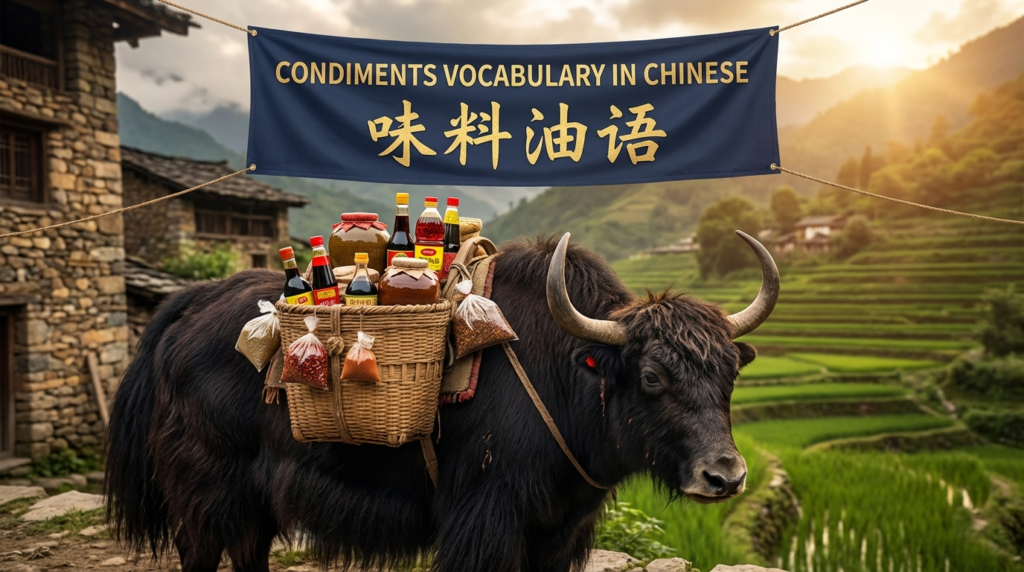
Learn the words for condiments in simplified Chinese: 调味品 tiáowèipǐn. Because asking for “the red sauce thing” only works until it really, really doesn’t.
Condiments show up everywhere: home kitchens, noodle shops, hot pot tables, dumpling counters, and that one fridge door where twelve half-used bottles go to retire. If you can name them in Chinese, you can cook better, order smarter, and sound a lot less lost.
Below, you will learn common Chinese condiment words with 汉字 hànzì, pinyin, English meanings, and real example sentences. Everything is in simplified Chinese, and every Chinese term comes with pinyin right beside it, like a decent friend should.
Yak Tip
In Chinese, “sauce” is not one magical catch-all word. 酱 jiàng usually means thick sauce or paste, 汁 zhī often means juice or liquid sauce, and 油 yóu means oil. Tiny difference, big survival upgrade.
Must-Know Condiment Cards
酱油 jiàngyóu
Soy sauce
我做饭常用酱油。Wǒ zuòfàn cháng yòng jiàngyóu. I often use soy sauce when cooking.
醋 cù
Vinegar
饺子要蘸醋。Jiǎozi yào zhàn cù. Dumplings should be dipped in vinegar.
辣椒酱 làjiāojiàng
Chili sauce
他吃面一定要加辣椒酱。Tā chī miàn yídìng yào jiā làjiāojiàng. He always adds chili sauce to noodles.
番茄酱 fānqiéjiàng
Ketchup
孩子喜欢薯条配番茄酱。Háizi xǐhuan shǔtiáo pèi fānqiéjiàng. Kids like fries with ketchup.
蚝油 háoyóu
Oyster sauce
青菜加一点蚝油很好吃。Qīngcài jiā yìdiǎn háoyóu hěn hǎochī. Greens taste great with a little oyster sauce.
芝麻油 zhīmayóu
Sesame oil
凉菜里放几滴芝麻油更香。Liángcài lǐ fàng jǐ dī zhīmayóu gèng xiāng. A few drops of sesame oil make cold dishes more fragrant.
豆瓣酱 dòubànjiàng
Broad bean chili paste
麻婆豆腐常用豆瓣酱。Mápó dòufu cháng yòng dòubànjiàng. Mapo tofu often uses broad bean chili paste.
花生酱 huāshēngjiàng
Peanut sauce / peanut butter
他喜欢用花生酱拌面。Tā xǐhuan yòng huāshēngjiàng bànmiàn. He likes mixing noodles with peanut sauce.
Useful Phrases And Real-Life Sentences
- 请给我一点酱油。Qǐng gěi wǒ yìdiǎn jiàngyóu. Please give me a little soy sauce.
- 这道菜要不要放醋?Zhè dào cài yàobuyào fàng cù? Should this dish have vinegar?
- 我不太能吃辣,少放辣椒油。Wǒ bú tài néng chī là, shǎo fàng làjiāoyóu. I cannot handle much spicy food, so use less chili oil.
- 麻烦把盐递给我。Máfan bǎ yán dì gěi wǒ. Please pass me the salt.
- 这个蘸料里有什么?Zhège zhànliào lǐ yǒu shénme? What is in this dipping sauce?
- 你们有甜辣酱吗?Nǐmen yǒu tiánlàjiàng ma? Do you have sweet chili sauce?
- 我想多加一点蒜泥。Wǒ xiǎng duō jiā yìdiǎn suànní. I want to add a little more mashed garlic.
- 火锅可以自己调蘸料。Huǒguō kěyǐ zìjǐ tiáo zhànliào. At hot pot, you can mix your own dipping sauce.
- 凉拌黄瓜要放香油。Liángbàn huángguā yào fàng xiāngyóu. Smashed cucumber salad needs sesame oil.
- 这个酱太咸了。Zhège jiàng tài xián le. This sauce is too salty.
- 那瓶老抽是上色用的。Nà píng lǎochōu shì shàngsè yòng de. That bottle of dark soy sauce is for color.
- 生抽比较适合调味。Shēngchōu bǐjiào shìhé tiáowèi. Light soy sauce is more suitable for seasoning.
Quick Notes That Save You From Sauce Confusion
生抽 shēngchōu Vs. 老抽 lǎochōu
生抽 shēngchōu is light soy sauce and is mostly used for seasoning. 老抽 lǎochōu is dark soy sauce and is often used to add color. Same family, very different jobs.
这道红烧肉要加老抽。Zhè dào hóngshāoròu yào jiā lǎochōu. This braised pork dish needs dark soy sauce.
香油 xiāngyóu Vs. 芝麻油 zhīmayóu
In everyday speech, 香油 xiāngyóu and 芝麻油 zhīmayóu often both mean sesame oil. 香油 xiāngyóu is just more common in some contexts. Language loves a duplicate. Kitchens do too.
请在汤里滴一点香油。Qǐng zài tāng lǐ dī yìdiǎn xiāngyóu. Please add a few drops of sesame oil to the soup.
Salty Sauces And Everyday Seasonings
| Hanzi | Pinyin | Meaning | Example (ZH) | Example (Pinyin) | Translation (EN) |
|---|---|---|---|---|---|
| 酱油 | jiàngyóu | soy sauce | 炒菜要放一点酱油。 | Chǎocài yào fàng yìdiǎn jiàngyóu. | Stir-fried dishes need a little soy sauce. |
| 生抽 | shēngchōu | light soy sauce | 生抽适合拌菜。 | Shēngchōu shìhé bàncài. | Light soy sauce is good for mixed dishes. |
| 老抽 | lǎochōu | dark soy sauce | 老抽让菜颜色更深。 | Lǎochōu ràng cài yánsè gèng shēn. | Dark soy sauce makes the dish darker. |
| 蚝油 | háoyóu | oyster sauce | 西兰花配蚝油很好吃。 | Xīlánhuā pèi háoyóu hěn hǎochī. | Broccoli tastes great with oyster sauce. |
| 鱼露 | yúlù | fish sauce | 这个酱里有一点鱼露。 | Zhège jiàng lǐ yǒu yìdiǎn yúlù. | There is a little fish sauce in this sauce. |
| 盐 | yán | salt | 汤里盐太多了。 | Tāng lǐ yán tài duō le. | There is too much salt in the soup. |
| 鸡精 | jījīng | chicken bouillon seasoning | 有些人做汤会加鸡精。 | Yǒuxiē rén zuò tāng huì jiā jījīng. | Some people add chicken bouillon seasoning when making soup. |
| 味精 | wèijīng | MSG | 这家店做菜不放味精。 | Zhè jiā diàn zuòcài bù fàng wèijīng. | This restaurant does not use MSG in its cooking. |
| 酱 | jiàng | sauce / paste | 这是什么酱? | Zhè shì shénme jiàng? | What sauce is this? |
Spicy Condiments
| Hanzi | Pinyin | Meaning | Example (ZH) | Example (Pinyin) | Translation (EN) |
|---|---|---|---|---|---|
| 辣椒酱 | làjiāojiàng | chili sauce | 我想要一点辣椒酱。 | Wǒ xiǎng yào yìdiǎn làjiāojiàng. | I want a little chili sauce. |
| 辣椒油 | làjiāoyóu | chili oil | 面上面放了很多辣椒油。 | Miàn shàngmiàn fàng le hěn duō làjiāoyóu. | A lot of chili oil was added on top of the noodles. |
| 辣酱 | làjiàng | spicy sauce | 这个辣酱很香。 | Zhège làjiàng hěn xiāng. | This spicy sauce is very fragrant. |
| 豆瓣酱 | dòubànjiàng | broad bean chili paste | 川菜里常用豆瓣酱。 | Chuāncài lǐ cháng yòng dòubànjiàng. | Sichuan dishes often use broad bean chili paste. |
| 剁椒 | duòjiāo | chopped chili | 剁椒鱼头很有名。 | Duòjiāo yútóu hěn yǒumíng. | Chopped chili fish head is very famous. |
| 甜辣酱 | tiánlàjiàng | sweet chili sauce | 炸鸡可以蘸甜辣酱。 | Zhájī kěyǐ zhàn tiánlàjiàng. | Fried chicken can be dipped in sweet chili sauce. |
| 花椒油 | huājiāoyóu | Sichuan pepper oil | 花椒油有麻味。 | Huājiāoyóu yǒu máwèi. | Sichuan pepper oil has a numbing taste. |
| 辣椒粉 | làjiāofěn | chili powder | 烧烤上会撒辣椒粉。 | Shāokǎo shàng huì sǎ làjiāofěn. | Chili powder is sprinkled on barbecue. |
| 辣椒面 | làjiāomiàn | ground chili flakes | 蘸水里常放辣椒面。 | Zhànshuǐ lǐ cháng fàng làjiāomiàn. | Ground chili flakes are often added to dipping sauce. |
Sweet, Sour, And Tangy Favorites
| Hanzi | Pinyin | Meaning | Example (ZH) | Example (Pinyin) | Translation (EN) |
|---|---|---|---|---|---|
| 醋 | cù | vinegar | 北方人吃饺子爱放醋。 | Běifāngrén chī jiǎozi ài fàng cù. | People in northern China like vinegar with dumplings. |
| 陈醋 | chéncù | mature vinegar | 山西陈醋很有名。 | Shānxī chéncù hěn yǒumíng. | Shanxi mature vinegar is very famous. |
| 白醋 | báicù | white vinegar | 凉拌菜可以用白醋。 | Liángbàncài kěyǐ yòng báicù. | Cold mixed dishes can use white vinegar. |
| 香醋 | xiāngcù | black fragrant vinegar | 小笼包常配香醋。 | Xiǎolóngbāo cháng pèi xiāngcù. | Soup dumplings are often served with black fragrant vinegar. |
| 番茄酱 | fānqiéjiàng | ketchup | 孩子喜欢番茄酱的味道。 | Háizi xǐhuan fānqiéjiàng de wèidào. | Kids like the taste of ketchup. |
| 沙拉酱 | shālājiàng | salad dressing / mayonnaise-style sauce | 水果沙拉里加了沙拉酱。 | Shuǐguǒ shālā lǐ jiā le shālājiàng. | Salad dressing was added to the fruit salad. |
| 蛋黄酱 | dànhuángjiàng | mayonnaise | 三明治里有蛋黄酱。 | Sānmíngzhì lǐ yǒu dànhuángjiàng. | There is mayonnaise in the sandwich. |
| 蜂蜜 | fēngmì | honey | 烤鸡翅上刷了一层蜂蜜。 | Kǎo jīchì shàng shuā le yì céng fēngmì. | A layer of honey was brushed onto the chicken wings. |
| 糖浆 | tángjiāng | syrup | 甜品上面加了糖浆。 | Tiánpǐn shàngmiàn jiā le tángjiāng. | Syrup was added on top of the dessert. |
Oils, Pastes, And Aromatic Helpers
| Hanzi | Pinyin | Meaning | Example (ZH) | Example (Pinyin) | Translation (EN) |
|---|---|---|---|---|---|
| 芝麻油 | zhīmayóu | sesame oil | 芝麻油味道很香。 | Zhīmayóu wèidào hěn xiāng. | Sesame oil smells very fragrant. |
| 香油 | xiāngyóu | sesame oil | 汤快好了,再放点香油。 | Tāng kuài hǎo le, zài fàng diǎn xiāngyóu. | The soup is almost ready, add a little sesame oil. |
| 蒜泥 | suànní | mashed garlic | 海鲜蘸蒜泥很好吃。 | Hǎixiān zhàn suànní hěn hǎochī. | Seafood tastes great dipped in mashed garlic. |
| 姜末 | jiāngmò | minced ginger | 这个酱里有姜末。 | Zhège jiàng lǐ yǒu jiāngmò. | This sauce contains minced ginger. |
| 葱花 | cōnghuā | chopped scallions | 面上撒了很多葱花。 | Miàn shàng sǎ le hěn duō cōnghuā. | A lot of chopped scallions were sprinkled on the noodles. |
| 芝麻酱 | zhīmajiàng | sesame paste | 麻酱面会用芝麻酱。 | Májiàngmiàn huì yòng zhīmajiàng. | Sesame noodles use sesame paste. |
| 花生酱 | huāshēngjiàng | peanut sauce / peanut butter | 花生酱拌面很浓。 | Huāshēngjiàng bànmiàn hěn nóng. | Peanut sauce makes noodles rich and thick. |
| 腐乳 | fǔrǔ | fermented tofu spread | 有些人吃馒头会配腐乳。 | Yǒuxiē rén chī mántou huì pèi fǔrǔ. | Some people eat steamed buns with fermented tofu spread. |
| 豆豉 | dòuchǐ | fermented black beans | 豆豉辣酱很下饭。 | Dòuchǐ làjiàng hěn xiàfàn. | Black bean chili sauce goes very well with rice. |
Dipping Sauces And Table Extras
| Hanzi | Pinyin | Meaning | Example (ZH) | Example (Pinyin) | Translation (EN) |
|---|---|---|---|---|---|
| 蘸料 | zhànliào | dipping sauce mix | 火锅店有很多蘸料。 | Huǒguōdiàn yǒu hěn duō zhànliào. | Hot pot restaurants have many dipping sauce ingredients. |
| 蘸水 | zhànshuǐ | dipping sauce | 贵州菜常配蘸水。 | Guìzhōu cài cháng pèi zhànshuǐ. | Guizhou dishes are often served with dipping sauce. |
| 酱汁 | jiàngzhī | sauce | 鸡肉上面淋了酱汁。 | Jīròu shàngmiàn lín le jiàngzhī. | Sauce was poured over the chicken. |
| 调料 | tiáoliào | seasoning | 厨房里的调料很多。 | Chúfáng lǐ de tiáoliào hěn duō. | There are many seasonings in the kitchen. |
| 调味品 | tiáowèipǐn | condiments / seasonings | 超市里有一排调味品。 | Chāoshì lǐ yǒu yì pái tiáowèipǐn. | There is a whole aisle of condiments in the supermarket. |
| 黑胡椒 | hēihújiāo | black pepper | 牛排上要撒黑胡椒。 | Niúpái shàng yào sǎ hēihújiāo. | Black pepper should be sprinkled on the steak. |
| 白胡椒 | báihújiāo | white pepper | 汤里放白胡椒更合适。 | Tāng lǐ fàng báihújiāo gèng héshì. | White pepper is more suitable in soup. |
| 孜然粉 | zīránfěn | cumin powder | 羊肉串上有很多孜然粉。 | Yángròuchuàn shàng yǒu hěn duō zīránfěn. | There is a lot of cumin powder on the lamb skewers. |
| 椒盐 | jiāoyán | pepper salt | 炸虾可以蘸椒盐。 | Zhàxiā kěyǐ zhàn jiāoyán. | Fried shrimp can be dipped in pepper salt. |
Extra Useful Condiment Words
| Hanzi | Pinyin | Meaning | Example (ZH) | Example (Pinyin) | Translation (EN) |
|---|---|---|---|---|---|
| 白糖 | báitáng | white sugar | 这个酱里加了一点白糖。 | Zhège jiàng lǐ jiā le yìdiǎn báitáng. | A little white sugar was added to this sauce. |
| 红糖 | hóngtáng | brown sugar | 红糖让味道更浓。 | Hóngtáng ràng wèidào gèng nóng. | Brown sugar makes the flavor richer. |
| 料酒 | liàojiǔ | cooking wine | 腌肉时可以放一点料酒。 | Yānròu shí kěyǐ fàng yìdiǎn liàojiǔ. | You can add a little cooking wine when marinating meat. |
| 卤汁 | lǔzhī | braising sauce | 鸡蛋泡在卤汁里很入味。 | Jīdàn pào zài lǔzhī lǐ hěn rùwèi. | Eggs soaked in braising sauce absorb a lot of flavor. |
| 咖喱酱 | gālíjiàng | curry sauce | 这家店的咖喱酱很浓。 | Zhè jiā diàn de gālíjiàng hěn nóng. | This restaurant’s curry sauce is rich and thick. |
| 芥末 | jièmò | mustard / wasabi-style paste | 寿司旁边有一点芥末。 | Shòusī pángbiān yǒu yìdiǎn jièmò. | There is a little mustard next to the sushi. |
| 果酱 | guǒjiàng | jam | 面包上抹果酱很好吃。 | Miànbāo shàng mǒ guǒjiàng hěn hǎochī. | Spreading jam on bread is delicious. |
| 炼乳 | liànrǔ | condensed milk | 炸馒头可以蘸炼乳。 | Zhámántou kěyǐ zhàn liànrǔ. | Fried mantou can be dipped in condensed milk. |
| 花生碎 | huāshēngsuì | crushed peanuts | 凉皮上常撒花生碎。 | Liángpí shàng cháng sǎ huāshēngsuì. | Crushed peanuts are often sprinkled on cold noodles. |
Condiment Variants And Handy Pairs
| Pair | Meaning | Difference | Example (ZH) | Example (Pinyin) | Translation (EN) |
|---|---|---|---|---|---|
| 生抽 shēngchōu / 老抽 lǎochōu | light soy sauce / dark soy sauce | Flavoring vs. coloring | 做红烧菜常用老抽。 | Zuò hóngshāo cài cháng yòng lǎochōu. | Dark soy sauce is often used for braised dishes. |
| 芝麻油 zhīmayóu / 香油 xiāngyóu | sesame oil / sesame oil | Often the same in daily speech | 这道凉菜加香油更香。 | Zhè dào liángcài jiā xiāngyóu gèng xiāng. | This cold dish is more fragrant with sesame oil. |
| 醋 cù / 香醋 xiāngcù | vinegar / black fragrant vinegar | General vs. specific type | 小吃店一般会给香醋。 | Xiǎochīdiàn yìbān huì gěi xiāngcù. | Snack shops usually provide black fragrant vinegar. |
| 辣椒粉 làjiāofěn / 辣椒面 làjiāomiàn | chili powder / chili flakes | Fine vs. coarser texture | 烧烤摊两种都有。 | Shāokǎotān liǎng zhǒng dōu yǒu. | The barbecue stall has both kinds. |
| 调料 tiáoliào / 调味品 tiáowèipǐn | seasoning / condiments | General kitchen seasoning vs. product category | 这家超市的调味品很全。 | Zhè jiā chāoshì de tiáowèipǐn hěn quán. | This supermarket has a very complete condiment section. |
| 酱 jiàng / 酱汁 jiàngzhī | paste-like sauce / liquid sauce | Thicker vs. thinner | 这个酱汁比较甜。 | Zhège jiàngzhī bǐjiào tián. | This sauce is relatively sweet. |
Practice Time
- 你吃饺子会蘸什么?Nǐ chī jiǎozi huì zhàn shénme? What do you dip dumplings in?
- 你喜欢辣椒油 làjiāoyóu 还是辣椒酱 làjiāojiàng?Nǐ xǐhuan làjiāoyóu háishi làjiāojiàng? Do you prefer chili oil or chili sauce?
- 把 “我不要太辣” Wǒ búyào tài là. I do not want it too spicy. 改成带一种调味品 tiáowèipǐn 的句子。Change it into a sentence that includes one condiment.
- 看着餐桌,说三样东西:盐 yán, 醋 cù, 酱油 jiàngyóu. Look at the table and name three things: salt, vinegar, soy sauce.
- 造句:用 芝麻酱 zhīmajiàng, 蘸料 zhànliào, 香醋 xiāngcù 各说一句。Make one sentence with each: sesame paste, dipping sauce mix, black fragrant vinegar.
Common Mistakes And Fast Fixes
- Do not call every sauce 酱 jiàng. Liquid sauces are often 汁 zhī or just the full name, like 酱油 jiàngyóu.
- Do not mix up 生抽 shēngchōu and 老抽 lǎochōu. One seasons, one darkens. Accidentally swapping them is a very educational mistake.
- Do not forget measure words in natural speech. 一点 yìdiǎn, 一勺 yìsháo, and 一瓶 yì píng are your friends.
- Do not skip pinyin when reviewing. 酱油 jiàngyóu and 香油 xiāngyóu look similar enough to start kitchen chaos.
Quick Reference Summary
- 调味品 tiáowèipǐn = condiments / seasonings
- 酱 jiàng = thick sauce or paste
- 汁 zhī = liquid sauce or juice
- 油 yóu = oil
- Most useful table words: 酱油 jiàngyóu, 醋 cù, 辣椒油 làjiāoyóu, 蘸料 zhànliào, 蚝油 háoyóu, 芝麻油 zhīmayóu
Final Yak Box
You do not need to memorize fifty condiment words in one heroic sitting. Start with five you actually use: 酱油 jiàngyóu, 醋 cù, 辣椒油 làjiāoyóu, 芝麻油 zhīmayóu, and 蘸料 zhànliào. That already covers a shocking amount of real life.
Then add the fancy ones later. Language learning, much like sauce selection, works better when you do not dump everything in at once.