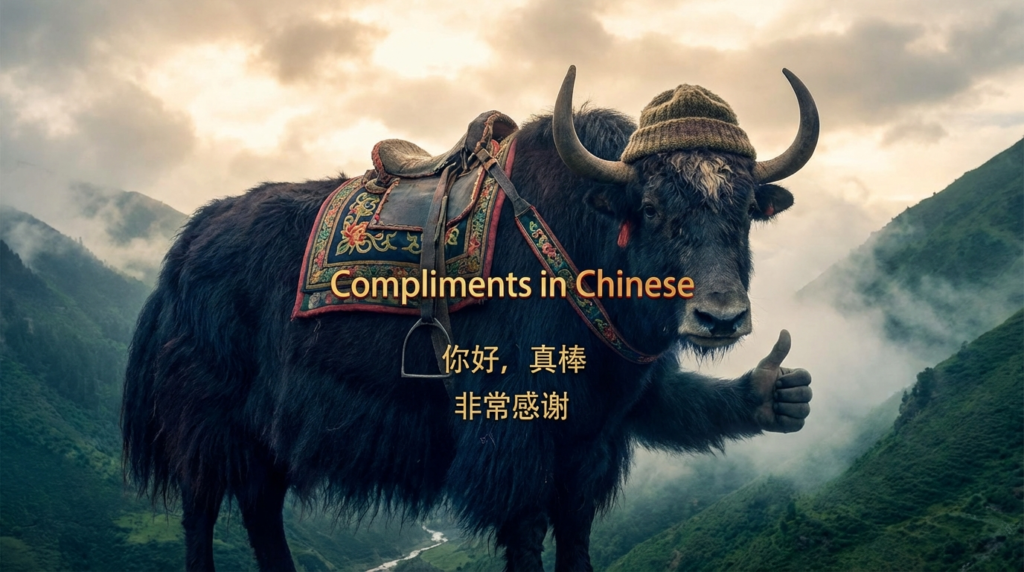
Chinese Compliments for Beginners: 50 Easy Nice Things to Say Naturally
Learn everyday compliments in Chinese: 夸奖的话 (kuājiǎng de huà) and 赞美的话 (zànměi de huà) for friends, dates, coworkers, family, and real life.
Compliments in Chinese are not hard, but they do go wrong fast when you sound too dramatic, too formal, or like a badly translated poster. The good news: a few natural phrases do most of the heavy lifting.
Below you will learn useful Chinese compliments with simplified Chinese characters, pinyin, English meanings, and real example sentences. You can start with the short, safe ones and then level up to appearance, personality, work, and skill compliments.
Start Here So You Do Not Sound Like A Robot
- Use 你 (nǐ) for casual “you” and 您 (nín) for polite “you.”
- 很 (hěn) “very” makes compliments sound natural: 你很可爱 (nǐ hěn kě’ài) = “You’re very cute.”
- 真 (zhēn) adds warmth: 你真厉害 (nǐ zhēn lìhai) = “You’re really awesome.”
- 太 (tài) can sound stronger: 你太美了 (nǐ tài měi le) = “You’re so beautiful.” Nice, but maybe not for your new accountant.
Quick Compliment Cards
真棒
zhēn bàng
Really great; awesome
你今天的演讲真棒。
nǐ jīntiān de yǎnjiǎng zhēn bàng.
Your presentation today was awesome.
真厉害
zhēn lìhai
Really impressive; amazing
你一个人做完了?真厉害。
nǐ yí gè rén zuò wán le? zhēn lìhai.
You finished it by yourself? That’s really impressive.
好看
hǎokàn
Good-looking; nice-looking
这件外套你穿起来很好看。
zhè jiàn wàitào nǐ chuān qǐlái hěn hǎokàn.
This coat looks really good on you.
可爱
kě’ài
Cute; lovable
你家的猫太可爱了。
nǐ jiā de māo tài kě’ài le.
Your cat is so cute.
漂亮
piàoliang
Pretty; beautiful
你今天看起来很漂亮。
nǐ jīntiān kàn qǐlái hěn piàoliang.
You look beautiful today.
帅
shuài
Handsome; stylish
你穿西装很帅。
nǐ chuān xīzhuāng hěn shuài.
You look handsome in a suit.
优秀
yōuxiù
Excellent; outstanding
你的表现非常优秀。
nǐ de biǎoxiàn fēicháng yōuxiù.
Your performance was excellent.
有品位
yǒu pǐnwèi
Have good taste; classy
你的装修风格很有品位。
nǐ de zhuāngxiū fēnggé hěn yǒu pǐnwèi.
Your interior style is very classy.
Useful Compliment Patterns You Can Reuse
| Pattern | Meaning | Example (ZH) | Example (Pinyin) | Translation (EN) |
|---|---|---|---|---|
| 你很 + adjective nǐ hěn + adjective | You are very… | 你很聪明。 nǐ hěn cōngming. | nǐ hěn cōngming. | You are very smart. |
| 你真 + adjective nǐ zhēn + adjective | You are really… | 你真细心。 nǐ zhēn xìxīn. | nǐ zhēn xìxīn. | You are really thoughtful. |
| 太 + adjective + 了 tài + adjective + le | So… | 太专业了。 tài zhuānyè le. | tài zhuānyè le. | So professional. |
| 你看起来很 + adjective nǐ kàn qǐlái hěn + adjective | You look very… | 你看起来很精神。 nǐ kàn qǐlái hěn jīngshen. | nǐ kàn qǐlái hěn jīngshen. | You look energetic. |
| 你做得很 + adjective nǐ zuò de hěn + adjective | You did … very well | 你做得很棒。 nǐ zuò de hěn bàng. | nǐ zuò de hěn bàng. | You did a great job. |
Compliments For Daily Conversation
These are the safe, common, non-cringe compliments you can use often. Blessedly, they work in real life and not just in textbooks written by people who have never made small talk.
| Hanzi | Pinyin | Meaning | Example (ZH) | Example (Pinyin) | Translation (EN) |
|---|---|---|---|---|---|
| 真棒 | zhēn bàng | Really great | 你这次考得真棒。 nǐ zhè cì kǎo de zhēn bàng. | nǐ zhè cì kǎo de zhēn bàng. | You did great on this test. |
| 真厉害 | zhēn lìhai | Really impressive | 你会三种语言,真厉害。 nǐ huì sān zhǒng yǔyán, zhēn lìhai. | nǐ huì sān zhǒng yǔyán, zhēn lìhai. | You speak three languages. That’s really impressive. |
| 不错 | bùcuò | Not bad; pretty good | 这个主意很不错。 zhè ge zhǔyi hěn bùcuò. | zhè ge zhǔyi hěn bùcuò. | This idea is pretty good. |
| 很好 | hěn hǎo | Very good | 你的发音很好。 nǐ de fāyīn hěn hǎo. | nǐ de fāyīn hěn hǎo. | Your pronunciation is very good. |
| 优秀 | yōuxiù | Excellent | 你们团队很优秀。 nǐmen tuánduì hěn yōuxiù. | nǐmen tuánduì hěn yōuxiù. | Your team is excellent. |
| 了不起 | liǎobuqǐ | Amazing; remarkable | 你能坚持下来,真了不起。 nǐ néng jiānchí xiàlai, zhēn liǎobuqǐ. | nǐ néng jiānchí xiàlai, zhēn liǎobuqǐ. | It’s amazing that you kept going. |
| 有意思 | yǒu yìsi | Interesting | 你的想法很有意思。 nǐ de xiǎngfa hěn yǒu yìsi. | nǐ de xiǎngfa hěn yǒu yìsi. | Your idea is very interesting. |
| 有才 | yǒu cái | Talented | 你写得这么快,真有才。 nǐ xiě de zhème kuài, zhēn yǒu cái. | nǐ xiě de zhème kuài, zhēn yǒu cái. | You write so fast. You’re really talented. |
| 有天赋 | yǒu tiānfù | Gifted | 你在音乐方面很有天赋。 nǐ zài yīnyuè fāngmiàn hěn yǒu tiānfù. | nǐ zài yīnyuè fāngmiàn hěn yǒu tiānfù. | You’re gifted in music. |
| 有两下子 | yǒu liǎng xiàzi | Have real skill | 你做饭真有两下子。 nǐ zuòfàn zhēn yǒu liǎng xiàzi. | nǐ zuòfàn zhēn yǒu liǎng xiàzi. | You really know how to cook. |
Compliments About Appearance
Appearance compliments are common in Chinese, but context matters. Use them naturally, and maybe do not open a business meeting with “Wow, your eyes are sparkling.” Save that energy for poetry.
| Hanzi | Pinyin | Meaning | Example (ZH) | Example (Pinyin) | Translation (EN) |
|---|---|---|---|---|---|
| 好看 | hǎokàn | Good-looking | 你今天很好看。 nǐ jīntiān hěn hǎokàn. | nǐ jīntiān hěn hǎokàn. | You look great today. |
| 漂亮 | piàoliang | Pretty; beautiful | 这条裙子很漂亮。 zhè tiáo qúnzi hěn piàoliang. | zhè tiáo qúnzi hěn piàoliang. | This dress is beautiful. |
| 帅 | shuài | Handsome | 你剪了头发以后更帅了。 nǐ jiǎn le tóufa yǐhòu gèng shuài le. | nǐ jiǎn le tóufa yǐhòu gèng shuài le. | You look even more handsome after the haircut. |
| 可爱 | kě’ài | Cute | 你的笑容很可爱。 nǐ de xiàoróng hěn kě’ài. | nǐ de xiàoróng hěn kě’ài. | Your smile is very cute. |
| 有气质 | yǒu qìzhì | Elegant; have poise | 你穿旗袍很有气质。 nǐ chuān qípáo hěn yǒu qìzhì. | nǐ chuān qípáo hěn yǒu qìzhì. | You look very elegant in a qipao. |
| 有魅力 | yǒu mèilì | Charming | 她说话的时候很有魅力。 tā shuōhuà de shíhou hěn yǒu mèilì. | tā shuōhuà de shíhou hěn yǒu mèilì. | She is very charming when she speaks. |
| 有精神 | yǒu jīngshen | Energetic; fresh-looking | 你今天看起来很有精神。 nǐ jīntiān kàn qǐlái hěn yǒu jīngshen. | nǐ jīntiān kàn qǐlái hěn yǒu jīngshen. | You look very energetic today. |
| 有型 | yǒu xíng | Stylish | 你这身穿搭很有型。 nǐ zhè shēn chuāndā hěn yǒu xíng. | nǐ zhè shēn chuāndā hěn yǒu xíng. | Your outfit is very stylish. |
| 有品位 | yǒu pǐnwèi | Have good taste | 你选的颜色很有品位。 nǐ xuǎn de yánsè hěn yǒu pǐnwèi. | nǐ xuǎn de yánsè hěn yǒu pǐnwèi. | You have great taste in colors. |
| 气色真好 | qìsè zhēn hǎo | You look healthy and glowing | 你最近气色真好。 nǐ zuìjìn qìsè zhēn hǎo. | nǐ zuìjìn qìsè zhēn hǎo. | You’ve been looking really fresh lately. |
Compliments About Personality
| Hanzi | Pinyin | Meaning | Example (ZH) | Example (Pinyin) | Translation (EN) |
|---|---|---|---|---|---|
| 聪明 | cōngming | Smart | 你真聪明,一下就明白了。 nǐ zhēn cōngming, yí xià jiù míngbai le. | nǐ zhēn cōngming, yí xià jiù míngbai le. | You’re really smart. You understood it right away. |
| 细心 | xìxīn | Careful; thoughtful | 你真细心,连这个都注意到了。 nǐ zhēn xìxīn, lián zhè ge dōu zhùyì dào le. | nǐ zhēn xìxīn, lián zhè ge dōu zhùyì dào le. | You’re so thoughtful. You even noticed this. |
| 体贴 | tǐtiē | Considerate | 你对家人很体贴。 nǐ duì jiārén hěn tǐtiē. | nǐ duì jiārén hěn tǐtiē. | You’re very considerate toward your family. |
| 善良 | shànliáng | Kind-hearted | 你真的很善良。 nǐ zhēn de hěn shànliáng. | nǐ zhēn de hěn shànliáng. | You’re truly kind-hearted. |
| 真诚 | zhēnchéng | Sincere | 你说话很真诚。 nǐ shuōhuà hěn zhēnchéng. | nǐ shuōhuà hěn zhēnchéng. | You speak very sincerely. |
| 大方 | dàfang | Generous; poised | 你待人很大方。 nǐ dàirén hěn dàfang. | nǐ dàirén hěn dàfang. | You are very generous with people. |
| 幽默 | yōumò | Humorous | 你说话真幽默。 nǐ shuōhuà zhēn yōumò. | nǐ shuōhuà zhēn yōumò. | You’re really funny. |
| 靠谱 | kàopǔ | Reliable | 跟你合作很放心,你很靠谱。 gēn nǐ hézuò hěn fàngxīn, nǐ hěn kàopǔ. | gēn nǐ hézuò hěn fàngxīn, nǐ hěn kàopǔ. | It’s reassuring to work with you. You’re very reliable. |
| 稳重 | wěnzhòng | Mature; steady | 你看问题很稳重。 nǐ kàn wèntí hěn wěnzhòng. | nǐ kàn wèntí hěn wěnzhòng. | You think about things in a very steady way. |
| 有耐心 | yǒu nàixīn | Patient | 你教小朋友的时候很有耐心。 nǐ jiāo xiǎo péngyou de shíhou hěn yǒu nàixīn. | nǐ jiāo xiǎo péngyou de shíhou hěn yǒu nàixīn. | You’re very patient when teaching children. |
Compliments About Skills And Work
| Hanzi | Pinyin | Meaning | Example (ZH) | Example (Pinyin) | Translation (EN) |
|---|---|---|---|---|---|
| 专业 | zhuānyè | Professional | 你的建议很专业。 nǐ de jiànyì hěn zhuānyè. | nǐ de jiànyì hěn zhuānyè. | Your advice is very professional. |
| 认真 | rènzhēn | Serious; conscientious | 你工作一直很认真。 nǐ gōngzuò yìzhí hěn rènzhēn. | nǐ gōngzuò yìzhí hěn rènzhēn. | You’re always very conscientious at work. |
| 高效 | gāoxiào | Efficient | 你处理问题很高效。 nǐ chǔlǐ wèntí hěn gāoxiào. | nǐ chǔlǐ wèntí hěn gāoxiào. | You handle problems very efficiently. |
| 能干 | nénggàn | Capable | 你真的很能干。 nǐ zhēn de hěn nénggàn. | nǐ zhēn de hěn nénggàn. | You’re really capable. |
| 有经验 | yǒu jīngyàn | Experienced | 你一看就很有经验。 nǐ yí kàn jiù hěn yǒu jīngyàn. | nǐ yí kàn jiù hěn yǒu jīngyàn. | You look very experienced right away. |
| 思路清晰 | sīlù qīngxī | Clear-thinking | 你的思路很清晰。 nǐ de sīlù hěn qīngxī. | nǐ de sīlù hěn qīngxī. | Your thinking is very clear. |
| 表达得很好 | biǎodá de hěn hǎo | Expressed it well | 你刚才表达得很好。 nǐ gāngcái biǎodá de hěn hǎo. | nǐ gāngcái biǎodá de hěn hǎo. | You expressed that very well just now. |
| 讲得很清楚 | jiǎng de hěn qīngchu | Explained clearly | 你把这个问题讲得很清楚。 nǐ bǎ zhè ge wèntí jiǎng de hěn qīngchu. | nǐ bǎ zhè ge wèntí jiǎng de hěn qīngchu. | You explained this issue very clearly. |
| 手艺真好 | shǒuyì zhēn hǎo | Great craftsmanship | 你做的蛋糕手艺真好。 nǐ zuò de dàngāo shǒuyì zhēn hǎo. | nǐ zuò de dàngāo shǒuyì zhēn hǎo. | You have great baking skills. |
| 水平很高 | shuǐpíng hěn gāo | High level | 你的中文水平很高。 nǐ de zhōngwén shuǐpíng hěn gāo. | nǐ de zhōngwén shuǐpíng hěn gāo. | Your Chinese level is very high. |
Compliments For Food And Cooking
| Hanzi | Pinyin | Meaning | Example (ZH) | Example (Pinyin) | Translation (EN) |
|---|---|---|---|---|---|
| 好吃 | hǎochī | Delicious | 你做的菜真好吃。 nǐ zuò de cài zhēn hǎochī. | nǐ zuò de cài zhēn hǎochī. | The dish you made is delicious. |
| 太香了 | tài xiāng le | Smells amazing | 这个汤太香了。 zhè ge tāng tài xiāng le. | zhè ge tāng tài xiāng le. | This soup smells amazing. |
| 味道真好 | wèidào zhēn hǎo | Tastes really good | 这个酱味道真好。 zhè ge jiàng wèidào zhēn hǎo. | zhè ge jiàng wèidào zhēn hǎo. | This sauce tastes really good. |
| 做得真地道 | zuò de zhēn dìdao | Authentically made | 你这道红烧肉做得真地道。 nǐ zhè dào hóngshāoròu zuò de zhēn dìdao. | nǐ zhè dào hóngshāoròu zuò de zhēn dìdao. | Your braised pork is really authentic. |
| 火候刚刚好 | huǒhòu gānggāng hǎo | Cooked just right | 这个牛排火候刚刚好。 zhè ge niúpái huǒhòu gānggāng hǎo. | zhè ge niúpái huǒhòu gānggāng hǎo. | This steak is cooked just right. |
| 摆盘真漂亮 | bǎipán zhēn piàoliang | Beautiful plating | 这道甜点摆盘真漂亮。 zhè dào tiándiǎn bǎipán zhēn piàoliang. | zhè dào tiándiǎn bǎipán zhēn piàoliang. | This dessert is plated beautifully. |
| 口感很好 | kǒugǎn hěn hǎo | Great texture | 这个面包口感很好。 zhè ge miànbāo kǒugǎn hěn hǎo. | zhè ge miànbāo kǒugǎn hěn hǎo. | This bread has a great texture. |
| 很入味 | hěn rùwèi | Well-seasoned; flavorful | 这个鸡肉很入味。 zhè ge jīròu hěn rùwèi. | zhè ge jīròu hěn rùwèi. | This chicken is full of flavor. |
| 很下饭 | hěn xiàfàn | Great with rice | 这个菜又辣又香,很下饭。 zhè ge cài yòu là yòu xiāng, hěn xiàfàn. | zhè ge cài yòu là yòu xiāng, hěn xiàfàn. | This dish is spicy and fragrant, perfect with rice. |
| 厨艺真棒 | chúyì zhēn bàng | Great cooking skills | 你的厨艺真棒。 nǐ de chúyì zhēn bàng. | nǐ de chúyì zhēn bàng. | Your cooking skills are excellent. |
Compliments For Children, Pets, And Cute Things
| Hanzi | Pinyin | Meaning | Example (ZH) | Example (Pinyin) | Translation (EN) |
|---|---|---|---|---|---|
| 真可爱 | zhēn kě’ài | Really cute | 你女儿真可爱。 nǐ nǚ’ér zhēn kě’ài. | nǐ nǚ’ér zhēn kě’ài. | Your daughter is really cute. |
| 好乖 | hǎo guāi | So well-behaved | 这个小朋友好乖。 zhè ge xiǎo péngyou hǎo guāi. | zhè ge xiǎo péngyou hǎo guāi. | This child is so well-behaved. |
| 好懂事 | hǎo dǒngshì | So sensible; mature for age | 你儿子好懂事。 nǐ érzi hǎo dǒngshì. | nǐ érzi hǎo dǒngshì. | Your son is so sensible. |
| 好机灵 | hǎo jīling | So clever and quick | 这个孩子好机灵。 zhè ge háizi hǎo jīling. | zhè ge háizi hǎo jīling. | This kid is so quick and clever. |
| 毛色真漂亮 | máosè zhēn piàoliang | Beautiful fur color | 你家狗狗毛色真漂亮。 nǐ jiā gǒugou máosè zhēn piàoliang. | nǐ jiā gǒugou máosè zhēn piàoliang. | Your dog has beautiful fur color. |
| 好乖巧 | hǎo guāiqiǎo | Sweet and well-behaved | 你家猫好乖巧。 nǐ jiā māo hǎo guāiqiǎo. | nǐ jiā māo hǎo guāiqiǎo. | Your cat is so sweet and well-behaved. |
| 笑起来真甜 | xiào qǐlái zhēn tián | Such a sweet smile | 你笑起来真甜。 nǐ xiào qǐlái zhēn tián. | nǐ xiào qǐlái zhēn tián. | You have such a sweet smile. |
| 眼睛真有神 | yǎnjing zhēn yǒu shén | Bright, expressive eyes | 这个宝宝眼睛真有神。 zhè ge bǎobao yǎnjing zhēn yǒu shén. | zhè ge bǎobao yǎnjing zhēn yǒu shén. | This baby has such bright eyes. |
| 特别讨人喜欢 | tèbié tǎo rén xǐhuan | Very likable | 你家孩子特别讨人喜欢。 nǐ jiā háizi tèbié tǎo rén xǐhuan. | nǐ jiā háizi tèbié tǎo rén xǐhuan. | Your child is especially likable. |
| 太萌了 | tài méng le | So adorable | 这只小狗太萌了。 zhè zhī xiǎo gǒu tài méng le. | zhè zhī xiǎo gǒu tài méng le. | This puppy is so adorable. |
Useful Real-Life Sentences
- 你今天气色真好。
nǐ jīntiān qìsè zhēn hǎo.
You look great today. - 你这件衣服很好看。
nǐ zhè jiàn yīfu hěn hǎokàn.
This piece of clothing looks great on you. - 你的中文进步真快。
nǐ de zhōngwén jìnbù zhēn kuài.
Your Chinese is improving so fast. - 你今天表现得特别好。
nǐ jīntiān biǎoxiàn de tèbié hǎo.
You did especially well today. - 你真会说话。
nǐ zhēn huì shuōhuà.
You really know how to speak nicely. - 你很会照顾别人。
nǐ hěn huì zhàogù biérén.
You’re very good at taking care of others. - 你拍照拍得真好。
nǐ pāizhào pāi de zhēn hǎo.
You take really great photos. - 你选的地方真不错。
nǐ xuǎn de dìfang zhēn bùcuò.
You picked a really nice place. - 你做事很靠谱。
nǐ zuòshì hěn kàopǔ.
You’re very reliable in the way you do things. - 你今天穿得很有气质。
nǐ jīntiān chuān de hěn yǒu qìzhì.
You look very elegant today. - 你笑起来很好看。
nǐ xiào qǐlái hěn hǎokàn.
You look great when you smile. - 你做的这个方案很专业。
nǐ zuò de zhè ge fāng’àn hěn zhuānyè.
This plan you made is very professional.
Common Confusions And Better Choices
Tap For Fast Fixes
- 漂亮 (piàoliang) vs 好看 (hǎokàn): both can mean “pretty” or “good-looking,” but 好看 (hǎokàn) is broader and very safe for clothes, hair, designs, and people.
- 厉害 (lìhai) is wildly useful. It can mean impressive, formidable, skilled, or awesome depending on context. Basically, it does a lot of work and never complains.
- 可爱 (kě’ài) is common, but be careful with adults in formal contexts. Cute is nice. Cute in the wrong meeting is chaos.
- 胖了 (pàng le) is not a compliment. Even if someone says it with a smile, that does not make it magical.
- 你真牛 (nǐ zhēn niú) means “you’re awesome,” but it is slangy. Great with friends, less great with your professor or future in-laws on day one.
Quick Reference Summary
| Situation | Best Compliments |
|---|---|
| General praise | 真棒 (zhēn bàng), 真厉害 (zhēn lìhai), 不错 (bùcuò) |
| Appearance | 好看 (hǎokàn), 漂亮 (piàoliang), 帅 (shuài), 有气质 (yǒu qìzhì) |
| Personality | 善良 (shànliáng), 体贴 (tǐtiē), 幽默 (yōumò), 靠谱 (kàopǔ) |
| Work and skills | 专业 (zhuānyè), 能干 (nénggàn), 高效 (gāoxiào), 有天赋 (yǒu tiānfù) |
| Food | 好吃 (hǎochī), 味道真好 (wèidào zhēn hǎo), 厨艺真棒 (chúyì zhēn bàng) |
| Kids and pets | 真可爱 (zhēn kě’ài), 好乖 (hǎo guāi), 太萌了 (tài méng le) |
Final Yak Box
If you remember only five compliments, make them these: 真棒 (zhēn bàng), 真厉害 (zhēn lìhai), 好看 (hǎokàn), 有气质 (yǒu qìzhì), and 靠谱 (kàopǔ). Those five cover a shocking amount of daily life, which is nice because your brain has better things to do than memorize 400 versions of “great haircut.”