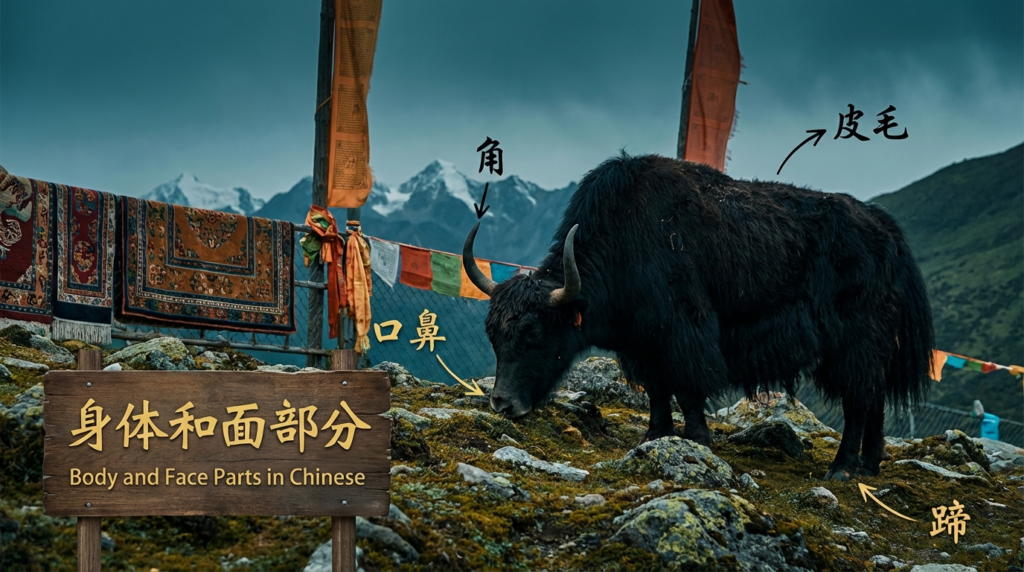
Chinese Body And Face Parts Vocabulary For Beginners
Learn body and face parts in simplified Chinese: 身体部位 shēntǐ bùwèi and 脸部部位 liǎnbù bùwèi. These are the words you need for daily life, doctor visits, skincare shopping, and the classic “my leg hurts” moment nobody plans for.
Body-part vocabulary in Chinese gets useful very quickly. You hear it in gyms, at the pharmacy, in beauty stores, in schools, and whenever someone tells a kid to wash their hands already.
This guide gives you the most common body and face words with pinyin, clear English meanings, and real example sentences. No mystery anatomy lecture. Just practical Chinese you can actually use.
Memorizing random body-part lists is cute, but using them in real sentences is how they stick. Your brain likes context. Your flashcards, frankly, are trying their best.
Quick Visual Cards
头
tóu
head
我的头有点疼。
Wǒ de tóu yǒudiǎn téng.
My head hurts a little.
眼睛
yǎnjing
eyes
她的眼睛很漂亮。
Tā de yǎnjing hěn piàoliang.
Her eyes are very pretty.
鼻子
bízi
nose
我的鼻子不通气。
Wǒ de bízi bù tōngqì.
My nose is blocked.
嘴巴
zuǐba
mouth
张开嘴巴。
Zhāngkāi zuǐba.
Open your mouth.
手
shǒu
hand
请先洗手。
Qǐng xiān xǐ shǒu.
Please wash your hands first.
胳膊
gēbo
arm
他的胳膊很酸。
Tā de gēbo hěn suān.
His arm feels sore.
腿
tuǐ
leg
我昨天练腿了。
Wǒ zuótiān liàn tuǐ le.
I trained legs yesterday.
脚
jiǎo
foot
我的脚有点冷。
Wǒ de jiǎo yǒudiǎn lěng.
My feet are a little cold.
Useful Phrases And Real-Life Sentences
- 抬头 tátóu — raise your head
抬头看这里。
Tátóu kàn zhèlǐ.
Raise your head and look here. - 低头 dītóu — lower your head
别老低头看手机。
Bié lǎo dītóu kàn shǒujī.
Don’t keep looking down at your phone. - 闭上眼睛 bì shàng yǎnjing — close your eyes
请闭上眼睛休息一下。
Qǐng bì shàng yǎnjing xiūxi yíxià.
Please close your eyes and rest for a moment. - 睁开眼睛 zhēngkāi yǎnjing — open your eyes
睁开眼睛,已经天亮了。
Zhēngkāi yǎnjing, yǐjīng tiān liàng le.
Open your eyes, it’s already daylight. - 张开嘴巴 zhāngkāi zuǐba — open your mouth
看牙医的时候要张开嘴巴。
Kàn yáyī de shíhou yào zhāngkāi zuǐba.
You need to open your mouth at the dentist. - 点头 diǎntóu — nod
他笑着点头了。
Tā xiàozhe diǎntóu le.
He nodded with a smile. - 摇头 yáotóu — shake your head
她听完以后摇头。
Tā tīng wán yǐhòu yáotóu.
She shook her head after listening. - 伸手 shēnshǒu — reach out your hand
请伸手,我给你看看。
Qǐng shēnshǒu, wǒ gěi nǐ kànkan.
Please hold out your hand and let me take a look. - 举手 jǔshǒu — raise your hand
会的人请举手。
Huì de rén qǐng jǔshǒu.
Raise your hand if you know it. - 洗手 xǐshǒu — wash your hands
吃饭前要洗手。
Chīfàn qián yào xǐshǒu.
You should wash your hands before eating. - 伸腿 shēntuǐ — stretch your leg
坐太久了,起来伸伸腿吧。
Zuò tài jiǔ le, qǐlai shēnshen tuǐ ba.
You’ve been sitting too long, get up and stretch your legs. - 抬脚 táijiǎo — lift your foot
进门前先抬脚。
Jìnmén qián xiān táijiǎo.
Lift your foot before stepping in.
Head And Face Parts In Chinese
| Hanzi | Pinyin | Meaning | Example (ZH) | Example (Pinyin) | Translation (EN) |
|---|---|---|---|---|---|
| 头 | tóu | head | 我的头很疼。 | Wǒ de tóu hěn téng. | My head hurts. |
| 头发 | tóufa | hair | 她的头发很长。 | Tā de tóufa hěn cháng. | Her hair is long. |
| 脸 | liǎn | face | 他的脸红了。 | Tā de liǎn hóng le. | His face turned red. |
| 额头 | étóu | forehead | 她的额头有点烫。 | Tā de étóu yǒudiǎn tàng. | Her forehead is a little hot. |
| 眉毛 | méimao | eyebrow | 他的眉毛很浓。 | Tā de méimao hěn nóng. | His eyebrows are thick. |
| 眼睛 | yǎnjing | eye | 我的眼睛进东西了。 | Wǒ de yǎnjing jìn dōngxi le. | Something got in my eye. |
| 眼皮 | yǎnpí | eyelid | 我的眼皮一直跳。 | Wǒ de yǎnpí yìzhí tiào. | My eyelid keeps twitching. |
| 睫毛 | jiémáo | eyelash | 她的睫毛很长。 | Tā de jiémáo hěn cháng. | Her eyelashes are long. |
| 耳朵 | ěrduo | ear | 我的耳朵有点疼。 | Wǒ de ěrduo yǒudiǎn téng. | My ear hurts a little. |
| 鼻子 | bízi | nose | 他的鼻子很高。 | Tā de bízi hěn gāo. | He has a high nose bridge. |
| 鼻孔 | bíkǒng | nostril | 天气太干,鼻孔不舒服。 | Tiānqì tài gān, bíkǒng bù shūfu. | The weather is too dry, so my nostrils feel uncomfortable. |
| 嘴巴 | zuǐba | mouth | 请闭上嘴巴。 | Qǐng bì shàng zuǐba. | Please close your mouth. |
| 嘴唇 | zuǐchún | lips | 冬天我的嘴唇很干。 | Dōngtiān wǒ de zuǐchún hěn gān. | My lips get very dry in winter. |
| 牙齿 | yáchǐ | teeth | 记得每天刷牙齿。 | Jìde měitiān shuā yáchǐ. | Remember to brush your teeth every day. |
| 舌头 | shétou | tongue | 小心,别咬到舌头。 | Xiǎoxīn, bié yǎodào shétou. | Be careful not to bite your tongue. |
| 下巴 | xiàba | chin | 他的下巴很尖。 | Tā de xiàba hěn jiān. | His chin is sharp. |
| 胡子 | húzi | beard; facial hair | 他今天没刮胡子。 | Tā jīntiān méi guā húzi. | He didn’t shave today. |
Upper Body Parts In Chinese
| Hanzi | Pinyin | Meaning | Example (ZH) | Example (Pinyin) | Translation (EN) |
|---|---|---|---|---|---|
| 脖子 | bózi | neck | 我的脖子有点酸。 | Wǒ de bózi yǒudiǎn suān. | My neck feels a little sore. |
| 喉咙 | hóulóng | throat | 我的喉咙不太舒服。 | Wǒ de hóulóng bú tài shūfu. | My throat doesn’t feel very good. |
| 肩膀 | jiānbǎng | shoulder | 她的肩膀很放松。 | Tā de jiānbǎng hěn fàngsōng. | Her shoulders are relaxed. |
| 胸 | xiōng | chest | 跑步以后我的胸有点闷。 | Pǎobù yǐhòu wǒ de xiōng yǒudiǎn mèn. | My chest feels a little tight after running. |
| 背 | bèi | back | 我的背很累。 | Wǒ de bèi hěn lèi. | My back is tired. |
| 腰 | yāo | waist; lower back | 坐久了我的腰疼。 | Zuò jiǔ le wǒ de yāo téng. | My lower back hurts from sitting too long. |
| 肚子 | dùzi | belly; stomach area | 我肚子饿了。 | Wǒ dùzi è le. | I’m hungry. |
| 肚脐 | dùqí | belly button | 小孩子总喜欢摸肚脐。 | Xiǎo háizi zǒng xǐhuan mō dùqí. | Kids always like touching their belly buttons. |
| 胳膊 | gēbo | arm | 他的胳膊受伤了。 | Tā de gēbo shòushāng le. | His arm is injured. |
| 手肘 | shǒuzhǒu | elbow | 别把手肘放在桌子上。 | Bié bǎ shǒuzhǒu fàng zài zhuōzi shàng. | Don’t put your elbows on the table. |
| 手腕 | shǒuwàn | wrist | 我的手腕有点痛。 | Wǒ de shǒuwàn yǒudiǎn tòng. | My wrist hurts a little. |
| 手 | shǒu | hand | 她的手很暖和。 | Tā de shǒu hěn nuǎnhuo. | Her hands are warm. |
| 手指 | shǒuzhǐ | finger | 我的手指被纸割到了。 | Wǒ de shǒuzhǐ bèi zhǐ gē dào le. | My finger got cut by paper. |
| 指甲 | zhǐjia | fingernail; nail | 她在剪指甲。 | Tā zài jiǎn zhǐjia. | She is trimming her nails. |
Lower Body Parts In Chinese
| Hanzi | Pinyin | Meaning | Example (ZH) | Example (Pinyin) | Translation (EN) |
|---|---|---|---|---|---|
| 屁股 | pìgu | butt; bottom | 坐太久,屁股都麻了。 | Zuò tài jiǔ, pìgu dōu má le. | I sat too long and my butt went numb. |
| 腿 | tuǐ | leg | 他的腿很长。 | Tā de tuǐ hěn cháng. | His legs are long. |
| 大腿 | dàtuǐ | thigh | 我练完以后大腿很酸。 | Wǒ liàn wán yǐhòu dàtuǐ hěn suān. | My thighs are sore after training. |
| 膝盖 | xīgài | knee | 我的膝盖碰到了桌子。 | Wǒ de xīgài pèng dào le zhuōzi. | My knee hit the table. |
| 小腿 | xiǎotuǐ | calf; lower leg | 跑步以后小腿很紧。 | Pǎobù yǐhòu xiǎotuǐ hěn jǐn. | My calves feel tight after running. |
| 脚踝 | jiǎohuái | ankle | 她的脚踝扭到了。 | Tā de jiǎohuái niǔ dào le. | She sprained her ankle. |
| 脚 | jiǎo | foot | 我的脚很冷。 | Wǒ de jiǎo hěn lěng. | My feet are cold. |
| 脚趾 | jiǎozhǐ | toe | 我撞到脚趾了。 | Wǒ zhuàng dào jiǎozhǐ le. | I stubbed my toe. |
| 脚底 | jiǎodǐ | sole of the foot | 走太多路,脚底很疼。 | Zǒu tài duō lù, jiǎodǐ hěn téng. | The soles of my feet hurt from walking too much. |
| 脚跟 | jiǎogēn | heel | 新鞋磨脚跟。 | Xīn xié mó jiǎogēn. | The new shoes rub my heels. |
Whole-Body Words You Will Hear A Lot
| Hanzi | Pinyin | Meaning | Example (ZH) | Example (Pinyin) | Translation (EN) |
|---|---|---|---|---|---|
| 身体 | shēntǐ | body; health | 你要多注意身体。 | Nǐ yào duō zhùyì shēntǐ. | You should take better care of your health. |
| 皮肤 | pífū | skin | 冬天皮肤容易干。 | Dōngtiān pífū róngyì gān. | Skin gets dry easily in winter. |
| 骨头 | gǔtou | bone | 摔倒以后骨头没事。 | Shuāidǎo yǐhòu gǔtou méi shì. | The bones were fine after the fall. |
| 肌肉 | jīròu | muscle | 今天练完,肌肉很酸。 | Jīntiān liàn wán, jīròu hěn suān. | My muscles are sore after today’s workout. |
| 血 | xuè | blood | 手破了,一点血都没有。 | Shǒu pò le, yìdiǎn xuè dōu méiyǒu. | My hand got scraped, but there’s barely any blood. |
| 汗 | hàn | sweat | 天气太热,我全是汗。 | Tiānqì tài rè, wǒ quán shì hàn. | It’s so hot that I’m covered in sweat. |
| 心脏 | xīnzàng | heart | 运动对心脏有好处。 | Yùndòng duì xīnzàng yǒu hǎochu. | Exercise is good for the heart. |
| 大脑 | dànǎo | brain | 睡眠对大脑很重要。 | Shuìmián duì dànǎo hěn zhòngyào. | Sleep is important for the brain. |
| 关节 | guānjié | joint | 下雨天我的关节会痛。 | Xiàyǔtiān wǒ de guānjié huì tòng. | My joints hurt on rainy days. |
| 神经 | shénjīng | nerve | 别压到神经了。 | Bié yā dào shénjīng le. | Don’t press on the nerve. |
Common Mix-Ups And Fast Fixes
- 脸 liǎn means face, while 嘴巴 zuǐba means mouth. So 洗脸 xǐliǎn is wash your face, not wash your mouth. Different vibe entirely.
- 手 shǒu is hand, while 胳膊 gēbo is arm. English often bundles these loosely. Chinese usually does not.
- 脚 jiǎo can mean foot, and in some contexts it may feel broader than English foot. For toes, use 脚趾 jiǎozhǐ. For ankle, use 脚踝 jiǎohuái.
- 肚子 dùzi is belly or stomach area in daily speech. It is also used in super common phrases like 肚子饿了 dùzi è le — hungry.
- 头发 tóufa is hair on your head. If you just say 毛 máo, you are wandering into fuzz, fur, and hair territory. Best not to freestyle that one too early.
Quick Reference Summary
- 头 tóu — head
- 脸 liǎn — face
- 眼睛 yǎnjing — eye
- 鼻子 bízi — nose
- 嘴巴 zuǐba — mouth
- 耳朵 ěrduo — ear
- 脖子 bózi — neck
- 肩膀 jiānbǎng — shoulder
- 手 shǒu — hand
- 手指 shǒuzhǐ — finger
- 肚子 dùzi — belly
- 背 bèi — back
- 腿 tuǐ — leg
- 膝盖 xīgài — knee
- 脚 jiǎo — foot
- 脚趾 jiǎozhǐ — toe
Yak Tip To Make These Words Stick
Point to your own face and body while saying the words out loud: 眼睛 yǎnjing, 鼻子 bízi, 嘴巴 zuǐba, 手 shǒu, 腿 tuǐ, 脚 jiǎo. It feels a bit silly for about thirty seconds, and then suddenly your memory gets much better. Funny how that works.
A solid beginner drill is to make simple sentences with 我的…… wǒ de…… — my… and 他的…… tā de…… — his… or 她的…… tā de…… — her…. Tiny sentences, repeated often, beat heroic study plans that die by Wednesday.