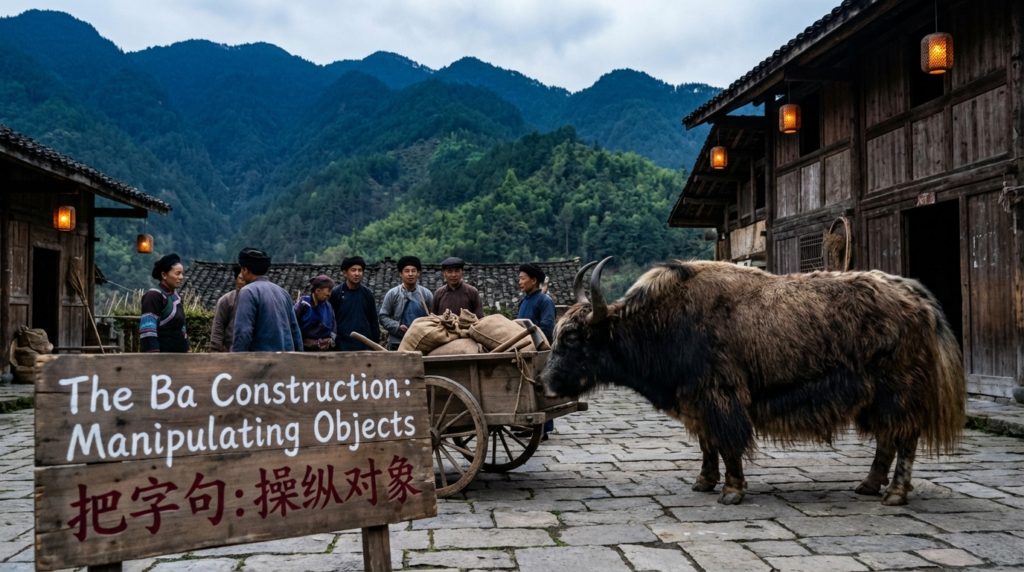
The Ba Construction: Manipulating Objects
Meet the famous Chinese pattern 把字句 (bǎ zìjù). This is the structure you use when you want to say what happens to an object. Not just “I eat an apple,” but “I ate the apple up,” “I put the book on the table,” or “Please turn the lights off.” Very practical. Very alive. Very unlike textbook zombie Chinese.
The core idea is simple: you bring the object forward, then say what you do with it. That is why 把 (bǎ) feels like a tool for handling, moving, changing, or disposing of something.
If you have ever looked at a sentence with 把 (bǎ) and thought, “Why is the object suddenly standing in front like it pays rent here?”, good news: there is a pattern. Once you learn it, everyday Chinese gets much easier.
This guide shows you when to use 把 (bǎ), when not to use it, the most common sentence patterns, and plenty of real examples with 汉字 (Hànzì), 拼音 (pīnyīn), and English. No mystery fog. No grammar panic.
Yak Snark Box
把 (bǎ) is not a magical decoration you sprinkle on random sentences to sound advanced. If nothing happens to the object, 把 (bǎ) usually has no job. Chinese is efficient like that.
What The Ba Construction Does
The basic pattern is:
Subject + 把 (bǎ) + Object + Verb + Result / Direction / Location / Complement
The important bit is this: the object after 把 (bǎ) is usually specific and affected by the action.
| Pattern | Meaning | Example |
| 我把门关上了。 wǒ bǎ mén guān shàng le | I closed the door. | The door is affected and now ends up closed. |
| 他把书放在桌子上。 tā bǎ shū fàng zài zhuōzi shàng | He put the book on the table. | The book is moved to a new place. |
| 请把灯打开。 qǐng bǎ dēng dǎ kāi | Please turn on the light. | The light changes state. |
When To Use 把 (bǎ)
Use 把 (bǎ) when the action clearly affects the object in one of these ways:
- It changes the object’s state.
- It moves the object somewhere.
- It finishes, removes, or gets rid of the object.
- It handles the object in a deliberate way.
State Change
我把窗户打开了。
wǒ bǎ chuānghu dǎ kāi le
I opened the window.
她把咖啡喝凉了。
tā bǎ kāfēi hē liáng le
She let the coffee get cold by drinking it slowly.
Movement
他把椅子搬到外面去了。
tā bǎ yǐzi bān dào wàimiàn qù le
He moved the chair outside.
请把手机放在包里。
qǐng bǎ shǒujī fàng zài bāo lǐ
Please put the phone in the bag.
Finished Or Removed
我把饭吃完了。
wǒ bǎ fàn chī wán le
I finished the meal.
他把旧衣服扔了。
tā bǎ jiù yīfu rēng le
He threw away the old clothes.
When Not To Use 把 (bǎ)
Do not force 把 (bǎ) into every sentence with an object. If the verb just describes a normal action and there is no clear result or disposal, plain word order is usually better.
| Natural | Why |
| 我喜欢这本书。 wǒ xǐhuan zhè běn shū I like this book. | No action is happening to the book, so 把 (bǎ) makes no sense here. |
| 我看书。 wǒ kàn shū I read books. | This is general reading, not handling one specific book in a changed way. |
| 我买了一本书。 wǒ mǎi le yì běn shū I bought a book. | You usually do not need 把 (bǎ) unless the sentence focuses on what happened to the book afterward. |
The Core Patterns You Actually Need
Pattern One: 把 (bǎ) + Object + Verb + Result Complement
This is the most common pattern. The result complement shows what happened in the end.
| Sentence | Meaning |
| 我把作业写完了。 wǒ bǎ zuòyè xiě wán le | I finished writing the homework. |
| 她把门关好了。 tā bǎ mén guān hǎo le | She shut the door properly. |
| 你把名字写错了。 nǐ bǎ míngzi xiě cuò le | You wrote the name wrong. |
Pattern Two: 把 (bǎ) + Object + Verb + Direction
Use this when the object moves somewhere.
请把箱子拿进来。
qǐng bǎ xiāngzi ná jìn lái
Please bring the box in.
他把垃圾拿出去了吗?
tā bǎ lājī ná chūqù le ma
Did he take the trash out?
我把照片挂起来了。
wǒ bǎ zhàopiàn guà qǐlai le
I hung the photo up.
Pattern Three: 把 (bǎ) + Object + Verb + 在 (zài) / 到 (dào) + Place
This one is great for “put something somewhere.”
我把钥匙放在桌子上了。
wǒ bǎ yàoshi fàng zài zhuōzi shàng le
I put the keys on the table.
她把电脑搬到办公室了。
tā bǎ diànnǎo bān dào bàngōngshì le
She moved the computer to the office.
请把牛奶放进冰箱里。
qǐng bǎ niúnǎi fàng jìn bīngxiāng lǐ
Please put the milk into the fridge.
Pattern Four: 把 (bǎ) + Object + Verb + 了 (le) / 掉 (diào)
This often shows disposal, completion, or getting rid of something.
我把那封邮件删了。
wǒ bǎ nà fēng yóujiàn shān le
I deleted that email.
他把药吃掉了。
tā bǎ yào chī diào le
He took the medicine up.
我们把问题解决了。
wǒmen bǎ wèntí jiějué le
We solved the problem.
Pattern Five: 把 (bǎ) In Commands
Imperatives love 把 (bǎ). It is direct, useful, and everywhere in real life.
- 把门关上。
bǎ mén guān shàng
Close the door. - 把电视关掉。
bǎ diànshì guān diào
Turn off the TV. - 把这个发给我。
bǎ zhège fā gěi wǒ
Send this to me. - 请把你的名字写下来。
qǐng bǎ nǐ de míngzi xiě xiàlái
Please write down your name.
Real-Life Sentences You Will Actually Hear
Here are high-frequency 把 (bǎ) sentences from daily life. These are the ones worth stealing immediately.
- 我把水喝完了。
wǒ bǎ shuǐ hē wán le
I finished the water. - 你把手机充上电了吗?
nǐ bǎ shǒujī chōng shàng diàn le ma
Did you put your phone on charge? - 她把头发剪短了。
tā bǎ tóufa jiǎn duǎn le
She cut her hair short. - 我把文件发给老板了。
wǒ bǎ wénjiàn fā gěi lǎobǎn le
I sent the document to the boss. - 他把车停在外面了。
tā bǎ chē tíng zài wàimiàn le
He parked the car outside.
- 请把空调打开。
qǐng bǎ kōngtiáo dǎ kāi
Please turn on the air conditioner. - 我把包忘在地铁上了。
wǒ bǎ bāo wàng zài dìtiě shàng le
I left my bag on the subway. - 别把孩子吵醒了。
bié bǎ háizi chǎo xǐng le
Do not wake the child up. - 他把房间收拾干净了。
tā bǎ fángjiān shōushi gānjìng le
He cleaned the room up. - 你先把这件事告诉我。
nǐ xiān bǎ zhè jiàn shì gàosu wǒ
Tell me this first.
Common Verbs That Love 把 (bǎ)
Some verbs show up with 把 (bǎ) all the time because they naturally change, move, or handle an object.
| Verb | Pinyin | Meaning | Example |
| 放 | fàng | to put | 把杯子放下。 bǎ bēizi fàng xià Put the cup down. |
| 关 | guān | to close | 把窗户关上。 bǎ chuānghu guān shàng Close the window. |
| 打开 | dǎ kāi | to open | 把盒子打开。 bǎ hézi dǎ kāi Open the box. |
| 拿 | ná | to take, hold | 把书拿过来。 bǎ shū ná guòlái Bring the book over. |
| 搬 | bān | to move | 把桌子搬进去。 bǎ zhuōzi bān jìnqù Move the table inside. |
| 写 | xiě | to write | 把地址写下来。 bǎ dìzhǐ xiě xiàlái Write the address down. |
| 删 | shān | to delete | 把照片删了。 bǎ zhàopiàn shān le Delete the photo. |
| 收拾 | shōushi | to tidy up | 把桌子收拾干净。 bǎ zhuōzi shōushi gānjìng Tidy the desk up. |
Common Mistakes And Fast Fixes
Mistake: 我把书看。
wǒ bǎ shū kàn
Fix: 我看书。
wǒ kàn shū
I read books.
Why: The sentence has no result, change, or disposal. 把 (bǎ) is hanging there with nothing to do. Awkward.
Mistake: 我把一个苹果吃了。
wǒ bǎ yí ge píngguǒ chī le
Better: 我吃了一个苹果。
wǒ chī le yí ge píngguǒ
I ate an apple.
Why: With 把 (bǎ), the object is often specific or already known. A random “an apple” is not the best fit unless context makes it specific.
Mistake: 把我喜欢这件衣服。
bǎ wǒ xǐhuan zhè jiàn yīfu
Fix: 我喜欢这件衣服。
wǒ xǐhuan zhè jiàn yīfu
I like this piece of clothing.
Why: 喜欢 (xǐhuan) describes feeling, not handling an object into a new result.
Practice: Build The Right Sentence
Try these little drills. The goal is to feel when 把 (bǎ) is natural.
Swap The Word Order
- 我关上门了。
wǒ guān shàng mén le
Rewrite: 我把门关上了。
wǒ bǎ mén guān shàng le - 他放在桌子上书。
tā fàng zài zhuōzi shàng shū
Rewrite: 他把书放在桌子上。
tā bǎ shū fàng zài zhuōzi shàng - 请写下电话号码。
qǐng xiě xià diànhuà hàomǎ
Rewrite: 请把电话号码写下来。
qǐng bǎ diànhuà hàomǎ xiě xiàlái
Choose Plain Order Or 把 (bǎ)
- I like coffee. → 我喜欢咖啡。
wǒ xǐhuan kāfēi - I put the coffee on the table. → 我把咖啡放在桌子上。
wǒ bǎ kāfēi fàng zài zhuōzi shàng - He finished his homework. → 他把作业做完了。
tā bǎ zuòyè zuò wán le - We bought a computer. → 我们买了一台电脑。
wǒmen mǎi le yì tái diànnǎo
Spot The Difference
我关门了。
wǒ guān mén le
I closed the door.
我把门关上了。
wǒ bǎ mén guān shàng le
I shut the door closed.
Both can work, but the second sentence puts more focus on the door as the affected object and the finished result 上 (shàng).
Quick Reference Summary
| Use 把 (bǎ) When… | Do Not Use 把 (bǎ) When… |
| The object is specific. | The object is general or indefinite. |
| The action changes, moves, finishes, or disposes of the object. | The verb only shows feeling, liking, or a plain action without a result. |
| You can add a result, direction, place, or complement. | The sentence has no clear outcome for the object. |
| Commands and instructions need focus. | You are just stating a basic fact in normal word order. |
Mini Pattern Table
| Pattern | Meaning | Example |
| 把 (bǎ) + Object + Verb + Result | change or completion | 把饭吃完。 bǎ fàn chī wán Finish the meal. |
| 把 (bǎ) + Object + Verb + Direction | movement | 把书拿过来。 bǎ shū ná guòlái Bring the book over. |
| 把 (bǎ) + Object + Verb + 在 (zài) / 到 (dào) + Place | put somewhere | 把包放在椅子上。 bǎ bāo fàng zài yǐzi shàng Put the bag on the chair. |
| 把 (bǎ) + Object + Verb + 掉 (diào) | get rid of | 把垃圾扔掉。 bǎ lājī rēng diào Throw away the trash. |
Final Yak Box
If you remember one thing, make it this: 把 (bǎ) shines when you want to spotlight what happened to the object. If the object gets moved, changed, finished, written down, cleaned up, thrown away, or switched on, 把 (bǎ) is probably lurking nearby looking helpful.
When nothing special happens to the object, stick with normal word order and save the drama. Chinese grammar likes clarity more than decoration, and honestly, that is a decent life lesson too.