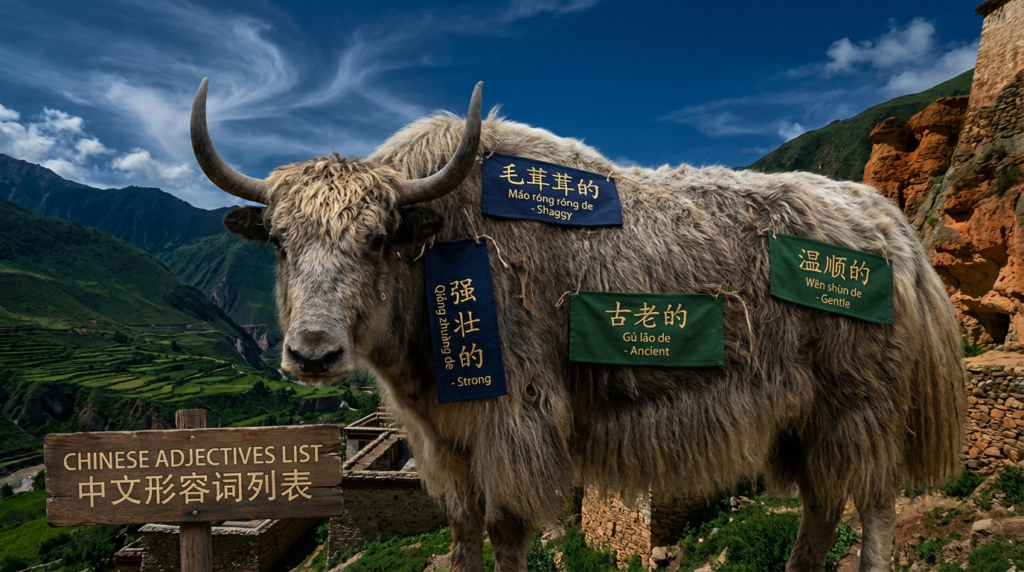
Chinese Adjectives List: 50 Easy Words You’ll Actually Use
Learn how to describe people, food, weather, places, and your own dramatic little opinions with Chinese adjectives — 形容词 xíngróngcí.
If you want to speak better Chinese fast, adjectives do a lot of heavy lifting. They help you say someone is nice, a movie is boring, food is delicious, or a day is busy. That is basically half of real life.
This Chinese adjectives list gives you simplified Chinese, pinyin, English meaning, and real example sentences. No mysterious grammar clouds. Just useful words you can steal immediately for daily conversation.
One Tiny Rule Before The Fun Starts
In Chinese, adjectives often work like verbs. So instead of saying “is happy” with a separate “is,” you will often say 她很高兴 tā hěn gāoxìng. Literally, that is “she very happy.” Yes, Chinese skips extra fluff. Honestly, pretty efficient.
Core Chinese Adjectives You Should Learn First
大 dà
big
这只狗很大。
Zhè zhī gǒu hěn dà.
This dog is big.
小 xiǎo
small
我的房间很小。
Wǒ de fángjiān hěn xiǎo.
My room is small.
好 hǎo
good
这个老师很好。
Zhège lǎoshī hěn hǎo.
This teacher is good.
坏 huài
bad
今天天气不坏。
Jīntiān tiānqì bù huài.
The weather is not bad today.
高兴 gāoxìng
happy
我今天很高兴。
Wǒ jīntiān hěn gāoxìng.
I am happy today.
忙 máng
busy
他最近很忙。
Tā zuìjìn hěn máng.
He has been very busy lately.
Useful Adjective Patterns For Real Life
- 很漂亮 hěn piàoliang — very pretty
她的裙子很漂亮。
Tā de qúnzi hěn piàoliang.
Her dress is very pretty. - 太贵了 tài guì le — too expensive
这件衣服太贵了。
Zhè jiàn yīfu tài guì le.
This piece of clothing is too expensive. - 不难 bù nán — not difficult
这个问题不难。
Zhège wèntí bù nán.
This question is not difficult. - 有点儿累 yǒudiǎnr lèi — a little tired
我今天有点儿累。
Wǒ jīntiān yǒudiǎnr lèi.
I’m a little tired today. - 非常重要 fēicháng zhòngyào — extremely important
这个会议非常重要。
Zhège huìyì fēicháng zhòngyào.
This meeting is extremely important. - 越来越冷 yuèláiyuè lěng — getting colder and colder
天气越来越冷了。
Tiānqì yuèláiyuè lěng le.
The weather is getting colder and colder. - 真可爱 zhēn kě’ài — really cute
这只猫真可爱。
Zhè zhī māo zhēn kě’ài.
This cat is really cute. - 比较安静 bǐjiào ānjìng — relatively quiet
这个地方比较安静。
Zhège dìfang bǐjiào ānjìng.
This place is relatively quiet. - 最有名 zuì yǒumíng — the most famous
这是这里最有名的菜。
Zhè shì zhèlǐ zuì yǒumíng de cài.
This is the most famous dish here. - 不一样 bù yíyàng — different
我们的想法不一样。
Wǒmen de xiǎngfǎ bù yíyàng.
Our ideas are different.
A Quick Note On 很 hěn
Beginners often think 很 hěn always means “very.” Sometimes it does. But very often it just smooths out the sentence. So 我很累 wǒ hěn lèi usually means “I’m tired,” not “I’m very tired.” Sneaky little word.
Chinese Adjectives List: Describing Size, Shape, And Basic Quality
| Hanzi | Pinyin | Meaning | Example (ZH) | Example (Pinyin) | Translation (EN) |
|---|---|---|---|---|---|
| 大 | dà | big | 这个苹果很大。 | Zhège píngguǒ hěn dà. | This apple is big. |
| 小 | xiǎo | small | 这家店很小。 | Zhè jiā diàn hěn xiǎo. | This shop is small. |
| 长 | cháng | long | 这条路很长。 | Zhè tiáo lù hěn cháng. | This road is long. |
| 短 | duǎn | short | 她的头发很短。 | Tā de tóufa hěn duǎn. | Her hair is short. |
| 高 | gāo | tall; high | 那座楼很高。 | Nà zuò lóu hěn gāo. | That building is tall. |
| 矮 | ǎi | short; low | 这把椅子有点儿矮。 | Zhè bǎ yǐzi yǒudiǎnr ǎi. | This chair is a little low. |
| 宽 | kuān | wide | 这条河很宽。 | Zhè tiáo hé hěn kuān. | This river is wide. |
| 窄 | zhǎi | narrow | 这条街很窄。 | Zhè tiáo jiē hěn zhǎi. | This street is narrow. |
| 厚 | hòu | thick | 这本书很厚。 | Zhè běn shū hěn hòu. | This book is thick. |
| 薄 | báo | thin | 这件外套很薄。 | Zhè jiàn wàitào hěn báo. | This coat is thin. |
Chinese Adjectives List: Feelings And Personality
| Hanzi | Pinyin | Meaning | Example (ZH) | Example (Pinyin) | Translation (EN) |
|---|---|---|---|---|---|
| 高兴 | gāoxìng | happy | 孩子们很高兴。 | Háizimen hěn gāoxìng. | The children are happy. |
| 伤心 | shāngxīn | sad | 她看起来很伤心。 | Tā kàn qǐlái hěn shāngxīn. | She looks sad. |
| 生气 | shēngqì | angry | 老师没有生气。 | Lǎoshī méiyǒu shēngqì. | The teacher is not angry. |
| 紧张 | jǐnzhāng | nervous | 我考试前很紧张。 | Wǒ kǎoshì qián hěn jǐnzhāng. | I am nervous before exams. |
| 轻松 | qīngsōng | relaxed | 周末我比较轻松。 | Zhōumò wǒ bǐjiào qīngsōng. | I’m more relaxed on weekends. |
| 友好 | yǒuhǎo | friendly | 这里的人很友好。 | Zhèlǐ de rén hěn yǒuhǎo. | People here are friendly. |
| 聪明 | cōngming | smart | 她妹妹很聪明。 | Tā mèimei hěn cōngming. | Her younger sister is smart. |
| 认真 | rènzhēn | serious; diligent | 他工作很认真。 | Tā gōngzuò hěn rènzhēn. | He works very seriously. |
| 懒 | lǎn | lazy | 我今天有点儿懒。 | Wǒ jīntiān yǒudiǎnr lǎn. | I’m a little lazy today. |
| 热情 | rèqíng | warm; enthusiastic | 她对客人很热情。 | Tā duì kèrén hěn rèqíng. | She is very warm toward guests. |
Chinese Adjectives List: Looks And Appearance
| Hanzi | Pinyin | Meaning | Example (ZH) | Example (Pinyin) | Translation (EN) |
|---|---|---|---|---|---|
| 漂亮 | piàoliang | pretty | 这条裙子很漂亮。 | Zhè tiáo qúnzi hěn piàoliang. | This skirt is pretty. |
| 帅 | shuài | handsome; cool | 他哥哥很帅。 | Tā gēge hěn shuài. | Her older brother is handsome. |
| 可爱 | kě’ài | cute | 这只兔子很可爱。 | Zhè zhī tùzi hěn kě’ài. | This rabbit is cute. |
| 年轻 | niánqīng | young | 我们的老师很年轻。 | Wǒmen de lǎoshī hěn niánqīng. | Our teacher is young. |
| 老 | lǎo | old | 这棵树很老。 | Zhè kē shù hěn lǎo. | This tree is old. |
| 干净 | gānjìng | clean | 你的房间很干净。 | Nǐ de fángjiān hěn gānjìng. | Your room is clean. |
| 脏 | zāng | dirty | 我的鞋有点儿脏。 | Wǒ de xié yǒudiǎnr zāng. | My shoes are a little dirty. |
| 胖 | pàng | fat; chubby | 那只猫胖胖的。 | Nà zhī māo pàngpàng de. | That cat is chubby. |
| 瘦 | shòu | thin | 他最近变瘦了。 | Tā zuìjìn biàn shòu le. | He has gotten thinner lately. |
| 整齐 | zhěngqí | neat; tidy | 桌子上的书很整齐。 | Zhuōzi shàng de shū hěn zhěngqí. | The books on the desk are neat. |
Chinese Adjectives List: Taste, Temperature, And Weather
| Hanzi | Pinyin | Meaning | Example (ZH) | Example (Pinyin) | Translation (EN) |
|---|---|---|---|---|---|
| 好吃 | hǎochī | delicious | 这个面包很好吃。 | Zhège miànbāo hěn hǎochī. | This bread is delicious. |
| 难吃 | nánchī | bad-tasting | 这个药有点儿难吃。 | Zhège yào yǒudiǎnr nánchī. | This medicine tastes bad. |
| 甜 | tián | sweet | 这个西瓜很甜。 | Zhège xīguā hěn tián. | This watermelon is sweet. |
| 酸 | suān | sour | 这个柠檬太酸了。 | Zhège níngméng tài suān le. | This lemon is too sour. |
| 辣 | là | spicy | 四川菜很辣。 | Sìchuān cài hěn là. | Sichuan food is spicy. |
| 苦 | kǔ | bitter | 咖啡有点儿苦。 | Kāfēi yǒudiǎnr kǔ. | The coffee is a little bitter. |
| 热 | rè | hot | 今天很热。 | Jīntiān hěn rè. | Today is hot. |
| 冷 | lěng | cold | 外面很冷。 | Wàimiàn hěn lěng. | It is cold outside. |
| 凉快 | liángkuai | cool; pleasantly cool | 晚上很凉快。 | Wǎnshang hěn liángkuai. | The evening is pleasantly cool. |
| 暖和 | nuǎnhuo | warm | 屋里很暖和。 | Wū lǐ hěn nuǎnhuo. | It is warm inside the room. |
Chinese Adjectives List: Difficulty, Value, And Everyday Opinions
| Hanzi | Pinyin | Meaning | Example (ZH) | Example (Pinyin) | Translation (EN) |
|---|---|---|---|---|---|
| 容易 | róngyì | easy | 这个汉字很容易。 | Zhège hànzì hěn róngyì. | This Chinese character is easy. |
| 难 | nán | difficult | 语法不太难。 | Yǔfǎ bú tài nán. | The grammar is not too difficult. |
| 快 | kuài | fast | 这辆车很快。 | Zhè liàng chē hěn kuài. | This car is fast. |
| 慢 | màn | slow | 他说得太慢了。 | Tā shuō de tài màn le. | He speaks too slowly. |
| 贵 | guì | expensive | 这个包很贵。 | Zhège bāo hěn guì. | This bag is expensive. |
| 便宜 | piányi | cheap | 这里的水果很便宜。 | Zhèlǐ de shuǐguǒ hěn piányi. | The fruit here is cheap. |
| 重要 | zhòngyào | important | 睡觉很重要。 | Shuìjiào hěn zhòngyào. | Sleep is important. |
| 特别 | tèbié | special | 今天是很特别的一天。 | Jīntiān shì hěn tèbié de yì tiān. | Today is a very special day. |
| 方便 | fāngbiàn | convenient | 手机支付很方便。 | Shǒujī zhīfù hěn fāngbiàn. | Mobile payment is convenient. |
| 麻烦 | máfan | troublesome | 搬家很麻烦。 | Bānjiā hěn máfan. | Moving house is troublesome. |
That gives you 50 high-frequency Chinese adjectives already. Plenty to sound more natural, less robotic, and slightly less like a textbook escaped into public.
Common Pairs You Should Memorize Together
| Pair | Meaning | Quick Example |
|---|---|---|
| 大 dà / 小 xiǎo | big / small | 这杯咖啡大,那杯小。 Zhè bēi kāfēi dà, nà bēi xiǎo. This cup of coffee is big, that one is small. |
| 高 gāo / 矮 ǎi | tall / short | 我哥哥高,我弟弟矮。 Wǒ gēge gāo, wǒ dìdi ǎi. My older brother is tall, and my younger brother is short. |
| 快 kuài / 慢 màn | fast / slow | 高铁很快,公交车比较慢。 Gāotiě hěn kuài, gōngjiāochē bǐjiào màn. The high-speed rail is fast, and the bus is slower. |
| 贵 guì / 便宜 piányi | expensive / cheap | 这个贵,那个便宜。 Zhège guì, nàge piányi. This one is expensive, that one is cheap. |
| 热 rè / 冷 lěng | hot / cold | 南方夏天热,北方冬天冷。 Nánfāng xiàtiān rè, běifāng dōngtiān lěng. Summers in the south are hot, and winters in the north are cold. |
Practice Section
- Say “The room is clean.”
房间很干净。
Fángjiān hěn gānjìng. - Say “This problem is difficult.”
这个问题很难。
Zhège wèntí hěn nán. - Say “The food is delicious.”
这个菜很好吃。
Zhège cài hěn hǎochī. - Say “She is young and pretty.”
她很年轻,也很漂亮。
Tā hěn niánqīng, yě hěn piàoliang. - Say “Today is a little cold.”
今天有点儿冷。
Jīntiān yǒudiǎnr lěng.
Common Mistakes And Fast Fixes
- Wrong: 她是高兴。
Better: 她很高兴。
Tā hěn gāoxìng.
She is happy. - Wrong: 很非常好。
Better: 非常好 or 很好。
Fēicháng hǎo / Hěn hǎo.
Very good. - Wrong: 这个很苹果大。
Better: 这个苹果很大。
Zhège píngguǒ hěn dà.
This apple is big. - Wrong: 我很喜欢这个,因为它是好吃。
Better: 我很喜欢这个,因为它很好吃。
Wǒ hěn xǐhuan zhège, yīnwèi tā hěn hǎochī.
I like this a lot because it is delicious.
Quick Reference Summary
| Category | Useful Adjectives |
|---|---|
| Size | 大 dà, 小 xiǎo, 长 cháng, 短 duǎn |
| People | 高兴 gāoxìng, 友好 yǒuhǎo, 聪明 cōngming, 热情 rèqíng |
| Looks | 漂亮 piàoliang, 帅 shuài, 可爱 kě’ài, 年轻 niánqīng |
| Food | 好吃 hǎochī, 难吃 nánchī, 甜 tián, 辣 là |
| Weather | 热 rè, 冷 lěng, 凉快 liángkuai, 暖和 nuǎnhuo |
| Daily Opinions | 容易 róngyì, 难 nán, 贵 guì, 方便 fāngbiàn |
Final Yak Box
Do not try to memorize all 50 adjectives in one heroic sitting. Pick 10. Use them in your own sentences. Then annoyingly reuse them all week. That is how words stop being “vocabulary” and start being your Chinese.