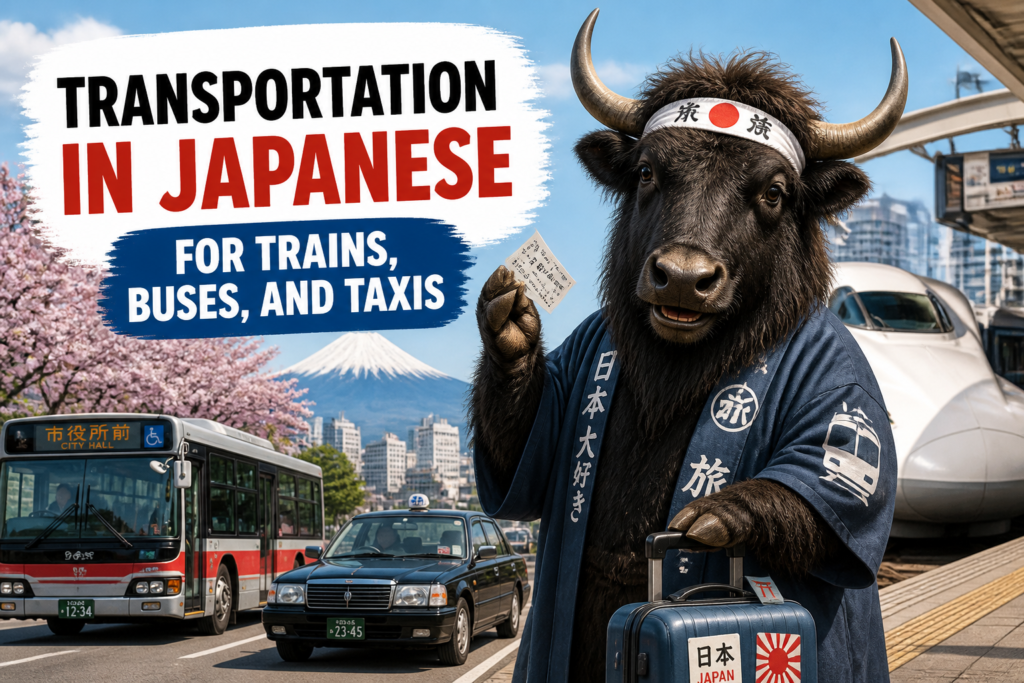
Transportation in Japanese for Trains, Buses, and Taxis
Transportation in Japanese looks simple until you need it in the real world, at the real station, with the real announcement speaking at real speed. Suddenly, the train platform becomes a tiny language exam with luggage. Charming, honestly.
This guide teaches the most useful transportation words and phrases for Japanese trains, buses, and taxis. You will see each item in Kanji, Rōmaji, and clear English meaning, plus example sentences you can actually use. For a broader word list, you can also check Japanese transport vocab, and for a general learning hub, visit Learn Japanese.
If you have ever stood in front of a ticket machine pretending you totally understand the buttons, this article is for you. Transportation language is practical Japanese: short, direct, and very polite when it needs to be. That is great news, because once you know the core words, you can get around with a lot less stress.
Essential Transportation Words
Kanji
Rōmaji
English Meaning
Example Sentence
Rōmaji
Translation
交通
kōtsū
transportation; traffic
東京の交通は便利です。
Tōkyō no kōtsū wa benri desu.
Transportation in Tokyo is convenient.
駅
eki
station
この駅で降ります。
Kono eki de orimasu.
I will get off at this station.
電車
densha
train
電車は何時に来ますか。
Densha wa nanji ni kimasu ka.
What time does the train come?
地下鉄
chikatetsu
subway; metro
地下鉄で行きます。
Chikatetsu de ikimasu.
I will go by subway.
バス
basu
bus
バス停はどこですか。
Basu-tei wa doko desu ka.
Where is the bus stop?
タクシー
takushī
taxi
タクシーを呼んでください。
Takushī o yonde kudasai.
Please call a taxi.
Train Phrases You Will Actually Hear
Kanji
Rōmaji
English Meaning
Example Sentence
Rōmaji
Translation
切符
kippu
ticket
切符を買います。
Kippu o kaimasu.
I will buy a ticket.
改札口
kaisatsuguchi
ticket gate
改札口はあちらです。
Kaisatsuguchi wa achira desu.
The ticket gate is over there.
乗る
noru
to ride; to take
この電車に乗ります。
Kono densha ni norimasu.
I will take this train.
降りる
oriru
to get off
次の駅で降ります。
Tsugi no eki de orimasu.
I will get off at the next station.
乗り換え
norikae
transfer
ここで乗り換えです。
Koko de norikae desu.
You transfer here.
遅れる
okureru
to be late; delayed
電車が少し遅れています。
Densha ga sukoshi okurete imasu.
The train is a little delayed.
満員
mannin
full; crowded
朝の電車は満員です。
Asa no densha wa man’in desu.
The morning train is packed.
各駅停車
kakuekiteisha
local train
各駅停車に乗ってください。
Kakuekiteisha ni notte kudasai.
Please take the local train.
快速
kaisoku
rapid train
快速は止まりません。
Kaisoku wa tomarimasen.
The rapid train does not stop.
終点
shūten
last stop; terminal
この電車の終点は大阪です。
Kono densha no shūten wa Ōsaka desu.
This train’s final stop is Osaka.
Bus Words And Real-Life Phrases
Kanji
Rōmaji
English Meaning
Example Sentence
Rōmaji
Translation
バス停
basu-tei
bus stop
バス停は駅の前です。
Basu-tei wa eki no mae desu.
The bus stop is in front of the station.
時刻表
jikokuhyō
timetable; schedule
時刻表を見ます。
Jikokuhyō o mimasu.
I will check the timetable.
路線
rosen
route; line
この路線は空港へ行きます。
Kono rosen wa kūkō e ikimasu.
This route goes to the airport.
運賃
unchin
fare
運賃はいくらですか。
Unchin wa ikura desu ka.
How much is the fare?
先払い
saki-barai
pay first
このバスは先払いです。
Kono basu wa saki-barai desu.
This bus is pay-first.
後払い
ato-barai
pay later
一部のバスは後払いです。
Ichibu no basu wa ato-barai desu.
Some buses are pay-later.
降車
kōsha
getting off
降車ボタンを押してください。
Kōsha botan o oshite kudasai.
Please press the stop button.
整理券
seiriken
numbered ticket
整理券を取ってください。
Seiriken o totte kudasai.
Please take a numbered ticket.
Taxi Words And Useful Requests
Kanji
Rōmaji
English Meaning
Example Sentence
Rōmaji
Translation
乗り場
noriba
pickup area; taxi stand
タクシー乗り場はどこですか。
Takushī noriba wa doko desu ka.
Where is the taxi stand?
目的地
mokutekichi
destination
目的地までお願いします。
Mokutekichi made onegaishimasu.
Please take me to my destination.
料金
ryōkin
fee; charge
料金はどのくらいですか。
Ryōkin wa dono kurai desu ka.
About how much is the fare?
メーター
mētā
meter
メーターをお願いします。
Mētā o onegaishimasu.
Please use the meter.
相乗り
aidori
shared ride
相乗りできますか。
Aidori dekimasu ka.
Can I share the ride?
迎えに来る
mukae ni kuru
to come pick up
駅まで迎えに来てください。
Eki made mukae ni kite kudasai.
Please come pick me up at the station.
Key Phrases For Getting Around
Kanji
Rōmaji
English Meaning
Example Sentence
Rōmaji
Translation
どこですか
doko desu ka
where is it?
駅はどこですか。
Eki wa doko desu ka.
Where is the station?
何番線
nanbansen
which platform
何番線ですか。
Nanbansen desu ka.
Which platform is it?
この電車
kono densha
this train
この電車は新宿に行きますか。
Kono densha wa Shinjuku ni ikimasu ka.
Does this train go to Shinjuku?
次の駅
tsugi no eki
next station
次の駅で降ります。
Tsugi no eki de orimasu.
I will get off at the next station.
乗り換えが必要です
norikae ga hitsuyō desu
a transfer is necessary
東京駅で乗り換えが必要です。
Tōkyō-eki de norikae ga hitsuyō desu.
You need to transfer at Tokyo Station.
何時に出ますか
nanji ni demasu ka
what time does it leave?
次のバスは何時に出ますか。
Tsugi no basu wa nanji ni demasu ka.
What time does the next bus leave?
止まりますか
tomarimasu ka
does it stop?
この電車はここに止まりますか。
Kono densha wa koko ni tomarimasu ka.
Does this train stop here?
お願いします
onegaishimasu
please; I would like
大阪までお願いします。
Ōsaka made onegaishimasu.
To Osaka, please.
How Transportation Japanese Changes By Situation
Japanese transportation words often come in pairs: one word for the vehicle, and one word for the action. For example, 電車 (densha, train) is the thing, while 乗る (noru, to ride/take) is the action. Simple. Useful. Not a trap, for once.
Pattern
Meaning
Example
Rōmaji
English
電車に乗る
to take the train
電車に乗ります。
Densha ni norimasu.
I will take the train.
バスで行く
to go by bus
バスで行きます。
Basu de ikimasu.
I will go by bus.
タクシーを呼ぶ
to call a taxi
タクシーを呼びます。
Takushī o yobimasu.
I will call a taxi.
駅で降りる
to get off at the station
駅で降ります。
Eki de orimasu.
I get off at the station.
One small detail matters a lot: で (de) often marks the place or method, like バスで (by bus), while に (ni) is common with destinations or vehicles you board, like 電車に乗る (take the train). Japanese likes these tiny particles. They are small, but they have big opinions.
Common Transport Signs And Announcements
Kanji
Rōmaji
English Meaning
Example Sentence
Rōmaji
Translation
出口
deguchi
exit
出口は右です。
Deguchi wa migi desu.
The exit is on the right.
入口
iriguchi
entrance
入口はこちらです。
Iriguchi wa kochira desu.
The entrance is this way.
のりば
noriba
boarding area
3番のりばから出ます。
San-ban noriba kara demasu.
It leaves from platform 3.
注意
chūi
caution; attention
注意してください。
Chūi shite kudasai.
Please be careful.
運行
unkō
service operation
電車は通常運行です。
Densha wa tsūjō unkō desu.
The train is operating normally.
Mini Practice
Try swapping the words below. Keep it simple. The point is to make the phrase feel automatic, not to win a trophy for mental gymnastics.
Prompt
Use This Word
Model Answer
Rōmaji
English
Take the train
電車
電車に乗ります。
Densha ni norimasu.
I will take the train.
Go by bus
バス
バスで行きます。
Basu de ikimasu.
I will go by bus.
Call a taxi
タクシー
タクシーを呼びます。
Takushī o yobimasu.
I will call a taxi.
Where is the station?
駅
駅はどこですか。
Eki wa doko desu ka.
Where is the station?
Get off at the next station
降りる
次の駅で降ります。
Tsugi no eki de orimasu.
I will get off at the next station.
Common Mistakes And Fixes
Mistake
Why It’s Off
Better Version
Rōmaji
電車で乗る
Sounds awkward for “take a train”
電車に乗る
Densha ni noru
バスに行く
Does not mean “go by bus”
バスで行く
Basu de iku
タクシーを行く
Wrong verb choice
タクシーで行く / タクシーを呼ぶ
Takushī de iku / takushī o yobu
駅を降りる
Usually we say get off at a station
駅で降りる
Eki de oriru
Quick Reference Summary
電車 (densha) = train
バス (basu) = bus
タクシー (takushī) = taxi
駅 (eki) = station
切符 (kippu) = ticket
乗る (noru) = to ride/take
降りる (oriru) = to get off
乗り換え (norikae) = transfer
運賃 (unchin) = fare
目的地 (mokutekichi) = destination
お願いします (onegaishimasu) = please / one please
For a deeper dive into transport-related words, keep the practice going with this related Japanese lesson. And if you want to see how “transportation” is used in English reference form, the Transport entry is a boring-but-helpful place to start. Boring is good. Boring is reliable.
The big Yak takeaway: when you learn 電車, バス, タクシー, 駅, and a few key verbs like 乗る and 降りる, you can handle most travel situations without panic. Add polite phrases like お願いします, and you sound calm, natural, and pleasantly prepared—basically the travel version of having your life together.