Japanese Vocabulary Guide
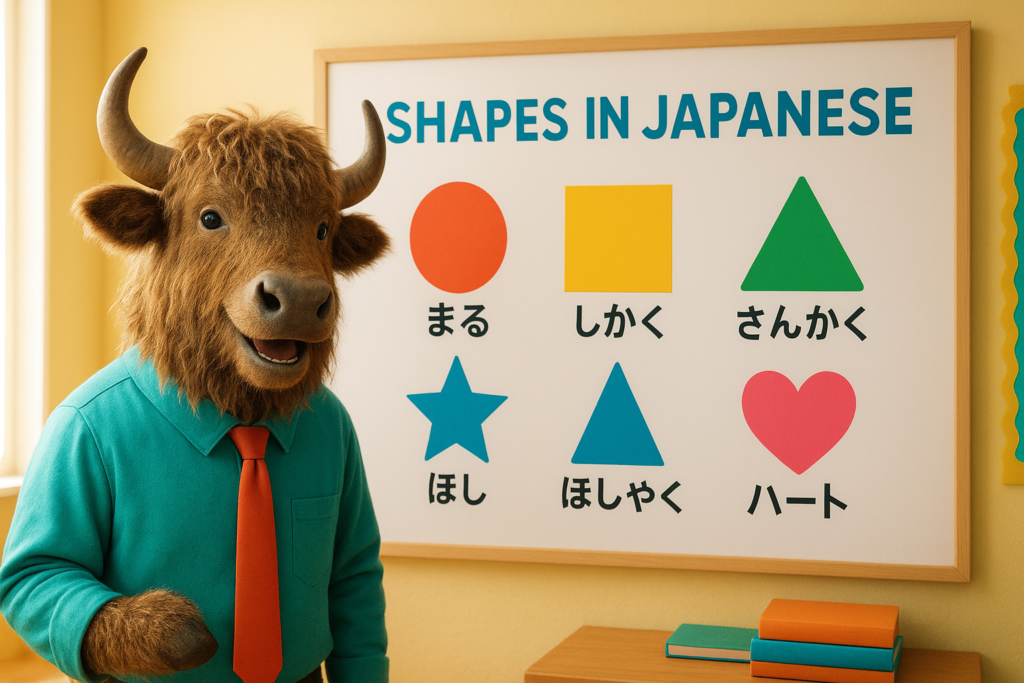
Shapes In Japanese
From 形 (katachi) to 三角形 (sankakkei), here’s how Japanese actually talks about shapes in real life, not just in geometry class.
The first time I tried to describe a plate in Japanese, my brain produced exactly one heroic word: 丸い (marui), “round.” Very useful. Right up until I needed to describe an oval mirror, a hexagonal pencil, and an L-shaped sofa that looked like it had opinions.
That is the problem with most “shapes in Japanese” lists: they hand you circle, triangle, square, then stroll away like the job is done. This guide does the actual work. You’ll learn the everyday words people really say, the more exact geometry terms, and the sentence patterns that stop your Japanese from sounding like a panicked worksheet.
Most shape lists stop at circle, triangle, and square. Cute. Less cute when you need to describe a heart-shaped box, a rectangular screen, or a hexagonal pencil in actual Japanese.
Core Shape Cards
形
katachi
shape; form
丸
maru
circle; round shape
三角
sankaku
triangle
四角
shikaku
four-cornered shape
正方形
seihōkei
square
長方形
chōhōkei
rectangle
楕円形
daenkei
oval shape
ハート形
hāto-gata
heart-shaped
How Japanese Actually Talks About Shape
Here’s the part most articles skip: Japanese often gives you an everyday word and a more exact word for the same shape. Learn both, and suddenly menus, textbooks, shop signs, design talk, and normal conversation all make more sense.
The Differences Most Shape Lists Usually Skip
- 形 (katachi) is broad and everyday: shape, form, appearance. 形状 (keijō) sounds more formal or technical.
雲の形 (kumo no katachi) = the shape of a cloud.
部品の形状 (buhin no keijō) = the shape/spec of a part. - 丸 (maru) and 丸い (marui) are common, natural, everyday choices. 円 (en) and 円形 (enkei) feel more geometric or precise.
- 三角 (sankaku) is casual and common. 三角形 (sankakkei) is more exact. You will hear both.
- 四角 (shikaku) is a loose everyday “four-cornered” word. 正方形 (seihōkei) means a true square. 長方形 (chōhōkei) means rectangle.
- 〜形 (〜gata / 〜kei) often names the visible shape itself, like 星形 (hoshigata). 〜型 (〜gata) often feels like a type or pattern, which is why L字型 (erujigata) and ピラミッド型 (piramiddo-gata) are common.
- There is no everyday adjective 三角い. Use 三角の instead: 三角の標識 (sankaku no hyōshiki), “a triangular sign.”
Useful Phrases And Real-Life Sentences
These are the phrases that actually do the heavy lifting when you describe objects, buildings, food, screens, furniture, or random things you suddenly need to point at with confidence.
- 何の形ですか — nani no katachi desu ka — what shape is it?
このクッキーは何の形ですか。
Kono kukkī wa nani no katachi desu ka.
What shape is this cookie? - どんな形ですか — donna katachi desu ka — what kind of shape is it?
その雲はどんな形ですか。
Sono kumo wa donna katachi desu ka.
What shape is that cloud? - 〜の形です — ~ no katachi desu — it is in the shape of …
この島はハートの形です。
Kono shima wa hāto no katachi desu.
This island is heart-shaped. - 〜の形をしています — ~ no katachi o shiteimasu — it has the shape of …
このビルは三角の形をしています。
Kono biru wa sankaku no katachi o shiteimasu.
This building has a triangular shape. - 〜の形をした — ~ no katachi o shita — shaped like …
星の形をしたランプが好きです。
Hoshi no katachi o shita ranpu ga suki desu.
I like lamps shaped like stars. - 角がある — kado ga aru — to have corners
このテーブルは角があります。
Kono tēburu wa kado ga arimasu.
This table has corners. - 角が丸い — kado ga marui — to have rounded corners
このスマホは角が丸いです。
Kono sumaho wa kado ga marui desu.
This phone has rounded corners.
- 先がとがっている — saki ga togatte iru — pointed at the tip
この葉は先がとがっています。
Kono ha wa saki ga togatte imasu.
This leaf has a pointed tip. - 左右対称です — sayūtaishō desu — it is symmetrical
このマークは左右対称です。
Kono māku wa sayūtaishō desu.
This mark is symmetrical. - 細長いです — hosonagai desu — it is long and thin
このパンは細長いです。
Kono pan wa hosonagai desu.
This bread is long and thin. - 形が似ています — katachi ga nite imasu — the shapes are similar
この二つの皿は形が似ています。
Kono futatsu no sara wa katachi ga nite imasu.
These two plates have similar shapes. - 形が崩れました — katachi ga kuzuremashita — it lost its shape
ケーキが暑さで形が崩れました。
Kēki ga atsusa de katachi ga kuzuremashita.
The cake lost its shape in the heat. - 形を整えてください — katachi o totonoete kudasai — please shape it neatly
生地の形を整えてください。
Kiji no katachi o totonoete kudasai.
Please shape the dough neatly. - 紙に円を描いてください — kami ni en o kaite kudasai — please draw a circle on the paper
紙に円を三つ描いてください。
Kami ni en o mittsu kaite kudasai.
Please draw three circles on the paper.
Tables Of Words
Below are grouped reference tables so this doesn’t turn into one giant monster chart. Save this page. Future you will be annoyingly grateful.
Everyday Basics
| Kanji | Rōmaji | Meaning | Example (JP) | Example (Rōmaji) | Translation (EN) |
|---|---|---|---|---|---|
| 形 | katachi | shape; form | このクッキーは星の形です。 | Kono kukkī wa hoshi no katachi desu. | This cookie is in the shape of a star. |
| 形状 | keijō | shape; form (formal) | この瓶は変わった形状をしています。 | Kono bin wa kawatta keijō o shiteimasu. | This bottle has an unusual shape. |
| 丸 | maru | circle; round shape | 子どもが紙に大きい丸を描きました。 | Kodomo ga kami ni ōkii maru o kakimashita. | The child drew a big circle on the paper. |
| 丸い | marui | round | 彼の目は丸いです。 | Kare no me wa marui desu. | His eyes are round. |
| 円 | en | circle (geometric) | 紙に円を一つ書いてください。 | Kami ni en o hitotsu kaite kudasai. | Please draw one circle on the paper. |
| 円形 | enkei | circular shape | 会議室に円形のテーブルがあります。 | Kaigishitsu ni enkei no tēburu ga arimasu. | There is a circular table in the meeting room. |
| 三角 | sankaku | triangle | あの標識は三角です。 | Ano hyōshiki wa sankaku desu. | That sign is triangular. |
| 三角形 | sankakkei | triangle (precise) | ピザを三角形に切りました。 | Piza o sankakkei ni kirimashita. | I cut the pizza into triangles. |
| 四角 | shikaku | four-cornered shape | この箱はほぼ四角です。 | Kono hako wa hobo shikaku desu. | This box is roughly square or boxy. |
| 四角い | shikakui | square; boxy | 四角いテーブルを探しています。 | Shikakui tēburu o sagashite imasu. | I’m looking for a square table. |
| 正方形 | seihōkei | square | 折り紙を正方形に切ってください。 | Origami o seihōkei ni kitte kudasai. | Please cut the origami paper into a square. |
| 長方形 | chōhōkei | rectangle | この画面は長方形です。 | Kono gamen wa chōhōkei desu. | This screen is rectangular. |
More Flat Shapes You’ll Actually Meet
| Kanji | Rōmaji | Meaning | Example (JP) | Example (Rōmaji) | Translation (EN) |
|---|---|---|---|---|---|
| 長四角 | nagashikaku | rectangle (casual) | その皿は長四角で使いやすいです。 | Sono sara wa nagashikaku de tsukaiyasui desu. | That plate is rectangular and easy to use. |
| 楕円 | daen | oval; ellipse | 池は楕円のように見えます。 | Ike wa daen no yō ni miemasu. | The pond looks oval. |
| 楕円形 | daenkei | oval shape | 楕円形の鏡を買いました。 | Daenkei no kagami o kaimashita. | I bought an oval mirror. |
| 半円 | han’en | semicircle | 子どもたちが半円に並びました。 | Kodomotachi ga han’en ni narabimashita. | The children lined up in a semicircle. |
| 台形 | daikei | trapezoid | このバッグは上から見ると台形です。 | Kono baggu wa ue kara miru to daikei desu. | This bag is trapezoid-shaped from above. |
| 菱形 | hishigata | diamond; rhombus | そのクッションは菱形です。 | Sono kusshon wa hishigata desu. | That cushion is diamond-shaped. |
| 平行四辺形 | heikōshihenkei | parallelogram | この図は平行四辺形に見えます。 | Kono zu wa heikōshihenkei ni miemasu. | This diagram looks like a parallelogram. |
| 五角形 | gokakukei | pentagon | その建物の窓は五角形です。 | Sono tatemono no mado wa gokakukei desu. | The windows in that building are pentagonal. |
| 六角形 | rokkakukei | hexagon | 六角形の鉛筆は転がりにくいです。 | Rokkakukei no enpitsu wa korogarinikui desu. | Hexagonal pencils do not roll easily. |
| 八角形 | hakkakukei | octagon | あの時計は八角形のケースです。 | Ano tokei wa hakkakukei no kēsu desu. | That watch has an octagonal case. |
| 多角形 | takakukei | polygon | このロゴは多角形を組み合わせています。 | Kono rogo wa takakukei o kumiawasete imasu. | This logo combines polygons. |
| 星形 | hoshigata | star shape | 星形のクッキーを焼きました。 | Hoshigata no kukkī o yakimashita. | I baked star-shaped cookies. |
3D And Diagram Words
| Kanji | Rōmaji | Meaning | Example (JP) | Example (Rōmaji) | Translation (EN) |
|---|---|---|---|---|---|
| ハート形 | hāto-gata | heart shape | ハート形の箱をもらいました。 | Hāto-gata no hako o moraimashita. | I got a heart-shaped box. |
| 点 | ten | point; dot | 地図に赤い点を付けました。 | Chizu ni akai ten o tsukemashita. | I marked a red dot on the map. |
| 線 | sen | line | この線をまっすぐ引いてください。 | Kono sen o massugu hiite kudasai. | Please draw this line straight. |
| 曲線 | kyokusen | curve | この道はゆるい曲線を描いています。 | Kono michi wa yurui kyokusen o egaite imasu. | This road forms a gentle curve. |
| 直線 | chokusen | straight line | このデザインは直線が多いです。 | Kono dezain wa chokusen ga ōi desu. | This design uses a lot of straight lines. |
| 平面 | heimen | flat surface; plane | この机の上は平面です。 | Kono tsukue no ue wa heimen desu. | The top of this desk is flat. |
| 立体 | rittai | solid; 3D form | このアプリで立体を回して見られます。 | Kono apuri de rittai o mawashite miraremasu. | You can rotate and view 3D shapes in this app. |
| 球形 | kyūkei | spherical shape | 地球は完全ではありませんが、ほぼ球形です。 | Chikyū wa kanzen de wa arimasen ga, hobo kyūkei desu. | The earth is not perfect, but it is nearly spherical. |
| 立方体 | rippōtai | cube | 氷を立方体に切りました。 | Kōri o rippōtai ni kirimashita. | I cut the ice into cubes. |
| 直方体 | chokuhōtai | rectangular prism | その箱は直方体です。 | Sono hako wa chokuhōtai desu. | That box is a rectangular prism. |
| 円柱 | enchū | cylinder | この缶は円柱の形です。 | Kono kan wa enchū no katachi desu. | This can is cylindrical. |
| 円錐 | ensui | cone | その帽子は円錐みたいです。 | Sono bōshi wa ensui mitai desu. | That hat looks like a cone. |
Descriptors And Pattern Words
| Kanji | Rōmaji | Meaning | Example (JP) | Example (Rōmaji) | Translation (EN) |
|---|---|---|---|---|---|
| 細長い | hosonagai | long and thin | 細長いグラスを使います。 | Hosonagai gurasu o tsukaimasu. | We use tall, slender glasses. |
| 縦長 | tatenaga | vertically long | このポスターは縦長です。 | Kono posutā wa tatenaga desu. | This poster is vertically long. |
| 横長 | yokonaga | horizontally long | 横長の画面のほうが見やすいです。 | Yokonaga no gamen no hō ga miyasui desu. | A wide screen is easier to see. |
| 左右対称 | sayūtaishō | symmetrical | このロゴは左右対称です。 | Kono rogo wa sayūtaishō desu. | This logo is symmetrical. |
| 波形 | namigata | wave shape | このグラフは波形に見えます。 | Kono gurafu wa namigata ni miemasu. | This graph looks wave-shaped. |
| 螺旋 | rasen | spiral | あの建物には螺旋階段があります。 | Ano tatemono ni wa rasen kaidan ga arimasu. | That building has a spiral staircase. |
| L字型 | erujigata | L-shaped | L字型のソファを買いました。 | Erujigata no sofa o kaimashita. | I bought an L-shaped sofa. |
| U字型 | yūjigata | U-shaped | 首のクッションはU字型が便利です。 | Kubi no kusshon wa yūjigata ga benri desu. | U-shaped neck pillows are useful. |
| V字型 | būjigata | V-shaped | 鳥がV字型に飛んでいます。 | Tori ga būjigata ni tonde imasu. | The birds are flying in a V formation. |
| ピラミッド型 | piramiddo-gata | pyramid-shaped | ピラミッド型の置き物が棚にあります。 | Piramiddo-gata no okimono ga tana ni arimasu. | There is a pyramid-shaped ornament on the shelf. |
Quick Practice
Try saying these before peeking at the answers. Tiny challenge, big payoff.
- a heart-shaped box
- a hexagonal pencil
- a circular table
- an L-shaped sofa
- a long, thin bridge
- a triangular sign
Answers
- ハート形の箱
Hāto-gata no hako
heart-shaped box - 六角形の鉛筆
Rokkakukei no enpitsu
hexagonal pencil - 円形のテーブル
Enkei no tēburu
circular table - L字型のソファ
Erujigata no sofa
L-shaped sofa - 細長い橋
Hosonagai hashi
long, thin bridge - 三角の標識 / 三角形の標識
Sankaku no hyōshiki / Sankakkei no hyōshiki
triangular sign
Variants You’ll Want To Remember
| Common Word | Precise Word | What Changes | Quick Example |
|---|---|---|---|
| 丸 (maru) | 円 / 円形 (en / enkei) | everyday vs geometric / formal | 丸い目 = round eyes / 円形のテーブル = circular table |
| 三角 (sankaku) | 三角形 (sankakkei) | casual vs exact | 三角のおにぎり / 三角形を描く |
| 四角 (shikaku) | 正方形 (seihōkei) | loose four-cornered vs true square | 四角い箱 / 正方形の紙 |
| 四角 (shikaku) | 長方形 (chōhōkei) | everyday boxy vs rectangle | 四角い机 / 長方形の画面 |
| 形 (katachi) | 形状 (keijō) | broad everyday vs formal/technical | 雲の形 / 部品の形状 |
| 〜形 (〜gata / 〜kei) | 〜型 (〜gata) | visible shape vs type/pattern | 星形クッキー / L字型ソファ |
Quick Reference Summary
- 形 (katachi) is your broad everyday word for shape or form.
- Use 丸, 三角, and 四角 in normal conversation a lot.
- Use 円形, 三角形, 正方形, and 長方形 when you want to sound exact.
- 四角 is not the same thing as 正方形. One is broad; one is a true square.
- Say 三角の, not the imaginary everyday adjective 三角い.
- Learn shape patterns too: 角が丸い, 左右対称, 細長い, L字型.
Yak Box
If you only memorize “circle, triangle, square,” your Japanese will survive kindergarten and then immediately betray you in a stationery shop. A much better sentence to steal is this:
この箱は長方形で、角が少し丸いです。
Kono hako wa chōhōkei de, kado ga sukoshi marui desu.
This box is rectangular, and its corners are slightly rounded.
That one sentence already sounds like a person who noticed the object in front of them instead of emotionally guessing “big round-ish thing.” Progress. Lovely progress.