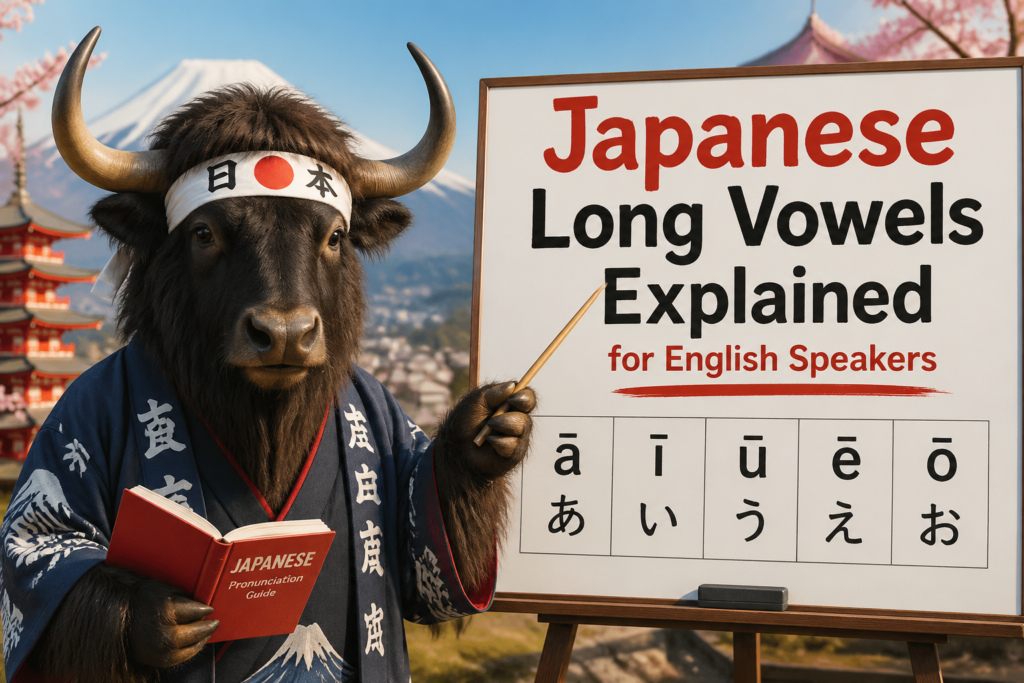
Long vowels are one of those tiny Japanese details that can quietly change a word from “correct” to “wait, what did you just say?” English speakers often hear a vowel and think, “Good enough.” Japanese politely disagrees.
The good news: long vowels are not mysterious. They are simply vowels that are held a little longer. That small stretch can change meaning, and yes, Japanese uses this trick constantly. If pronunciation has ever felt slippery, this guide will make it much less annoying. For a broader look at sound patterns, you can also check common Japanese pronunciation mistakes.
Here is the basic idea: in Japanese, vowel length matters. おばさん (Obasan) means aunt, while おばあさん (Obāsan) means grandmother. One extra beat. One very different family member. Japanese is charming like that.
What A Long Vowel Actually Is
A long vowel is a vowel sound that lasts for two beats instead of one. In Japanese, those beats are important. A short vowel and a long vowel can make different words.
In Japanese writing, long vowels can appear in a few ways:
- お母さん
Okaasan
Mother - お兄さん
Oniisan
Older brother - こうえん
kōen
Park - とうきょう
Tōkyō
Tokyo - せんせい
sensei
Teacher - ゆうびんきょく
yūbinkyoku
Post office
Notice something? The romanization often uses a macron, like ō and ū. That mark is doing a lot of heavy lifting, which is rude but effective.
Why Long Vowels Matter
Long vowels can change meaning, not just pronunciation. This is not optional decoration. It is part of the word.
| Kanji | Rōmaji | Meaning | Example | Rōmaji | English |
|---|---|---|---|---|---|
| おばさん | Obasan | Aunt | おばさん は やさしい。 Obasan wa yasashii. The aunt is kind. | Obasan wa yasashii. | The aunt is kind. |
| おばあさん | Obāsan | Grandmother | おばあさん は てを ふった。 Obāsan wa te o futta. The grandmother waved. | Obāsan wa te o futta. | The grandmother waved. |
| ゆき | Yuki | Snow | ゆき が ふった。 Yuki ga futta. Snow fell. | Yuki ga futta. | Snow fell. |
| ゆうき | Yūki | Courage | ゆうき が ある。 Yūki ga aru. There is courage. | Yūki ga aru. | There is courage. |
Common Long Vowel Patterns
Japanese long vowels usually come from simple spelling patterns. Learn the pattern, and suddenly the word stops feeling like random sound magic.
| Pattern | What It Means | Example | Rōmaji | English |
|---|---|---|---|---|
| お + お / う | Long “o” sound | おとうさん | otōsan | father |
| え + い | Long “e” sound | せんせい | sensei | teacher |
| お + う | Long “o” sound | こうえん | kōen | park |
| う + う | Long “u” sound | ゆうびんきょく | yūbinkyoku | post office |
| あ + あ | Long “a” sound | おかあさん | okaasan | mother |
| い + い | Long “i” sound | いい | ii | good |
Some long vowels are written in hiragana in a way that looks simple but still matters a lot in pronunciation. For example, おう often sounds like a long ō. So こうえん is not “ko-en” with a break. It is closer to kōen.
Useful Words And Phrases With Long Vowels
| Kanji | Rōmaji | Meaning | Example Sentence | Rōmaji | English Translation |
|---|---|---|---|---|---|
| お母さん | Okaasan | Mother | お母さん は いそがしい。 Okaasan wa isogashii. Mother is busy. | Okaasan wa isogashii. | Mother is busy. |
| お父さん | Otōsan | Father | お父さん は しごと に 行く。 Otōsan wa shigoto ni iku. Father goes to work. | Otōsan wa shigoto ni iku. | Father goes to work. |
| お兄さん | Oniisan | Older brother | お兄さん は やさしい。 Oniisan wa yasashii. Older brother is kind. | Oniisan wa yasashii. | Older brother is kind. |
| お姉さん | Oneesan | Older sister | お姉さん は えが じょうず。 Oneesan wa e ga jōzu. Older sister is good at drawing. | Oneesan wa e ga jōzu. | Older sister is good at drawing. |
| 学校 | Gakkō | School | 学校 へ 行きます。 Gakkō e ikimasu. I go to school. | Gakkō e ikimasu. | I go to school. |
| 先生 | Sensei | Teacher | 先生 は きびしい。 Sensei wa kibishii. The teacher is strict. | Sensei wa kibishii. | The teacher is strict. |
| 東京 | Tōkyō | Tokyo | 東京 に すんで います。 Tōkyō ni sunde imasu. I live in Tokyo. | Tōkyō ni sunde imasu. | I live in Tokyo. |
| 京都 | Kyōto | Kyoto | 京都 は うつくしい。 Kyōto wa utsukushii. Kyoto is beautiful. | Kyōto wa utsukushii. | Kyoto is beautiful. |
| 高い | Takai | High; expensive | この みせ は 高い。 Kono mise wa takai. This shop is expensive. | Kono mise wa takai. | This shop is expensive. |
| 長い | Nagai | Long | その みち は 長い。 Sono michi wa nagai. That road is long. | Sono michi wa nagai. | That road is long. |
| 空港 | Kūkō | Airport | 空港 へ いそぎます。 Kūkō e isogimasu. I hurry to the airport. | Kūkō e isogimasu. | I hurry to the airport. |
| 有名 | Yūmei | Famous | その えいが は 有名 です。 Sono eiga wa yūmei desu. That movie is famous. | Sono eiga wa yūmei desu. | That movie is famous. |
Common Mistakes English Speakers Make
English speakers usually make the same few mistakes. Fortunately, they are easy to spot once you know what to listen for.
| Mistake | What Happens | Better Version | Example |
|---|---|---|---|
| Ignoring vowel length | Short and long vowels sound the same | Hold the vowel for two beats | おばさん / おばあさん |
| Turning ō into “oh” | English-style diphthong sneaks in | Keep the sound smooth and steady | とうきょう → Tōkyō |
| Dropping the second vowel | Long vowel becomes short | Say both beats clearly | せんせい → sensei |
| Adding extra stress | Japanese rhythm becomes too English | Use length, not stress, to mark the difference | こうえん → kōen |
| Confusing ii with “ee” too sharply | Sound gets clipped | Keep it smooth and natural | いい → ii |
In Japanese, long vowels are not “fancy pronunciation.” They are part of the word. Skip them, and the word may quietly become a different word. That is a very Japanese kind of trap.
How To Pronounce Long Vowels
Keep the sound steady. Do not slide it. Do not stress it like English. Just hold it a little longer.
- Short vowel: one beat
- Long vowel: two beats
- Best habit: listen, repeat, then exaggerate a little while practicing
Here are a few easy drills:
| Short | Long | Example Pair | English Meaning |
|---|---|---|---|
| おじさん Ojisan | おじいさん Ojiisan | uncle / grandfather | Very different people, very important difference. |
| ゆき Yuki | ゆうき Yūki | snow / courage | Same basic sound family, different meaning. |
| さけ Sake | さあけ Saake | short / long practice form | Used here only to hear the length difference. |
If a long vowel looks awkward in romanization, that is normal. Japanese is not trying to be cute. It is trying to be clear.
Useful Real-Life Sentences
| Kanji | Rōmaji | Meaning | Example Sentence | Rōmaji | English Translation |
|---|---|---|---|---|---|
| お名前 | Onamae | Your name | お名前 は なん です か。 Onamae wa nan desu ka. What is your name? | Onamae wa nan desu ka. | What is your name? |
| お願いします | Onegaishimasu | Please; I request this | これ、お願いします。 Kore, onegaishimasu. This one, please. | Kore, onegaishimasu. | This one, please. |
| 大丈夫 | Daijōbu | Okay; all right | それで 大丈夫 です。 Sore de daijōbu desu. That is okay. | Sore de daijōbu desu. | That is okay. |
| 有料 | Yūryō | Paid; fee required | ここは 有料 です。 Koko wa yūryō desu. This place costs money. | Koko wa yūryō desu. | This place costs money. |
| 無料 | Muryō | Free | この ちず は 無料 です。 Kono chizu wa muryō desu. This map is free. | Kono chizu wa muryō desu. | This map is free. |
| 兄弟 | Kyōdai | Siblings | 兄弟 が ふたり います。 Kyōdai ga futari imasu. I have two siblings. | Kyōdai ga futari imasu. | I have two siblings. |
Quick Practice
Try saying these aloud. Slow is fine. Clear is better. Speed can come later, once the vowels stop staging little rebellions.
- おばさん → おばあさん
- ゆき → ゆうき
- おとさん → おとうさん
- せんせい → せんせい
- こうえん → こうえん
Now read these sentences and stretch the long vowels:
- お母さん は いそがしい。
Okaasan wa isogashii.
Mother is busy. - 先生 は 東京 に います。
Sensei wa Tōkyō ni imasu.
The teacher is in Tokyo. - 京都 は うつくしい。
Kyōto wa utsukushii.
Kyoto is beautiful.
Long Vowels And Please
Polite Japanese often includes words where long vowels matter, especially in set phrases. If you want to hear a useful example in context, look at please in Japanese. It is a good reminder that pronunciation and politeness like to travel together.
Also, if you want a quick history-and-language rabbit hole, the Japanese writing system page on Wikipedia is a perfectly boring place to start: Japanese writing system. Boring sources are often the best sources. Annoying, but true.
Common Mistakes And Fixes
| Mistake | Fix | Tip |
|---|---|---|
| Reading every vowel exactly once | Listen for two beats | Count slowly at first |
| Using English stress instead of length | Make the vowel longer, not louder | Volume is not the same as length |
| Skipping long vowels in names and place names | Keep the full pronunciation | Names especially care about this |
| Assuming romanization is just spelling | Use the macron as a pronunciation cue | ō means “long o” |
Quick Reference Summary
- Long vowels matter. They can change meaning.
- Japanese long vowels are two beats.
- Macrons like ō and ū show long vowels in rōmaji.
- Do not use English stress. Use length.
- Listen for pattern changes like おう, えい, ああ, いい, and うう.
Once your ear starts hearing long vowels, Japanese words become much less slippery. That tiny extra beat is doing a lot of work, so give it the respect it deserves. And yes, it really does matter whether someone is your aunt or your grandmother.