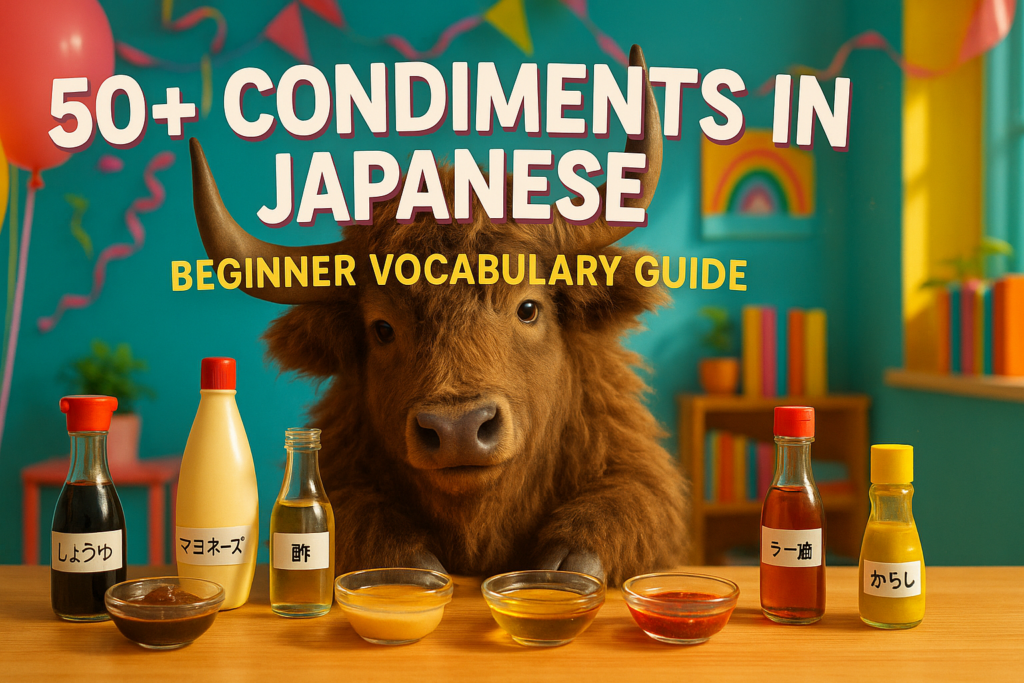
Condiments in Japanese: 50+ Useful Words and Phrases for Beginners
Learn 調味料と薬味 (Chōmiryō to Yakumi) the way real people use them: sauces, seasonings, spicy add-ons, and little toppings that quietly run the whole meal.
I once watched a friend attack a perfectly good plate of gyoza with ketchup because the soy sauce bottle looked “too official.” The dumplings survived. The table’s dignity did not. Japanese food has a whole tiny universe of sauces, seasonings, and toppings, and once you know the names, menus and condiment stations stop feeling like a polite little ambush.
This guide gives you the words people actually use: the pantry basics, table sauces, sharp spicy extras, fresh 薬味 (yakumi), and those sprinkle-on finishers that make rice, tofu, noodles, and grilled food taste properly alive. Every item includes Japanese text, rōmaji, a clear meaning, and a real example sentence, because memorizing a naked word list is brave but not smart.
Calling everything “sauce” is how you end up putting tonkatsu sauce on cold tofu. Technically possible. Spiritually chaotic.
The 8 Condiments You Will See Constantly
醤油
Shōyu
Soy Sauce
味噌
Miso
Miso
酢
Su
Vinegar
みりん
Mirin
Sweet Cooking Rice Wine
ポン酢
Ponzu
Citrus Soy Sauce
わさび
Wasabi
Wasabi
七味唐辛子
Shichimi Tōgarashi
Seven-Spice Chili
マヨネーズ
Mayonēzu
Mayonnaise
What Counts As A Condiment In Japanese?
The broad everyday word is 調味料 (chōmiryō), which covers seasonings and condiments in general. The slightly more specific word 薬味 (yakumi) means those fresh or aromatic little helpers added at the end, like ginger, green onion, shiso, or myōga. Then you get たれ (tare), which is usually a dipping or glazing sauce, and ソース (sōsu), which often means a thicker sauce, especially the Japanese kind you see with fried foods.
One useful thing beginners miss: not every important Japanese condiment shows up in neat old-school kanji. Plenty of common items are written in hiragana or katakana in real life, like みりん, わさび, or マヨネーズ. So yes, the bottle can look simple and still ruin your confidence. Very rude of it.
Useful Phrases You Can Use At The Table
- 醤油を少しかけてもいいですか。
Shōyu o sukoshi kakete mo ii desu ka.
Can I add a little soy sauce? - ポン酢で食べるのが好きです。
Ponzu de taberu no ga suki desu.
I like eating it with ponzu. - わさび抜きでお願いします。
Wasabi nuki de onegaishimasu.
No wasabi, please. - 七味をかけすぎました。
Shichimi o kakesugimashita.
I added too much seven-spice. - ソースは別添えにしてください。
Sōsu wa betsuzoe ni shite kudasai.
Please put the sauce on the side. - ドレッシングは何がありますか。
Doresshingu wa nani ga arimasu ka.
What dressings do you have? - ごま油の香りがいいですね。
Goma abura no kaori ga ii desu ne.
The sesame oil smells great. - 大根おろしを添えてください。
Daikon oroshi o soete kudasai.
Please add grated daikon on the side. - マヨネーズ多めでお願いします。
Mayonēzu ōme de onegaishimasu.
Extra mayo, please. - からしは抜きで大丈夫です。
Karashi wa nuki de daijōbu desu.
I’m fine without mustard. - 焼肉のたれをつけてください。
Yakiniku no tare o tsukete kudasai.
Please add yakiniku sauce. - この味噌は少し甘いです。
Kono miso wa sukoshi amai desu.
This miso is a little sweet.
Core Vocabulary Tables
These are grouped by how you will actually meet them: basics, sauces, spicy things, fresh toppings, sprinkles, and everyday table stuff. Each item gives you Japanese text, rōmaji, meaning, and a sentence you can steal immediately.
Kitchen Basics
| Japanese | Rōmaji | Meaning | Example (JP) | Example (Rōmaji) | Translation (EN) |
|---|---|---|---|---|---|
| 調味料 | Chōmiryō | Condiments / seasonings | この店は調味料が豊富です。 | Kono mise wa chōmiryō ga hōfu desu. | This restaurant has lots of condiments. |
| 薬味 | Yakumi | Aromatic condiment / garnish | うどんに薬味をのせます。 | Udon ni yakumi o nosemasu. | I put aromatic toppings on the udon. |
| 砂糖 | Satō | Sugar | 煮物に砂糖を少し入れます。 | Nimono ni satō o sukoshi iremasu. | I add a little sugar to the simmered dish. |
| 塩 | Shio | Salt | 天ぷらを塩で食べます。 | Tempura o shio de tabemasu. | I eat tempura with salt. |
| 酢 | Su | Vinegar | サラダに酢をかけます。 | Sarada ni su o kakemasu. | I put vinegar on the salad. |
| 醤油 | Shōyu | Soy sauce | 刺身に醤油をつけます。 | Sashimi ni shōyu o tsukemasu. | I dip sashimi in soy sauce. |
| 味噌 | Miso | Miso | この味噌は香りがいいです。 | Kono miso wa kaori ga ii desu. | This miso smells great. |
| みりん | Mirin | Sweet cooking rice wine | 照り焼きにみりんを使います。 | Teriyaki ni mirin o tsukaimasu. | I use mirin in teriyaki. |
Liquids And Pantry Staples
| Japanese | Rōmaji | Meaning | Example (JP) | Example (Rōmaji) | Translation (EN) |
|---|---|---|---|---|---|
| 料理酒 | Ryōrishu | Cooking sake | 魚の下味に料理酒を使います。 | Sakana no shitaji ni ryōrishu o tsukaimasu. | I use cooking sake to prep fish. |
| 酒 | Sake | Sake / rice wine | 鍋に酒を少し入れると香りがよくなります。 | Nabe ni sake o sukoshi ireru to kaori ga yoku narimasu. | A little sake makes the hot pot smell better. |
| ごま油 | Goma abura | Sesame oil | ナムルにごま油をたらします。 | Namuru ni goma abura o tarashimasu. | I drizzle sesame oil on namul. |
| サラダ油 | Sarada abura | Vegetable oil | 炒め物にはサラダ油を使います。 | Itamemono ni wa sarada abura o tsukaimasu. | I use vegetable oil for stir-fries. |
| だし | Dashi | Soup stock / broth base | だしの味がやさしいです。 | Dashi no aji ga yasashii desu. | The dashi flavor is gentle. |
| 麺つゆ | Mentsuyu | Noodle soup base | そうめんを麺つゆで食べます。 | Sōmen o mentsuyu de tabemasu. | I eat somen with noodle sauce. |
| ポン酢 | Ponzu | Citrus soy sauce | 豆腐にポン酢がよく合います。 | Tōfu ni ponzu ga yoku aimasu. | Ponzu goes well with tofu. |
| 胡麻だれ | Goma dare | Sesame sauce | 冷しゃぶは胡麻だれで食べたいです。 | Reishabu wa goma dare de tabetai desu. | I want to eat cold shabu-shabu with sesame sauce. |
Sauce Counter Favorites
| Japanese | Rōmaji | Meaning | Example (JP) | Example (Rōmaji) | Translation (EN) |
|---|---|---|---|---|---|
| とんかつソース | Tonkatsu sōsu | Tonkatsu sauce | とんかつにとんかつソースをかけます。 | Tonkatsu ni tonkatsu sōsu o kakemasu. | I pour tonkatsu sauce on tonkatsu. |
| 中濃ソース | Chūnō sōsu | Medium-thick brown sauce | コロッケには中濃ソースが合います。 | Korokke ni wa chūnō sōsu ga aimasu. | Medium-thick sauce goes well with croquettes. |
| ウスターソース | Usutā sōsu | Worcestershire sauce | 焼きそばにウスターソースを入れます。 | Yakisoba ni usutā sōsu o iremasu. | I add Worcestershire sauce to yakisoba. |
| お好み焼きソース | Okonomiyaki sōsu | Okonomiyaki sauce | お好み焼きソースは甘めです。 | Okonomiyaki sōsu wa amame desu. | Okonomiyaki sauce is on the sweet side. |
| たこ焼きソース | Takoyaki sōsu | Takoyaki sauce | たこ焼きソースをたっぷりかけました。 | Takoyaki sōsu o tappuri kakemashita. | I poured on plenty of takoyaki sauce. |
| 焼肉のたれ | Yakiniku no tare | Yakiniku sauce | 焼肉のたれでご飯が進みます。 | Yakiniku no tare de gohan ga susumimasu. | Yakiniku sauce makes rice disappear fast. |
| 照り焼きソース | Teriyaki sōsu | Teriyaki sauce | 鶏肉に照り焼きソースをからめます。 | Toriniku ni teriyaki sōsu o karame masu. | I coat the chicken in teriyaki sauce. |
| マヨネーズ | Mayonēzu | Mayonnaise | 唐揚げにマヨネーズをつける人もいます。 | Karaage ni mayonēzu o tsukeru hito mo imasu. | Some people dip fried chicken in mayo. |
Spicy And Sharp
| Japanese | Rōmaji | Meaning | Example (JP) | Example (Rōmaji) | Translation (EN) |
|---|---|---|---|---|---|
| わさび | Wasabi | Wasabi | 寿司にわさびを少しのせます。 | Sushi ni wasabi o sukoshi nosemasu. | I put a little wasabi on the sushi. |
| 辛子 | Karashi | Japanese mustard | おでんに辛子をつけます。 | Oden ni karashi o tsukemasu. | I eat oden with mustard. |
| 柚子胡椒 | Yuzu koshō | Yuzu chili paste | 鶏鍋に柚子胡椒を入れるとおいしいです。 | Torinabe ni yuzu koshō o ireru to oishii desu. | Chicken hot pot tastes great with yuzu pepper paste. |
| 七味唐辛子 | Shichimi tōgarashi | Seven-spice chili blend | うどんに七味唐辛子を振ります。 | Udon ni shichimi tōgarashi o furimasu. | I shake seven-spice onto udon. |
| 一味唐辛子 | Ichimi tōgarashi | Ground red chili | 辛いもの好きなら一味唐辛子がいいです。 | Karai mono zuki nara ichimi tōgarashi ga ii desu. | If you like spicy food, plain chili is a good pick. |
| 山椒 | Sanshō | Japanese pepper | うなぎに山椒をかけます。 | Unagi ni sanshō o kakemasu. | I sprinkle sansho on eel. |
| ラー油 | Rāyu | Chili oil | 餃子のたれにラー油を足します。 | Gyōza no tare ni rāyu o tashimasu. | I add chili oil to the gyoza sauce. |
| 豆板醤 | Tōbanjan | Doubanjiang chili bean paste | スープに豆板醤を少し入れました。 | Sūpu ni tōbanjan o sukoshi iremashita. | I added a little doubanjiang to the soup. |
Fresh Yakumi And Fragrant Extras
| Japanese | Rōmaji | Meaning | Example (JP) | Example (Rōmaji) | Translation (EN) |
|---|---|---|---|---|---|
| 生姜 | Shōga | Ginger | 冷ややっこに生姜をのせます。 | Hiyayakko ni shōga o nosemasu. | I put ginger on chilled tofu. |
| にんにく | Ninniku | Garlic | 餃子のたれににんにくを入れません。 | Gyōza no tare ni ninniku o iremasen. | I don’t add garlic to the dumpling sauce. |
| 大根おろし | Daikon oroshi | Grated daikon | 焼き魚に大根おろしを添えます。 | Yakizakana ni daikon oroshi o soemasu. | I serve grated daikon with grilled fish. |
| もみじおろし | Momiji oroshi | Spicy grated daikon | もみじおろしは鍋によく合います。 | Momiji oroshi wa nabe ni yoku aimasu. | Momiji oroshi goes well with hot pot. |
| 葱 | Negi | Green onion | ねぎをたっぷり入れてください。 | Negi o tappuri irete kudasai. | Please add lots of green onion. |
| 大葉 | Ōba | Shiso leaf | 大葉はさっぱりした香りです。 | Ōba wa sappari shita kaori desu. | Shiso leaf has a fresh aroma. |
| 茗荷 | Myōga | Japanese ginger bud | そうめんに茗荷をのせると夏っぽいです。 | Sōmen ni myōga o noseru to natsuppoi desu. | Myoga on somen feels very summery. |
| 柚子 | Yuzu | Yuzu citrus | 柚子の皮を少し散らしました。 | Yuzu no kawa o sukoshi chirashimashita. | I scattered a little yuzu peel on top. |
Sprinkles And Dry Toppings
| Japanese | Rōmaji | Meaning | Example (JP) | Example (Rōmaji) | Translation (EN) |
|---|---|---|---|---|---|
| ふりかけ | Furikake | Rice seasoning sprinkle | ご飯にふりかけをかけます。 | Gohan ni furikake o kakemasu. | I sprinkle furikake on rice. |
| 胡麻塩 | Gomashio | Sesame salt | おにぎりに胡麻塩を使いました。 | Onigiri ni gomashio o tsukaimashita. | I used sesame salt on the rice ball. |
| 白ごま | Shiro goma | White sesame | 白ごまをサラダに散らします。 | Shiro goma o sarada ni chirashimasu. | I scatter white sesame on the salad. |
| 黒ごま | Kuro goma | Black sesame | アイスに黒ごまをかけると香ばしいです。 | Aisu ni kuro goma o kakeru to kōbashii desu. | Black sesame on ice cream tastes nutty. |
| すりごま | Suri goma | Ground sesame | ほうれん草にすりごまを和えます。 | Hōrensō ni suri goma o aemasu. | I mix ground sesame with spinach. |
| 青のり | Aonori | Dried green seaweed | 青のりをかけるとたこ焼きらしくなります。 | Aonori o kakeru to takoyaki rashiku narimasu. | Aonori makes it feel like real takoyaki. |
| 刻み海苔 | Kizami nori | Shredded nori | 丼に刻み海苔をのせます。 | Don ni kizami nori o nosemasu. | I put shredded nori on the rice bowl. |
| 鰹節 | Katsuobushi | Bonito flakes | たこ焼きの上で鰹節が踊っています。 | Takoyaki no ue de katsuobushi ga odotte imasu. | The bonito flakes are dancing on the takoyaki. |
Everyday Table Condiments
| Japanese | Rōmaji | Meaning | Example (JP) | Example (Rōmaji) | Translation (EN) |
|---|---|---|---|---|---|
| ケチャップ | Kechappu | Ketchup | オムライスにケチャップをかけます。 | Omuraisu ni kechappu o kakemasu. | I put ketchup on omurice. |
| マスタード | Masutādo | Mustard | ホットドッグにマスタードを塗ります。 | Hottodoggu ni masutādo o nurimasu. | I spread mustard on the hot dog. |
| 胡椒 | Koshō | Pepper | スープに胡椒を少し振ります。 | Sūpu ni koshō o sukoshi furimasu. | I add a little pepper to the soup. |
| 唐辛子 | Tōgarashi | Chili pepper | このラー油は唐辛子の香りが強いです。 | Kono rāyu wa tōgarashi no kaori ga tsuyoi desu. | This chili oil has a strong chili aroma. |
| 蜂蜜 | Hachimitsu | Honey | ヨーグルトに蜂蜜を入れます。 | Yōguruto ni hachimitsu o iremasu. | I add honey to yogurt. |
| ジャム | Jamu | Jam | トーストにいちごジャムを塗りました。 | Tōsuto ni ichigo jamu o nurimashita. | I spread strawberry jam on toast. |
| バター | Batā | Butter | じゃがいもにバターをのせます。 | Jagaimo ni batā o nosemasu. | I put butter on the potato. |
| ドレッシング | Doresshingu | Dressing | サラダのドレッシングは別にしてください。 | Sarada no doresshingu wa betsu ni shite kudasai. | Please keep the salad dressing separate. |
Fast Confusion Fixes
- 調味料 (chōmiryō) is the broad word for condiments and seasonings.
- 薬味 (yakumi) is usually a fresh, aromatic add-on like ginger, green onion, shiso, or myōga.
- たれ (tare) often means a dipping, coating, or grilling sauce.
- ソース (sōsu) usually means a thicker sauce, especially with fried foods.
- 抜き (nuki) means “without it,” so わさび抜き means no wasabi.
- 別添え (betsuzoe) means “served on the side,” which is wildly useful and almost suspiciously efficient.
Yak Tip Before You Panic At The Sauce Station
If you only remember six words this week, make them 調味料 (chōmiryō), 薬味 (yakumi), 醤油 (shōyu), ポン酢 (ponzu), わさび抜き (wasabi nuki), and 別添え (betsuzoe). That tiny set gets you through a shocking amount of Japanese dining without random sauce drama.