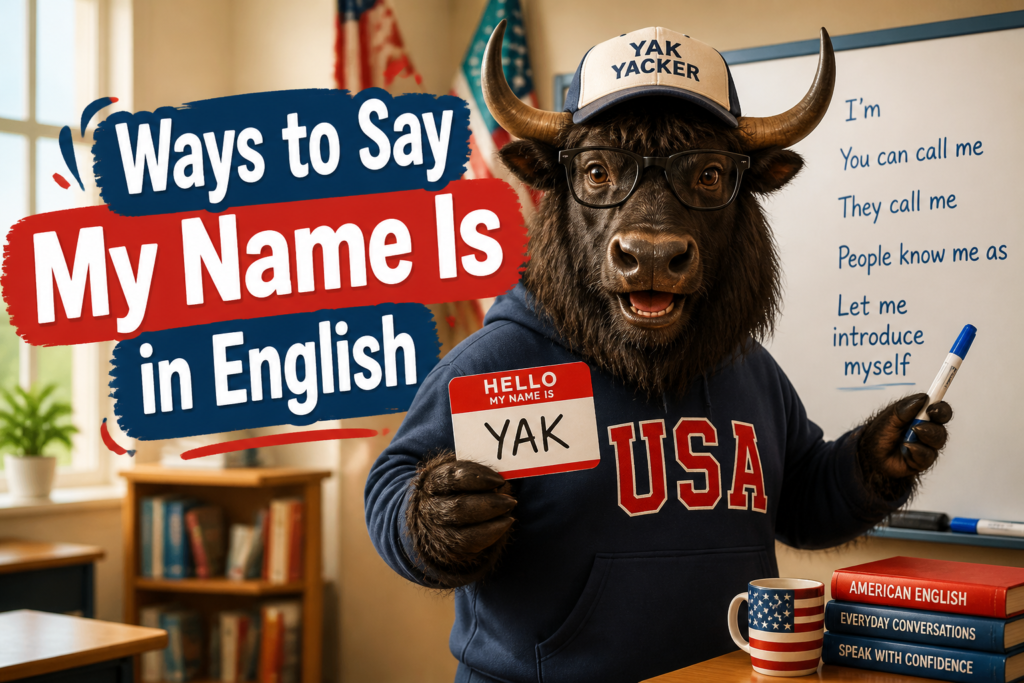
There are more ways to introduce yourself than just “My name is…” English speakers use different phrases depending on the situation, the level of formality, and how friendly they want to sound. Because yes, even saying your name has social strategy. Fun little language chaos.
For the broader learning path, visit our parent guide.
In this guide, you’ll learn practical ways to introduce yourself in natural English. You’ll also see pronunciation help, simple meaning notes, and real example sentences, so you can sound natural instead of like a greeting card that learned English from a textbook.
By the end, you’ll know how to say your name in casual conversations, job interviews, emails, and polite introductions. You’ll also learn which phrases sound warm, which sound formal, and which are best avoided unless you want to sound awkward on purpose.
Quick Overview
| Phrase | Style | Example |
|---|---|---|
| My name is … | Neutral, safe | My name is Ana. |
| I’m … | Casual, common | I’m Daniel. |
| It’s nice to meet you, I’m … | Friendly, polite | It’s nice to meet you, I’m Sara. |
| Let me introduce myself | Polite, formal | Let me introduce myself. I’m John Lee. |
| You can call me … | Casual or friendly | You can call me Max. |
| I go by … | Natural, a little more advanced | I go by MJ. |
Useful Ways To Say It
Here are the most common ways to say “My name is” in English. Start with these and you’ll be fine in most real-life situations.
| English | Pronunciation | Meaning | Example Sentence | Learner Note |
|---|---|---|---|---|
| My name is … | my naym iz | Standard way to say your name | My name is Julia. | Neutral and safe in almost any situation. |
| I’m … | aym | Short for “I am” | I’m Carlos. | Very common in speaking. Friendly and natural. |
| I am … | ay am | Full form of “I’m” | I am Priya. | Correct, but usually sounds more formal or careful. |
| Call me … | kawl mee | Use this name for me | Call me Sam. | Casual. Good when you want a short nickname. |
| You can call me … | yoo kan kawl mee | Use this name or nickname | You can call me Anna. | Friendly and polite. Very useful in conversation. |
| I go by … | ay goh by | This is the name I usually use | I go by Alex. | Natural for nicknames, shortened names, or preferred names. |
| I’m known as … | aym nohn az | People know me by this name | I’m known as “DJ” at work. | A bit more formal or descriptive. |
| My friends call me … | my frendz kawl mee | This is the name friends use | My friends call me Leo. | Warm and conversational. |
| Please, call me … | pleez kawl mee | A polite invitation to use your name | Please, call me Mr. Khan. | Good in polite or semi-formal situations. |
| Allow me to introduce myself | uh-lou mee to in-troh-doos my-self | A formal way to begin introducing yourself | Allow me to introduce myself. I’m Elena García. | Formal, businesslike, or humorous if said too dramatically. |
Simple And Natural Choices
If you want the safest answers, use My name is … or I’m …. These are the two big winners. They work at school, in class, at an interview, at a store, and in most polite introductions.
- My name is … — neutral and clear.
- I’m … — shorter and more natural in conversation.
- I am … — grammatically correct, but usually less common in everyday speech.
- Call me … — good if you want a shorter or friendlier name.
- You can call me … — polite and easy to use.
Example: “Hi, I’m Maya.” Sounds friendly. “Hi, my name is Maya.” Sounds slightly more neutral. Both are fine. English is not a robot contest.
Polite And Formal Introductions
In formal situations, people often use a fuller introduction. This is common in meetings, interviews, presentations, or when speaking to someone older or in authority.
| English | Pronunciation | Meaning | Example Sentence | Learner Note |
|---|---|---|---|---|
| Let me introduce myself. | let mee in-troh-doos my-self | I would like to introduce myself | Let me introduce myself. I’m Daniel Brooks. | Polite and useful at work or formal events. |
| Allow me to introduce myself. | uh-lou mee to in-troh-doos my-self | A more formal version of the same idea | Allow me to introduce myself. My name is Olivia Chen. | Very formal. Can sound a little dramatic in casual speech. |
| My name is … | my naym iz | Standard introduction | My name is Marcus Lee. | Safe choice for interviews and first meetings. |
| It’s a pleasure to meet you. | its uh plezh-er to meet yoo | A polite phrase after introductions | It’s a pleasure to meet you. I’m Fatima. | Warm and polite. Often used in formal settings. |
| Pleased to meet you. | pleezd to meet yoo | Polite greeting when meeting someone new | Pleased to meet you. I’m Eric. | Very common and safe. |
For formal English, remember this pattern:
- Greeting + name + polite phrase
- Example: Hello, my name is Nadia. It’s nice to meet you.
Casual And Friendly Ways
In everyday conversation, people usually shorten things. English speakers like to keep it light unless they’re filling out a form, being interviewed, or summoning formal energy from the ancient mountain of politeness.
| English | Pronunciation | Meaning | Example Sentence | Learner Note |
|---|---|---|---|---|
| I’m … | aym | I am | I’m Tina. | Most natural in casual conversation. |
| Call me … | kawl mee | Use this shorter name | Call me Ben. | Friendly and relaxed. |
| You can call me … | yoo kan kawl mee | This is the name people should use | You can call me Liz. | Good when giving a nickname. |
| I go by … | ay goh by | I usually use this name | I go by Sam. | Very common with nicknames and chosen names. |
| People call me … | pee-pul kawl mee | People know me by this name | People call me “RJ” at school. | Natural and easy to say. |
| Just call me … | juhst kawl mee | A casual suggestion | Just call me Maria. | Friendly; can sound helpful and relaxed. |
| I’m known as … | aym nohn az | This is the name people know me by | I’m known as “Coach Mike” online. | Useful for online names, public names, or titles. |
| My friends call me … | my frendz kawl mee | This is the name friends use | My friends call me Dee. | Warm, personal, and natural. |
How To Use Nicknames And Preferred Names
Sometimes your full name is not the name you want people to use. Maybe your name is long, maybe it is hard to pronounce, or maybe you simply prefer a nickname. English has several easy ways to say that.
| English | Pronunciation | Meaning | Example Sentence | Learner Note |
|---|---|---|---|---|
| Call me … | kawl mee | Use this name | Call me Tony. | Very common and friendly. |
| You can call me … | yoo kan kawl mee | Please use this name | You can call me Jenny. | Polite and helpful. |
| I go by … | ay goh by | This is the name I normally use | I go by Rina. | Great for nicknames and preferred names. |
| My name is …, but everyone calls me … | my naym iz … but ev-ree-wuhn kawlz mee … | Your full name plus your common name | My name is William, but everyone calls me Will. | Very useful in real life. |
| Please, call me … | pleez kawl mee | A polite request | Please, call me Ana. | Good when speaking to teachers, coworkers, or new people. |
Learner note: In the U.S., people often use nicknames quickly and casually. In more formal settings, give your full name first, then add your preferred name if needed.
Mini Patterns You Can Copy
| Pattern | Meaning | Example | Learner Note |
|---|---|---|---|
| My name is + name | Standard introduction | My name is David. | Easy and always correct. |
| I’m + name | Short introduction | I’m Sofia. | Most common in speech. |
| Call me + name | Use this shorter name | Call me Jo. | Casual and friendly. |
| You can call me + name | Please use this name | You can call me Sam. | Soft and polite. |
| My friends call me + name | Nickname or common name | My friends call me Max. | Nice for informal conversation. |
| I go by + name | Preferred name | I go by Lily. | Very useful with shortened names. |
American And British Notes
There is not a huge American vs. British difference here. Both varieties use My name is… and I’m…. The main difference is style, not grammar.
- American English: I’m Jake. is very common and natural.
- British English: I’m Jake. is also common.
- Both: Let me introduce myself works in formal situations.
- Both: I go by… is widely understood, though slightly more common in American English.
If you want a source to check dictionary meaning and usage, the Cambridge Dictionary entry for “name” is a boring but useful place to look. Boring is good when the grammar is doing the heavy lifting.
Common Mistakes
| Wrong | Better | Why |
|---|---|---|
| I name is Maria. | My name is Maria. | Use my, not I, before name. |
| I am Maria in the office. | I go by Maria in the office. | I am is okay for identity, but I go by sounds more natural for a chosen name. |
| Call me to Sam. | Call me Sam. | Do not use to here. |
| My name Maria. | My name is Maria. | You need the verb is. |
| I’m called as Alex. | People call me Alex. | Usually use call without as. |
One small pronunciation note: in everyday speech, I’m often sounds like one quick word, almost like “aim”. That is normal. English likes to eat syllables for breakfast.
Practice
Try these quick exercises. Say the sentences out loud if you can. Your mouth needs practice too, not just your eyes.
- Change this formal sentence into a casual one: My name is Emma.
- Change this casual sentence into a more formal one: I’m Omar.
- Fill in the blank: You can call me ____.
- Choose the best phrase for a job interview: I go by / Let me introduce myself / Call me
- Rewrite with a nickname: My name is Christopher, but everyone calls me ____.
Possible answers: I’m Emma. / My name is Omar. / any name you choose / Let me introduce myself / Chris
Mini Reference
| Situation | Best Phrase |
|---|---|
| First meeting | My name is … / I’m … |
| Friendlier conversation | I’m … / Call me … |
| Formal meeting | Let me introduce myself. |
| Nickname or preferred name | You can call me … / I go by … |
| Classroom or training | My name is … |
| Professional setting | My name is … / Allow me to introduce myself. |
If you want more English practice after this, try the English Vocabulary Test or the English Placement Test CEFR. Both are handy for checking your level without turning it into a dramatic life event.
Yak Takeaway
The easiest ways to say “My name is” in English are My name is … and I’m …. Use My name is … for safe, neutral English, and use I’m … when you want to sound more natural and relaxed. If you have a nickname, You can call me … and I go by … are your best friends.
Yak rule: if you can introduce yourself clearly, politely, and without a grammar face-plant, you’re already doing better than many confident speakers.