會 vs 能 vs 可以: Picking The Right “Can / Will / May”
English “can” is doing too many jobs. Chinese splits it into different “powers.” Pick the wrong one and you’ll accidentally […]
All Yak Yacker Traditional Chinese posts (繁體中文 fántǐ zhōngwén)—practical phrases, characters, grammar patterns, and Taiwan-style Mandarin learning tips.
English “can” is doing too many jobs. Chinese splits it into different “powers.” Pick the wrong one and you’ll accidentally […]
Traditional Chinese 了 (Le): Finished Actions Vs Sentence-Ending 了 Subtitle: Two “le” particles, two jobs — 完成了 (wánchéng le) “completed”
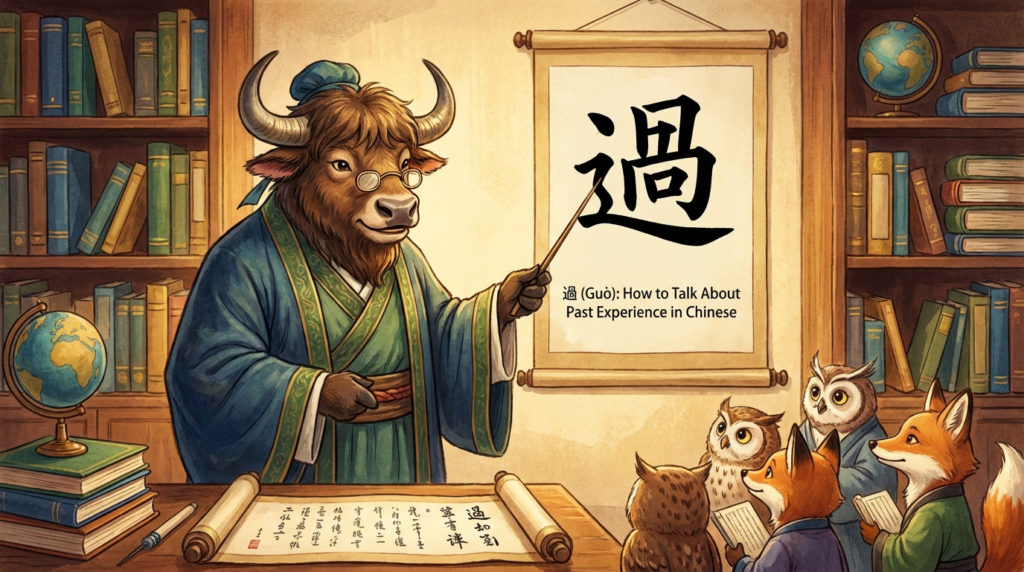
「過 (guò)」is the Chinese grammar move you use when you want to say you’ve done something before (experience), not necessarily
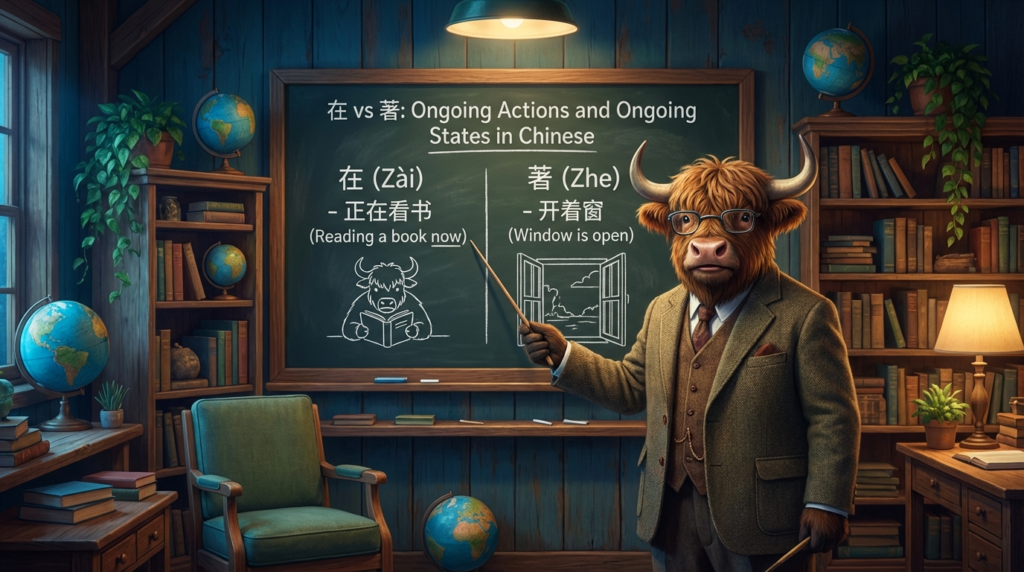
If you’ve ever said something like “I’m wearing my coat” and accidentally told people you’re putting it on right now…
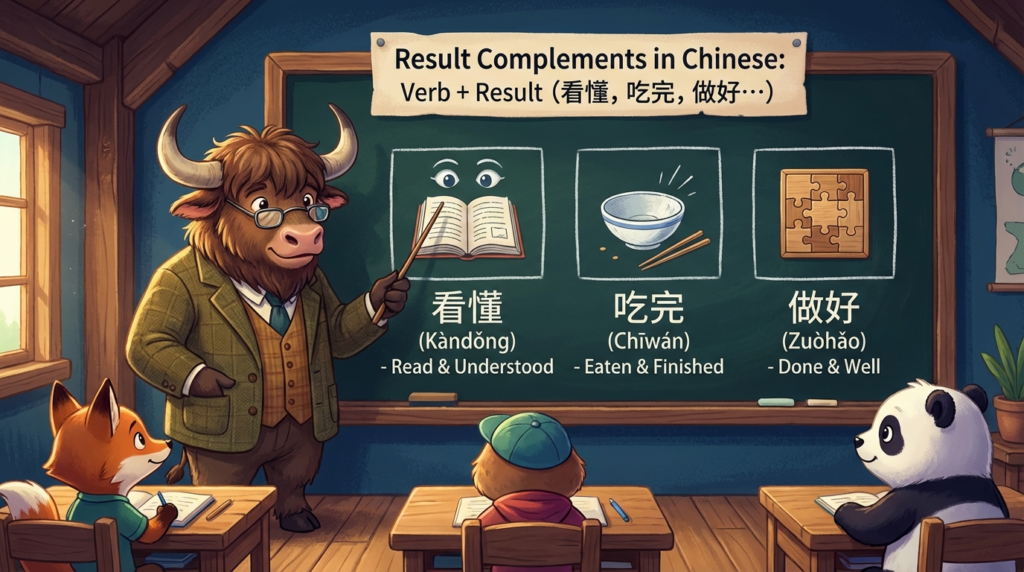
Chinese Result Complements (Verb + Result): The “I Actually Finished It” Upgrade Topic Name: 結果補語 (jiéguǒ bǔyǔ) — “result complements”
English uses “am/is/are” for everything: identity (“I am a teacher”), location (“I am at home”), states (“I am tired”), even
Using 有 (Yǒu): “There Is/Are” And “To Have” In Chinese Chinese Topic: 有(yǒu) Two jobs. One tiny character. 有(yǒu) helps
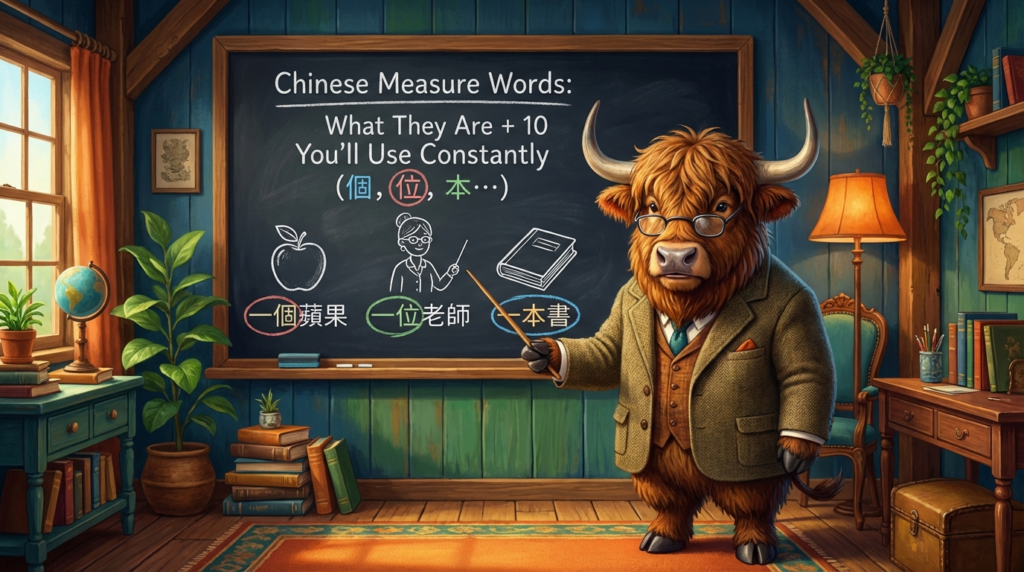
Chinese Measure Words: What They Are + 10 You’ll Use Constantly Measure words 量詞 liàngcí are the tiny words that
Chinese questions are weirdly simple once you stop trying to “flip” word order like English. Most of the time, you
Yak Snark Box 🦬 If you randomly guess between 不 and 沒, you’ll be wrong exactly often enough to feel