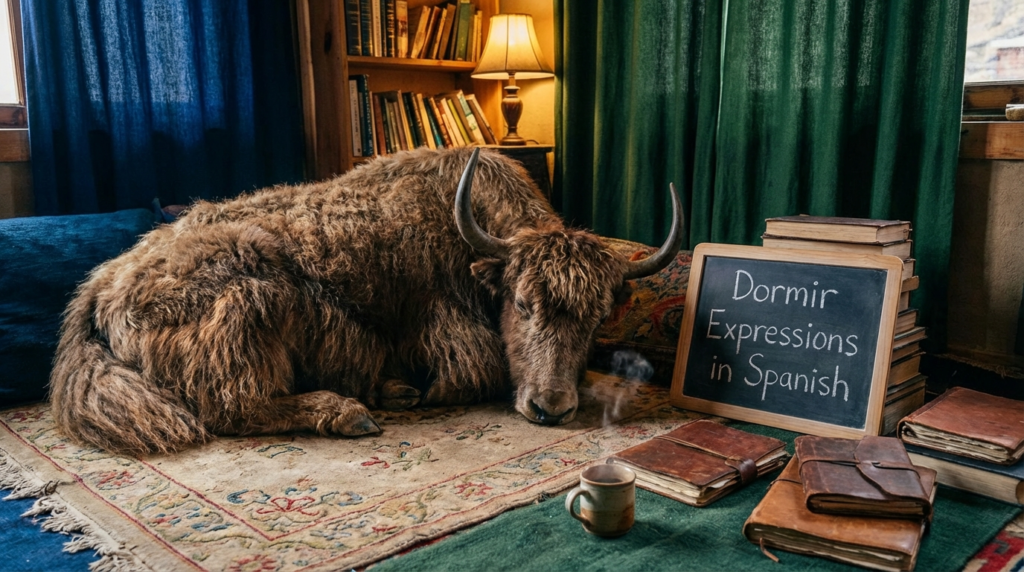
Dormir Expressions In Spanish
50 sleep phrases, idioms, and real-life examples that help you sound natural instead of like a grammar robot who desperately needs a nap.
The first time I heard a friend in Mexico say, “Me voy a echar un coyotito”, I looked around like a tiny desert animal was somehow part of the bedtime routine. Nope. He just meant he was taking a nap. That is the fun part of dormir expressions: the minute you leave textbook Spanish, sleep talk gets much more useful and way more interesting.
In this guide, you will learn the sleep expressions adults actually use, with Mexican Spanish first and a few broader regional notes when they help. You will also see the annoying-but-important difference between dormir, dormirse, and acostarse, because yes, Spanish found three ways to make you think about being tired.
Yak Box
If you remember only one thing, make it this: dormir = to sleep, dormirse = to fall asleep, and acostarse = to go to bed. You can go to bed and still scroll your phone for 47 tragic minutes, so no, they are not the same.
8 Core Dormir Expressions
Dormir Como Un Tronco
English meaning: To sleep like a log.
Example: Anoche dormí como un tronco y ni oí la alarma. — I slept like a log last night and didn’t even hear the alarm.
Dormir A Pierna Suelta
English meaning: To sleep soundly and comfortably.
Example: Con el ventilador por fin dormí a pierna suelta. — With the fan on, I finally slept soundly.
Pasar La Noche En Blanco
English meaning: To spend a sleepless night.
Example: Pasé la noche en blanco por el café de las seis. — I was up all night because of that 6 p.m. coffee.
No Pegar Ojo
English meaning: To not sleep a wink.
Example: Con los perros ladrando, no pegué ojo. — With the dogs barking, I didn’t sleep a wink.
Dormir La Siesta
English meaning: To take a nap.
Example: Si duermo la siesta, trabajo mucho mejor en la tarde. — If I take a nap, I work much better in the afternoon.
Echar Un Coyotito
English meaning: Mexican Spanish for “to take a quick nap.”
Example: Después de comer me voy a echar un coyotito de veinte minutos. — After lunch, I’m going to take a quick twenty-minute nap.
Dormirse En Los Laureles
English meaning: To rest on your laurels; to get complacent.
Example: Ganó el contrato y luego se durmió en los laureles. — He won the contract and then got complacent.
Dormir La Mona
English meaning: To sleep off a hangover.
Example: Después de la boda, varios se fueron a dormir la mona. — After the wedding, several people went to sleep off the hangover.
Useful Phrases And Real-Life Sentences
- Tengo sueño — I’m sleepy. Tengo sueño, así que no voy a ver otra serie.
- Me muero de sueño — I’m exhausted; I’m dying of sleepiness. Me muero de sueño después de esa junta eterna.
- No puedo dormir — I can’t sleep. No puedo dormir cuando hace mucho calor.
- Me voy a dormir — I’m going to sleep. Ya me voy a dormir; mañana entro temprano.
- Me voy a acostar — I’m going to bed. Me voy a acostar, pero seguro todavía leo un rato.
- Me dormí tarde — I fell asleep late. Me dormí tarde por terminar el informe.
- Me quedé dormido / dormida — I fell asleep; I nodded off; sometimes “I overslept” depending on context. Me quedé dormida en el sillón viendo una película.
- Dormí de un tirón — I slept straight through. Por fin dormí de un tirón toda la noche.
- Dormí fatal — I slept terribly. Dormí fatal en el hotel por el ruido del pasillo.
- Tengo el sueño ligero — I’m a light sleeper. Tengo el sueño ligero; cualquier ruido me despierta.
- Tengo el sueño pesado — I’m a heavy sleeper. Mi hermano tiene el sueño pesado y no oye nada.
- ¿Dormiste bien? — Did you sleep well? ¿Dormiste bien o te volvió a despertar el vecino?
Dormir, Dormirse, Or Acostarse?
This is the part that trips up a lot of learners. Dormir is the action of sleeping. Dormirse is the moment of falling asleep. Acostarse is going to bed or lying down. And quedarse dormido usually suggests it happened on you, often by accident. Very elegant. Very human.
| Pattern | Meaning | Example 1 | Example 2 |
|---|---|---|---|
| dormir | to sleep | Duermo seis horas entre semana. | No puedo dormir con ruido. |
| dormirse | to fall asleep | Me dormí en cuanto apagaron la luz. | Se durmió tardísimo. |
| acostarse | to go to bed | Me acuesto a las once. | Se acostó temprano, pero no se durmió hasta la una. |
| quedarse dormido/a | to doze off; to fall asleep unexpectedly | Me quedé dormido en la junta. | Nos quedamos dormidos viendo la película. |
| tener sueño / tener un sueño | to be sleepy / to have a dream | Tengo sueño y ya no pienso bien. | Tuve un sueño rarísimo anoche. |
Common Mistakes That Trip People Up
- “Me voy a dormir” vs. “me voy a acostar”: Both can work, but me voy a acostar is more exact for “I’m going to bed.” Me voy a acostar, pero todavía voy a leer.
- Using dormirse for long-duration sleep: Say dormí ocho horas, not me dormí ocho horas. One means “I slept eight hours.” The other sounds off.
- Quedarse dormido usually feels accidental: Me quedé dormida en el camión. That is not a calm bedtime plan. That is your body taking over.
- Dormir con alguien needs context: It can mean to share a bed, but it can also sound intimate. Dormí en el mismo cuarto que mi hermana is safer if you only mean sharing a room.
- Tengo sueño vs. tengo un sueño: Tengo sueño = I’m sleepy. Tengo un sueño = I have a dream. One needs a pillow. The other needs interpretation.
More Dormir Expressions You Will Recognize Fast
| Spanish | English Meaning | Example 1 | Example 2 | Example 3 |
|---|---|---|---|---|
| dormir al raso | to sleep out in the open | En el viaje dormimos al raso porque no llevamos tienda. | — | — |
| dormir como un bendito | to sleep like a baby; to sleep peacefully | Después de la caminata dormí como un bendito. | — | — |
| dormir como un santo | to sleep like a baby; to sleep peacefully | Con esa lluvia suave, dormí como un santo. | — | — |
| dormir como un lirón | to sleep like a log; more common in Spain | En el tren venía dormido como un lirón. | — | — |
| dormir el sueño de los justos | to sleep very peacefully | Mientras yo seguía trabajando, él dormía el sueño de los justos. | — | — |
| dormir en casa | to sleep at home; to stay home overnight | Hoy no salgo; prefiero dormir en casa. | — | — |
| dormir con alguien | to sleep with someone; sometimes to share a bed, depending on context | No es lo mismo dormir con alguien que vivir con esa persona. | — | — |
| dormirla | to sleep it off | Anda medio crudo; mejor que la duerma en su casa. | — | — |
| ir a dormir temprano | to go to bed early | Hoy sí voy a dormir temprano porque mañana vuelo. | — | — |
| ser de poco dormir | to not need much sleep | Mi abuelo es de poco dormir y a las cinco ya está despierto. | — | — |
| un saco de dormir | sleeping bag | No olvides el saco de dormir para el festival. | — | — |
| dormirse | to fall asleep; to go to sleep | Me duermo rapidísimo en los aviones. | — | — |
| dormirse la mano | for your hand to fall asleep; to go numb | Se me durmió la mano por apoyar el codo mal. | — | — |
| dormirse el pie | for your foot to fall asleep; to go numb | Se me durmió el pie durante la película. | — | — |
| ¡Todos a dormir! | everybody to bed; off to bed, everyone | Ya apaguen la tele: ¡todos a dormir! | — | — |
Everyday Sleep Talk That Rounds You Out
These are not all strict dormir idioms, but they are exactly the phrases that make your Spanish sound fuller, more adult, and much less like you memorized one lonely verb and called it a day.
| Spanish | English Meaning | Example 1 | Example 2 | Example 3 |
|---|---|---|---|---|
| acostarse | to go to bed; to lie down | Me acuesto tarde cuando trabajo desde casa. | — | — |
| quedarse dormido / dormida | to doze off; to fall asleep unexpectedly | Me quedé dormida en la videollamada. | — | — |
| desvelarse | to be unable to sleep; to stay up too late | Me desvelé pensando en la entrevista. | — | — |
| estar desvelado / desvelada | to feel sleep-deprived | Ando desvelado desde el viaje. | — | — |
| echar una siesta | to take a nap | Si echo una siesta de veinte minutos, revivo. | — | — |
| echar una pestañita | to take a quick nap | Voy a echar una pestañita antes de salir. | — | — |
| echarse un sueñito | to get a little sleep | Después de comer me eché un sueñito. | — | — |
| amanecer bien | to wake up feeling good | Hoy sí amanecí bien, milagro total. | — | — |
| amanecer mal | to wake up feeling rough | Amanecí mal por no cenar y dormir fatal. | — | — |
| ¿Cómo dormiste? | How did you sleep? | ¿Cómo dormiste en el hotel? | — | — |
| ¿Cómo amaneciste? | How are you this morning?; how did you wake up? | ¿Cómo amaneciste después del vuelo? | — | — |
| ¿A qué hora te dormiste? | What time did you fall asleep? | ¿A qué hora te dormiste anoche? | — | — |
| ¿Cuántas horas dormiste? | How many hours did you sleep? | ¿Cuántas horas dormiste de verdad? | — | — |
| dormir suficiente | to get enough sleep | Esta semana no he dormido suficiente. | — | — |
| pasar buena noche | to have a good night | Ojalá pases buena noche y descanses. | — | — |
Quick Notes On Variants And Nuance
| Phrase | Best Use | Note | Example 1 |
|---|---|---|---|
| echar un coyotito | Mexico | Very Mexican, casual, and great for a short nap. | Después de comer me eché un coyotito. |
| echar una siesta | General Spanish | Neutral and widely understood. | Los domingos me gusta echar una siesta. |
| dormir como un tronco | General Spanish | Very common and easy to remember. | Con tapones dormí como un tronco. |
| dormir como un lirón | More Spain-ish | Useful to recognize, even if you do not make it your default. | Mi primo en Madrid dice que duerme como un lirón. |
| dormir con alguien | Use with care | Context matters a lot; say en el mismo cuarto if you only mean sharing a room. | Dormimos en el mismo cuarto del hotel. |
FAQ
Is dormir the same as dormirse?
No. Dormir is “to sleep,” while dormirse is “to fall asleep.” Duermo poco entre semana means “I sleep little during the week,” but me dormí en el sofá means “I fell asleep on the couch.”
Is echar un coyotito only Mexican Spanish?
It is strongly associated with Mexico. If you want the safer all-purpose version, use echar una siesta. Voy a echar una siesta travels well; voy a echar un coyotito sounds more deliciously Mexican.
Does dormir con alguien always mean sex?
Not always, but it can sound intimate. If you only mean sleeping in the same room, say dormir en el mismo cuarto or compartir cuarto. That saves everyone from an awkward correction.
Which five phrases should a beginner learn first?
Start with tengo sueño, me voy a dormir, me voy a acostar, no pegué ojo, and dormí como un tronco. Those five cover sleepy, bedtime, bad sleep, and great sleep. That is most of adult life, honestly.
Final Yak
If you want to sound natural fast, memorize these in chunks: tengo sueño, me voy a acostar, me dormí tarde, no pegué ojo, dormí como un tronco, and me voy a echar un coyotito. That tiny set already lets you talk about being sleepy, going to bed, sleeping badly, sleeping well, and sneaking in a very Mexican nap. Not bad for one sleepy verb family.