Spanish Letter Q Pronunciation: How To Say Que And Qui
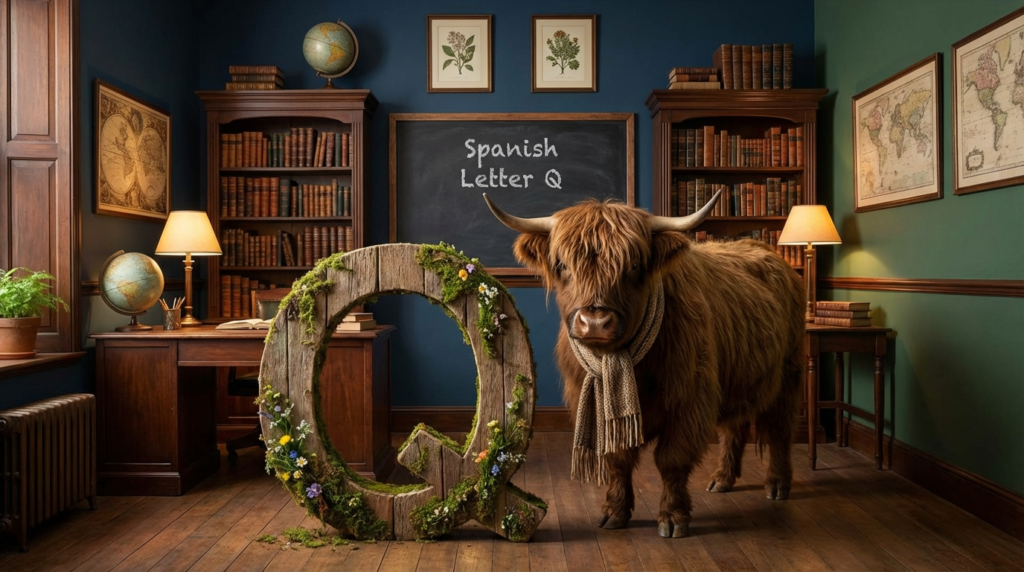
Spanish q looks dramatic, but it is actually one of the easiest letters in the language. Once you understand the silent u, words like queso, quiero, quince, and quién stop feeling mysterious and start sounding normal. Finally.
The first week I spent in Mexico City, I ordered tacos and asked for extra “kweh-so.” The vendor smiled, handed me the salsa, and then repeated it back the right way: queso, keh-so. Not rude, not dramatic, just very clear. That tiny correction fixed about twenty other words at the same time, which is annoyingly efficient.
That is the big win with Spanish q. In Mexican Spanish, and in standard beginner Spanish generally, it usually makes a simple k sound. Not kw. Not something fancy. Just a clean, crisp k, usually in que and qui.
Yak Box: The Rule You Actually Need
- Q usually appears in que and qui.
- The u is silent in those patterns.
- Que sounds like “keh,” and qui sounds like “kee.”
So queso is keh-so, not kweh-so. And quince is keen-seh, not kween-seh. Your English habits will try to fight this. They are not helping.
How The Spanish Letter Q Sounds
The Spanish letter q makes the same basic sound as English k in words like kit or skill. The key difference is that Spanish does not add that little puff of air English speakers often throw in. Keep it neat and short.
Spanish Q has one job: make a clean k sound before e and i.
That means these all begin with the same sound: que, queso, querer, quien, química, quitar. If you can say one correctly, you can say a lot more than one. Nice when a language rule earns its paycheck.
Six High-Use Q Words You Will Hear Fast
que
Meaning: what / that
Example: ¿Qué quieres comer? = What do you want to eat?
queso
Meaning: cheese
Example: Quiero una quesadilla con mucho queso. = I want a quesadilla with a lot of cheese.
quiero
Meaning: I want
Example: Quiero un café, por favor. = I want a coffee, please.
quién
Meaning: who
Example: ¿Quién está en la puerta? = Who is at the door?
quince
Meaning: fifteen
Example: Tengo quince minutos antes de salir. = I have fifteen minutes before leaving.
aquí
Meaning: here
Example: Estoy aquí, junto a la ventana. = I am here, next to the window.
The Two Patterns That Matter Most
| Pattern | How It Sounds | What The U Does | Examples |
|---|---|---|---|
| que | ke | Silent | que, queso, pequeño, querer |
| qui | ki | Silent | quince, quién, quitar, química |
| qué / quién / química | Same k sound | Still silent | Accent marks do not change the q sound |
That silent u is the part that trips people up. In English, qu often sounds like kw, as in quick. In Spanish, que and qui do not work like that. The u is there for spelling, not for show-off pronunciation.
Why Spanish Uses Q Before E And I
Spanish spreads the k sound across different letters depending on the vowel that follows. This is the part that makes spelling feel random until it suddenly does not.
| If You Want The Sound… | Before A / O / U | Before E / I |
|---|---|---|
| k | casa, cosa, cuna | queso, quiero, quince |
So Spanish uses c for the k sound before a, o, and u, but switches to qu before e and i. That is why you get casa but queso, and curioso but quiero.
Useful shortcut: if you hear a k sound before e or i in a normal Spanish word, there is a very good chance you need qu, not c.
Useful Phrases With Q And Real-Life Sentences
- ¿Qué? — What?
¿Qué dijiste? = What did you say? - ¿Qué pasa? — What’s happening?
Oye, ¿qué pasa aquí? = Hey, what’s happening here? - ¿Qué quieres? — What do you want?
¿Qué quieres tomar? = What do you want to drink? - ¿Quién es? — Who is it?
¿Quién es la persona del teléfono? = Who is the person on the phone? - Aquí está. — Here it is.
Tu café, aquí está. = Your coffee, here it is. - Quiero… — I want…
Quiero dos tacos de pollo. = I want two chicken tacos. - Te quiero. — I love you / I care about you.
Te quiero mucho, mamá. = I love you a lot, Mom. - Quita eso. — Take that away.
Quita eso de la mesa, por favor. = Take that off the table, please. - Qué rico. — So tasty / how delicious.
Qué rico está el pan dulce. = This sweet bread is so delicious. - ¿A qué hora? — At what time?
¿A qué hora sales del trabajo? = What time do you leave work? - Tengo quince minutos. — I have fifteen minutes.
Tengo quince minutos para almorzar. = I have fifteen minutes for lunch. - Me quedo aquí. — I’m staying here.
Está lloviendo, así que me quedo aquí. = It’s raining, so I’m staying here.
A Tiny But Useful Note About The Letter Name
The name of the letter itself is cu. That matters when you are spelling out a word.
Example: Queso se escribe con cu, u, e, ese, o. = Queso is spelled with q, u, e, s, o.
Most beginners do not need to obsess over the letter name on day one, but it is handy when someone asks you to spell your last name, a street name, or a menu word you just learned five seconds ago.
Common Mistakes And Fast Fixes
- Mistake: saying queso like kweh-so.
Fix: say keh-so. The u is silent. - Mistake: saying quién like kween.
Fix: say ki-en. Again, silent u. - Mistake: writing qe or qi.
Fix: Spanish uses que and qui, not naked little q plus a vowel. - Mistake: using q before a, o, or u in normal Spanish words.
Fix: use c instead: casa, cosa, cuna. - Mistake: thinking an accent mark changes the q sound.
Fix: qué, quién, and química still keep the same basic k sound.
Quick Practice
Say these out loud slowly first, then at normal speed:
- queso
- quiero queso
- ¿Quién quiere queso?
- Me quedo aquí
- ¿A qué hora quieres ir?
Now try a quick spelling check. Which form is correct?
- keso or queso
- qitar or quitar
- ciero or quiero
- kince or quince
Answers: queso, quitar, quiero, quince.
Quick Reference Summary
| Remember This | Keep It Simple |
|---|---|
| Spanish q usually appears in que and qui | Think ke and ki |
| The u is silent in normal Spanish que/qui words | Do not say kw |
| Before a, o, and u, Spanish usually uses c for the k sound | casa, cosa, cuna |
| Accent marks do not change the basic q sound | qué, quién, química |
| The letter name is cu | Useful when spelling words |
You may occasionally notice foreign names or borrowed words that break the normal pattern. Fine. Let them be weird on their own time. For beginner Spanish, the rule above is the one that matters and the one you will use constantly.
Final Yak
The Spanish letter q is not here to ruin your day. It is one of the most consistent spelling patterns you will learn: que = ke, qui = ki, and the u stays quiet. Once that clicks, a whole chunk of beginner Spanish gets easier all at once, which is honestly the least the language could do.