Spanish Travel Phrase
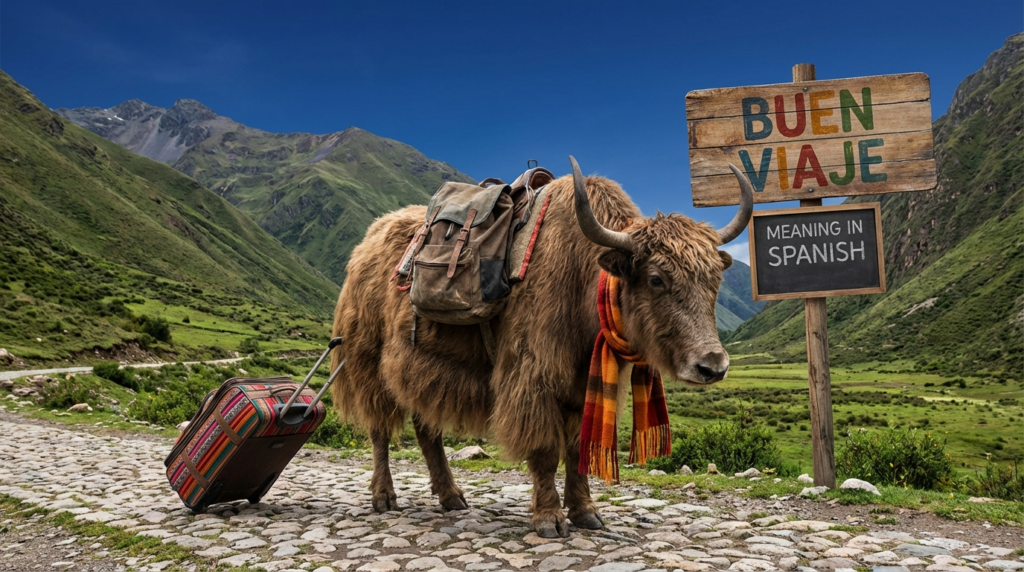
Buen Viaje Meaning in Spanish: How to Say “Have a Good Trip”
The simple phrase buen viaje means “have a good trip,” and yes, it is exactly the kind of useful Spanish you want before you run off to the airport pretending you are chill.
One early morning at the Mexico City bus terminal, I was saying goodbye to a friend heading to Puebla for a family wedding. I wanted to say something warmer than adiós, but my learner brain immediately offered the deeply unhelpful option buena viaje. Then the woman at the snack stand smiled, waved, and fixed the moment for me with two easy words: ¡Buen viaje!
That little scene stuck because the phrase was short, natural, and very real-life Spanish. So if you want the plain-English meaning, when to use it, how to pronounce it, and what to say before or after someone travels, here is the version you will actually remember.
Quick Answer
¡Buen viaje! means “Have a good trip!” or “Bon voyage!” You say it when someone is leaving for a trip by plane, bus, car, or train.
In Mexican Spanish, it sounds natural, friendly, and completely normal in conversation, texts, and airport goodbyes. Tiny phrase, big usefulness. Very rude of it to be that efficient.
Phrase
¡Buen viaje!
English meaning: Have a good trip!
Example: ¡Buen viaje, Sofía! Nos vemos el lunes.
Have a good trip, Sofía! See you Monday.
Literal Meaning
Buen + viaje = good + trip
Example: Te deseo un buen viaje a Oaxaca.
I wish you a good trip to Oaxaca.
Pronunciation
bwen byAH-heh
Example: ¡Buen viaje, prima!
Have a good trip, cousin!
What Does Buen Viaje Mean?
Buen viaje means “have a good trip” in Spanish. In English, you can also translate it as “bon voyage”, but “have a good trip” is the most direct everyday meaning.
You use it as a farewell right before someone leaves. That is the key. It is not something you usually say after the person arrives. Once they get there, you switch to phrases like ¿Tuviste un buen viaje? (“Did you have a good trip?”).
It works for vacations, business trips, quick weekend escapes, and long family journeys. If a human is leaving with luggage and mild chaos, ¡buen viaje! will probably do the job.
Why Is It Buen and Not Bueno?
Because viaje is a masculine singular noun. In Spanish, bueno often drops the final -o before a masculine singular noun. That shorter form is buen.
So you get:
| Spanish Pattern | English Meaning | Example |
|---|---|---|
| buen viaje | good trip | ¡Buen viaje, amigos! — Have a good trip, friends! |
| buen día | good day | Que tengas un buen día. — Have a good day. |
| buen provecho | enjoy your meal | ¡Buen provecho! — Enjoy your meal! |
So yes, buena viaje is wrong. People may still understand you, but it sounds off. Spanish loves doing this to learners right when they were feeling confident.
How To Pronounce Buen Viaje
- buen sounds like bwen
- via sounds like byah
- je sounds like heh, because the Spanish j has an h-like sound
Say it smoothly: bwen byAH-heh.
Example: ¡Buen viaje, Carlos! Mándame mensaje cuando llegues.
Have a good trip, Carlos! Text me when you arrive.
When To Say Buen Viaje
At The Airport
Spanish: ¡Buen viaje! Avísame cuando aterrices.
English meaning: Have a good trip! Let me know when you land.
Before A Road Trip
Spanish: Que tengas un buen viaje y que llegues bien.
English meaning: Hope you have a good trip and arrive safely.
In A Formal Situation
Spanish: Le deseo un buen viaje, señora Torres.
English meaning: I wish you a good trip, Mrs. Torres.
Do not use ¡buen viaje! after the person arrives. At that point, you want an arrival phrase such as ¿Tuviste un buen viaje? or ¿Cómo estuvo el viaje?
Useful Phrases And Real-Life Sentences
Here are the travel phrases that pair well with buen viaje in real Spanish. These are the ones that make you sound normal instead of like you swallowed a phrasebook whole.
| Spanish | English Meaning | Example |
|---|---|---|
| ¡Buen viaje! | Have a good trip! | ¡Buen viaje, Ana! Nos vemos el lunes. Have a good trip, Ana! See you Monday. |
| Que tengas un buen viaje. | Hope you have a good trip. | Que tengas un buen viaje a Cancún. Hope you have a good trip to Cancún. |
| Que tengan un buen viaje. | Hope you all have a good trip. | Chicos, que tengan un buen viaje. Guys, have a good trip. |
| Le deseo un buen viaje. | I wish you a good trip. | Señora Ruiz, le deseo un buen viaje. Mrs. Ruiz, I wish you a good trip. |
| Mándame mensaje cuando llegues. | Text me when you arrive. | Buen viaje, y mándame mensaje cuando llegues. Have a good trip, and text me when you arrive. |
| Avísame cuando aterrices. | Let me know when you land. | Avísame cuando aterrices en Guadalajara. Let me know when you land in Guadalajara. |
| Cuídate. | Take care. | Cuídate y disfruta el viaje. Take care and enjoy the trip. |
| Que te vaya bien. | Hope it goes well / take care. | Nos vemos, que te vaya bien. See you, take care. |
| Que llegues bien. | Hope you arrive safely. | Maneja con cuidado y que llegues bien. Drive carefully and arrive safely. |
| ¿Tuviste un buen viaje? | Did you have a good trip? | ¡Qué gusto verte! ¿Tuviste un buen viaje? Great to see you! Did you have a good trip? |
| ¿Cómo estuvo el viaje? | How was the trip? | Bienvenido, ¿cómo estuvo el viaje? Welcome, how was the trip? |
| Buen viaje de regreso. | Have a good trip back. | Buen viaje de regreso a casa. Have a good trip back home. |
Common Mistakes And Fast Fixes
- Wrong: buena viaje
Fix: buen viaje
Why: viaje is masculine, so bueno becomes buen. - Wrong moment: saying ¡buen viaje! after the person arrives
Fix: say ¿Tuviste un buen viaje?
Example: Hola, ¿tuviste un buen viaje? — Hi, did you have a good trip? - Too literal: forcing “safe travels” every time
Fix: use ¡buen viaje! or que llegues bien
Example: Que llegues bien y me avisas. — Arrive safely and let me know.
Practice Section
Pick the best phrase for each situation.
- Your friend is boarding a flight to Monterrey.
Best answer: ¡Buen viaje! - Your professor is leaving for a conference.
Best answer: Le deseo un buen viaje. - Your cousin just arrived after a long bus ride.
Best answer: ¿Tuviste un buen viaje? - Your brother is driving home late at night.
Best answer: Que llegues bien.
That last one matters because Spanish often changes the phrase depending on the moment. Before the trip: ¡Buen viaje! After the trip: ¿Tuviste un buen viaje? Tiny difference, big improvement.
Quick Reference Summary
| Situation | Best Spanish Phrase | English Meaning |
|---|---|---|
| Someone is about to leave | ¡Buen viaje! | Have a good trip! |
| You want to sound warmer | Que tengas un buen viaje. | Hope you have a good trip. |
| You need a formal version | Le deseo un buen viaje. | I wish you a good trip. |
| You care about safety | Que llegues bien. | Hope you arrive safely. |
| The person already arrived | ¿Tuviste un buen viaje? | Did you have a good trip? |
| They are heading back home | Buen viaje de regreso. | Have a good trip back. |
Does buen viaje mean “bon voyage”?
Yes. It can be translated as “bon voyage,” but “have a good trip” is usually the clearest everyday English meaning.
Is buen viaje formal or informal?
It is neutral. You can say it to a friend, coworker, neighbor, or relative. For extra formality, use le deseo un buen viaje.
Can I also say feliz viaje?
Yes, you may hear feliz viaje, but buen viaje is the easiest, safest everyday default for learners.
Final Yak
If you remember only one phrase from this whole article, make it ¡Buen viaje! It is short, natural, useful, and very hard to mess up once you stop trying to invent buena viaje out of pure panic.
Say it before the trip. Use ¿Tuviste un buen viaje? after the trip. Add que llegues bien when you want to sound extra caring. Done. You now have travel Spanish that actually earns its luggage space.