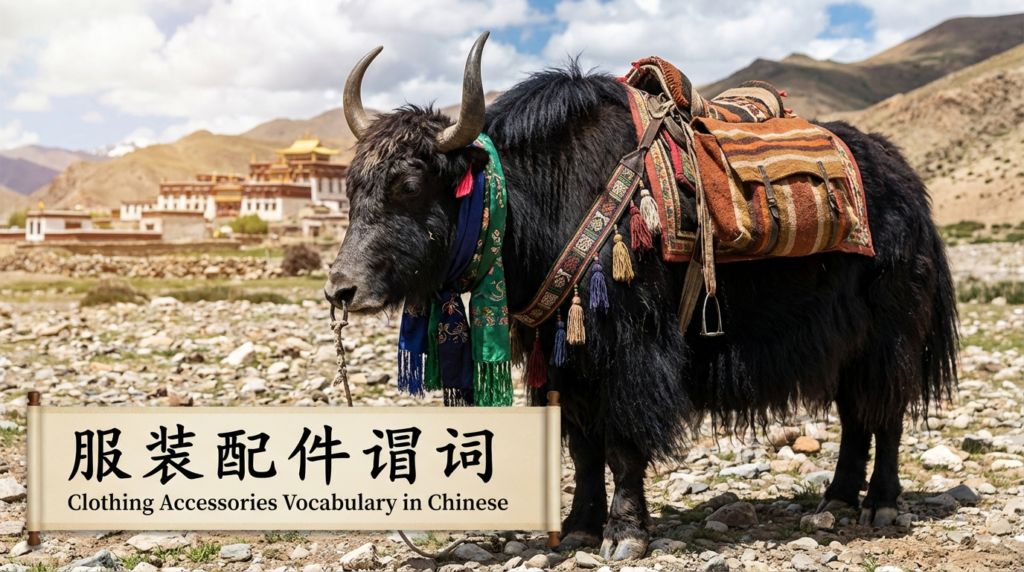
Clothing Accessories Vocabulary In Chinese
Learn everyday words for clothing accessories in simplified Chinese: 服饰配件 fúshì pèijiàn. From hats to handbags to scarves, this is the vocabulary that makes your outfit talk instead of just standing there awkwardly.
If you already know shirt, pants, and shoes, great. Now it is time for the accessories that actually finish the look. In Chinese, these words show up in shopping, complimenting outfits, packing for trips, and asking where on earth you left your sunglasses.
Below you will get high-utility accessory vocabulary with pinyin, English meanings, and real example sentences. No mystery, no grammar fog, no fashion degree required.
Yak Tip: In real life, people often say 配饰 pèishì for “accessories” in a fashion sense, and 配件 pèijiàn for parts or add-ons more generally. Tiny difference, big usefulness. Chinese loves precision almost as much as it loves online shopping.
High-Utility Accessory Cards
帽子 màozi
hat
围巾 wéijīn
scarf
手套 shǒutào
gloves
腰带 yāodài
belt
包 bāo
bag
太阳镜 tàiyángjìng
sunglasses
项链 xiàngliàn
necklace
手表 shǒubiǎo
wristwatch
Useful Phrases And Real-Life Sentences
- 我忘了带帽子。 Wǒ wàng le dài màozi. — I forgot to bring a hat.
- 这条围巾很暖和。 Zhè tiáo wéijīn hěn nuǎnhuo. — This scarf is very warm.
- 你的腰带在哪里买的? Nǐ de yāodài zài nǎlǐ mǎi de? — Where did you buy your belt?
- 她喜欢背小包出门。 Tā xǐhuan bēi xiǎo bāo chūmén. — She likes carrying a small bag when she goes out.
- 今天太阳很大,戴太阳镜吧。 Jīntiān tàiyáng hěn dà, dài tàiyángjìng ba. — The sun is strong today, wear sunglasses.
- 他总是戴一块手表。 Tā zǒngshì dài yí kuài shǒubiǎo. — He always wears a watch.
- 这副耳环有点夸张。 Zhè fù ěrhuán yǒudiǎn kuāzhāng. — These earrings are a bit flashy.
- 我想买一个新的钱包。 Wǒ xiǎng mǎi yí ge xīn de qiánbāo. — I want to buy a new wallet.
- 他的领带是深蓝色的。 Tā de lǐngdài shì shēnlánsè de. — His tie is dark blue.
- 下雨了,别忘了带雨伞。 Xiàyǔ le, bié wàng le dài yǔsǎn. — It is raining, do not forget to bring an umbrella.
- 她把发夹放在桌子上了。 Tā bǎ fàjiā fàng zài zhuōzi shàng le. — She put the hair clip on the table.
- 这枚戒指看起来很精致。 Zhè méi jièzhi kàn qǐlái hěn jīngzhì. — This ring looks delicate.
Headwear And Cold-Weather Accessories
| Hanzi | Pinyin | Meaning | Example (ZH) | Example (Pinyin) | Translation (EN) |
|---|---|---|---|---|---|
| 帽子 | màozi | hat | 这顶帽子很适合你。 | Zhè dǐng màozi hěn shìhé nǐ. | This hat suits you well. |
| 鸭舌帽 | yāshémào | baseball cap | 他出门总爱戴鸭舌帽。 | Tā chūmén zǒng ài dài yāshémào. | He always likes wearing a baseball cap when he goes out. |
| 毛线帽 | máoxiànmào | beanie | 冬天我常戴毛线帽。 | Dōngtiān wǒ cháng dài máoxiànmào. | I often wear a beanie in winter. |
| 草帽 | cǎomào | straw hat | 去海边别忘了草帽。 | Qù hǎibiān bié wàng le cǎomào. | Do not forget your straw hat for the beach. |
| 贝雷帽 | bèiléimào | beret | 这顶贝雷帽很有法式感觉。 | Zhè dǐng bèiléimào hěn yǒu fǎshì gǎnjué. | This beret has a very French vibe. |
| 围巾 | wéijīn | scarf | 今天风大,系上围巾吧。 | Jīntiān fēng dà, jì shàng wéijīn ba. | It is windy today, put on a scarf. |
| 手套 | shǒutào | gloves | 天气冷,我需要手套。 | Tiānqì lěng, wǒ xūyào shǒutào. | The weather is cold, I need gloves. |
| 耳罩 | ěrzhào | earmuffs | 她戴着耳罩去上班。 | Tā dàizhe ěrzhào qù shàngbān. | She wore earmuffs to work. |
| 口罩 | kǒuzhào | mask | 地铁里很多人还会戴口罩。 | Dìtiě lǐ hěn duō rén hái huì dài kǒuzhào. | Many people still wear masks on the subway. |
| 头巾 | tóujīn | headscarf | 这条头巾颜色很亮。 | Zhè tiáo tóujīn yánsè hěn liàng. | This headscarf has a bright color. |
Eyewear, Hair, And Small Detail Accessories
| Hanzi | Pinyin | Meaning | Example (ZH) | Example (Pinyin) | Translation (EN) |
|---|---|---|---|---|---|
| 眼镜 | yǎnjìng | glasses | 我不戴眼镜就看不清。 | Wǒ bú dài yǎnjìng jiù kàn bu qīng. | I cannot see clearly without glasses. |
| 太阳镜 | tàiyángjìng | sunglasses | 中午出门最好带太阳镜。 | Zhōngwǔ chūmén zuìhǎo dài tàiyángjìng. | You had better bring sunglasses when going out at noon. |
| 墨镜 | mòjìng | dark sunglasses | 他戴上墨镜以后更酷了。 | Tā dài shàng mòjìng yǐhòu gèng kù le. | He looks cooler after putting on dark sunglasses. |
| 隐形眼镜 | yǐnxíng yǎnjìng | contact lenses | 今天她没戴框架眼镜,戴了隐形眼镜。 | Jīntiān tā méi dài kuàngjià yǎnjìng, dài le yǐnxíng yǎnjìng. | Today she did not wear framed glasses; she wore contact lenses. |
| 发带 | fàdài | headband | 运动的时候我会戴发带。 | Yùndòng de shíhou wǒ huì dài fàdài. | I wear a headband when exercising. |
| 发夹 | fàjiā | hair clip | 这个发夹很适合长头发。 | Zhège fàjiā hěn shìhé cháng tóufa. | This hair clip is good for long hair. |
| 发圈 | fàquān | hair tie | 我的发圈又找不到了。 | Wǒ de fàquān yòu zhǎo bú dào le. | I cannot find my hair tie again. |
| 胸针 | xiōngzhēn | brooch | 她把胸针别在外套上。 | Tā bǎ xiōngzhēn bié zài wàitào shàng. | She pinned the brooch onto her coat. |
| 袖扣 | xiùkòu | cuff links | 正式场合他会戴袖扣。 | Zhèngshì chǎnghé tā huì dài xiùkòu. | He wears cuff links for formal occasions. |
| 领结 | lǐngjié | bow tie | 这套西装配领结更好看。 | Zhè tào xīzhuāng pèi lǐngjié gèng hǎokàn. | This suit looks better with a bow tie. |
Jewelry And Personal Accessories
| Hanzi | Pinyin | Meaning | Example (ZH) | Example (Pinyin) | Translation (EN) |
|---|---|---|---|---|---|
| 首饰 | shǒushì | jewelry | 她喜欢简单的首饰。 | Tā xǐhuan jiǎndān de shǒushì. | She likes simple jewelry. |
| 项链 | xiàngliàn | necklace | 这条项链是朋友送的。 | Zhè tiáo xiàngliàn shì péngyou sòng de. | This necklace was a gift from a friend. |
| 耳环 | ěrhuán | earrings | 她今天戴了银色耳环。 | Tā jīntiān dài le yínsè ěrhuán. | She is wearing silver earrings today. |
| 戒指 | jièzhi | ring | 他的戒指很低调。 | Tā de jièzhi hěn dīdiào. | His ring is understated. |
| 手链 | shǒuliàn | bracelet | 这条手链有点松。 | Zhè tiáo shǒuliàn yǒudiǎn sōng. | This bracelet is a little loose. |
| 脚链 | jiǎoliàn | anklet | 夏天有人喜欢戴脚链。 | Xiàtiān yǒu rén xǐhuan dài jiǎoliàn. | Some people like wearing anklets in summer. |
| 手表 | shǒubiǎo | wristwatch | 我每天都戴手表。 | Wǒ měitiān dōu dài shǒubiǎo. | I wear a wristwatch every day. |
| 智能手表 | zhìnéng shǒubiǎo | smartwatch | 这块智能手表可以看消息。 | Zhè kuài zhìnéng shǒubiǎo kěyǐ kàn xiāoxi. | This smartwatch can show messages. |
| 别针 | biézhēn | pin | 她用别针固定围巾。 | Tā yòng biézhēn gùdìng wéijīn. | She uses a pin to secure the scarf. |
| 钥匙扣 | yàoshikòu | keychain | 我的钥匙扣上有一只小熊。 | Wǒ de yàoshikòu shàng yǒu yì zhī xiǎoxióng. | There is a little bear on my keychain. |
Bags, Wallets, And Carry Items
| Hanzi | Pinyin | Meaning | Example (ZH) | Example (Pinyin) | Translation (EN) |
|---|---|---|---|---|---|
| 包 | bāo | bag | 这个包很百搭。 | Zhège bāo hěn bǎidā. | This bag goes well with many outfits. |
| 背包 | bēibāo | backpack | 学生常常背背包上学。 | Xuéshēng chángcháng bēi bēibāo shàngxué. | Students often carry backpacks to school. |
| 手提包 | shǒutíbāo | handbag | 她买了一个新的手提包。 | Tā mǎi le yí ge xīn de shǒutíbāo. | She bought a new handbag. |
| 单肩包 | dānjiānbāo | shoulder bag | 这款单肩包很轻。 | Zhè kuǎn dānjiānbāo hěn qīng. | This shoulder bag is very light. |
| 斜挎包 | xiékùabāo | crossbody bag | 旅行时我喜欢用斜挎包。 | Lǚxíng shí wǒ xǐhuan yòng xiékùabāo. | I like using a crossbody bag when traveling. |
| 钱包 | qiánbāo | wallet | 我的钱包在你包里吗? | Wǒ de qiánbāo zài nǐ bāo lǐ ma? | Is my wallet in your bag? |
| 卡包 | kǎbāo | card holder | 这个卡包很薄,很方便。 | Zhège kǎbāo hěn báo, hěn fāngbiàn. | This card holder is thin and convenient. |
| 零钱包 | língqiánbāo | coin purse | 她把硬币放进零钱包里。 | Tā bǎ yìngbì fàng jìn língqiánbāo lǐ. | She put the coins into the coin purse. |
| 公文包 | gōngwénbāo | briefcase | 他拿着黑色公文包去开会。 | Tā názhe hēisè gōngwénbāo qù kāihuì. | He took a black briefcase to the meeting. |
| 购物袋 | gòuwùdài | shopping bag | 请自带购物袋更环保。 | Qǐng zìdài gòuwùdài gèng huánbǎo. | Bringing your own shopping bag is more eco-friendly. |
Belts, Ties, And Finishing Pieces
| Hanzi | Pinyin | Meaning | Example (ZH) | Example (Pinyin) | Translation (EN) |
|---|---|---|---|---|---|
| 腰带 | yāodài | belt | 这条腰带是真皮的。 | Zhè tiáo yāodài shì zhēnpí de. | This belt is genuine leather. |
| 皮带 | pídài | leather belt | 他买了一条新的皮带。 | Tā mǎi le yì tiáo xīn de pídài. | He bought a new leather belt. |
| 领带 | lǐngdài | tie | 面试的时候他打了领带。 | Miànshì de shíhou tā dǎ le lǐngdài. | He wore a tie for the interview. |
| 丝巾 | sījīn | silk scarf | 这条丝巾摸起来很柔软。 | Zhè tiáo sījīn mō qǐlái hěn róuruǎn. | This silk scarf feels very soft. |
| 披肩 | pījiān | shawl | 晚上有点凉,带上披肩吧。 | Wǎnshang yǒudiǎn liáng, dài shàng pījiān ba. | It gets a little cool at night, bring a shawl. |
| 领巾 | lǐngjīn | neckerchief | 她用红色领巾点亮了整套穿搭。 | Tā yòng hóngsè lǐngjīn diǎnliàng le zhěng tào chuāndā. | She brightened the whole outfit with a red neckerchief. |
| 袖套 | xiùtào | sleeve covers | 做饭的时候她会戴袖套。 | Zuòfàn de shíhou tā huì dài xiùtào. | She wears sleeve covers when cooking. |
| 围裙 | wéiqún | apron | 妈妈系上围裙开始做饭。 | Māma jì shàng wéiqún kāishǐ zuòfàn. | Mom tied on an apron and started cooking. |
| 雨伞 | yǔsǎn | umbrella | 包里放一把雨伞更安心。 | Bāo lǐ fàng yì bǎ yǔsǎn gèng ānxīn. | Keeping an umbrella in your bag feels safer. |
| 徽章 | huīzhāng | badge | 这个徽章可以别在帽子上。 | Zhège huīzhāng kěyǐ bié zài màozi shàng. | This badge can be pinned on a hat. |
Shopping Words For Talking About Accessories
| Hanzi | Pinyin | Meaning | Example (ZH) | Example (Pinyin) | Translation (EN) |
|---|---|---|---|---|---|
| 配饰 | pèishì | fashion accessories | 这家店的配饰很好看。 | Zhè jiā diàn de pèishì hěn hǎokàn. | The accessories in this shop are very pretty. |
| 搭配 | dāpèi | to match; outfit pairing | 这条项链很好搭配。 | Zhè tiáo xiàngliàn hěn hǎo dāpèi. | This necklace is easy to match with outfits. |
| 百搭 | bǎidā | versatile; goes with everything | 黑色包最百搭。 | Hēisè bāo zuì bǎidā. | Black bags are the most versatile. |
| 时尚 | shíshàng | fashionable | 这副太阳镜很时尚。 | Zhè fù tàiyángjìng hěn shíshàng. | These sunglasses are very fashionable. |
| 简约 | jiǎnyuē | minimalist; simple | 我更喜欢简约风的首饰。 | Wǒ gèng xǐhuan jiǎnyuē fēng de shǒushì. | I prefer minimalist-style jewelry. |
| 夸张 | kuāzhāng | flashy; exaggerated | 这对耳环有点夸张。 | Zhè duì ěrhuán yǒudiǎn kuāzhāng. | This pair of earrings is a little flashy. |
| 经典 | jīngdiǎn | classic | 白衬衫配黑领带很经典。 | Bái chènshān pèi hēi lǐngdài hěn jīngdiǎn. | A white shirt with a black tie is classic. |
| 精致 | jīngzhì | delicate; refined | 这枚戒指很精致。 | Zhè méi jièzhi hěn jīngzhì. | This ring is very delicate. |
| 耐看 | nàikàn | gets better the longer you look at it | 这款手表很耐看。 | Zhè kuǎn shǒubiǎo hěn nàikàn. | This watch becomes more appealing the longer you look at it. |
| 显气质 | xiǎn qìzhì | makes someone look elegant | 丝巾真的很显气质。 | Sījīn zhēn de hěn xiǎn qìzhì. | A silk scarf really makes someone look elegant. |
Quick Notes On Common Confusions
- 帽子 màozi is the general word for hat. Use more specific words like 鸭舌帽 yāshémào for baseball cap when needed.
- 眼镜 yǎnjìng means glasses, while 太阳镜 tàiyángjìng and 墨镜 mòjìng mean sunglasses. Yes, Chinese is helping you be specific again.
- 腰带 yāodài is belt in general. 皮带 pídài often means a leather belt, though in everyday speech many people use the two almost interchangeably.
- 包 bāo is bag in general, but Chinese gets delightfully precise fast: 背包 bēibāo, 手提包 shǒutíbāo, 单肩包 dānjiānbāo, 斜挎包 xiékùabāo.
- 首饰 shǒushì means jewelry as a category. Individual items include 项链 xiàngliàn, 耳环 ěrhuán, and 戒指 jièzhi.
Useful Mini Table: Measure Words You Will Actually Need
| Item | Measure Word | Example (ZH) | Example (Pinyin) | Translation (EN) |
|---|---|---|---|---|
| 帽子 màozi | 顶 dǐng | 我买了一顶帽子。 | Wǒ mǎi le yì dǐng màozi. | I bought a hat. |
| 围巾 wéijīn | 条 tiáo | 她有很多条围巾。 | Tā yǒu hěn duō tiáo wéijīn. | She has many scarves. |
| 眼镜 yǎnjìng | 副 fù | 这副眼镜很轻。 | Zhè fù yǎnjìng hěn qīng. | These glasses are light. |
| 项链 xiàngliàn | 条 tiáo | 这条项链很好看。 | Zhè tiáo xiàngliàn hěn hǎokàn. | This necklace looks nice. |
| 戒指 jièzhi | 枚 méi | 这枚戒指太大了。 | Zhè méi jièzhi tài dà le. | This ring is too big. |
| 手表 shǒubiǎo | 块 kuài | 他戴着一块手表。 | Tā dàizhe yí kuài shǒubiǎo. | He is wearing a watch. |
| 雨伞 yǔsǎn | 把 bǎ | 门口有两把雨伞。 | Ménkǒu yǒu liǎng bǎ yǔsǎn. | There are two umbrellas by the door. |
| 包 bāo | 个 / 只 ge / zhī | 她买了一个新包。 | Tā mǎi le yí ge xīn bāo. | She bought a new bag. |
Quick Practice
Try saying these out loud. The goal is not perfection. The goal is getting the words into your mouth before your brain starts overthinking like a dramatic side character.
- 我想买一条围巾。 Wǒ xiǎng mǎi yì tiáo wéijīn. — I want to buy a scarf.
- 这副太阳镜太贵了。 Zhè fù tàiyángjìng tài guì le. — These sunglasses are too expensive.
- 你的包是什么颜色的? Nǐ de bāo shì shénme yánsè de? — What color is your bag?
- 她戴耳环很好看。 Tā dài ěrhuán hěn hǎokàn. — She looks good in earrings.
- 下雨天我总会带一把雨伞。 Xiàyǔtiān wǒ zǒng huì dài yì bǎ yǔsǎn. — I always bring an umbrella on rainy days.
Quick Reference Summary
- General accessories: 配饰 pèishì, 首饰 shǒushì
- Head and cold weather: 帽子 màozi, 围巾 wéijīn, 手套 shǒutào
- Eyewear and hair: 眼镜 yǎnjìng, 太阳镜 tàiyángjìng, 发夹 fàjiā, 发圈 fàquān
- Jewelry: 项链 xiàngliàn, 耳环 ěrhuán, 戒指 jièzhi, 手链 shǒuliàn
- Bags: 包 bāo, 背包 bēibāo, 手提包 shǒutíbāo, 斜挎包 xiékùabāo
- Finishing pieces: 腰带 yāodài, 领带 lǐngdài, 丝巾 sījīn, 雨伞 yǔsǎn
Final Yak Box
If you learn just ten words from this page, make them 帽子 màozi, 围巾 wéijīn, 手套 shǒutào, 眼镜 yǎnjìng, 太阳镜 tàiyángjìng, 项链 xiàngliàn, 戒指 jièzhi, 手表 shǒubiǎo, 包 bāo, and 腰带 yāodài. Those show up constantly in daily life, shopping, and casual conversation. That is a very decent return for a few minutes of study.