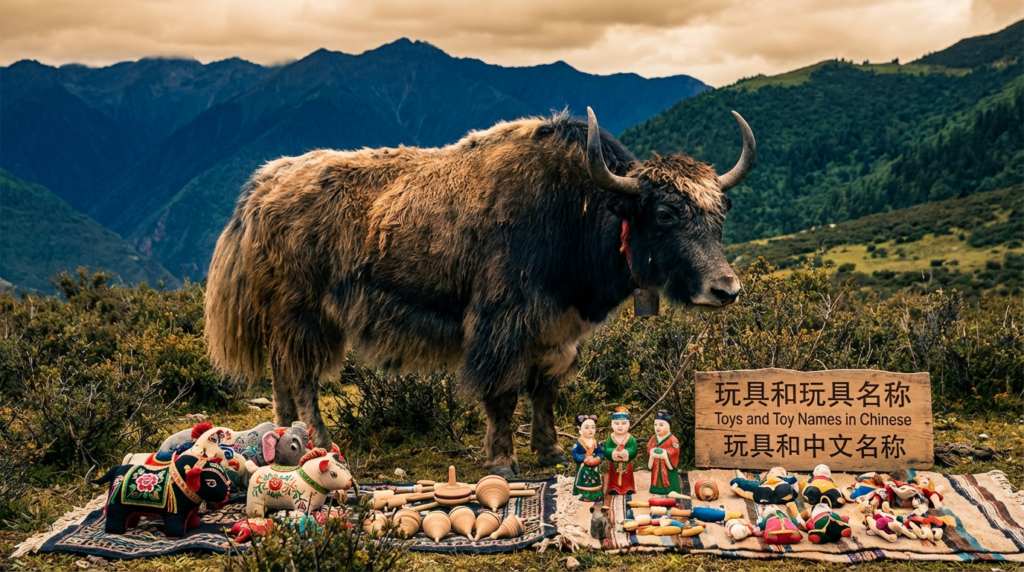
Simplified Chinese Toys And Toy Names
Learn the everyday word for toys — 玩具 wánjù — plus dozens of common toy names, useful phrases, and real sentences you can actually use.
If your entire toy vocabulary is 玩具 wánjù, you can still survive. Barely. But calling every single toy 玩具 wánjù is a bit like calling every dessert “sweet food.” Technically not wrong. Socially a little tragic.
This guide gives you the most useful toy words in simplified Chinese, with Hanzi, pinyin, English meaning, and real example sentences. So when you see a doll, puzzle, yo-yo, or remote-control car, you will not have to point and invent chaos.
Most Useful Toy Words At A Glance
积木
jīmù — building blocks
他在搭积木。
tā zài dā jīmù.
He is building with blocks.
娃娃
wáwa — doll
妹妹在给娃娃穿衣服。
mèimei zài gěi wáwa chuān yīfu.
My little sister is dressing the doll.
玩具车
wánjù chē — toy car
地上有一辆红色的玩具车。
dìshang yǒu yí liàng hóngsè de wánjù chē.
There is a red toy car on the floor.
拼图
pīntú — puzzle
这幅拼图有一百块。
zhè fú pīntú yǒu yì bǎi kuài.
This puzzle has 100 pieces.
风筝
fēngzheng — kite
春天很适合放风筝。
chūntiān hěn shìhé fàng fēngzheng.
Spring is great for flying kites.
溜溜球
liūliūqiú — yo-yo
他会玩溜溜球。
tā huì wán liūliūqiú.
He knows how to play with a yo-yo.
机器人
jīqìrén — robot
这个机器人会唱歌。
zhège jīqìrén huì chànggē.
This robot can sing.
球
qiú — ball
球滚到桌子下面了。
qiú gǔn dào zhuōzi xiàmiàn le.
The ball rolled under the table.
Useful Phrases For Talking About Toys
- 我最喜欢的玩具是……
wǒ zuì xǐhuan de wánjù shì……
My favorite toy is …
Real line: 我最喜欢的玩具是积木。
wǒ zuì xǐhuan de wánjù shì jīmù.
My favorite toy is building blocks. - 这个玩具很好玩。
zhège wánjù hěn hǎowán.
This toy is fun.
Real line: 这个玩具很好玩,我想再玩一次。
zhège wánjù hěn hǎowán, wǒ xiǎng zài wán yí cì.
This toy is fun, and I want to play with it again. - 你想一起玩吗?
nǐ xiǎng yìqǐ wán ma?
Do you want to play together?
Real line: 你想一起玩拼图吗?
nǐ xiǎng yìqǐ wán pīntú ma?
Do you want to do the puzzle together? - 别把玩具弄坏了。
bié bǎ wánjù nòng huài le.
Don’t break the toy.
Real line: 轻一点,别把玩具弄坏了。
qīng yìdiǎn, bié bǎ wánjù nòng huài le.
Be gentle. Don’t break the toy. - 请把玩具收起来。
qǐng bǎ wánjù shōu qǐlái.
Please put the toys away.
Real line: 吃饭前请把玩具收起来。
chīfàn qián qǐng bǎ wánjù shōu qǐlái.
Please put the toys away before dinner. - 这个娃娃真可爱。
zhège wáwa zhēn kě’ài.
This doll is really cute.
Real line: 这个娃娃真可爱,眼睛很大。
zhège wáwa zhēn kě’ài, yǎnjing hěn dà.
This doll is really cute, and its eyes are big. - 这是谁的玩具车?
zhè shì shéi de wánjù chē?
Whose toy car is this?
Real line: 这是谁的玩具车?是你的吗?
zhè shì shéi de wánjù chē? shì nǐ de ma?
Whose toy car is this? Is it yours? - 我们来拼拼图吧。
wǒmen lái pīn pīntú ba.
Let’s do the puzzle.
Real line: 下雨天我们来拼拼图吧。
xiàyǔtiān wǒmen lái pīn pīntú ba.
Let’s do the puzzle on this rainy day. - 遥控车没有电了。
yáokòng chē méiyǒu diàn le.
The remote-control car is out of battery.
Real line: 遥控车没有电了,先去充电吧。
yáokòng chē méiyǒu diàn le, xiān qù chōngdiàn ba.
The remote-control car is out of battery, so let’s charge it first. - 他在搭积木。
tā zài dā jīmù.
He is building with blocks.
Real line: 他在搭积木,不想被打扰。
tā zài dā jīmù, bù xiǎng bèi dǎrǎo.
He is building with blocks and does not want to be disturbed. - 风筝飞得很高。
fēngzheng fēi de hěn gāo.
The kite is flying high.
Real line: 今天风大,风筝飞得很高。
jīntiān fēng dà, fēngzheng fēi de hěn gāo.
It is windy today, so the kite is flying high. - 把玩具放回盒子里。
bǎ wánjù fàng huí hézi lǐ.
Put the toy back in the box.
Real line: 玩完以后,把玩具放回盒子里。
wán wán yǐhòu, bǎ wánjù fàng huí hézi lǐ.
After playing, put the toy back in the box.
Tiny But Very Useful Distinctions
- 玩具 wánjù — the generic word for toy. Safe. Flexible. Very hard to mess up.
- 娃娃 wáwa — usually a doll, especially the cute human-shaped kind.
- 玩偶 wán’ǒu — a toy figure or character doll. It can be plush, cartoonish, or collectible.
- 模型 móxíng — a model, like 飞机模型 fēijī móxíng for a model airplane or 恐龙模型 kǒnglóng móxíng for a dinosaur model.
- 毛绒玩具 máoróng wánjù — a plush toy. Soft, fluffy, impossible to fold neatly.
Plush And Pretend Play Toys
| Hanzi | Pinyin | Meaning | Example (ZH) | Example (Pinyin) | Translation (EN) |
|---|---|---|---|---|---|
| 玩具 | wánjù | toy | 这个玩具很新。 | zhège wánjù hěn xīn. | This toy is new. |
| 毛绒玩具 | máoróng wánjù | plush toy | 她抱着毛绒玩具睡觉。 | tā bào zhe máoróng wánjù shuìjiào. | She sleeps holding a plush toy. |
| 泰迪熊 | tàidíxióng | teddy bear | 我的泰迪熊是棕色的。 | wǒ de tàidíxióng shì zōngsè de. | My teddy bear is brown. |
| 娃娃 | wáwa | doll | 妹妹在给娃娃穿衣服。 | mèimei zài gěi wáwa chuān yīfu. | My little sister is dressing the doll. |
| 玩偶 | wán’ǒu | toy figure; character doll | 这个玩偶放在床上。 | zhège wán’ǒu fàng zài chuáng shàng. | This toy figure is on the bed. |
| 洋娃娃 | yángwáwa | fashion doll | 她有三个洋娃娃。 | tā yǒu sān ge yángwáwa. | She has three dolls. |
| 木偶 | mù’ǒu | puppet | 老师用木偶讲故事。 | lǎoshī yòng mù’ǒu jiǎng gùshi. | The teacher uses a puppet to tell a story. |
| 玩具厨房 | wánjù chúfáng | toy kitchen | 孩子们在玩具厨房里做饭。 | háizimen zài wánjù chúfáng lǐ zuòfàn. | The kids are cooking in the toy kitchen. |
| 玩具电话 | wánjù diànhuà | toy phone | 他拿着玩具电话说“喂”。 | tā ná zhe wánjù diànhuà shuō “wéi”. | He says “hello” into the toy phone. |
| 玩具箱 | wánjù xiāng | toy box | 玩具箱里有很多积木。 | wánjù xiāng lǐ yǒu hěn duō jīmù. | There are many blocks in the toy box. |
Building And Brain Toys
| Hanzi | Pinyin | Meaning | Example (ZH) | Example (Pinyin) | Translation (EN) |
|---|---|---|---|---|---|
| 积木 | jīmù | building blocks | 弟弟喜欢用积木盖房子。 | dìdi xǐhuan yòng jīmù gài fángzi. | My little brother likes using blocks to build houses. |
| 乐高 | Lègāo | LEGO | 他在拼乐高汽车。 | tā zài pīn Lègāo qìchē. | He is putting together a LEGO car. |
| 拼图 | pīntú | puzzle; jigsaw | 这幅拼图有一百块。 | zhè fú pīntú yǒu yì bǎi kuài. | This puzzle has 100 pieces. |
| 七巧板 | qīqiǎobǎn | tangram | 七巧板可以拼出很多图形。 | qīqiǎobǎn kěyǐ pīn chū hěn duō túxíng. | A tangram can make many shapes. |
| 魔方 | mófāng | Rubik’s Cube | 哥哥三分钟就能还原魔方。 | gēge sān fēnzhōng jiù néng huányuán mófāng. | My older brother can solve a Rubik’s Cube in three minutes. |
| 串珠 | chuànzhū | stringing beads | 她用串珠做了一条手链。 | tā yòng chuànzhū zuò le yì tiáo shǒuliàn. | She made a bracelet with beads. |
| 涂色书 | túsè shū | coloring book | 这本涂色书里有动物。 | zhè běn túsè shū lǐ yǒu dòngwù. | This coloring book has animals in it. |
| 贴纸 | tiēzhǐ | stickers | 孩子把贴纸贴在本子上。 | háizi bǎ tiēzhǐ tiē zài běnzi shàng. | The child stuck stickers on the notebook. |
| 画板 | huàbǎn | drawing board; easel | 小朋友在画板上画太阳。 | xiǎopéngyou zài huàbǎn shàng huà tàiyáng. | The child is drawing the sun on the easel. |
| 黏土 | niántǔ | modeling clay | 我们用黏土做小猫。 | wǒmen yòng niántǔ zuò xiǎo māo. | We are making a little cat with clay. |
Toy Vehicles And Action Toys
| Hanzi | Pinyin | Meaning | Example (ZH) | Example (Pinyin) | Translation (EN) |
|---|---|---|---|---|---|
| 玩具车 | wánjù chē | toy car | 地上有一辆红色的玩具车。 | dìshang yǒu yí liàng hóngsè de wánjù chē. | There is a red toy car on the floor. |
| 小汽车 | xiǎo qìchē | little car; toy car | 他推着小汽车到处跑。 | tā tuī zhe xiǎo qìchē dàochù pǎo. | He pushes the little car around everywhere. |
| 火车模型 | huǒchē móxíng | train model | 爷爷送我一套火车模型。 | yéye sòng wǒ yí tào huǒchē móxíng. | Grandpa gave me a train model set. |
| 飞机模型 | fēijī móxíng | model airplane | 这架飞机模型很轻。 | zhè jià fēijī móxíng hěn qīng. | This model airplane is light. |
| 遥控车 | yáokòng chē | remote-control car | 遥控车跑得很快。 | yáokòng chē pǎo de hěn kuài. | The remote-control car runs fast. |
| 遥控飞机 | yáokòng fēijī | remote-control plane | 爸爸周末带我玩遥控飞机。 | bàba zhōumò dài wǒ wán yáokòng fēijī. | Dad takes me to fly the remote-control plane on weekends. |
| 机器人 | jīqìrén | robot | 这个机器人会唱歌。 | zhège jīqìrén huì chànggē. | This robot can sing. |
| 动作人偶 | dòngzuò rén’ǒu | action figure | 他的动作人偶站在书架上。 | tā de dòngzuò rén’ǒu zhàn zài shūjià shàng. | His action figure stands on the bookshelf. |
| 恐龙模型 | kǒnglóng móxíng | dinosaur model | 儿子最喜欢恐龙模型。 | érzi zuì xǐhuan kǒnglóng móxíng. | My son likes dinosaur models best. |
| 挖掘机玩具 | wājuéjī wánjù | toy excavator | 挖掘机玩具在沙子里最好玩。 | wājuéjī wánjù zài shāzi lǐ zuì hǎowán. | A toy excavator is the most fun in the sand. |
Outdoor And Sound Toys
| Hanzi | Pinyin | Meaning | Example (ZH) | Example (Pinyin) | Translation (EN) |
|---|---|---|---|---|---|
| 球 | qiú | ball | 球滚到桌子下面了。 | qiú gǔn dào zhuōzi xiàmiàn le. | The ball rolled under the table. |
| 风筝 | fēngzheng | kite | 春天很适合放风筝。 | chūntiān hěn shìhé fàng fēngzheng. | Spring is great for flying kites. |
| 溜溜球 | liūliūqiú | yo-yo | 他会玩溜溜球。 | tā huì wán liūliūqiú. | He knows how to play with a yo-yo. |
| 跳绳 | tiàoshéng | jump rope | 她每天都跳绳十分钟。 | tā měitiān dōu tiàoshéng shí fēnzhōng. | She jumps rope for ten minutes every day. |
| 弹珠 | dànzhū | marbles | 盒子里有很多彩色弹珠。 | hézi lǐ yǒu hěn duō cǎisè dànzhū. | There are many colorful marbles in the box. |
| 泡泡棒 | pàopao bàng | bubble wand | 小孩拿着泡泡棒吹泡泡。 | xiǎohái ná zhe pàopao bàng chuī pàopao. | The child is blowing bubbles with a bubble wand. |
| 沙滩玩具 | shātān wánjù | beach toys | 我们带了沙滩玩具去海边。 | wǒmen dài le shātān wánjù qù hǎibiān. | We took beach toys to the seaside. |
| 摇铃 | yáolíng | rattle | 宝宝一听到摇铃就笑了。 | bǎobao yì tīng dào yáolíng jiù xiào le. | The baby smiled as soon as it heard the rattle. |
| 音乐盒 | yīnyuèhé | music box | 这个音乐盒一打开就响。 | zhège yīnyuèhé yì dǎkāi jiù xiǎng. | This music box plays as soon as it is opened. |
| 玩具鼓 | wánjù gǔ | toy drum | 他一边唱歌一边敲玩具鼓。 | tā yìbiān chànggē yìbiān qiāo wánjù gǔ. | He sings while beating the toy drum. |
Quick Reference By Type
| Category | Chinese | Pinyin | Meaning |
|---|---|---|---|
| Generic | 玩具 | wánjù | toy |
| Soft Toys | 毛绒玩具 | máoróng wánjù | plush toy |
| Dolls | 娃娃 / 玩偶 | wáwa / wán’ǒu | doll / figure |
| Building | 积木 | jīmù | building blocks |
| Puzzles | 拼图 | pīntú | puzzle |
| Vehicles | 玩具车 / 遥控车 | wánjù chē / yáokòng chē | toy car / remote-control car |
| Outdoor | 风筝 / 跳绳 | fēngzheng / tiàoshéng | kite / jump rope |
| Classic Small Toys | 溜溜球 / 弹珠 | liūliūqiú / dànzhū | yo-yo / marbles |
Yak Tip: Three Safe Toy Sentences That Work Almost Anywhere
- 这是什么玩具?
zhè shì shénme wánjù?
What toy is this? - 我们一起玩吧。
wǒmen yìqǐ wán ba.
Let’s play together. - 请把玩具收好。
qǐng bǎ wánjù shōu hǎo.
Please put the toys away neatly.
If you forget the exact toy name, fall back to 玩具 wánjù. It is the duct tape of toy vocabulary. Not glamorous, but wildly useful.
FAQ
What Is The Generic Word For Toy In Chinese?
Use 玩具 wánjù. It is the standard everyday word for toy. If you forget the exact name, 玩具 wánjù will save you.
What Is The Difference Between 娃娃 wáwa And 玩偶 wán’ǒu?
娃娃 wáwa usually means a doll, especially a cute human-shaped one. 玩偶 wán’ǒu is broader and can mean a toy figure, character doll, or decorative collectible.
How Do You Say LEGO In Chinese?
People commonly say 乐高 Lègāo for LEGO. For the general idea of blocks, use 积木 jīmù.