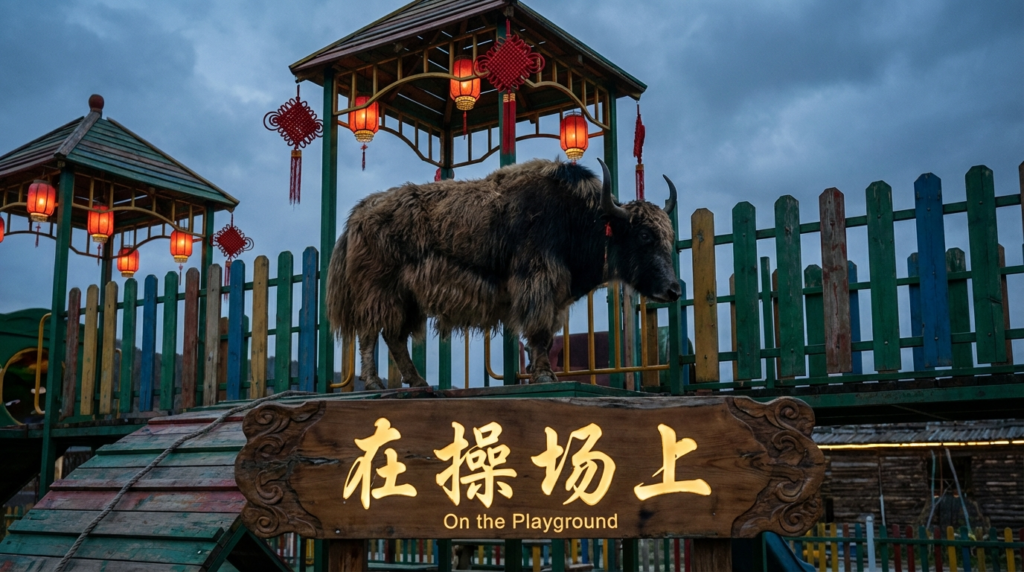
Playground In Chinese: 50+ Easy Words And Phrases For Beginners
Learn how to talk about the playground in simplified Chinese: 操场 cāochǎng, 游乐场 yóulèchǎng, 滑梯 huátī, 秋千 qiūqiān, and plenty more useful words real people actually say.
If you can say “playground” in Chinese, that is nice. If you can also say “slide,” “swing,” “run carefully,” and “wait your turn,” that is way more useful.
In daily Mandarin, people may say 操场 cāochǎng for a school playground or sports ground, and 游乐场 yóulèchǎng for an amusement or play area. Kids, parents, and teachers also use lots of simple action words around playgrounds, so this guide gives you the vocabulary, pinyin, meanings, and real sentences you can use right away.
Yak Tip
Do not panic if you see two words for “playground.” Chinese loves context. 操场 cāochǎng is often the school yard or sports ground. 游乐场 yóulèchǎng is more like a play area or amusement place. Language: helpful. Context: rude little goblin.
Visual Cards: Core Playground Words
操场 cāochǎng
playground / school sports ground
游乐场 yóulèchǎng
play area / amusement area
滑梯 huátī
slide
秋千 qiūqiān
swing
跷跷板 qiāoqiāobǎn
seesaw
沙坑 shākēng
sandpit / sandbox
单杠 dāngàng
horizontal bar
跑道 pǎodào
running track
Useful Phrases And Real-Life Sentences
- 去操场 qù cāochǎng — go to the playground
Example: 我们去操场玩吧。Wǒmen qù cāochǎng wán ba. — Let’s go play on the playground. - 玩滑梯 wán huátī — play on the slide
Example: 他最喜欢玩滑梯。Tā zuì xǐhuan wán huátī. — He likes playing on the slide the most. - 荡秋千 dàng qiūqiān — swing on a swing
Example: 妹妹在荡秋千。Mèimei zài dàng qiūqiān. — Little sister is on the swing. - 排队 páiduì — line up / queue
Example: 小朋友们在排队玩滑梯。Xiǎopéngyoumen zài páiduì wán huátī. — The children are lining up to use the slide. - 轮到你了 lún dào nǐ le — it’s your turn
Example: 轮到你了,快去吧。Lún dào nǐ le, kuài qù ba. — It’s your turn, go ahead. - 小心一点 xiǎoxīn yìdiǎn — be careful
Example: 跑慢一点,小心一点。Pǎo màn yìdiǎn, xiǎoxīn yìdiǎn. — Run a little slower and be careful. - 不要推人 búyào tuī rén — don’t push people
Example: 在滑梯旁边不要推人。Zài huátī pángbiān búyào tuī rén. — Don’t push people near the slide. - 慢慢来 màn man lái — take it slowly
Example: 你第一次玩单杠,慢慢来。Nǐ dì yī cì wán dāngàng, màn man lái. — It’s your first time on the bar, take it slowly. - 一起玩 yìqǐ wán — play together
Example: 他们在沙坑里一起玩。Tāmen zài shākēng lǐ yìqǐ wán. — They are playing together in the sandbox. - 休息一下 xiūxi yíxià — take a break
Example: 玩了很久,先休息一下。Wán le hěn jiǔ, xiān xiūxi yíxià. — We’ve played for a long time, let’s rest first. - 去喝水 qù hē shuǐ — go drink water
Example: 你出汗了,去喝水吧。Nǐ chūhàn le, qù hē shuǐ ba. — You’re sweating, go drink some water. - 该回家了 gāi huí jiā le — it’s time to go home
Example: 天黑了,该回家了。Tiān hēi le, gāi huí jiā le. — It’s getting dark, time to go home.
A Quick Note On Playground Words
Some words change a little depending on where you are. On a school campus, 操场 cāochǎng is very common. In a park, people may simply talk about the playground equipment itself, like 滑梯 huátī and 秋千 qiūqiān. So yes, the object often matters more than the grand theory of “playgroundness.” Languages love doing that.
Table Of Words: Places And Equipment
| Hanzi | Pinyin | Meaning | Example (ZH) | Example (Pinyin) | Translation (EN) |
|---|---|---|---|---|---|
| 操场 | cāochǎng | playground / school sports ground | 孩子们在操场上跑步。 | Háizimen zài cāochǎng shàng pǎobù. | The children are running on the playground. |
| 游乐场 | yóulèchǎng | play area / amusement area | 周末我们去游乐场。 | Zhōumò wǒmen qù yóulèchǎng. | We are going to the play area this weekend. |
| 公园 | gōngyuán | park | 公园里有一个小操场。 | Gōngyuán lǐ yǒu yí gè xiǎo cāochǎng. | There is a small playground in the park. |
| 滑梯 | huátī | slide | 弟弟从滑梯上滑下来。 | Dìdi cóng huátī shàng huá xiàlái. | Little brother slides down the slide. |
| 秋千 | qiūqiān | swing | 她坐在秋千上笑。 | Tā zuò zài qiūqiān shàng xiào. | She sits on the swing and smiles. |
| 跷跷板 | qiāoqiāobǎn | seesaw | 两个孩子在玩跷跷板。 | Liǎng gè háizi zài wán qiāoqiāobǎn. | Two children are playing on the seesaw. |
| 沙坑 | shākēng | sandpit / sandbox | 他在沙坑里堆城堡。 | Tā zài shākēng lǐ duī chéngbǎo. | He is building a castle in the sandbox. |
| 单杠 | dāngàng | horizontal bar | 哥哥会玩单杠。 | Gēge huì wán dāngàng. | Older brother can use the horizontal bar. |
| 双杠 | shuānggàng | parallel bars | 那边有一组双杠。 | Nàbiān yǒu yì zǔ shuānggàng. | There is a set of parallel bars over there. |
| 攀爬架 | pānpájià | climbing frame | 孩子们在攀爬架上爬来爬去。 | Háizimen zài pānpájià shàng pá lái pá qù. | The children are climbing all over the climbing frame. |
| 跑道 | pǎodào | running track | 我们在跑道上比赛。 | Wǒmen zài pǎodào shàng bǐsài. | We are racing on the track. |
| 长椅 | chángyǐ | bench | 妈妈坐在长椅上等我。 | Māma zuò zài chángyǐ shàng děng wǒ. | Mom is waiting for me on the bench. |
| 围栏 | wéilán | fence / railing | 不要爬围栏。 | Búyào pá wéilán. | Don’t climb the fence. |
| 台阶 | táijiē | steps | 滑梯旁边有台阶。 | Huátī pángbiān yǒu táijiē. | There are steps beside the slide. |
| 树荫 | shùyīn | shade from trees | 我们在树荫下休息。 | Wǒmen zài shùyīn xià xiūxi. | We are resting in the shade. |
Table Of Words: Actions On The Playground
| Hanzi | Pinyin | Meaning | Example (ZH) | Example (Pinyin) | Translation (EN) |
|---|---|---|---|---|---|
| 玩 | wán | play | 他们在外面玩。 | Tāmen zài wàimiàn wán. | They are playing outside. |
| 跑 | pǎo | run | 不要跑得太快。 | Búyào pǎo de tài kuài. | Don’t run too fast. |
| 走 | zǒu | walk | 在台阶上慢慢走。 | Zài táijiē shàng màn man zǒu. | Walk slowly on the steps. |
| 跳 | tiào | jump | 他跳得很高。 | Tā tiào de hěn gāo. | He jumps very high. |
| 爬 | pá | climb | 她会爬攀爬架。 | Tā huì pá pānpájià. | She can climb the frame. |
| 滑 | huá | slide | 我想再滑一次。 | Wǒ xiǎng zài huá yí cì. | I want to slide one more time. |
| 荡 | dàng | swing | 他在高高地荡秋千。 | Tā zài gāo gāo de dàng qiūqiān. | He is swinging very high. |
| 推 | tuī | push | 不要推别人。 | Búyào tuī biérén. | Don’t push others. |
| 拉 | lā | pull | 请拉住我的手。 | Qǐng lā zhù wǒ de shǒu. | Please hold my hand. |
| 排队 | páiduì | line up | 大家都在排队。 | Dàjiā dōu zài páiduì. | Everyone is lining up. |
| 等待 | děngdài | wait | 请在这里等待。 | Qǐng zài zhèlǐ děngdài. | Please wait here. |
| 分享 | fēnxiǎng | share | 要学会分享玩具。 | Yào xuéhuì fēnxiǎng wánjù. | You should learn to share toys. |
| 比赛 | bǐsài | compete / race | 我们来比赛跑步吧。 | Wǒmen lái bǐsài pǎobù ba. | Let’s race each other. |
| 休息 | xiūxi | rest | 累了就休息一下。 | Lèi le jiù xiūxi yíxià. | Rest if you are tired. |
| 喝水 | hē shuǐ | drink water | 玩完以后要喝水。 | Wán wán yǐhòu yào hē shuǐ. | Drink water after playing. |
Table Of Words: People, Safety, And Useful Nouns
| Hanzi | Pinyin | Meaning | Example (ZH) | Example (Pinyin) | Translation (EN) |
|---|---|---|---|---|---|
| 小朋友 | xiǎopéngyou | child / kid | 小朋友们玩得很开心。 | Xiǎopéngyoumen wán de hěn kāixīn. | The kids are having fun. |
| 朋友 | péngyou | friend | 我和朋友一起玩。 | Wǒ hé péngyou yìqǐ wán. | I play with my friend. |
| 老师 | lǎoshī | teacher | 老师在看着大家。 | Lǎoshī zài kàn zhe dàjiā. | The teacher is watching everyone. |
| 家长 | jiāzhǎng | parent / guardian | 家长在旁边聊天。 | Jiāzhǎng zài pángbiān liáotiān. | The parents are chatting nearby. |
| 同学 | tóngxué | classmate | 我和同学去操场。 | Wǒ hé tóngxué qù cāochǎng. | I go to the playground with my classmates. |
| 玩具 | wánjù | toy | 这个玩具可以带去沙坑。 | Zhège wánjù kěyǐ dài qù shākēng. | This toy can be taken to the sandbox. |
| 球 | qiú | ball | 他们在踢球。 | Tāmen zài tī qiú. | They are kicking a ball. |
| 书包 | shūbāo | schoolbag | 我的书包在长椅上。 | Wǒ de shūbāo zài chángyǐ shàng. | My schoolbag is on the bench. |
| 帽子 | màozi | hat | 太阳大,戴上帽子吧。 | Tàiyáng dà, dài shàng màozi ba. | The sun is strong, put on your hat. |
| 水壶 | shuǐhú | water bottle | 我的水壶是蓝色的。 | Wǒ de shuǐhú shì lánsè de. | My water bottle is blue. |
| 太阳 | tàiyáng | sun | 今天太阳很大。 | Jīntiān tàiyáng hěn dà. | The sun is very strong today. |
| 影子 | yǐngzi | shadow | 我们在看影子。 | Wǒmen zài kàn yǐngzi. | We are looking at shadows. |
| 小心 | xiǎoxīn | careful | 上台阶要小心。 | Shàng táijiē yào xiǎoxīn. | Be careful on the steps. |
| 安全 | ānquán | safe / safety | 安全最重要。 | Ānquán zuì zhòngyào. | Safety is the most important thing. |
| 轮流 | lúnliú | take turns | 大家要轮流玩。 | Dàjiā yào lúnliú wán. | Everyone should take turns. |
| 规则 | guīzé | rules | 我们要遵守规则。 | Wǒmen yào zūnshǒu guīzé. | We should follow the rules. |
| 帮助 | bāngzhù | help | 需要帮助就叫老师。 | Xūyào bāngzhù jiù jiào lǎoshī. | If you need help, call the teacher. |
| 摔倒 | shuāidǎo | fall down | 他跑太快,差点摔倒。 | Tā pǎo tài kuài, chàdiǎn shuāidǎo. | He ran too fast and almost fell. |
| 受伤 | shòushāng | get hurt | 不要乱推,会受伤。 | Búyào luàn tuī, huì shòushāng. | Don’t push around, someone could get hurt. |
| 回家 | huí jiā | go home | 玩完我们就回家。 | Wán wán wǒmen jiù huí jiā. | We’ll go home after playing. |
Useful Variants And Easy Choices
| Word | Pinyin | Use It When | Easy Note |
|---|---|---|---|
| 操场 | cāochǎng | school playground, PE ground, sports area | Very common at school. |
| 游乐场 | yóulèchǎng | play area, amusement place | Broader and less school-specific. |
| 小朋友 | xiǎopéngyou | children | Warm, natural word for kids. |
| 孩子 | háizi | child / children | Also very common and useful. |
| 休息一下 | xiūxi yíxià | take a short break | Softer than just saying 休息 xiūxi. |
| 小心一点 | xiǎoxīn yìdiǎn | be a bit more careful | Gentle warning, very natural. |
| 轮流玩 | lúnliú wán | take turns playing | Useful for parents and teachers. |
| 排队 | páiduì | line up | Great for slides and swings. |
Quick Practice
- “Let’s go to the playground.”
我们去操场吧。Wǒmen qù cāochǎng ba. - “Don’t push people.”
不要推人。Búyào tuī rén. - “It’s your turn.”
轮到你了。Lún dào nǐ le. - “The kids are playing on the slide.”
小朋友们在玩滑梯。Xiǎopéngyoumen zài wán huátī. - “Take a break and drink water.”
休息一下,去喝水。Xiūxi yíxià, qù hē shuǐ.
Final Yak Box
If you remember only five words, make them 操场 cāochǎng, 滑梯 huátī, 秋千 qiūqiān, 排队 páiduì, and 小心 xiǎoxīn. That tiny set already lets you understand a surprising amount of real playground talk. Which is nice, because memorizing 200 words on day one would be a bit dramatic.