Chinese School Vocabulary Every Beginner Actually Needs
Learn school vocabulary in simplified Chinese: 学校 xuéxiào, 教室 jiàoshì, 作业 zuòyè, 考试 kǎoshì, and a whole lot more without sounding like a confused backpack.
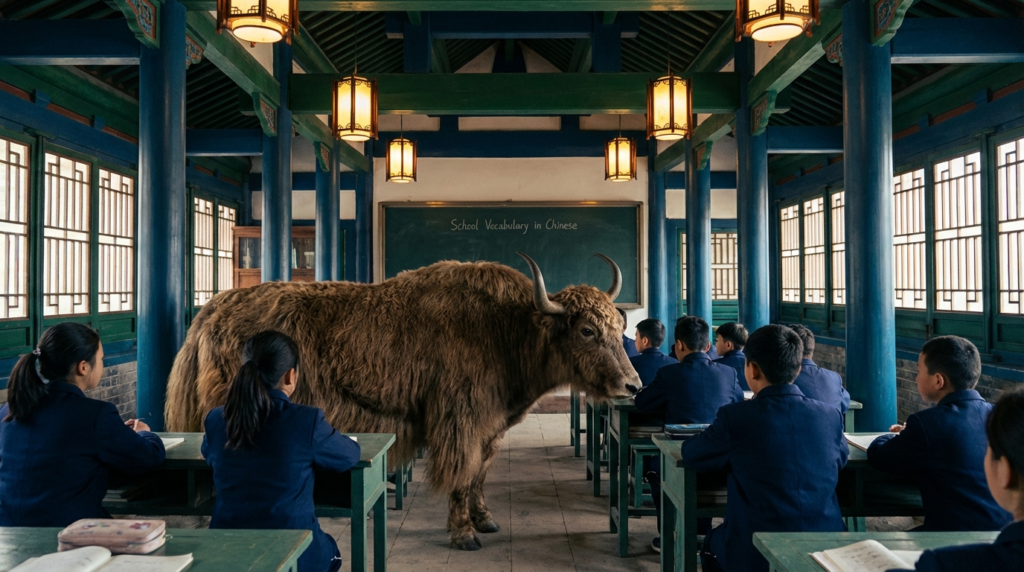
If you want to talk about school in Chinese, you need more than just 学校 xuéxiào “school” and 老师 lǎoshī “teacher.” Real life is full of classrooms, homework, exams, notebooks, and that one student who always forgets a pencil.
This guide gives you high-use school vocabulary in simplified Chinese with pinyin, clear meanings, and real example sentences. Everything is beginner-friendly, practical, and built for actual daily use.
Yak Tip
Chinese school words are wonderfully honest. 课本 kèběn is a textbook. 黑板 hēibǎn is a blackboard. 班主任 bānzhǔrèn is the homeroom teacher who probably knows exactly who did not do the homework. Efficient language. Mildly terrifying authority.
Core School Words You Will Use All The Time
学校 xuéxiào
school
教室 jiàoshì
classroom
老师 lǎoshī
teacher
学生 xuéshēng
student
课本 kèběn
textbook
作业 zuòyè
homework
考试 kǎoshì
exam; test
成绩 chéngjì
grade; score
Useful School Phrases And Real-Life Sentences
- 我去学校。 Wǒ qù xuéxiào. — I go to school.
- 老师在教室里。 Lǎoshī zài jiàoshì lǐ. — The teacher is in the classroom.
- 我是学生。 Wǒ shì xuéshēng. — I am a student.
- 这是我的课本。 Zhè shì wǒ de kèběn. — This is my textbook.
- 今天有很多作业。 Jīntiān yǒu hěn duō zuòyè. — There is a lot of homework today.
- 明天我们有考试。 Míngtiān wǒmen yǒu kǎoshì. — We have a test tomorrow.
- 我的成绩不错。 Wǒ de chéngjì búcuò. — My grades are not bad.
- 请打开书包。 Qǐng dǎkāi shūbāo. — Please open your schoolbag.
- 上课的时候不要说话。 Shàngkè de shíhou búyào shuōhuà. — Do not talk during class.
- 下课以后我们去操场。 Xiàkè yǐhòu wǒmen qù cāochǎng. — After class, we go to the playground.
- 我想去图书馆借书。 Wǒ xiǎng qù túshūguǎn jiè shū. — I want to go to the library to borrow a book.
- 他上课迟到了。 Tā shàngkè chídào le. — He was late for class.
Places At School
| Hanzi | Pinyin | Meaning | Example (ZH) | Example (Pinyin) | Translation (EN) |
|---|---|---|---|---|---|
| 学校 | xuéxiào | school | 我们的学校很大。 | Wǒmen de xuéxiào hěn dà. | Our school is big. |
| 教室 | jiàoshì | classroom | 学生在教室里学习。 | Xuéshēng zài jiàoshì lǐ xuéxí. | Students study in the classroom. |
| 图书馆 | túshūguǎn | library | 我下午去图书馆。 | Wǒ xiàwǔ qù túshūguǎn. | I go to the library in the afternoon. |
| 食堂 | shítáng | cafeteria | 我们在食堂吃午饭。 | Wǒmen zài shítáng chī wǔfàn. | We eat lunch in the cafeteria. |
| 操场 | cāochǎng | playground; sports field | 孩子们在操场跑步。 | Háizimen zài cāochǎng pǎobù. | The children run on the playground. |
| 办公室 | bàngōngshì | office | 老师在办公室工作。 | Lǎoshī zài bàngōngshì gōngzuò. | The teacher works in the office. |
| 实验室 | shíyànshì | laboratory | 我们在实验室做实验。 | Wǒmen zài shíyànshì zuò shíyàn. | We do experiments in the lab. |
| 宿舍 | sùshè | dormitory | 我的宿舍很安静。 | Wǒ de sùshè hěn ānjìng. | My dorm is quiet. |
| 校门 | xiàomén | school gate | 我们在校门口见面。 | Wǒmen zài xiàomén kǒu jiànmiàn. | We meet at the school gate. |
| 走廊 | zǒuláng | hallway | 走廊里不要跑。 | Zǒuláng lǐ búyào pǎo. | Do not run in the hallway. |
People, Objects, And Everyday Classroom Stuff
| Hanzi | Pinyin | Meaning | Example (ZH) | Example (Pinyin) | Translation (EN) |
|---|---|---|---|---|---|
| 老师 | lǎoshī | teacher | 老师来了。 | Lǎoshī lái le. | The teacher has arrived. |
| 学生 | xuéshēng | student | 那个学生很认真。 | Nàge xuéshēng hěn rènzhēn. | That student is very serious. |
| 同学 | tóngxué | classmate | 他是我的同学。 | Tā shì wǒ de tóngxué. | He is my classmate. |
| 校长 | xiàozhǎng | principal | 校长今天讲话了。 | Xiàozhǎng jīntiān jiǎnghuà le. | The principal spoke today. |
| 班主任 | bānzhǔrèn | homeroom teacher | 班主任很关心我们。 | Bānzhǔrèn hěn guānxīn wǒmen. | The homeroom teacher cares about us. |
| 保安 | bǎoān | security guard | 保安在校门口站着。 | Bǎoān zài xiàomén kǒu zhànzhe. | The security guard is standing at the school gate. |
| 书 | shū | book | 这本书很有意思。 | Zhè běn shū hěn yǒu yìsi. | This book is interesting. |
| 课本 | kèběn | textbook | 请拿出课本。 | Qǐng náchū kèběn. | Please take out your textbook. |
| 笔记本 | bǐjìběn | notebook | 我把新词写在笔记本上。 | Wǒ bǎ xīncí xiě zài bǐjìběn shàng. | I write new words in my notebook. |
| 铅笔 | qiānbǐ | pencil | 我的铅笔在桌子上。 | Wǒ de qiānbǐ zài zhuōzi shàng. | My pencil is on the desk. |
| 橡皮 | xiàngpí | eraser | 我需要一块橡皮。 | Wǒ xūyào yí kuài xiàngpí. | I need an eraser. |
| 尺子 | chǐzi | ruler | 请把尺子给我。 | Qǐng bǎ chǐzi gěi wǒ. | Please give me the ruler. |
| 书包 | shūbāo | schoolbag | 我的书包很重。 | Wǒ de shūbāo hěn zhòng. | My schoolbag is heavy. |
| 黑板 | hēibǎn | blackboard | 老师在黑板上写字。 | Lǎoshī zài hēibǎn shàng xiězì. | The teacher writes on the blackboard. |
| 粉笔 | fěnbǐ | chalk | 白色粉笔在这里。 | Báisè fěnbǐ zài zhèlǐ. | The white chalk is here. |
| 电脑 | diànnǎo | computer | 教室里有一台电脑。 | Jiàoshì lǐ yǒu yì tái diànnǎo. | There is a computer in the classroom. |
| 课桌 | kèzhuō | desk | 书在课桌下面。 | Shū zài kèzhuō xiàmiàn. | The book is under the desk. |
| 椅子 | yǐzi | chair | 请坐在椅子上。 | Qǐng zuò zài yǐzi shàng. | Please sit on the chair. |
Subjects, Time, And Common School Actions
| Hanzi | Pinyin | Meaning | Example (ZH) | Example (Pinyin) | Translation (EN) |
|---|---|---|---|---|---|
| 语文 | yǔwén | Chinese class | 我最喜欢语文。 | Wǒ zuì xǐhuān yǔwén. | I like Chinese class the most. |
| 数学 | shùxué | math | 数学今天有点难。 | Shùxué jīntiān yǒudiǎn nán. | Math is a bit difficult today. |
| 英语 | Yīngyǔ | English | 英语老师说得很清楚。 | Yīngyǔ lǎoshī shuō de hěn qīngchu. | The English teacher speaks very clearly. |
| 科学 | kēxué | science | 科学课很有趣。 | Kēxué kè hěn yǒuqù. | Science class is interesting. |
| 历史 | lìshǐ | history | 他喜欢读历史书。 | Tā xǐhuān dú lìshǐ shū. | He likes reading history books. |
| 体育 | tǐyù | PE | 下午我们有体育课。 | Xiàwǔ wǒmen yǒu tǐyù kè. | We have PE in the afternoon. |
| 音乐 | yīnyuè | music | 音乐课很轻松。 | Yīnyuè kè hěn qīngsōng. | Music class is relaxing. |
| 美术 | měishù | art | 她的美术作业很好看。 | Tā de měishù zuòyè hěn hǎokàn. | Her art homework looks great. |
| 课间 | kèjiān | between classes; break | 课间我去喝水。 | Kèjiān wǒ qù hē shuǐ. | I go drink water during the break. |
| 上课 | shàngkè | to attend class; class starts | 八点开始上课。 | Bādiǎn kāishǐ shàngkè. | Class starts at eight o’clock. |
| 下课 | xiàkè | class ends | 下课以后我回宿舍。 | Xiàkè yǐhòu wǒ huí sùshè. | After class I go back to the dorm. |
| 作业 | zuòyè | homework | 今晚的作业不多。 | Jīnwǎn de zuòyè bú duō. | There is not much homework tonight. |
| 考试 | kǎoshì | exam; test | 这次考试我不紧张。 | Zhè cì kǎoshì wǒ bù jǐnzhāng. | I am not nervous for this test. |
| 成绩 | chéngjì | grade; result | 他的成绩提高了。 | Tā de chéngjì tígāo le. | His grades improved. |
| 上学 | shàngxué | to go to school | 我每天七点上学。 | Wǒ měitiān qī diǎn shàngxué. | I go to school at seven every day. |
| 放学 | fàngxué | school finishes | 放学以后我们回家。 | Fàngxué yǐhòu wǒmen huíjiā. | We go home after school. |
| 举手 | jǔshǒu | to raise one’s hand | 知道答案请举手。 | Zhīdào dá’àn qǐng jǔshǒu. | Please raise your hand if you know the answer. |
| 迟到 | chídào | to be late | 今天我没有迟到。 | Jīntiān wǒ méiyǒu chídào. | I was not late today. |
| 请假 | qǐngjià | to ask for leave | 他生病了,所以请假。 | Tā shēngbìng le, suǒyǐ qǐngjià. | He is sick, so he asked for leave. |
| 复习 | fùxí | to review | 考试前我要复习。 | Kǎoshì qián wǒ yào fùxí. | I need to review before the test. |
| 预习 | yùxí | to preview | 老师让我们先预习。 | Lǎoshī ràng wǒmen xiān yùxí. | The teacher asked us to preview first. |
| 回答问题 | huídá wèntí | to answer questions | 她喜欢回答问题。 | Tā xǐhuān huídá wèntí. | She likes answering questions. |
| 做笔记 | zuò bǐjì | to take notes | 上课时我要做笔记。 | Shàngkè shí wǒ yào zuò bǐjì. | I need to take notes during class. |
| 借书 | jiè shū | to borrow books | 我想去图书馆借书。 | Wǒ xiǎng qù túshūguǎn jiè shū. | I want to borrow books from the library. |
Fast Confusions To Avoid
学校 xuéxiào vs 上学 shàngxué
学校 xuéxiào is the place: “school.” 上学 shàngxué is the action: “to go to school.” So 我在学校。Wǒ zài xuéxiào. means “I am at school,” but 我去上学。Wǒ qù shàngxué. means “I am going to school.”
老师 lǎoshī vs 班主任 bānzhǔrèn
老师 lǎoshī is any teacher. 班主任 bānzhǔrèn is your homeroom teacher or class advisor. One teaches you. The other teaches you and also knows exactly when you forgot your homework.
课本 kèběn vs 书 shū
书 shū is any book. 课本 kèběn is specifically a textbook. A novel is 书 shū. Your math book is 数学课本 shùxué kèběn.
Quick Reference Summary
- Places: 学校 xuéxiào, 教室 jiàoshì, 图书馆 túshūguǎn, 食堂 shítáng, 操场 cāochǎng
- People: 老师 lǎoshī, 学生 xuéshēng, 同学 tóngxué, 校长 xiàozhǎng, 班主任 bānzhǔrèn
- Objects: 课本 kèběn, 笔记本 bǐjìběn, 铅笔 qiānbǐ, 橡皮 xiàngpí, 书包 shūbāo
- School Life: 上课 shàngkè, 下课 xiàkè, 作业 zuòyè, 考试 kǎoshì, 成绩 chéngjì
- Actions: 举手 jǔshǒu, 迟到 chídào, 复习 fùxí, 预习 yùxí, 做笔记 zuò bǐjì
Final Yak Box
If you can say 学校 xuéxiào, 教室 jiàoshì, 老师 lǎoshī, 学生 xuéshēng, 作业 zuòyè, and 考试 kǎoshì naturally, you already have the bones of a real school conversation in Chinese. Add a few action words like 举手 jǔshǒu and 复习 fùxí, and suddenly you are not just learning vocabulary. You are surviving class.