Chinese Senses Vocabulary
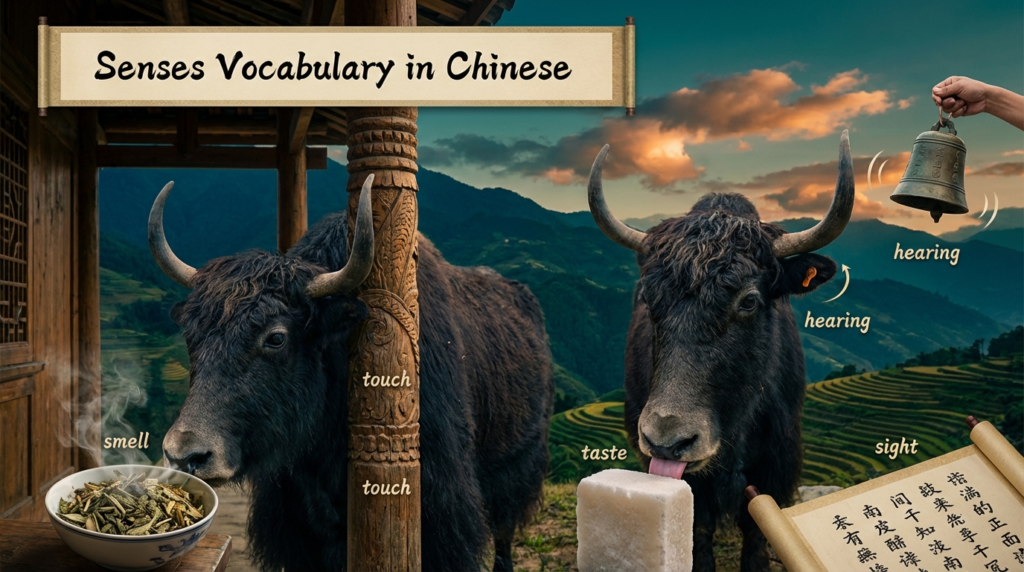
Learn sight, sound, smell, taste, and touch in simplified Chinese with 感官 gǎnguān vocabulary you can actually use in daily life.
The good news is that senses vocabulary in Chinese is practical fast. You use it when food is too spicy, music is too loud, the room is too dark, or a blanket feels amazing and you suddenly become weirdly poetic.
This guide gives you the core words first, then real-life phrases, then grouped tables so you can steal the useful stuff without pretending to enjoy memorizing giant vocab lists.
Tiny Shortcut That Makes This Easier
Chinese loves neat patterns. Once you learn 看 kàn for look, 听 tīng for listen, 闻 wén for smell, 尝 cháng for taste, and 摸 mō for touch, a lot of daily descriptions stop feeling scary and start feeling almost suspiciously organized.
Top 8 Senses Words You Will Use First
看 kàn
look, watch
听 tīng
listen
闻 wén
smell, sniff
尝 cháng
taste, try
摸 mō
touch
声音 shēngyīn
sound, voice
味道 wèidào
taste, flavor
感觉 gǎnjué
feel, sensation
Useful Phrases And Real-Life Sentences
看起来 kànqilai — to look, to seem
这个蛋糕看起来很好吃。
Zhège dàngāo kànqilai hěn hǎochī.
This cake looks delicious.
听起来 tīngqilai — to sound, to seem
这个主意听起来不错。
Zhège zhǔyi tīngqilai búcuò.
This idea sounds good.
闻起来 wénqilai — to smell like
咖啡闻起来很香。
Kāfēi wénqilai hěn xiāng.
The coffee smells great.
尝起来 chángqilai — to taste like
这个汤尝起来很鲜。
Zhège tāng chángqilai hěn xiān.
This soup tastes savory and fresh.
摸起来 mōqilai — to feel like
这件毛衣摸起来很柔软。
Zhè jiàn máoyī mōqilai hěn róuruǎn.
This sweater feels soft.
闭上眼睛 bì shàng yǎnjing — close your eyes
请闭上眼睛,猜一猜这是什么。
Qǐng bì shàng yǎnjing, cāi yì cāi zhè shì shénme.
Please close your eyes and guess what this is.
睁开眼睛 zhēngkāi yǎnjing — open your eyes
你可以睁开眼睛了。
Nǐ kěyǐ zhēngkāi yǎnjing le.
You can open your eyes now.
提高音量 tígāo yīnliàng — turn up the volume
请提高音量,我听不清楚。
Qǐng tígāo yīnliàng, wǒ tīng bu qīngchu.
Please turn up the volume. I can’t hear clearly.
降低音量 jiàngdī yīnliàng — turn down the volume
音乐太吵了,快降低音量。
Yīnyuè tài chǎo le, kuài jiàngdī yīnliàng.
The music is too noisy, turn it down.
有点辣 yǒudiǎn là — a little spicy
这个酱有点辣,但是很好吃。
Zhège jiàng yǒudiǎn là, dànshì hěn hǎochī.
This sauce is a little spicy, but very tasty.
手感很好 shǒugǎn hěn hǎo — feels good in the hand
这支笔手感很好。
Zhè zhī bǐ shǒugǎn hěn hǎo.
This pen feels great in the hand.
没有味道 méiyǒu wèidào — has no taste, no flavor
这个菜太淡了,几乎没有味道。
Zhège cài tài dàn le, jīhū méiyǒu wèidào.
This dish is too bland. It almost has no flavor.
Curious Bits That Save You From Easy Mistakes
- 看 kàn means look or watch. 看见 kànjiàn means actually see. One is the action, one is the result.
- 听 tīng means listen. 听见 tīngjiàn means hear. Same idea, less drama.
- 闻 wén is the verb smell. 闻起来 wénqilai means smells like. Tiny change, big payoff.
- 味道 wèidào usually means taste or smell in context. 口味 kǒuwèi is more like personal taste or flavor preference.
Sight Words In Chinese
| Hanzi | Pinyin | Meaning | Example (ZH) | Example (Pinyin) | Translation (EN) |
|---|---|---|---|---|---|
| 看 | kàn | look, watch | 你看那边的山。 | Nǐ kàn nàbiān de shān. | Look at the mountain over there. |
| 看见 | kànjiàn | see | 我看见一只白猫。 | Wǒ kànjiàn yì zhī bái māo. | I see a white cat. |
| 颜色 | yánsè | color | 这个颜色很漂亮。 | Zhège yánsè hěn piàoliang. | This color is pretty. |
| 明亮 | míngliàng | bright | 房间很明亮。 | Fángjiān hěn míngliàng. | The room is bright. |
| 黑暗 | hēi’àn | dark | 这里太黑暗了。 | Zhèlǐ tài hēi’àn le. | It’s too dark here. |
| 模糊 | móhu | blurry | 照片有点模糊。 | Zhàopiàn yǒudiǎn móhu. | The photo is a little blurry. |
| 清楚 | qīngchu | clear | 黑板上的字很清楚。 | Hēibǎn shàng de zì hěn qīngchu. | The words on the board are clear. |
| 闪亮 | shǎnliàng | shiny, sparkling | 她的鞋子很闪亮。 | Tā de xiézi hěn shǎnliàng. | Her shoes are shiny. |
| 反光 | fǎnguāng | reflective, glaring | 这张桌子有点反光。 | Zhè zhāng zhuōzi yǒudiǎn fǎnguāng. | This table is a bit reflective. |
| 景色 | jǐngsè | scenery | 这里的景色真美。 | Zhèlǐ de jǐngsè zhēn měi. | The scenery here is really beautiful. |
Sound Words In Chinese
| Hanzi | Pinyin | Meaning | Example (ZH) | Example (Pinyin) | Translation (EN) |
|---|---|---|---|---|---|
| 听 | tīng | listen | 你先听老师说。 | Nǐ xiān tīng lǎoshī shuō. | Listen to the teacher first. |
| 听见 | tīngjiàn | hear | 我没听见你的名字。 | Wǒ méi tīngjiàn nǐ de míngzi. | I didn’t hear your name. |
| 声音 | shēngyīn | sound, voice | 她的声音很温柔。 | Tā de shēngyīn hěn wēnróu. | Her voice is gentle. |
| 安静 | ānjìng | quiet | 请保持安静。 | Qǐng bǎochí ānjìng. | Please stay quiet. |
| 吵 | chǎo | noisy | 这家店太吵了。 | Zhè jiā diàn tài chǎo le. | This shop is too noisy. |
| 大声 | dàshēng | loudly, loud | 他大声唱歌。 | Tā dàshēng chànggē. | He sings loudly. |
| 小声 | xiǎoshēng | softly, quietly | 请小声一点。 | Qǐng xiǎoshēng yìdiǎn. | Please be a little quieter. |
| 音乐 | yīnyuè | music | 我喜欢轻音乐。 | Wǒ xǐhuan qīng yīnyuè. | I like light music. |
| 噪音 | zàoyīn | noise | 外面的噪音很大。 | Wàimiàn de zàoyīn hěn dà. | The noise outside is loud. |
| 回声 | huíshēng | echo | 山谷里有回声。 | Shāngǔ lǐ yǒu huíshēng. | There is an echo in the valley. |
Smell Words In Chinese
| Hanzi | Pinyin | Meaning | Example (ZH) | Example (Pinyin) | Translation (EN) |
|---|---|---|---|---|---|
| 闻 | wén | smell, sniff | 你闻一下这朵花。 | Nǐ wén yíxià zhè duǒ huā. | Smell this flower. |
| 气味 | qìwèi | smell, odor | 厨房里有奇怪的气味。 | Chúfáng lǐ yǒu qíguài de qìwèi. | There is a strange smell in the kitchen. |
| 香 | xiāng | fragrant, smells good | 面包好香啊。 | Miànbāo hǎo xiāng a. | The bread smells so good. |
| 臭 | chòu | smelly, stinky | 这双鞋有点臭。 | Zhè shuāng xié yǒudiǎn chòu. | These shoes are a bit smelly. |
| 清香 | qīngxiāng | light fragrance | 茶有一股清香。 | Chá yǒu yì gǔ qīngxiāng. | The tea has a light fragrance. |
| 刺鼻 | cíbí | pungent, irritating | 这个味道很刺鼻。 | Zhège wèidào hěn cíbí. | This smell is pungent. |
| 新鲜 | xīnxiān | fresh | 空气闻起来很新鲜。 | Kōngqì wénqilai hěn xīnxiān. | The air smells fresh. |
| 烧焦味 | shāojiāowèi | burnt smell | 我闻到一点烧焦味。 | Wǒ wéndào yìdiǎn shāojiāowèi. | I smell a bit of something burnt. |
Taste Words In Chinese
| Hanzi | Pinyin | Meaning | Example (ZH) | Example (Pinyin) | Translation (EN) |
|---|---|---|---|---|---|
| 吃 | chī | eat | 我想吃水果。 | Wǒ xiǎng chī shuǐguǒ. | I want to eat fruit. |
| 尝 | cháng | taste, try | 你尝一下这个汤。 | Nǐ cháng yíxià zhège tāng. | Taste this soup. |
| 味道 | wèidào | taste, flavor | 这个菜的味道不错。 | Zhège cài de wèidào búcuò. | This dish tastes pretty good. |
| 甜 | tián | sweet | 这个西瓜很甜。 | Zhège xīguā hěn tián. | This watermelon is sweet. |
| 咸 | xián | salty | 汤有点咸。 | Tāng yǒudiǎn xián. | The soup is a little salty. |
| 酸 | suān | sour | 柠檬非常酸。 | Níngméng fēicháng suān. | Lemons are very sour. |
| 苦 | kǔ | bitter | 这杯咖啡太苦了。 | Zhè bēi kāfēi tài kǔ le. | This coffee is too bitter. |
| 辣 | là | spicy | 四川菜常常很辣。 | Sìchuān cài chángcháng hěn là. | Sichuan food is often spicy. |
| 淡 | dàn | bland, light | 这个粥比较淡。 | Zhège zhōu bǐjiào dàn. | This porridge is fairly bland. |
| 鲜 | xiān | savory, fresh-tasting | 这碗汤很鲜。 | Zhè wǎn tāng hěn xiān. | This soup tastes fresh and savory. |
Touch And Feeling Words In Chinese
| Hanzi | Pinyin | Meaning | Example (ZH) | Example (Pinyin) | Translation (EN) |
|---|---|---|---|---|---|
| 摸 | mō | touch | 别摸墙上的油漆。 | Bié mō qiáng shàng de yóuqī. | Don’t touch the paint on the wall. |
| 感觉 | gǎnjué | feel, sensation | 我的手感觉很冷。 | Wǒ de shǒu gǎnjué hěn lěng. | My hands feel cold. |
| 柔软 | róuruǎn | soft | 这条毛毯很柔软。 | Zhè tiáo máotǎn hěn róuruǎn. | This blanket is soft. |
| 硬 | yìng | hard | 这个枕头太硬了。 | Zhège zhěntou tài yìng le. | This pillow is too hard. |
| 光滑 | guānghuá | smooth | 这块石头很光滑。 | Zhè kuài shítou hěn guānghuá. | This stone is smooth. |
| 粗糙 | cūcāo | rough | 这张纸有点粗糙。 | Zhè zhāng zhǐ yǒudiǎn cūcāo. | This paper is a bit rough. |
| 热 | rè | hot | 杯子摸起来很热。 | Bēizi mōqilai hěn rè. | The cup feels hot. |
| 冷 | lěng | cold | 地板很冷。 | Dìbǎn hěn lěng. | The floor is cold. |
| 温暖 | wēnnuǎn | warm | 阳光照在身上很温暖。 | Yángguāng zhào zài shēnshang hěn wēnnuǎn. | The sunshine feels warm on the body. |
| 湿 | shī | wet | 我的袖子湿了。 | Wǒ de xiùzi shī le. | My sleeve is wet. |
| 干 | gān | dry | 毛巾已经干了。 | Máojīn yǐjīng gān le. | The towel is already dry. |
| 痒 | yǎng | itchy | 我的胳膊有点痒。 | Wǒ de gēbo yǒudiǎn yǎng. | My arm is a little itchy. |
Quick Pattern Table
| Pattern | Meaning | Example (ZH) | Example (Pinyin) | Translation (EN) |
|---|---|---|---|---|
| 看起来 kànqilai | looks, seems | 这件衣服看起来很贵。 | Zhè jiàn yīfu kànqilai hěn guì. | This piece of clothing looks expensive. |
| 听起来 tīngqilai | sounds, seems | 这首歌听起来很轻松。 | Zhè shǒu gē tīngqilai hěn qīngsōng. | This song sounds relaxing. |
| 闻起来 wénqilai | smells like | 这个房间闻起来很新鲜。 | Zhège fángjiān wénqilai hěn xīnxiān. | This room smells fresh. |
| 尝起来 chángqilai | tastes like | 这个面包尝起来有点甜。 | Zhège miànbāo chángqilai yǒudiǎn tián. | This bread tastes a little sweet. |
| 摸起来 mōqilai | feels like | 这个沙发摸起来很光滑。 | Zhège shāfā mōqilai hěn guānghuá. | This sofa feels smooth. |
Yak Tip
The fastest way to lock this vocabulary in is to practice with real things, not sad flashcards floating in the void. Look at a room and describe what you 看见 kànjiàn. Taste lunch and say whether it is 甜 tián, 咸 xián, or 辣 là. Touch fabric and decide if it is 柔软 róuruǎn or 粗糙 cūcāo. Daily life is basically a free textbook with better snacks.