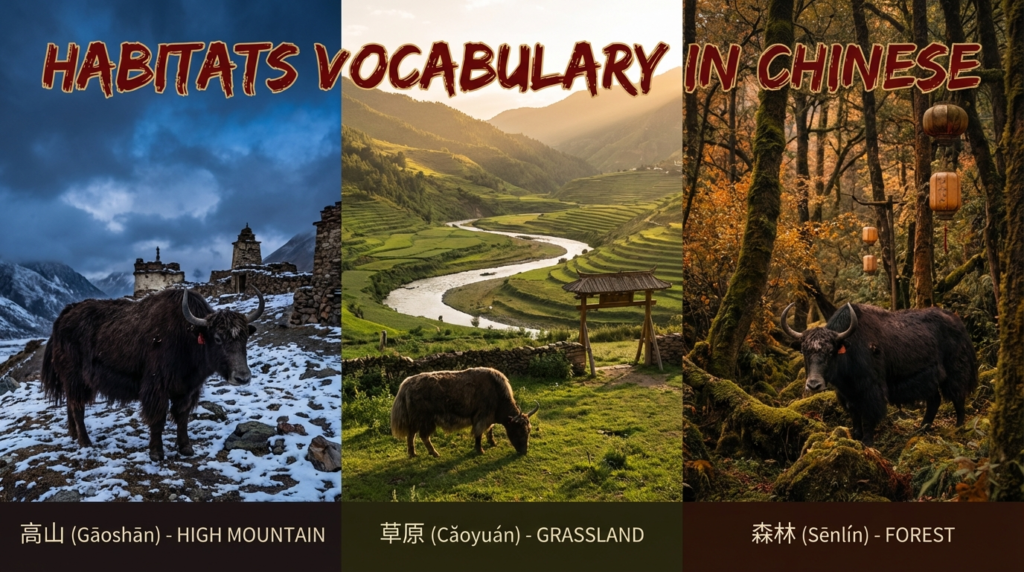
Habitats Vocabulary In Chinese
Learn habitat words in simplified Chinese, from 栖息地 qīxīdì “habitat” to 海洋 hǎiyáng “ocean,” with pinyin, meaning, and real-life sentences.
If you can say where an animal or plant lives, your Chinese gets useful fast. You stop sounding like a flashcard robot and start sounding like someone who can actually describe the world.
This guide teaches the most common habitats vocabulary in simplified Chinese, plus location words, weather words, and environment phrases that usually show up together. Nature vocabulary loves company. Annoying, yes. Helpful, also yes.
Yak Tip
In Chinese, 栖息地 qīxīdì means “habitat,” but people also use broader words like 环境 huánjìng “environment” and 地区 dìqū “region” when talking about where living things survive. So yes, one neat English word often turns into a small vocabulary party.
Core Habitat Words
森林 sēnlín
forest
草原 cǎoyuán
grassland; prairie
沙漠 shāmò
desert
海洋 hǎiyáng
ocean
湿地 shīdì
wetland
丛林 cónglín
jungle
河流 héliú
river
山区 shānqū
mountain area
Useful Phrases And Real-Life Sentences
- 栖息地 qīxīdì — habitat
这个地区是熊猫的栖息地。 Zhège dìqū shì xióngmāo de qīxīdì. This area is the habitat of pandas. - 自然环境 zìrán huánjìng — natural environment
我们要保护自然环境。 Wǒmen yào bǎohù zìrán huánjìng. We need to protect the natural environment. - 生活在 shēnghuó zài — to live in
北极熊生活在寒冷的地方。 Běijíxióng shēnghuó zài hánlěng de dìfang. Polar bears live in cold places. - 分布在 fēnbù zài — to be distributed in; to be found in
这种鸟分布在南方的湿地。 Zhè zhǒng niǎo fēnbù zài nánfāng de shīdì. This kind of bird is found in southern wetlands. - 适应 shìyìng — to adapt
骆驼很会适应沙漠环境。 Luòtuo hěn huì shìyìng shāmò huánjìng. Camels adapt well to desert environments. - 保护区 bǎohùqū — protected area; reserve
这里是野生动物保护区。 Zhèlǐ shì yěshēng dòngwù bǎohùqū. This is a wildlife reserve. - 野生动物 yěshēng dòngwù — wild animals
森林里有很多野生动物。 Sēnlín lǐ yǒu hěnduō yěshēng dòngwù. There are many wild animals in the forest. - 植物 zhíwù — plants
热带雨林里有丰富的植物。 Rèdài yǔlín lǐ yǒu fēngfù de zhíwù. There are abundant plants in the tropical rainforest. - 食物链 shíwùliàn — food chain
每个生态系统都有自己的食物链。 Měi gè shēngtài xìtǒng dōu yǒu zìjǐ de shíwùliàn. Every ecosystem has its own food chain. - 生态系统 shēngtài xìtǒng — ecosystem
海洋生态系统非常复杂。 Hǎiyáng shēngtài xìtǒng fēicháng fùzá. Ocean ecosystems are very complex. - 迁徙 qiānxǐ — migration
很多鸟会在冬天以前迁徙。 Hěnduō niǎo huì zài dōngtiān yǐqián qiānxǐ. Many birds migrate before winter. - 濒危 bīnwēi — endangered
这种动物已经濒危了。 Zhè zhǒng dòngwù yǐjīng bīnwēi le. This animal is already endangered.
Habitats Vocabulary By Type
Land Habitats
| Hanzi | Pinyin | Meaning | Example (ZH) | Example (Pinyin) | Translation (EN) |
|---|---|---|---|---|---|
| 森林 | sēnlín | forest | 老虎住在森林里。 | Lǎohǔ zhù zài sēnlín lǐ. | Tigers live in forests. |
| 草原 | cǎoyuán | grassland | 狮子生活在草原上。 | Shīzi shēnghuó zài cǎoyuán shàng. | Lions live on grasslands. |
| 沙漠 | shāmò | desert | 沙漠白天很热。 | Shāmò báitiān hěn rè. | The desert is very hot during the day. |
| 山区 | shānqū | mountain area | 很多山羊生活在山区。 | Hěnduō shānyáng shēnghuó zài shānqū. | Many goats live in mountain areas. |
| 山洞 | shāndòng | cave | 蝙蝠白天待在山洞里。 | Biānfú báitiān dāi zài shāndòng lǐ. | Bats stay in caves during the day. |
| 平原 | píngyuán | plain | 这片平原很适合放牧。 | Zhè piàn píngyuán hěn shìhé fàngmù. | This plain is suitable for grazing. |
| 高原 | gāoyuán | plateau | 牦牛常见于高原地区。 | Máoniú chángjiàn yú gāoyuán dìqū. | Yaks are often seen in plateau regions. |
| 丛林 | cónglín | jungle | 丛林里又热又湿。 | Cónglín lǐ yòu rè yòu shī. | The jungle is hot and humid. |
| 灌木丛 | guànmùcóng | bushes; shrubland | 兔子躲在灌木丛里。 | Tùzi duǒ zài guànmùcóng lǐ. | Rabbits hide in the bushes. |
| 农田 | nóngtián | farmland | 有些鸟会在农田找食物。 | Yǒuxiē niǎo huì zài nóngtián zhǎo shíwù. | Some birds look for food in farmland. |
| 竹林 | zhúlín | bamboo forest | 熊猫喜欢竹林。 | Xióngmāo xǐhuan zhúlín. | Pandas like bamboo forests. |
| 岩石地带 | yánshí dìdài | rocky area | 蜥蜴住在岩石地带。 | Xīyì zhù zài yánshí dìdài. | Lizards live in rocky areas. |
Water Habitats
| Hanzi | Pinyin | Meaning | Example (ZH) | Example (Pinyin) | Translation (EN) |
|---|---|---|---|---|---|
| 海洋 | hǎiyáng | ocean | 鲸鱼生活在海洋里。 | Jīngyú shēnghuó zài hǎiyáng lǐ. | Whales live in the ocean. |
| 大海 | dàhǎi | sea | 大海里有很多鱼。 | Dàhǎi lǐ yǒu hěnduō yú. | There are many fish in the sea. |
| 河流 | héliú | river | 河流给动物带来水源。 | Héliú gěi dòngwù dàilái shuǐyuán. | Rivers bring water sources to animals. |
| 小溪 | xiǎoxī | stream | 小鹿在小溪边喝水。 | Xiǎolù zài xiǎoxī biān hē shuǐ. | The fawn drinks water by the stream. |
| 湖泊 | húpō | lake | 很多鸟会停在湖泊附近。 | Hěnduō niǎo huì tíng zài húpō fùjìn. | Many birds stop near lakes. |
| 池塘 | chítáng | pond | 青蛙住在池塘里。 | Qīngwā zhù zài chítáng lǐ. | Frogs live in ponds. |
| 湿地 | shīdì | wetland | 湿地是很多鸟的家。 | Shīdì shì hěnduō niǎo de jiā. | Wetlands are home to many birds. |
| 沼泽 | zhǎozé | swamp; marsh | 鳄鱼常见于沼泽地区。 | Èyú chángjiàn yú zhǎozé dìqū. | Crocodiles are often found in swamp areas. |
| 海岸 | hǎi’àn | coast | 海岸附近有很多海鸟。 | Hǎi’àn fùjìn yǒu hěnduō hǎiniǎo. | There are many seabirds near the coast. |
| 珊瑚礁 | shānhújiāo | coral reef | 珊瑚礁里有丰富的海洋生物。 | Shānhújiāo lǐ yǒu fēngfù de hǎiyáng shēngwù. | There is abundant marine life in coral reefs. |
| 海边 | hǎibiān | seaside | 螃蟹常在海边活动。 | Pángxiè cháng zài hǎibiān huódòng. | Crabs often move around by the seaside. |
| 水下 | shuǐxià | underwater | 这种植物生长在水下。 | Zhè zhǒng zhíwù shēngzhǎng zài shuǐxià. | This plant grows underwater. |
Cold, Hot, And Extreme Habitats
| Hanzi | Pinyin | Meaning | Example (ZH) | Example (Pinyin) | Translation (EN) |
|---|---|---|---|---|---|
| 北极 | Běijí | the Arctic | 北极非常寒冷。 | Běijí fēicháng hánlěng. | The Arctic is extremely cold. |
| 南极 | Nánjí | Antarctica | 企鹅生活在南极附近。 | Qǐ’é shēnghuó zài Nánjí fùjìn. | Penguins live near Antarctica. |
| 冰川 | bīngchuān | glacier | 有些动物生活在冰川附近。 | Yǒuxiē dòngwù shēnghuó zài bīngchuān fùjìn. | Some animals live near glaciers. |
| 冻土 | dòngtǔ | permafrost | 冻土地区的冬天很长。 | Dòngtǔ dìqū de dōngtiān hěn cháng. | Winters in permafrost regions are long. |
| 热带 | rèdài | tropics | 热带地区天气温暖。 | Rèdài dìqū tiānqì wēnnuǎn. | Tropical regions have warm weather. |
| 热带雨林 | rèdài yǔlín | tropical rainforest | 猴子住在热带雨林里。 | Hóuzi zhù zài rèdài yǔlín lǐ. | Monkeys live in tropical rainforests. |
| 干旱地区 | gānhàn dìqū | arid region | 这种植物适合干旱地区。 | Zhè zhǒng zhíwù shìhé gānhàn dìqū. | This plant suits arid regions. |
| 寒带 | hándài | frigid zone | 寒带的动物有厚厚的毛。 | Hándài de dòngwù yǒu hòuhòu de máo. | Animals in frigid zones have thick fur. |
| 洞穴 | dòngxué | cavern; cave habitat | 有些昆虫住在洞穴里。 | Yǒuxiē kūnchóng zhù zài dòngxué lǐ. | Some insects live in caves. |
| 火山地区 | huǒshān dìqū | volcanic area | 火山地区不适合大多数动物生活。 | Huǒshān dìqū bù shìhé dàduōshù dòngwù shēnghuó. | Volcanic areas are not suitable for most animals. |
Human-Influenced Habitats And Surroundings
| Hanzi | Pinyin | Meaning | Example (ZH) | Example (Pinyin) | Translation (EN) |
|---|---|---|---|---|---|
| 城市 | chéngshì | city | 有些鸟已经适应城市生活。 | Yǒuxiē niǎo yǐjīng shìyìng chéngshì shēnghuó. | Some birds have adapted to city life. |
| 乡村 | xiāngcūn | countryside | 乡村附近常有田野动物。 | Xiāngcūn fùjìn cháng yǒu tiányě dòngwù. | Field animals are often found near the countryside. |
| 公园 | gōngyuán | park | 松鼠常在公园里活动。 | Sōngshǔ cháng zài gōngyuán lǐ huódòng. | Squirrels often move around in parks. |
| 花园 | huāyuán | garden | 蝴蝶喜欢花园。 | Húdié xǐhuan huāyuán. | Butterflies like gardens. |
| 农场 | nóngchǎng | farm | 农场里有很多鸡和鸭。 | Nóngchǎng lǐ yǒu hěnduō jī hé yā. | There are many chickens and ducks on the farm. |
| 田野 | tiányě | field | 田野里可以看到野兔。 | Tiányě lǐ kěyǐ kàn dào yětù. | You can see wild rabbits in fields. |
| 居民区 | jūmínqū | residential area | 有些狐狸会进入居民区。 | Yǒuxiē húli huì jìnrù jūmínqū. | Some foxes enter residential areas. |
| 垃圾场 | lājīchǎng | dump; garbage site | 垃圾场会影响周围环境。 | Lājīchǎng huì yǐngxiǎng zhōuwéi huánjìng. | Garbage sites affect the surrounding environment. |
Extra Environment Words You Will Actually Need
- 环境 huánjìng — environment
- 地区 dìqū — region; area
- 地形 dìxíng — terrain
- 气候 qìhòu — climate
- 天气 tiānqì — weather
- 温度 wēndù — temperature
- 潮湿 cháoshī — humid; damp
- 干燥 gānzào — dry
- 寒冷 hánlěng — cold
- 炎热 yánrè — scorching hot
- 凉爽 liángshuǎng — cool and pleasant
- 多雨 duōyǔ — rainy
- 阳光充足 yángguāng chōngzú — full of sunlight
- 遮阴 zhēyīn — shade
- 水源 shuǐyuán — water source
- 土壤 tǔrǎng — soil
- 植被 zhíbèi — vegetation
- 树木 shùmù — trees
- 草地 cǎodì — grassy ground
- 生长 shēngzhǎng — to grow
- 繁殖 fánzhí — to reproduce
- 躲藏 duǒcáng — to hide
- 捕食 bǔshí — to prey on
- 筑巢 zhùcháo — to build a nest
Common Mix-Ups
- 海洋 hǎiyáng is “ocean,” while 大海 dàhǎi is “sea” or just “the sea” in a broad, everyday way.
- 湿地 shīdì is “wetland,” while 沼泽 zhǎozé is more like “swamp” or “marsh.” Wetland is the wider category.
- 丛林 cónglín is “jungle,” while 森林 sēnlín is “forest.” Not every forest is a jungle. Nature loves fine print.
- 山区 shānqū means “mountain area,” while 高原 gāoyuán means “plateau.” High land, yes. Same thing, no.
Quick Practice
Try reading these short lines out loud. The goal is not speed. The goal is sounding less terrified by new vocabulary.
- 熊猫住在竹林里。 Xióngmāo zhù zài zhúlín lǐ. Pandas live in bamboo forests.
- 骆驼适应干旱地区。 Luòtuo shìyìng gānhàn dìqū. Camels adapt to arid regions.
- 青蛙喜欢潮湿的环境。 Qīngwā xǐhuan cháoshī de huánjìng. Frogs like humid environments.
- 企鹅生活在寒冷的地方。 Qǐ’é shēnghuó zài hánlěng de dìfang. Penguins live in cold places.
- 很多鱼生活在珊瑚礁附近。 Hěnduō yú shēnghuó zài shānhújiāo fùjìn. Many fish live near coral reefs.
- 老鹰常在山区寻找猎物。 Lǎoyīng cháng zài shānqū xúnzhǎo lièwù. Eagles often search for prey in mountain areas.
Quick Reference Summary
| Chinese | Pinyin | Meaning |
|---|---|---|
| 栖息地 | qīxīdì | habitat |
| 环境 | huánjìng | environment |
| 森林 | sēnlín | forest |
| 草原 | cǎoyuán | grassland |
| 沙漠 | shāmò | desert |
| 海洋 | hǎiyáng | ocean |
| 湿地 | shīdì | wetland |
| 山区 | shānqū | mountain area |
| 热带雨林 | rèdài yǔlín | tropical rainforest |
| 沼泽 | zhǎozé | swamp; marsh |
| 适应 | shìyìng | adapt |
| 生态系统 | shēngtài xìtǒng | ecosystem |
Final Yak Box
Start with the big habitat words first: 森林 sēnlín, 草原 cǎoyuán, 沙漠 shāmò, 海洋 hǎiyáng, and 湿地 shīdì. Then add action words like 生活在 shēnghuó zài, 适应 shìyìng, and 分布在 fēnbù zài. That combo lets you build real sentences instead of just pointing at a tree and whispering “forest” like a confused documentary narrator.