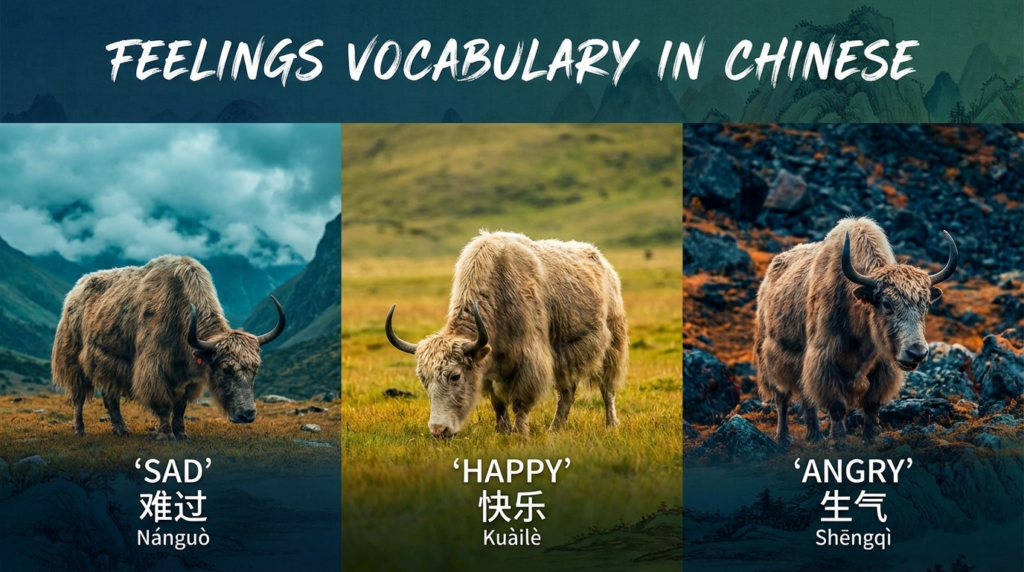
Chinese Feelings Vocabulary For Beginners
Learn the everyday language of feelings in simplified Chinese: 情绪词汇 (qíngxù cíhuì). From “happy” to “awkward” to “I cannot deal with this today,” this is the vocabulary that makes your Chinese sound human instead of robot-shaped.
Feelings words are some of the first words you actually use in real life. You are tired, happy, nervous, annoyed, relaxed, or weirdly emotional because someone bought you a dumpling. Language should cover that.
The big trick in Chinese is that emotion words often sound more natural with a small intensifier in front, such as 很 (hěn), 有点 (yǒudiǎn), 真 (zhēn), 太 (tài), or 特别 (tèbié). You will see that pattern all over this guide, because Chinese loves natural rhythm and hates awkward textbook stiffness almost as much as you do.
The 8 Feelings You Will Use All The Time
开心
kāixīn
happy
难过
nánguò
sad
生气
shēngqì
angry
紧张
jǐnzhāng
nervous
放松
fàngsōng
relaxed
害怕
hàipà
scared
感动
gǎndòng
touched
尴尬
gāngà
awkward
Useful Phrases And Real-Life Sentences
- 我很开心 (wǒ hěn kāixīn) — I’m happy.
今天不用加班,我很开心。
Jīntiān bú yòng jiābān, wǒ hěn kāixīn.
I’m happy because I do not have to work overtime today. - 我有点难过 (wǒ yǒudiǎn nánguò) — I’m a little sad.
听到这个消息,我有点难过。
Tīngdào zhège xiāoxi, wǒ yǒudiǎn nánguò.
I feel a little sad after hearing the news. - 我太兴奋了 (wǒ tài xīngfèn le) — I’m so excited.
明天去上海,我太兴奋了。
Míngtiān qù Shànghǎi, wǒ tài xīngfèn le.
I’m so excited because I’m going to Shanghai tomorrow. - 我有点紧张 (wǒ yǒudiǎn jǐnzhāng) — I’m a bit nervous.
第一次开会发言,我有点紧张。
Dì yī cì kāihuì fāyán, wǒ yǒudiǎn jǐnzhāng.
I’m a bit nervous speaking in a meeting for the first time. - 别担心 (bié dānxīn) — Don’t worry.
别担心,一切都会好的。
Bié dānxīn, yíqiè dōu huì hǎo de.
Don’t worry. Everything will be fine. - 我放心了 (wǒ fàngxīn le) — I’m relieved.
你到家以后给我发了消息,我终于放心了。
Nǐ dào jiā yǐhòu gěi wǒ fā le xiāoxi, wǒ zhōngyú fàngxīn le.
You messaged me after getting home, so I finally felt relieved. - 我好尴尬 (wǒ hǎo gāngà) — I’m so awkward / embarrassed.
我把老师的名字叫错了,我好尴尬。
Wǒ bǎ lǎoshī de míngzi jiào cuò le, wǒ hǎo gāngà.
I called the teacher by the wrong name, and I felt so awkward. - 我对这个很失望 (wǒ duì zhège hěn shīwàng) — I’m disappointed about this.
等了这么久,结果还是取消了,我对这个很失望。
děng le zhème jiǔ, jiéguǒ háishi qǔxiāo le, wǒ duì zhège hěn shīwàng.
After waiting so long, it was still canceled, so I’m disappointed. - 我被感动了 (wǒ bèi gǎndòng le) — I was moved.
看到大家来帮忙,我真的被感动了。
Kàndào dàjiā lái bāngmáng, wǒ zhēnde bèi gǎndòng le.
I was really moved when I saw everyone come help. - 我觉得很幸福 (wǒ juéde hěn xìngfú) — I feel blessed / happy.
和家人一起吃饭的时候,我觉得很幸福。
Hé jiārén yìqǐ chīfàn de shíhou, wǒ juéde hěn xìngfú.
I feel blessed when I eat with my family. - 我现在很烦躁 (wǒ xiànzài hěn fánzào) — I’m irritated right now.
网太慢了,我现在很烦躁。
Wǎng tài màn le, wǒ xiànzài hěn fánzào.
The internet is too slow, and I’m irritated right now. - 我有点纠结 (wǒ yǒudiǎn jiūjié) — I’m torn / undecided.
两份工作都不错,我有点纠结。
Liǎng fèn gōngzuò dōu búcuò, wǒ yǒudiǎn jiūjié.
Both jobs are good, so I’m a bit torn.
Quick Note On Degree Words
Chinese emotion words often need a little helper word in front. These are the ones you will use constantly:
- 很 (hěn) — very / often just makes the sentence sound natural: 我很累 (wǒ hěn lèi) = I’m tired.
- 有点 (yǒudiǎn) — a little, often for slightly negative feelings: 我有点烦 (wǒ yǒudiǎn fán) = I’m a little annoyed.
- 真 (zhēn) — really: 你真贴心 (nǐ zhēn tiēxīn) = You’re really thoughtful.
- 太 (tài) — too / so: 我太困了 (wǒ tài kùn le) = I’m so sleepy.
- 特别 (tèbié) — especially: 我特别紧张 (wǒ tèbié jǐnzhāng) = I’m especially nervous.
Yes, you can sometimes drop them, but bare emotion words can sound blunt. Chinese likes a bit of cushion. Your feelings deserve grammar, not emotional caveman mode.
Positive And Pleasant Feelings
| Hanzi | Pinyin | Meaning | Example In Chinese | Example Pinyin | Translation |
|---|---|---|---|---|---|
| 开心 | kāixīn | happy | 听到这个消息,我很开心。 | Tīngdào zhège xiāoxi, wǒ hěn kāixīn. | I was happy to hear the news. |
| 高兴 | gāoxìng | glad | 见到你我真高兴。 | Jiàndào nǐ wǒ zhēn gāoxìng. | I’m really glad to see you. |
| 兴奋 | xīngfèn | excited | 明天去北京,我特别兴奋。 | Míngtiān qù Běijīng, wǒ tèbié xīngfèn. | I’m really excited to go to Beijing tomorrow. |
| 放松 | fàngsōng | relaxed | 周末在家让我很放松。 | Zhōumò zài jiā ràng wǒ hěn fàngsōng. | Staying home on the weekend helps me relax. |
| 安心 | ānxīn | at ease | 看到他安全到家,我就安心了。 | Kàndào tā ānquán dào jiā, wǒ jiù ānxīn le. | I felt at ease when I saw he got home safely. |
| 满意 | mǎnyì | satisfied | 我对考试成绩很满意。 | Wǒ duì kǎoshì chéngjì hěn mǎnyì. | I’m satisfied with my exam result. |
| 感动 | gǎndòng | moved | 你的话让我很感动。 | Nǐ de huà ràng wǒ hěn gǎndòng. | Your words really moved me. |
| 自豪 | zìháo | proud | 孩子进步了,父母很自豪。 | Háizi jìnbù le, fùmǔ hěn zìháo. | The parents are proud that the child improved. |
| 愉快 | yúkuài | pleasant | 我们聊得很愉快。 | Wǒmen liáo de hěn yúkuài. | We had a pleasant chat. |
| 幸福 | xìngfú | blessed; happy | 和家人在一起的时候,我觉得很幸福。 | Hé jiārén zài yìqǐ de shíhou, wǒ juéde hěn xìngfú. | I feel blessed when I’m with family. |
| 舒服 | shūfu | comfortable | 洗完热水澡以后真舒服。 | Xǐ wán rèshuǐ zǎo yǐhòu zhēn shūfu. | A hot shower feels so comfortable. |
| 期待 | qīdài | look forward to | 我很期待下个月的旅行。 | Wǒ hěn qīdài xià gè yuè de lǚxíng. | I’m looking forward to next month’s trip. |
| 喜欢 | xǐhuan | like | 我很喜欢这首歌。 | Wǒ hěn xǐhuan zhè shǒu gē. | I really like this song. |
Tough And Negative Feelings
| Hanzi | Pinyin | Meaning | Example In Chinese | Example Pinyin | Translation |
|---|---|---|---|---|---|
| 难过 | nánguò | sad | 听到坏消息以后,她很难过。 | Tīngdào huài xiāoxi yǐhòu, tā hěn nánguò. | She felt sad after hearing the bad news. |
| 伤心 | shāngxīn | heartbroken | 他丢了狗,特别伤心。 | Tā diū le gǒu, tèbié shāngxīn. | He lost his dog and felt heartbroken. |
| 失望 | shīwàng | disappointed | 电影没有我想的那么好,我有点失望。 | Diànyǐng méiyǒu wǒ xiǎng de nàme hǎo, wǒ yǒudiǎn shīwàng. | The movie was not as good as I expected, so I felt disappointed. |
| 生气 | shēngqì | angry | 别迟到了,老师会生气。 | Bié chídào le, lǎoshī huì shēngqì. | Don’t be late, or the teacher will get angry. |
| 烦 | fán | annoyed | 今天事情太多,我有点烦。 | Jīntiān shìqing tài duō, wǒ yǒudiǎn fán. | I have too much to do today, so I’m a little annoyed. |
| 烦躁 | fánzào | irritable | 天气太热,我变得很烦躁。 | Tiānqì tài rè, wǒ biàn de hěn fánzào. | The weather is too hot, and I’m getting irritable. |
| 紧张 | jǐnzhāng | nervous | 面试前我特别紧张。 | Miànshì qián wǒ tèbié jǐnzhāng. | I was very nervous before the interview. |
| 害怕 | hàipà | scared | 晚上一个人走路,我会害怕。 | Wǎnshang yí ge rén zǒulù, wǒ huì hàipà. | I get scared walking alone at night. |
| 担心 | dānxīn | worried | 妈妈很担心你的身体。 | Māma hěn dānxīn nǐ de shēntǐ. | Mom is very worried about your health. |
| 尴尬 | gāngà | awkward | 我叫错了名字,太尴尬了。 | Wǒ jiào cuò le míngzi, tài gāngà le. | I said the wrong name. That was so awkward. |
| 委屈 | wěiqu | wronged; hurt | 我没做错,却被批评了,心里很委屈。 | Wǒ méi zuò cuò, què bèi pīpíng le, xīnlǐ hěn wěiqu. | I did nothing wrong but got criticized, so I felt wronged. |
| 后悔 | hòuhuǐ | regretful | 我昨天睡太晚了,现在很后悔。 | Wǒ zuótiān shuì tài wǎn le, xiànzài hěn hòuhuǐ. | I stayed up too late yesterday, and now I regret it. |
| 难受 | nánshòu | upset; unwell | 我肚子不舒服,心里也难受。 | Wǒ dùzi bù shūfu, xīnlǐ yě nánshòu. | My stomach feels bad, and emotionally I feel awful too. |
Low Energy, High Energy, And Heavy Mood Words
| Hanzi | Pinyin | Meaning | Example In Chinese | Example Pinyin | Translation |
|---|---|---|---|---|---|
| 累 | lèi | tired | 今天加班以后,我太累了。 | Jīntiān jiābān yǐhòu, wǒ tài lèi le. | I’m exhausted after working overtime today. |
| 困 | kùn | sleepy | 下午三点我最困。 | Xiàwǔ sān diǎn wǒ zuì kùn. | I’m sleepiest at three in the afternoon. |
| 无聊 | wúliáo | bored | 一直等车真的很无聊。 | Yìzhí děng chē zhēnde hěn wúliáo. | Waiting for the bus forever is really boring. |
| 平静 | píngjìng | calm | 听完音乐以后,我平静多了。 | Tīng wán yīnyuè yǐhòu, wǒ píngjìng duō le. | I felt much calmer after listening to music. |
| 冷静 | lěngjìng | composed | 遇到问题先冷静一点。 | Yùdào wèntí xiān lěngjìng yìdiǎn. | Stay a bit calm first when a problem comes up. |
| 激动 | jīdòng | emotionally excited | 他收到录取通知以后很激动。 | Tā shōudào lùqǔ tōngzhī yǐhòu hěn jīdòng. | He was very excited after receiving the admission notice. |
| 慌 | huāng | flustered | 手机找不到了,我一下就慌了。 | Shǒujī zhǎo bú dào le, wǒ yíxià jiù huāng le. | I panicked as soon as I couldn’t find my phone. |
| 孤独 | gūdú | lonely | 一个人在外地过节有点孤独。 | Yí ge rén zài wàidì guò jié yǒudiǎn gūdú. | Spending a holiday alone in another city feels lonely. |
| 空虚 | kōngxū | empty | 忙完以后,他突然觉得很空虚。 | Máng wán yǐhòu, tā tūrán juéde hěn kōngxū. | After everything was done, he suddenly felt empty. |
| 压抑 | yāyì | oppressed; stifled | 这个办公室的气氛很压抑。 | Zhège bàngōngshì de qìfēn hěn yāyì. | The atmosphere in this office feels oppressive. |
| 烦闷 | fánmèn | gloomy; stuffy | 下雨好几天了,大家都有点烦闷。 | Xiàyǔ hǎo jǐ tiān le, dàjiā dōu yǒudiǎn fánmèn. | It has rained for days, and everyone feels a bit gloomy. |
| 痛苦 | tòngkǔ | painful; miserable | 失去朋友对她来说很痛苦。 | Shīqù péngyou duì tā lái shuō hěn tòngkǔ. | Losing a friend was very painful for her. |
| 郁闷 | yùmèn | frustrated; depressed | 周末还要工作,真郁闷。 | Zhōumò hái yào gōngzuò, zhēn yùmèn. | Having to work on the weekend is so frustrating. |
Social And Complex Feelings
| Hanzi | Pinyin | Meaning | Example In Chinese | Example Pinyin | Translation |
|---|---|---|---|---|---|
| 不好意思 | bù hǎoyìsi | embarrassed; sorry | 来晚了,真不好意思。 | Lái wǎn le, zhēn bù hǎoyìsi. | Sorry for being late. |
| 感激 | gǎnjī | grateful | 这次你帮了我很多,我很感激。 | Zhè cì nǐ bāng le wǒ hěn duō, wǒ hěn gǎnjī. | You helped me a lot this time, and I’m very grateful. |
| 佩服 | pèifú | admire | 我很佩服她的耐心。 | Wǒ hěn pèifú tā de nàixīn. | I really admire her patience. |
| 嫉妒 | jídù | jealous | 他升职了,有人会嫉妒他。 | Tā shēngzhí le, yǒurén huì jídù tā. | He got promoted, and some people will feel jealous. |
| 羡慕 | xiànmù | envious; admire | 我很羡慕你会说三种语言。 | Wǒ hěn xiànmù nǐ huì shuō sān zhǒng yǔyán. | I envy that you can speak three languages. |
| 内疚 | nèijiù | guilty | 忘了朋友的生日,我很内疚。 | Wàng le péngyou de shēngrì, wǒ hěn nèijiù. | I forgot my friend’s birthday, so I feel guilty. |
| 震惊 | zhènjīng | shocked | 听到这个结果,大家都很震惊。 | Tīngdào zhège jiéguǒ, dàjiā dōu hěn zhènjīng. | Everyone was shocked to hear the result. |
| 惊讶 | jīngyà | surprised | 我很惊讶他这么早就到了。 | Wǒ hěn jīngyà tā zhème zǎo jiù dào le. | I’m surprised he arrived so early. |
| 怀疑 | huáiyí | doubtful | 我开始怀疑这个说法是不是真的。 | Wǒ kāishǐ huáiyí zhège shuōfǎ shì bú shì zhēn de. | I started to doubt whether that statement was true. |
| 放心 | fàngxīn | relieved | 你到了给我发消息,我才放心。 | Nǐ dào le gěi wǒ fā xiāoxi, wǒ cái fàngxīn. | I only feel relieved after you message me when you arrive. |
| 有压力 | yǒu yālì | stressed | 最近工作太多,我很有压力。 | Zuìjìn gōngzuò tài duō, wǒ hěn yǒu yālì. | I’ve had too much work lately, so I feel stressed. |
| 没感觉 | méi gǎnjué | numb; no feeling | 看了那部电影,我居然没感觉。 | Kàn le nà bù diànyǐng, wǒ jūrán méi gǎnjué. | I surprisingly felt nothing after watching that movie. |
| 纠结 | jiūjié | torn; conflicted | 我在咖啡和茶之间很纠结。 | Wǒ zài kāfēi hé chá zhījiān hěn jiūjié. | I’m torn between coffee and tea. |
Common Mix-Ups You Will Meet Fast
Some Chinese feeling words look like twins but do not behave like twins. Here are the ones that trip beginners first.
| Pair | Main Difference | Quick Example |
|---|---|---|
| 开心 (kāixīn) / 高兴 (gāoxìng) | Both mean happy. 开心 (kāixīn) often feels more personal and emotional. 高兴 (gāoxìng) is extremely common for “glad.” | 见到你我很高兴。 Jiàndào nǐ wǒ hěn gāoxìng. I’m glad to see you. |
| 难过 (nánguò) / 伤心 (shāngxīn) | 难过 (nánguò) is sad or upset. 伤心 (shāngxīn) is deeper and more heartbreaking. | 他走了以后,我很难过。 Tā zǒu le yǐhòu, wǒ hěn nánguò. I felt sad after he left. |
| 害怕 (hàipà) / 紧张 (jǐnzhāng) | 害怕 (hàipà) is fear. 紧张 (jǐnzhāng) is nervous tension, like before a test or interview. | 考试前我很紧张,不是害怕。 Kǎoshì qián wǒ hěn jǐnzhāng, bú shì hàipà. I’m nervous before the exam, not scared. |
| 羡慕 (xiànmù) / 嫉妒 (jídù) | 羡慕 (xiànmù) is lighter and often harmless. 嫉妒 (jídù) is stronger and more negative. | 我羡慕他的中文,不嫉妒他。 Wǒ xiànmù tā de Zhōngwén, bù jídù tā. I admire his Chinese. I’m not jealous of him. |
Yak Tip For Sounding More Natural
Do not memorize feeling words as lonely dictionary chunks. Learn them as ready-to-use patterns: 我很开心 (wǒ hěn kāixīn), 我有点担心 (wǒ yǒudiǎn dānxīn), 我太累了 (wǒ tài lèi le), 我觉得很幸福 (wǒ juéde hěn xìngfú). That way your mouth already knows what to do before your brain starts overthinking everything like a dramatic side character.