Flowers In Chinese For Beginners
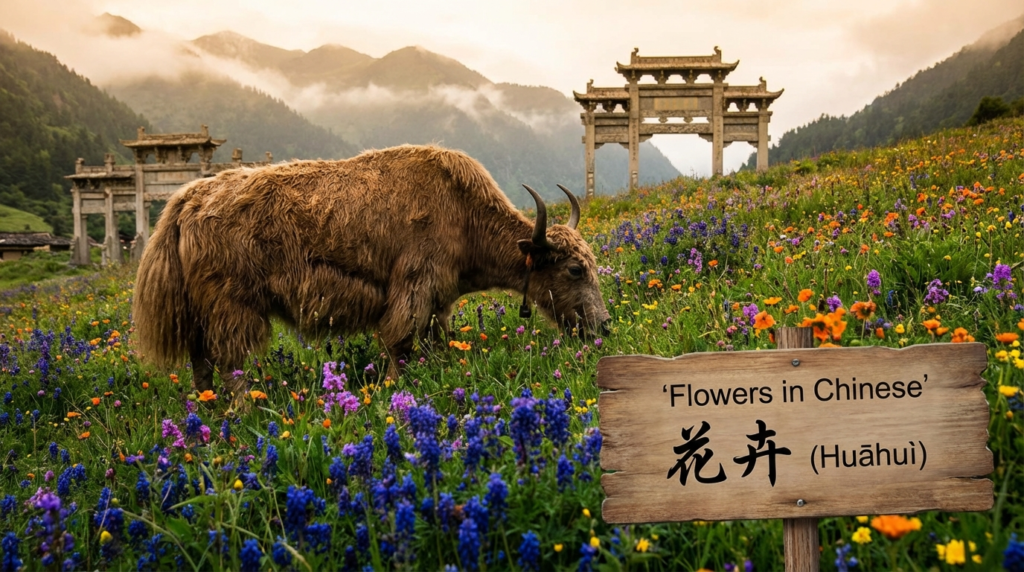
Learn flower words fast with 花卉 huāhuì, simple pinyin, and real-life sentences you can actually use.
Flowers are one of those beginner topics that feel nice and harmless until you realize you only know 花 huā and then your brain politely gives up. This guide fixes that.
You will learn common flower names, bouquet words, and useful phrases in simplified Chinese, all with pinyin and clear English meanings. No mysterious poetry haze required.
The most basic word is 花 huā, which means “flower.” From there, you can build into 花朵 huāduǒ for “blossom,” 花束 huāshù for “bouquet,” and specific flowers like 玫瑰 méiguī for “rose” or 百合 bǎihé for “lily.” Once these words stop looking random, talking about flowers gets much easier.
Visual Cards For High-Utility Flower Words
花
huā
flower
玫瑰
méiguī
rose
花朵
huāduǒ
blossom
百合
bǎihé
lily
花园
huāyuán
garden
向日葵
xiàngrìkuí
sunflower
鲜花
xiānhuā
fresh flowers
花束
huāshù
bouquet
Useful Phrases For Talking About Flowers
- 这是什么花? Zhè shì shénme huā? — What flower is this?
- 我喜欢玫瑰。 Wǒ xǐhuan méiguī. — I like roses.
- 这朵花很漂亮。 Zhè duǒ huā hěn piàoliang. — This flower is very pretty.
- 花开了。 Huā kāi le. — The flowers have bloomed.
- 这束花送给你。 Zhè shù huā sòng gěi nǐ. — This bouquet is for you.
- 花很香。 Huā hěn xiāng. — The flowers smell great.
- 花店在哪里? Huādiàn zài nǎlǐ? — Where is the flower shop?
- 我想买百合。 Wǒ xiǎng mǎi bǎihé. — I want to buy lilies.
- 这盆栽需要浇水。 Zhè pénzāi xūyào jiāoshuǐ. — This potted plant needs watering.
- 春天很多花盛开。 Chūntiān hěn duō huā shèngkāi. — Many flowers bloom in spring.
- 她在学插花。 Tā zài xué chāhuā. — She is learning flower arranging.
- 公园里有一片花海。 Gōngyuán lǐ yǒu yí piàn huāhǎi. — There is a sea of flowers in the park.
- 这种花的花语是爱情。 Zhè zhǒng huā de huāyǔ shì àiqíng. — The language of this flower is love.
A Small But Useful Distinction
Chinese uses different measure words with flower words, and they matter. You can say 一朵花 yì duǒ huā for “one flower,” 一束花 yí shù huā for “one bouquet,” and 一盆花 yì pén huā for “one potted flower.” Tiny words, annoyingly important.
Everyday Flower Words
| Hanzi | Pinyin | Meaning | Example (ZH) | Example (Pinyin) | Translation (EN) |
|---|---|---|---|---|---|
| 花 | huā | flower | 这朵花很好看。 | Zhè duǒ huā hěn hǎokàn. | This flower looks lovely. |
| 花朵 | huāduǒ | blossom | 花朵开得很大。 | Huāduǒ kāi de hěn dà. | The blossom opened wide. |
| 鲜花 | xiānhuā | fresh flowers | 桌上有一束鲜花。 | Zhuō shàng yǒu yī shù xiānhuā. | There is a bouquet of fresh flowers on the table. |
| 干花 | gānhuā | dried flowers | 她喜欢用干花装饰房间。 | Tā xǐhuan yòng gānhuā zhuāngshì fángjiān. | She likes decorating the room with dried flowers. |
| 花束 | huāshù | bouquet | 这束花是送给妈妈的。 | Zhè shù huā shì sòng gěi māma de. | This bouquet is for Mom. |
| 花篮 | huālán | flower basket | 门口放着一个花篮。 | Ménkǒu fàngzhe yí gè huālán. | There is a flower basket at the entrance. |
| 花瓶 | huāpíng | vase | 花瓶里有三支玫瑰。 | Huāpíng lǐ yǒu sān zhī méiguī. | There are three roses in the vase. |
| 花店 | huādiàn | flower shop | 我们去花店买百合。 | Wǒmen qù huādiàn mǎi bǎihé. | We are going to the flower shop to buy lilies. |
| 花园 | huāyuán | garden | 她的花园里有很多花。 | Tā de huāyuán lǐ yǒu hěn duō huā. | There are many flowers in her garden. |
| 花香 | huāxiāng | floral fragrance | 这款茶有淡淡的花香。 | Zhè kuǎn chá yǒu dàndàn de huāxiāng. | This tea has a light floral fragrance. |
| 花瓣 | huābàn | petal | 花瓣掉在桌子上了。 | Huābàn diào zài zhuōzi shàng le. | A petal fell onto the table. |
| 花苞 | huābāo | bud | 这些花苞明天会开。 | Zhèxiē huābāo míngtiān huì kāi. | These buds will open tomorrow. |
| 开花 | kāihuā | to bloom | 春天的树开始开花。 | Chūntiān de shù kāishǐ kāihuā. | The trees start blooming in spring. |
Popular Flower Names
| Hanzi | Pinyin | Meaning | Example (ZH) | Example (Pinyin) | Translation (EN) |
|---|---|---|---|---|---|
| 玫瑰 | méiguī | rose | 她最喜欢红玫瑰。 | Tā zuì xǐhuan hóng méiguī. | She likes red roses best. |
| 百合 | bǎihé | lily | 婚礼上摆了很多百合。 | Hūnlǐ shàng bǎi le hěn duō bǎihé. | There were many lilies at the wedding. |
| 郁金香 | yùjīnxiāng | tulip | 公园里的郁金香开了。 | Gōngyuán lǐ de yùjīnxiāng kāi le. | The tulips in the park have bloomed. |
| 向日葵 | xiàngrìkuí | sunflower | 向日葵总是朝着太阳。 | Xiàngrìkuí zǒngshì cháozhe tàiyáng. | Sunflowers always face the sun. |
| 兰花 | lánhuā | orchid | 奶奶养了一盆兰花。 | Nǎinai yǎng le yì pén lánhuā. | Grandma keeps a pot of orchids. |
| 牡丹 | mǔdān | peony | 牡丹看起来很华丽。 | Mǔdān kàn qǐlai hěn huálì. | Peonies look very elegant. |
| 菊花 | júhuā | chrysanthemum | 秋天常常能看到菊花。 | Qiūtiān chángcháng néng kàndào júhuā. | You can often see chrysanthemums in autumn. |
| 荷花 | héhuā | lotus | 湖里的荷花很漂亮。 | Hú lǐ de héhuā hěn piàoliang. | The lotus flowers in the lake are beautiful. |
| 茉莉花 | mòlihuā | jasmine | 茉莉花闻起来很清新。 | Mòlihuā wén qǐlai hěn qīngxīn. | Jasmine smells very fresh. |
| 樱花 | yīnghuā | cherry blossom | 四月很多人去看樱花。 | Sì yuè hěn duō rén qù kàn yīnghuā. | Many people go see cherry blossoms in April. |
| 桂花 | guìhuā | osmanthus | 桂花的香味很特别。 | Guìhuā de xiāngwèi hěn tèbié. | Osmanthus has a very distinctive scent. |
| 梅花 | méihuā | plum blossom | 冬天还能看到梅花。 | Dōngtiān hái néng kàndào méihuā. | You can still see plum blossoms in winter. |
| 康乃馨 | kāngnǎixīn | carnation | 母亲节常常送康乃馨。 | Mǔqīnjié chángcháng sòng kāngnǎixīn. | Carnations are often given on Mother’s Day. |
More Flower Names You Will Actually See
| Hanzi | Pinyin | Meaning | Example (ZH) | Example (Pinyin) | Translation (EN) |
|---|---|---|---|---|---|
| 雏菊 | chújú | daisy | 她买了一束雏菊。 | Tā mǎi le yī shù chújú. | She bought a bouquet of daisies. |
| 绣球花 | xiùqiúhuā | hydrangea | 院子里的绣球花是蓝色的。 | Yuànzi lǐ de xiùqiúhuā shì lánsè de. | The hydrangeas in the yard are blue. |
| 杜鹃花 | dùjuānhuā | azalea | 山上开满了杜鹃花。 | Shān shàng kāi mǎn le dùjuānhuā. | The mountain is full of azaleas. |
| 水仙花 | shuǐxiānhuā | narcissus | 冬天很多人喜欢养水仙花。 | Dōngtiān hěn duō rén xǐhuan yǎng shuǐxiānhuā. | Many people like growing narcissus in winter. |
| 茶花 | cháhuā | camellia | 这朵茶花颜色很深。 | Zhè duǒ cháhuā yánsè hěn shēn. | This camellia has a deep color. |
| 牵牛花 | qiānniúhuā | morning glory | 早上牵牛花开得特别快。 | Zǎoshang qiānniúhuā kāi de tèbié kuài. | Morning glories open very quickly in the morning. |
| 薰衣草 | xūnyīcǎo | lavender | 我喜欢薰衣草的香味。 | Wǒ xǐhuan xūnyīcǎo de xiāngwèi. | I like the scent of lavender. |
| 蒲公英 | púgōngyīng | dandelion | 小孩在吹蒲公英。 | Xiǎohái zài chuī púgōngyīng. | A child is blowing a dandelion. |
| 油菜花 | yóucàihuā | rapeseed flower | 春天的油菜花田很美。 | Chūntiān de yóucàihuā tián hěn měi. | Rapeseed flower fields are beautiful in spring. |
| 野花 | yěhuā | wildflower | 路边开着很多野花。 | Lùbiān kāizhe hěn duō yěhuā. | Many wildflowers are blooming by the roadside. |
| 勿忘我 | wùwàngwǒ | forget-me-not | 她把勿忘我放进小花瓶里。 | Tā bǎ wùwàngwǒ fàng jìn xiǎo huāpíng lǐ. | She put forget-me-nots into a small vase. |
| 金银花 | jīnyínhuā | honeysuckle | 金银花常用来泡茶。 | Jīnyínhuā cháng yòng lái pàochá. | Honeysuckle is often used for tea. |
| 紫藤花 | zǐténghuā | wisteria | 春天的紫藤花垂得很长。 | Chūntiān de zǐténghuā chuí de hěn cháng. | Wisteria hangs very long in spring. |
Flower Care And Flower Shop Words
| Hanzi | Pinyin | Meaning | Example (ZH) | Example (Pinyin) | Translation (EN) |
|---|---|---|---|---|---|
| 盛开 | shèngkāi | in full bloom | 公园里的花都盛开了。 | Gōngyuán lǐ de huā dōu shèngkāi le. | The flowers in the park are all in full bloom. |
| 插花 | chāhuā | flower arrangement | 她周末去学插花。 | Tā zhōumò qù xué chāhuā. | She studies flower arranging on weekends. |
| 送花 | sònghuā | give flowers | 他想在生日那天送花。 | Tā xiǎng zài shēngrì nà tiān sònghuā. | He wants to give flowers on that birthday. |
| 盆栽 | pénzāi | potted plant | 这盆栽放在窗边很好看。 | Zhè pénzāi fàng zài chuāngbiān hěn hǎokàn. | This potted plant looks nice by the window. |
| 浇水 | jiāoshuǐ | water plants | 别忘了给花浇水。 | Bié wàng le gěi huā jiāoshuǐ. | Do not forget to water the flowers. |
| 修剪 | xiūjiǎn | prune | 春天要修剪玫瑰。 | Chūntiān yào xiūjiǎn méiguī. | You need to prune roses in spring. |
| 种花 | zhònghuā | grow flowers | 我妈妈喜欢在阳台种花。 | Wǒ māma xǐhuan zài yángtái zhònghuā. | My mom likes growing flowers on the balcony. |
| 花期 | huāqī | blooming season | 这种花的花期很短。 | Zhè zhǒng huā de huāqī hěn duǎn. | This flower has a short blooming season. |
| 花茎 | huājīng | stem | 这枝花的花茎很长。 | Zhè zhī huā de huājīng hěn cháng. | This flower has a long stem. |
| 香味 | xiāngwèi | scent | 这种花的香味很甜。 | Zhè zhǒng huā de xiāngwèi hěn tián. | This flower has a sweet scent. |
| 花海 | huāhǎi | sea of flowers | 山坡上有一片花海。 | Shānpō shàng yǒu yí piàn huāhǎi. | There is a sea of flowers on the hillside. |
| 花圃 | huāpǔ | flower bed | 学校旁边有一个小花圃。 | Xuéxiào pángbiān yǒu yí gè xiǎo huāpǔ. | There is a small flower bed by the school. |
| 花语 | huāyǔ | language of flowers | 红玫瑰的花语常常是爱情。 | Hóng méiguī de huāyǔ chángcháng shì àiqíng. | The language of red roses is often love. |
Quick Reference Summary
- 花 huā = flower
- 花朵 huāduǒ = blossom
- 鲜花 xiānhuā = fresh flowers
- 花束 huāshù = bouquet
- 花店 huādiàn = flower shop
- 玫瑰 méiguī = rose
- 百合 bǎihé = lily
- 向日葵 xiàngrìkuí = sunflower
- 樱花 yīnghuā = cherry blossom
- 开花 kāihuā = to bloom
Yak Tip
When your memory starts acting dramatic, keep three survival words ready: 花 huā, 鲜花 xiānhuā, and 花束 huāshù. With those alone, you can already ask questions, buy flowers, and sound much less lost.
A good starter sentence is 我想买一束鲜花。 Wǒ xiǎng mǎi yī shù xiānhuā. “I want to buy a bouquet of fresh flowers.” Useful, polite, and far better than pointing helplessly at a bucket of roses.