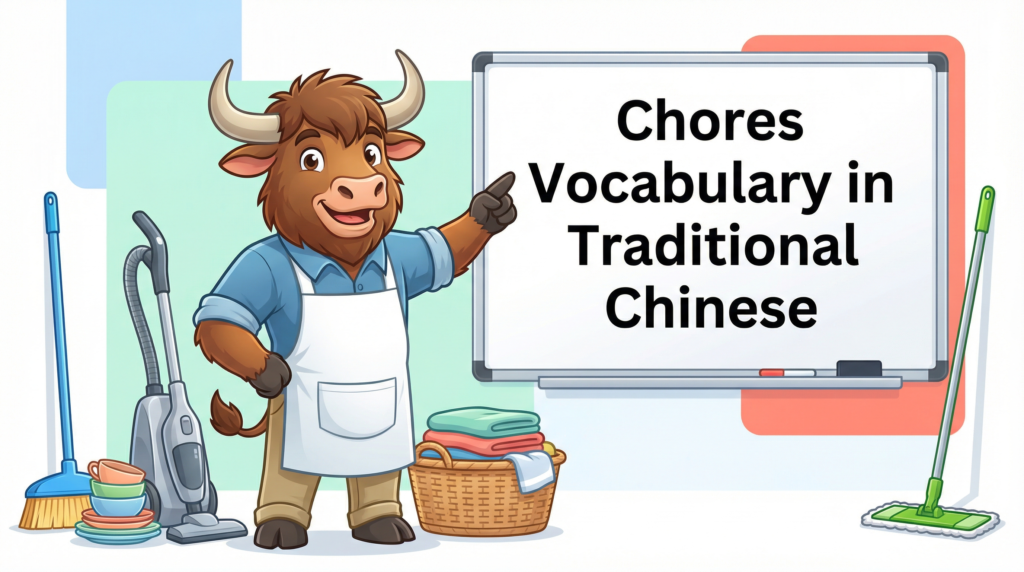
Chores Vocabulary in Traditional Chinese (60+)
Speak real-life home Chinese with characters, pinyin, meanings, and examples. 主題:家務/家事
Subtitle (中文): 家務詞彙與常用句型(繁體中文)|Tap 🔊 to hear the Hanzi in a Taiwan Mandarin voice.
This list gives you the most common chores words in Traditional Chinese, with pinyin (tone marks) and everyday example sentences. You’ll also get a few high-utility grammar patterns people actually use when negotiating chores (yes, that is a real-life skill).
Use the core verbs first, then steal the short patterns like “先…再…” and “把…收拾好” to sound instantly more natural.
Chores vocabulary is basically “verbs + mild annoyance.” Learn a few patterns, and you can complain politely in two languages. Growth.
Section 1: Visual Cards (Core Chores Verbs)
These 8 show up everywhere at home. Start here if you want maximum usefulness with minimum brain pain.
Quick examples for the core verbs
我今天要打掃客廳。
Wǒ jīntiān yào dǎsǎo kètīng.
I’m cleaning the living room today.
你可以幫我倒垃圾嗎?
Nǐ kěyǐ bāng wǒ dào lèsè ma?
Can you help me take out the trash?
我吃完就去洗碗。
Wǒ chī wán jiù qù xǐ wǎn.
After I eat, I’ll go wash the dishes.
這週末我要洗衣服。
Zhè zhōumò wǒ yào xǐ yīfu.
I’m doing laundry this weekend.
地板有點黏,我要拖地。
Dìbǎn yǒudiǎn nián, wǒ yào tuō dì.
The floor is a bit sticky; I’m going to mop.
衣服乾了,我來摺衣服。
Yīfu gān le, wǒ lái zhéi yīfu.
The clothes are dry; I’ll fold them.
吃飯前先擦桌子。
Chīfàn qián xiān cā zhuōzi.
Wipe the table first before eating.
貓毛很多,我要吸地。
Māo máo hěn duō, wǒ yào xī dì.
There’s a lot of cat hair; I’m going to vacuum.
Section 1.01: Relevant phrases and sentences (aka “How chores really get negotiated”)
These are copy-paste useful. Learn a few and you’ll sound way more natural than “I do clean now.”
我來…
“I’ll do it / let me handle it.”
我來洗碗,你休息。
Wǒ lái xǐ wǎn, nǐ xiūxí.
I’ll wash the dishes. You rest.
你可以幫我…嗎?
“Can you help me…?” (polite and super common)
你可以幫我倒垃圾嗎?
Nǐ kěyǐ bāng wǒ dào lèsè ma?
Can you help me take out the trash?
麻煩你…
“Could you please…?” (very Taiwan-friendly)
麻煩你把桌子擦一下。
Máfan nǐ bǎ zhuōzi cā yíxià.
Could you please wipe the table?
該…了
“It’s time to…” (soft nudge, not a lecture)
該打掃房間了。
Gāi dǎsǎo fángjiān le.
It’s time to clean the room.
先…再…
“First… then…” (instant organization vibe)
先洗碗,再拖地。
Xiān xǐ wǎn, zài tuō dì.
First wash the dishes, then mop the floor.
…還沒…呢
“(I) haven’t … yet.”
我還沒洗衣服呢。
Wǒ hái méi xǐ yīfu ne.
I haven’t done the laundry yet.
正在…
“(I’m) currently …” (right now, in progress)
我正在吸地,等等喔。
Wǒ zhèngzài xī dì, děngděng ō.
I’m vacuuming right now—give me a sec.
做完了
“Finished (doing it).”
我把廚房整理好,已經做完了。
Wǒ bǎ chúfáng zhěnglǐ hǎo, yǐjīng zuò wán le.
I tidied up the kitchen—I’m done.
記得…
“Remember to…”
記得把垃圾拿出去。
Jìde bǎ lèsè ná chūqù.
Remember to take the trash out.
別忘了…
“Don’t forget…” (friendly warning)
別忘了把衣服收進來。
Bié wàng le bǎ yīfu shōu jìnlái.
Don’t forget to bring the clothes in.
今天輪到你了
“It’s your turn today.” (chore fairness, activated)
今天輪到你倒垃圾。
Jīntiān lún dào nǐ dào lèsè.
It’s your turn to take out the trash today.
我們分工吧
“Let’s split the tasks.”
我們分工吧,你洗碗,我拖地。
Wǒmen fēngōng ba, nǐ xǐ wǎn, wǒ tuō dì.
Let’s split it: you do dishes, I mop.
Section 1.1: Common grammar patterns for chores (quick + practical)
You don’t need “grammar class.” You need patterns that make chores sentences sound normal.
把 + object + verb
Use this when you’re “handling” something: put it away, clean it up, move it, fix it.
把地板拖乾淨。
Bǎ dìbǎn tuō gānjìng.
Mop the floor clean.
結果補語 (完 / 好 / 乾淨)
Add an “ending” to show it’s finished or done well. Chores love endings.
我已經洗好了。
Wǒ yǐjīng xǐ hǎo le.
I’ve already washed it (done properly).
先…再…
Clean people love sequence. Even messy people pretend they do.
先收拾客廳,再打掃房間。
Xiān shōushí kètīng, zài dǎsǎo fángjiān.
First tidy the living room, then clean the bedroom.
正在…
Use it when you’re mid-task (and can’t magically teleport to help someone).
我正在洗衣服,等一下。
Wǒ zhèngzài xǐ yīfu, děng yíxià.
I’m doing laundry—wait a moment.
還沒…就…
“Before even…” Great for mild dramatic effect at home.
我還沒坐下,就要洗碗了。
Wǒ hái méi zuòxià, jiù yào xǐ wǎn le.
I hadn’t even sat down and I already had to do dishes.
該…了
A gentle “time to…” that sounds natural (and slightly unavoidable).
該倒垃圾了,垃圾車快來了。
Gāi dào lèsè le, lèsèchē kuài lái le.
Time to take out the trash—the trash truck is coming soon.
Section 2: Table of Words (More chores + tools)
These are grouped so your brain doesn’t melt. Each row includes a real sentence you can steal.
Cleaning & tidying (actions)
| Traditional Chinese | Pinyin | Meaning (EN) | Example (ZH + Pinyin) | Translation (EN) | Audio |
|---|---|---|---|---|---|
掃地 | sǎo dì | to sweep the floor | 我每天晚上掃地。 Wǒ měitiān wǎnshàng sǎo dì. | I sweep the floor every evening. | |
洗地板 | xǐ dìbǎn | to wash/mop the floor | 週末我會洗地板。 Zhōumò wǒ huì xǐ dìbǎn. | I’ll mop the floor on the weekend. | |
擦窗戶 | cā chuānghu | to wipe the windows | 今天陽光很好,順便擦窗戶。 Jīntiān yángguāng hěn hǎo, shùnbiàn cā chuānghu. | The sunlight is great today, so I’ll wipe the windows too. | |
擦鏡子 | cā jìngzi | to wipe the mirror | 鏡子有水痕,我去擦鏡子。 Jìngzi yǒu shuǐhén, wǒ qù cā jìngzi. | The mirror has water marks; I’ll wipe it. | |
擦家具 | cā jiājù | to wipe furniture | 我用抹布擦家具。 Wǒ yòng mǒbù cā jiājù. | I wipe the furniture with a cloth. | |
除塵 | chú chén | to dust (remove dust) | 書架要除塵,不然會過敏。 Shūjià yào chú chén, bùrán huì guòmǐn. | The bookshelf needs dusting, or allergies will happen. | |
消毒 | xiāodú | to disinfect | 我把門把消毒一下。 Wǒ bǎ ménbǎ xiāodú yíxià. | I’ll disinfect the door handle a bit. | |
清潔 | qīngjié | to clean (more formal) | 浴室需要定期清潔。 Yùshì xūyào dìngqí qīngjié. | The bathroom needs regular cleaning. | |
收拾 | shōushí | to tidy up / put away | 吃完記得收拾桌面。 Chī wán jìde shōushí zhuōmiàn. | After eating, remember to tidy up the table. | |
整理 | zhěnglǐ | to organize | 我想整理一下衣櫃。 Wǒ xiǎng zhěnglǐ yíxià yīguì. | I want to organize the wardrobe a bit. | |
分類 | fēnlèi | to sort / categorize | 回收要先分類。 Huíshōu yào xiān fēnlèi. | Recycling needs to be sorted first. | |
回收 | huíshōu | to recycle | 這個瓶子可以回收。 Zhège píngzi kěyǐ huíshōu. | This bottle can be recycled. | |
倒回收 | dào huíshōu | to take out the recycling | 我先倒回收,再倒垃圾。 Wǒ xiān dào huíshōu, zài dào lèsè. | I’ll take out the recycling first, then the trash. | |
倒廚餘 | dào chúyú | to take out food waste | 廚餘味道很重,快去倒廚餘。 Chúyú wèidào hěn zhòng, kuài qù dào chúyú. | The food waste smells strong—go take it out. |
Laundry & clothes (actions + items)
| Traditional Chinese | Pinyin | Meaning (EN) | Example (ZH + Pinyin) | Translation (EN) | Audio |
|---|---|---|---|---|---|
晾衣服 | liàng yīfu | to hang clothes to dry | 雨停了,我去晾衣服。 Yǔ tíng le, wǒ qù liàng yīfu. | The rain stopped; I’ll hang the clothes to dry. | |
曬衣服 | shài yīfu | to dry clothes in the sun | 今天太陽很好,適合曬衣服。 Jīntiān tàiyáng hěn hǎo, shìhé shài yīfu. | Great sun today—perfect for drying clothes. | |
烘衣服 | hōng yīfu | to tumble-dry clothes | 天氣太潮,我用烘衣機烘衣服。 Tiānqì tài cháo, wǒ yòng hōngyījī hōng yīfu. | It’s too humid, so I’ll use the dryer. | |
脫水 | tuōshuǐ | to spin-dry | 洗完先脫水,再晾衣服。 Xǐ wán xiān tuōshuǐ, zài liàng yīfu. | After washing, spin-dry first, then hang the clothes. | |
熨衣服 | yùn yīfu | to iron clothes | 這件襯衫皺了,我要熨衣服。 Zhè jiàn chènshān zhòu le, wǒ yào yùn yīfu. | This shirt is wrinkled; I need to iron it. | |
掛衣服 | guà yīfu | to hang up clothes | 外套不要丟沙發上,掛衣服。 Wàitào búyào diū shāfā shàng, guà yīfu. | Don’t throw your coat on the sofa—hang it up. | |
收衣服 | shōu yīfu | to bring in the laundry | 快下雨了,先把衣服收進來。 Kuài xià yǔ le, xiān bǎ yīfu shōu jìnlái. | It’s about to rain—bring the clothes in first. | |
洗衣精 | xǐyījīng | laundry detergent (liquid) | 洗衣精快沒了,記得買。 Xǐyījīng kuài méi le, jìde mǎi. | The detergent is almost gone—remember to buy some. | |
柔軟精 | róuruǎnjīng | fabric softener | 加一點柔軟精,衣服比較香。 Jiā yìdiǎn róuruǎnjīng, yīfu bǐjiào xiāng. | Add a bit of softener; the clothes smell nicer. | |
洗衣籃 | xǐyīlán | laundry basket | 髒衣服放進洗衣籃。 Zāng yīfu fàng jìn xǐyīlán. | Put dirty clothes into the laundry basket. |
Kitchen chores
| Traditional Chinese | Pinyin | Meaning (EN) | Example (ZH + Pinyin) | Translation (EN) | Audio |
|---|---|---|---|---|---|
洗鍋子 | xǐ guōzi | to wash pots/pans | 這個鍋子很油,要洗鍋子。 Zhège guōzi hěn yóu, yào xǐ guōzi. | This pot is greasy; it needs washing. | |
收碗盤 | shōu wǎnpán | to clear the dishes | 我收碗盤,你去洗碗。 Wǒ shōu wǎnpán, nǐ qù xǐ wǎn. | I’ll clear the dishes; you wash them. | |
擦流理臺 | cā liúlǐtái | to wipe the countertop | 煮完記得擦流理臺。 Zhǔ wán jìde cā liúlǐtái. | After cooking, remember to wipe the counter. | |
擦瓦斯爐 | cā wǎsīlú | to wipe the gas stove | 瓦斯爐有油,快擦瓦斯爐。 Wǎsīlú yǒu yóu, kuài cā wǎsīlú. | The stove is oily—wipe it quickly. | |
洗水槽 | xǐ shuǐcáo | to clean the sink | 水槽有味道,我去洗水槽。 Shuǐcáo yǒu wèidào, wǒ qù xǐ shuǐcáo. | The sink smells; I’ll clean it. | |
洗菜 | xǐ cài | to wash vegetables | 你洗菜,我來切菜。 Nǐ xǐ cài, wǒ lái qiē cài. | You wash the veggies; I’ll cut them. | |
切菜 | qiē cài | to chop vegetables | 我切菜很慢,你先煮飯。 Wǒ qiē cài hěn màn, nǐ xiān zhǔ fàn. | I chop slowly; you start cooking rice first. | |
洗米 | xǐ mǐ | to rinse rice | 煮飯前要先洗米。 Zhǔ fàn qián yào xiān xǐ mǐ. | Before cooking rice, rinse it first. | |
煮飯 | zhǔ fàn | to cook rice / cook a meal | 今天我煮飯,你洗碗。 Jīntiān wǒ zhǔ fàn, nǐ xǐ wǎn. | I’ll cook today; you do the dishes. | |
清冰箱 | qīng bīngxiāng | to clean out the fridge | 週末要清冰箱,把過期的丟掉。 Zhōumò yào qīng bīngxiāng, bǎ guòqí de diū diào. | This weekend we should clean the fridge and toss expired stuff. |
Bathroom chores
| Traditional Chinese | Pinyin | Meaning (EN) | Example (ZH + Pinyin) | Translation (EN) | Audio |
|---|---|---|---|---|---|
刷馬桶 | shuā mǎtǒng | to scrub the toilet | 我最不想刷馬桶。 Wǒ zuì bù xiǎng shuā mǎtǒng. | The thing I least want to do is scrub the toilet. | |
洗浴室 | xǐ yùshì | to clean the bathroom | 週六早上我洗浴室。 Zhōuliù zǎoshàng wǒ xǐ yùshì. | I clean the bathroom on Saturday morning. | |
刷地磚 | shuā dìzhuān | to scrub floor tiles | 地磚很滑,刷地磚比較安全。 Dìzhuān hěn huá, shuā dìzhuān bǐjiào ānquán. | The tiles are slippery; scrubbing them is safer. | |
清理排水孔 | qīnglǐ páishuǐkǒng | to clean the drain | 浴室卡住了,要清理排水孔。 Yùshì kǎzhù le, yào qīnglǐ páishuǐkǒng. | The bathroom drain is clogged; we need to clean it. | |
擦洗手台 | cā xǐshǒutái | to wipe the sink basin | 刷牙後把洗手台擦一下。 Shuāyá hòu bǎ xǐshǒutái cā yíxià. | After brushing teeth, wipe the sink quickly. | |
洗浴缸 | xǐ yùgāng | to clean the bathtub | 泡澡前先洗浴缸。 Pào zǎo qián xiān xǐ yùgāng. | Clean the bathtub before taking a bath. | |
換衛生紙 | huàn wèishēngzhǐ | to replace toilet paper | 衛生紙用完了,誰去換衛生紙? Wèishēngzhǐ yòng wán le, shéi qù huàn wèishēngzhǐ? | The toilet paper is gone—who’s replacing it? | |
浴室清潔劑 | yùshì qīngjiéjì | bathroom cleaner | 用浴室清潔劑比較好刷。 Yòng yùshì qīngjiéjì bǐjiào hǎo shuā. | Bathroom cleaner makes scrubbing easier. |
Home chores & small errands
| Traditional Chinese | Pinyin | Meaning (EN) | Example (ZH + Pinyin) | Translation (EN) | Audio |
|---|---|---|---|---|---|
鋪床 | pū chuáng | to make the bed | 起床後先鋪床。 Qǐchuáng hòu xiān pū chuáng. | After getting up, make the bed first. | |
換床單 | huàn chuángdān | to change bedsheets | 這週要換床單。 Zhè zhōu yào huàn chuángdān. | We need to change the bedsheets this week. | |
換枕頭套 | huàn zhěntóutào | to change pillowcases | 枕頭套也要換一下。 Zhěntóutào yě yào huàn yíxià. | Change the pillowcases too. | |
澆花 | jiāo huā | to water plants/flowers | 天氣很熱,記得澆花。 Tiānqì hěn rè, jìde jiāo huā. | It’s hot—remember to water the plants. | |
遛狗 | liù gǒu | to walk the dog | 晚上你遛狗,我洗碗。 Wǎnshàng nǐ liù gǒu, wǒ xǐ wǎn. | You walk the dog tonight; I’ll do the dishes. | |
餵寵物 | wèi chǒngwù | to feed pets | 你餵寵物了嗎? Nǐ wèi chǒngwù le ma? | Did you feed the pets? | |
付帳單 | fù zhàngdān | to pay bills | 我今天要付帳單。 Wǒ jīntiān yào fù zhàngdān. | I need to pay bills today. | |
拿包裹 | ná bāoguǒ | to pick up a package | 管理員說有包裹,我去拿包裹。 Guǎnlǐyuán shuō yǒu bāoguǒ, wǒ qù ná bāoguǒ. | The building staff said there’s a package; I’ll pick it up. | |
換燈泡 | huàn dēngpào | to change a light bulb | 客廳燈壞了,要換燈泡。 Kètīng dēng huài le, yào huàn dēngpào. | The living room light is broken; we need to change the bulb. |
Tools & supplies
| Traditional Chinese | Pinyin | Meaning (EN) | Example (ZH + Pinyin) | Translation (EN) | Audio |
|---|---|---|---|---|---|
掃把 | sàobǎ | broom | 掃把放在門後面。 Sàobǎ fàng zài mén hòumiàn. | The broom is behind the door. | |
畚箕 | běnjī | dustpan | 掃完用畚箕把垃圾收起來。 Sǎo wán yòng běnjī bǎ lèsè shōu qǐlái. | After sweeping, use the dustpan to collect the trash. | |
拖把 | tuōbǎ | mop | 拖把要先洗乾淨再收。 Tuōbǎ yào xiān xǐ gānjìng zài shōu. | Wash the mop clean before putting it away. | |
抹布 | mǒbù | cleaning cloth | 這塊抹布專門擦桌子。 Zhè kuài mǒbù zhuānmén cā zhuōzi. | This cloth is specifically for wiping the table. | |
海綿 | hǎimián | sponge | 洗鍋子用海綿比較方便。 Xǐ guōzi yòng hǎimián bǐjiào fāngbiàn. | A sponge is more convenient for washing pots. | |
清潔劑 | qīngjiéjì | cleaning agent | 這個清潔劑味道不刺鼻。 Zhège qīngjiéjì wèidào bù cìbí. | This cleaner doesn’t have a harsh smell. | |
洗碗精 | xǐwǎnjīng | dish soap | 洗碗精用太多會很難沖。 Xǐwǎnjīng yòng tài duō huì hěn nán chōng. | If you use too much dish soap, it’s hard to rinse. | |
垃圾袋 | lèsèdài | trash bag | 垃圾袋快用完了。 Lèsèdài kuài yòng wán le. | We’re almost out of trash bags. |
Section 3: Optional Variants (synonyms + “Taiwan-ish” usage)
Not required, but helpful when you hear different words in different homes.
| Use | Traditional Chinese | Pinyin | Meaning (EN) | Quick example (ZH + Pinyin) | Translation (EN) | Audio |
|---|---|---|---|---|---|---|
| “Clean up” (alt) | 清掃 | qīngsǎo | to clean/sweep (slightly formal) | 社區明天要清掃樓梯。 Shèqū míngtiān yào qīngsǎo lóutī. | The building will clean the stairs tomorrow. | |
| “Trash” (word) | 垃圾 | lèsè | trash (Taiwan pronunciation is common) | 垃圾先綁好再拿出去。 Lèsè xiān bǎng hǎo zài ná chūqù. | Tie up the trash first, then take it out. | |
| “Throw away” | 丟垃圾 | diū lèsè | to throw away trash (casual) | 我先去丟垃圾。 Wǒ xiān qù diū lèsè. | I’ll go throw out the trash first. | |
| “Wipe” (common pair) | 擦 / 抹 | cā / mǒ | to wipe (both common; 擦 is very general) | 用抹布擦一下就好。 Yòng mǒbù cā yíxià jiù hǎo. | A quick wipe with a cloth is enough. | |
| “Done well” ending | …好 | … hǎo | result complement: finished properly | 把房間收拾好就可以休息了。 Bǎ fángjiān shōushí hǎo jiù kěyǐ xiūxí le. | Once you tidy the room up, you can rest. | |
| Chore counter | 一件家事 | yí jiàn jiāshì | one chore / one household task | 每天做一件家事就好。 Měitiān zuò yí jiàn jiāshì jiù hǎo. | Just do one chore a day. |
If you can say “先…再…” and “把…收拾好,” you can sound impressively competent while still doing the bare minimum. Language learning is about strategy.