Curiosity runs on question words and clean sentence shapes. Spanish gives a compact toolkit—¿qué, quién, dónde, cuándo, por qué, cómo, cuál, cuánto(s)—plus easy yes/no forms shaped by intonation or ¿verbo + sujeto…?. This guide maps the essentials with IPA, natural translations, and copy-ready micro-dialogues.
The Core Question Words (With IPA And Meaning)
| Spanish | IPA | Meaning | Notes |
| ¿qué | /ke/ | what | things, definitions, choices before a noun |
| ¿quién / quiénes | /ˈkjẽn ~ ˈkje.nes/ | who / who (pl.) | persons |
| ¿dónde | /ˈdon.de/ | where | location, destination |
| ¿cuándo | /ˈkwan.do/ | when | time, date |
| ¿por qué | /poɾ ˈke/ | why | reason (answer often porque “because”) |
| ¿cómo | /ˈko.mo/ | how | manner, condition |
| ¿cuál / cuáles | /ˈkwal ~ ˈkwa.les/ | which (one/s) | selection from known set |
| ¿cuánto/a/os/as | /ˈkwan.to ~ ˈkwan.ta …/ | how much/many | quantity; agrees in gender/number |
Accent marks matter: they signal interrogatives. Keep the inverted ¿ at the start.
Yes/No Questions: Two Easy Shapes
Intonation (most common in speech)
Statement shape + rising pitch
¿Tienes tiempo
/ˈtje.nes ˈtjẽm.po/
Do you have time
Inversion (especially in writing or for clarity)
¿Tiene usted tiempo
/ˈtje.ne usˈteð ˈtjẽm.po/
Do you have time
Both are correct. Add polite softeners when needed: por favor, podría/podrías, me puede/me puede decir.
Information Questions: The Master Pattern
¿[Q-word] + [verb] + [subject] (+ extras)
| Pattern | Example | IPA | English |
| ¿Dónde + está + [sujeto] | ¿Dónde está el baño | /ˈdon.de esˈta el ˈba.ɲo/ | Where is the bathroom |
| ¿Cuándo + sale + [sujeto] | ¿Cuándo sale el tren | /ˈkwan.do ˈsa.le el ˈtɾen/ | When does the train leave |
| ¿Cómo + se dice + [X] | ¿Cómo se dice “receipt” en español | /ˈko.mo se ˈði.se reˈsip̚t en espaˈɲol/ | How do you say “receipt” in Spanish |
| ¿Cuál + es + [opción] | ¿Cuál es su correo | /ˈkwal es su koˈre.o/ | What is your email |
| ¿Por qué + [verbo] | ¿Por qué cuesta tanto | /poɾ ˈke ˈkwes.ta ˈtan.to/ | Why does it cost so much |
When the question word is the object of a preposition, keep the preposition in front: ¿Con quién…? ¿Para qué…? ¿De qué…?
Polite Questions That Work Everywhere
| Spanish | IPA | English |
| ¿Me puede ayudar | /me ˈpwe.ðe a.ʝuˈðaɾ/ | Could you help me |
| ¿Me podría decir… | /me poˈðɾi.a ðeˈsiɾ/ | Could you tell me… |
| ¿Podría traer la cuenta, por favor | /poˈðɾi.a tɾaˈeɾ la ˈkwen.ta poɾ faˈβoɾ/ | Could you bring the bill, please |
| ¿Sería tan amable de… | /seˈɾi.a tan aˈma.βle ðe/ | Would you be so kind as to… |
Switch me puede → me puedes (tú) or nos puede (for “us”) as needed.
Questions With Key Verbs (Ser, Estar, Tener, Haber)
| Use | Template | Example | IPA | English |
| Identity/definition (ser) | ¿Qué es… / ¿Cuál es… | ¿Cuál es su nombre | /ˈkwal es su ˈnom.bɾe/ | What’s your name |
| Location/state (estar) | ¿Dónde está… / ¿Cómo está… | ¿Cómo está usted hoy | /ˈko.mo esˈta usˈteð oj/ | How are you today |
| Possession/age (tener) | ¿Tiene… / ¿Cuántos años tienes | ¿Cuántos años tiene | /ˈkwan.tos ˈa.ɲos ˈtje.ne/ | How old are you |
| Existence (haber: hay) | ¿Hay… | ¿Hay baño aquí | /aj ˈba.ɲo aˈki/ | Is there a bathroom here |
Qué vs. cuál: before a noun of category, favor qué (¿Qué café quieres). For selecting one from known options, cuál (¿Cuál prefieres).
Preposition + Question Word
| Structure | Example | IPA | English |
| ¿Con quién… | ¿Con quién vienes | /kon ˈkjẽn ˈbje.nes/ | Who are you coming with |
| ¿Para qué… | ¿Para qué es este formulario | /ˈpa.ɾa ˈke es ˈes.te foɾ.muˈla.ɾjo/ | What is this form for |
| ¿De qué… | ¿De qué tamaño lo quiere | /de ke taˈma.ɲo lo ˈkje.re/ | What size would you like |
| ¿En qué… | ¿En qué andén para el tren a Lima | /en ke anˈðen ˈpa.ɾa el ˈtɾen a ˈli.ma/ | On which platform for the train to Lima |
Don’t strand the preposition at the end in Spanish.
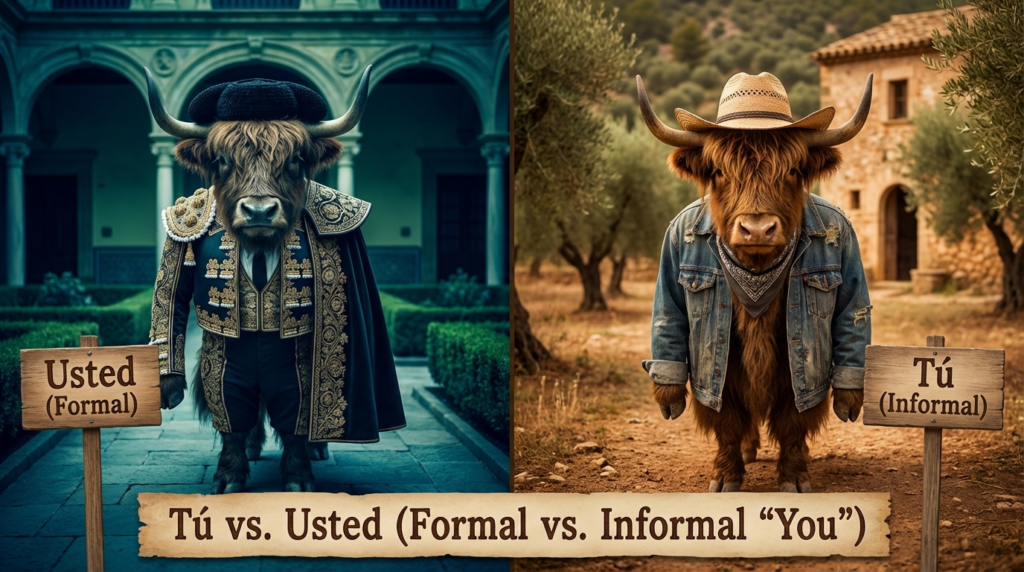
Register And Number: Tú, Usted, Ustedes, Vosotros
| Context | Form | Example |
| Informal singular (tú) | ¿Cómo estás / Dónde vives | Friends/peers |
| Formal singular (usted) | ¿Cómo está / Dónde vive | Staff, elders, official |
| Latin American plural (ustedes) | ¿Cómo están / Dónde viven | Any group |
| Spain informal plural (vosotros) | ¿Cómo estáis / Dónde vivís | Friends group in Spain |
Keep pronouns consistent with verbs and any follow-ups.
Region-Friendly Starters
| Region | Natural “How’s it going?” |
| Neutral everywhere | ¿Qué tal /ke ˈtal/ |
| Mexico/Central America | ¿Qué onda /ke ˈon.da/ |
| Colombia | ¿Qué más /ke ˈmas/ |
| Río de la Plata | ¿Todo bien /ˈto.ðo ˈbjen/ |
Pair them with time-of-day greetings for instant politeness: Buenas tardes, ¿qué tal.
Mini Dialogues (Copy, Practice, Use)
En la calle (directions)
Perdón, ¿dónde está la estación de metro
/peɾˈðon ˈdon.de esˈta la es.taˈsjon ðe ˈme.tɾo/
Excuse me, where is the subway station
Recto dos cuadras y a la izquierda
/ˈrek.to ðos ˈkwa.ðɾas i a la isˈkjeɾ.ða/
Straight two blocks, then left
¿Hay baños por aquí
/aj ˈba.ɲos poɾ aˈki/
Are there restrooms around here
Sí, en el parque
/si en el ˈpaɾ.ke/
Yes, in the park
En la tienda (sizes and price)
Buenos días. ¿Tiene esta camiseta en talla M
/ˈbwe.nos ˈði.as ˈtje.ne ˈes.ta ka.miˈse.ta en ˈta.ʝa ˈe.me/
Good morning. Do you have this T-shirt in size M
Sí. ¿Cuánto cuesta
/si ˈkwan.to ˈkwes.ta/
Yes. How much is it
Cuatrocientos. ¿La quiere probar
/kwatɾoˈsjẽn.tos la ˈkje.ɾe pɾoˈβaɾ/
Four hundred. Would you like to try it on
Sí, gracias. ¿Dónde están los probadores
/si ˈɣɾa.sjas ˈdon.de esˈtan los pɾo.βaˈðoɾes/
Yes, thanks. Where are the fitting rooms
Recepción (formal)
Buenas tardes. ¿Me podría decir a qué hora es el check-out
/ˈbwe.nas ˈtaɾ.ðes me poˈðɾi.a ðeˈsiɾ a ke ˈo.ɾa es el t͡ʃekˈaut/
Good afternoon. Could you tell me what time check-out is
A las once. ¿Necesita taxi
/a las ˈon.se ne.seˈsi.ta ˈtak.si/
At eleven. Do you need a taxi
Sí, por favor. ¿Dónde lo pido
/si poɾ faˈβoɾ ˈdon.de lo ˈpi.ðo/
Yes, please. Where should I request it
Common Mistakes To Avoid
- Using qué when cuál is needed for selection: prefer ¿Cuál es tu número (not ¿Qué es tu número).
- Forgetting the accent mark on interrogatives: cómo/qué/cuándo/por qué.
- Stranding prepositions: use ¿Con quién hablo (not ¿Quién hablo con).
- Mixing registers: don’t switch usted to tú mid-conversation.
- Over-literal word order: keep Q-word → verb → subject rhythm for clarity.
Quick Question Starters (Screenshot-Friendly)
| Goal | Spanish Starter | IPA |
| Ask for help | ¿Me puede… / ¿Me podría… | /me ˈpwe.ðe ~ me poˈðɾi.a/ |
| Find a place | ¿Dónde está… | /ˈdon.de esˈta/ |
| Ask the price | ¿Cuánto cuesta… | /ˈkwan.to ˈkwes.ta/ |
| Ask time | ¿A qué hora… | /a ke ˈo.ɾa/ |
| Ask reason | ¿Por qué… | /poɾ ˈke/ |
| Ask method | ¿Cómo se hace… | /ˈko.mo se ˈa.se/ |
| Confirm availability | ¿Hay… | /aj/ |
| Choose among options | ¿Cuál es… / ¿Cuáles son… | /ˈkwal es ~ ˈkwa.les son/ |
Five-Minute Practice Plan
- Sound Pass (60s): Read the question-word table aloud twice. Keep vowels short; tap /ɾ/ lightly in ¿por qué.
- Pattern Drill (60s): Build five lines with the master pattern: ¿Dónde está + lugar; ¿Cuándo sale + transporte; ¿Cómo se dice + palabra.
- Polite Ladder (60s): Say ¿Me puede + verbo → ¿Me podría + verbo → ¿Sería tan amable de + infinitivo.
- Preposition Chain (60s): ¿Con quién… / Para qué… / De qué… / En qué…—one example each.
- Live Line (60s): Prepare one real question to use today (shop, transit, hotel). Say it with intonation and with inversion.
Yak-Style Closing Spark
Good questions in Spanish are tidy little keys: put the right Q-word up front, snap in a clear verb, mind your register, and doors open—directions appear, bills arrive, schedules make sense. Learn the shapes once and every conversation gets easier.